
Who Can Legally Remove and Reinstall Solar in Florida?
Your roof needs replacing and there are solar panels on it. The roofer says his crew can take them off and put them back. A general contractor says the same. So does a handyman your neighbor used. From the driveway, there is no way to tell which of them is actually allowed to do that work in Florida, and the answer matters more than the price. A solar detach and reinstall touches three licensed trades at once, and whoever does it either holds those licenses or hires someone who does. Fused Solar and Roofing is a licensed roofing (CCC1331058), electrical (EC13014750), and building contractor (CBC1252064), all three in-house, which is why we get asked this question a lot and why we think every Tampa Bay homeowner should know the answer before anyone climbs the ladder.
1. A Detach and Reinstall Is Three Trades, Not One
Taking a solar array off a roof and putting it back sounds like one job. Under Florida licensing it is three.
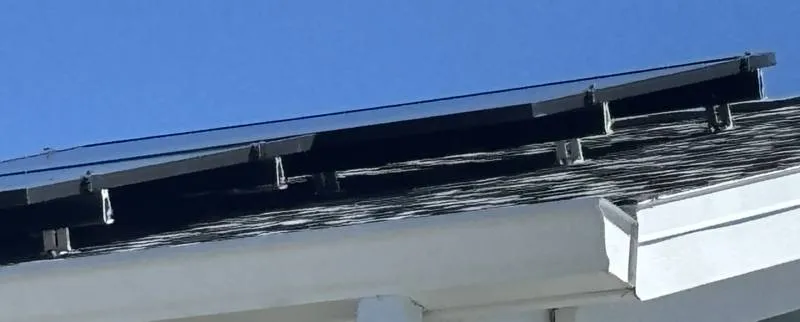
The roofing part is the removal of the old attachments from the old roof and the flashing and sealing of new attachments into the new roof. Every place a solar mount meets the roof is a penetration through the roofing system, and flashing and sealing penetrations is roofing work on an existing structure.
The electrical part is shutting the system down, disconnecting the array, handling the wiring and rapid shutdown equipment safely while the roof is open, and then reconnecting and recommissioning the system so it produces power and talks to the utility again. That is electrical contracting from the first wire to the last.
The structural part is attaching the racking to the roof framing so the array stays on the house in Florida wind. Attachment spacing, fastener embedment, and the connection to the rafters or trusses are structural questions, and they are the reason a detach and reinstall carries a structural component in its permit in Tampa Bay.
One license rarely covers all three, which is why the question of who is doing the work is really three questions.
📌 Key Takeaway: Taking solar off a roof and putting it back is roofing work, electrical work, and structural work at the same time. Whoever does it needs a license for each, or a licensed subcontractor for each.
2. What Florida's Licensing Law Says About Working Outside Your Trade
Florida licenses contractors by trade. A roofing contractor is licensed to roof. An electrical contractor is licensed to do electrical work. A general contractor holds a broad license, but broad is not the same as unlimited. Florida Statute 489.105 defines the general contractor's scope as unlimited in building type, except as limited by section 489.113. That limitation is the one that matters here.
Florida Statute 489.113 requires a contractor to subcontract electrical, mechanical, plumbing, and roofing work unless the contractor holds a state license in that trade. In plain terms, a general contractor can run the whole project, but the roofing work goes to a licensed roofer and the electrical work goes to a licensed electrical contractor unless the general contractor also holds those licenses. The same rule applies to a roofing contractor who wants to handle the electrical side, and to an electrical contractor who wants to handle the roof.
A general contractor who brings in a licensed roofer and a licensed electrical contractor for those parts of a detach and reinstall is doing exactly what the law asks. Plenty of good contractors in Hillsborough, Pinellas, Pasco, and Manatee counties work that way. The homeowner's job is simply to know who those subcontractors are and to see their licenses, because the rule is about who performs the work, not who signs the contract.
3. Why the Roofing Part Needs a Roofing License on an Existing Roof
There is a roofing exception in the law, and it is worth understanding because it is narrower than it sounds. The roofing exception in section 489.113 for general, building, and residential contractors applies only to shingles on a new building that contractor built. It does not apply to an existing roof. A detach and reinstall is, by definition, work on an existing home, so the exception does not reach it.
That matters at a very specific place on your roof. Roofs rarely leak in the open field of shingles. They leak at penetrations, and every solar attachment is a penetration. When the array goes back on the new roof, each mount has to be flashed and sealed into the roofing system so water sheds around it for the life of the roof. That is the roofer's craft, it is what roofing licenses exist to cover, and it is the part of a detach and reinstall that shows up as a stain on a ceiling three years later if it is done wrong.
What a roofing license does and does not cover on a detach and reinstall, and how roofers handle it correctly, is covered at https://fusedsolarandroofing.com/post/roofer-license-remove-solar-panels-florida
⚠️ Warning: If the person flashing and sealing your solar attachments does not hold a roofing license, ask who does. The roof manufacturer's warranty can exclude leaks at those exact spots.
4. Why the Electrical Part Needs an Electrical License
A solar array is a power plant on your roof. The panels produce DC power whenever there is daylight, the inverter converts it to AC, and the system is tied to your home's electrical service and, through the meter, to the utility. Rapid shutdown equipment sits in that path so the system can be de-energized at the roof. Disconnecting all of that for a re-roof and reconnecting it afterward is electrical contracting under Florida law, not a side task for the roofing crew.
The reconnection is also the part of the job that gets inspected. When the system goes back on, the electrical inspector checks the work, and the utility relies on that approval when it allows the system to operate again. If the reconnection was done by someone without an electrical license, there is often no permit, no inspection, and no record that the system was ever checked before it went live. Fused Solar and Roofing handles the electrical side of every detach and reinstall under its own electrical license, so the same company that took the system down is the one that signs for putting it back on.
Replacing a roof that has solar on it? Fused Solar and Roofing holds the roofing and electrical licenses to remove, store, and reinstall your system under one contract and one set of permits across Hillsborough, Pinellas, Pasco, and Manatee counties. Request a detach and reinstall quote at https://fusedsolarandroofing.com/solar-panel-removal
5. The Permits a Detach and Reinstall Normally Requires
A roof replacement is permitted work everywhere in Tampa Bay, and homeowners generally know that. What fewer homeowners know is that the solar removal and reinstall is normally permitted separately from the roof. Florida Building Code section 105.1 requires a permit to alter, repair, or replace an electrical or structural system, and a detach and reinstall does both: it alters the electrical system when the array is disconnected and reconnected, and it alters the structural attachment of the array to the roof when the mounts come off and go back on.
In practice that usually means an electrical permit for the solar work, and often a building or structural component covering the attachments, in addition to the roofing permit. The local authority having jurisdiction decides exactly how it is handled, and the requirements vary from one jurisdiction to another across Hillsborough, Pinellas, Pasco, and Manatee counties. Permitting is handled as part of the project, and a contractor who does this work regularly knows what each office expects.
The permit is not paperwork for its own sake. It means an inspector looks at the attachments and the reconnection, and it means a final inspection is on file showing the work was done and accepted. That final inspection is the homeowner's proof, and it stays with the house.
Whether a permit is required for the solar reinstall, who pulls it, and what the inspector checks is covered at https://fusedsolarandroofing.com/post/solar-removal-reinstall-permit-florida
💡 Pro Tip: Ask for the permit numbers for both the roof and the solar reinstall before work starts, and check that both are finaled before you make the last payment.
6. What the Homeowner Is Left Holding When It Is Done Without a License or a Permit
When a detach and reinstall is done by someone working outside their license, or without a permit, there are two sets of consequences, and they land on different people.
For the contractor, both are matters for the state licensing board. Under Florida Statute 489.129, failing to obtain a required permit is a ground for disciplinary action against a contractor's license. Working outside the scope of a license is handled the same way. Those are the contractor's problems to answer for.
The homeowner's problems are quieter and last longer. There is no final inspection on record for the solar work. The permit history on a home is a public record, and a roof permit with no matching solar permit is visible to anyone who pulls it. A missing final inspection is a question the homeowner, not the contractor, will have to answer later, whenever the house changes hands or whenever something goes wrong at one of those attachment points. The contractor is long gone by then. The homeowner is still living under the roof.
None of this means an unpermitted system is unsafe or cannot run. It means the homeowner has no independent record that it was checked, and that gap belongs to them.
7. How to Check a Contractor's License in Two Minutes
Florida makes this easy. Every state contractor license can be looked up free on the Florida Department of Business and Professional Regulation website, by the contractor's name or by the license number printed on the proposal. No account is needed.
The license number itself tells you the trade. Roofing licenses begin with CCC. Electrical contractor licenses begin with EC. Certified general contractor licenses begin with CGC, building contractor licenses with CBC, and solar contractor licenses with CVC. When you look up a license, check three things: that it is current, that the trade matches the work being proposed, and that the business name on the license is the business you are hiring. If a contractor tells you one license covers the roofing and the electrical, the lookup will tell you whether that is true.
It is also fair to check the people doing the checking. Fused Solar and Roofing is an EnergySage Elite Installer with a 5.0/5 rating and 21+ verified reviews, independent verification, earned not purchased, and all three of our licenses are on the state site under our name for anyone to see.
📌 Key Takeaway: Fused Solar and Roofing holds the roofing (CCC1331058), electrical (EC13014750), and building (CBC1252064) licenses, so the roofer, the electrician, and the contractor on your detach and reinstall are the same company.
8. Three Questions to Ask Before Anyone Touches Your Panels
You do not need to understand the statutes to protect yourself. You need three plain questions, asked before anyone goes on the roof.
First: which license covers the roofing work, and who holds it? You are asking for a license number that begins with CCC and a name you can look up.
Second: which license covers the electrical work of disconnecting and reconnecting the solar, and who holds it? You are asking for a license number that begins with EC and, again, a name you can look up.
Third: what permits will be pulled for this job, and who is pulling them? You want to hear a roofing permit and a separate solar permit, and you want to know which licensed contractor's name goes on each one.
A good contractor answers all three without hesitation, because a good contractor has already arranged it. If the answers come slowly, or the same person's name comes up for every trade without the licenses to match, that is your signal to slow down. Fused Solar and Roofing is a licensed roofing (CCC1331058), electrical (EC13014750), and building contractor (CBC1252064), all three in-house, so when a Tampa Bay homeowner asks us these three questions, the answer to all of them is the same company, the same licenses, and the same set of permits.
Frequently Asked Questions
1. Can a roofer legally remove and reinstall solar panels in Florida?
A roofing contractor is licensed for the roofing part of a detach and reinstall: removing the attachments from the old roof and flashing and sealing new attachments into the new one. The electrical part, disconnecting and reconnecting the array, is electrical contracting, and Florida requires a roofing contractor to subcontract it to a licensed electrical contractor unless the roofer also holds an electrical license. Many Tampa Bay roofers handle this correctly by bringing in a licensed solar or electrical partner. The homeowner should ask who that partner is.
2. Can a general contractor do solar work in Florida?
A general contractor can contract for and manage a project that includes solar, but must subcontract the electrical and roofing portions to licensed contractors in those trades unless the general contractor also holds those licenses. On a detach and reinstall, that means the reconnection goes to a licensed electrical contractor and the flashing and sealing on an existing roof goes to a licensed roofer. A general contractor who does that is following the law. One who does not is working outside the scope of the license.
3. Is a permit required to remove and reinstall solar panels for a roof replacement?
In Tampa Bay, yes, and normally as a separate permit from the roof. The solar reinstall alters the electrical system and the structural attachment of the array, both of which are permitted work under the Florida Building Code. The local authority having jurisdiction decides how it is handled in Hillsborough, Pinellas, Pasco, and Manatee counties, but a homeowner should expect a roofing permit and a solar permit, each with its own final inspection.
4. What happens if solar panels were reinstalled without a permit?
For the contractor, it is a licensing board matter. For the homeowner, there is no final inspection on record for the solar work, and the permit history on the home is a public record that will show a roof permit with nothing to match it. That missing inspection is a question the homeowner will have to answer later, not the contractor. A licensed contractor can often help by pulling an after-the-fact permit and having the work inspected, which puts the record right.
5. How do I look up a Florida contractor's license?
Go to the Florida Department of Business and Professional Regulation website and search by the contractor's name or license number. Check that the license is current, that the trade matches the work (roofing licenses begin with CCC, electrical with EC, general contractor with CGC, building with CBC, solar with CVC), and that the business name matches the company you are hiring. It takes about two minutes and requires no account.
6. Can one company hold the roofing and electrical licenses needed for the whole job?
Yes. A company can hold a roofing license, an electrical license, and a building or general license at the same time, and when it does, the roofer, the electrician, and the contractor on your detach and reinstall are the same company pulling the same set of permits. Fused Solar and Roofing holds all three for Hillsborough, Pinellas, Pasco, and Manatee counties, and any homeowner can confirm that on the state licensing site.
Fused Solar and Roofing is a licensed roofing (CCC1331058) and electrical (EC13014750) contractor performing solar detach and reinstall for roof replacements across Hillsborough, Pinellas, Pasco, and Manatee counties, including for roofing companies who need a licensed solar partner. Request a quote at https://fusedsolarandroofing.com/solar-panel-removal
Related questions homeowners ask before a re-roof with solar: your roofer says the solar company has to remove the panels; whether a roof can be replaced around the panels; getting the detach and reinstall into an insurance roof claim; leased or PPA panels and a new roof; your installer is out of business; what the solar line on a roofing quote should include; a roofer damaged your panels; HOA and townhome re-roofs with solar; where the panels go while the roof is open; the inspection and utility steps after a reinstall; solar on a roof that is fifteen years old; roofing companies that need a solar partner.
Need your solar removed and reinstalled for a new roof? Request a quote at https://fusedsolarandroofing.com/solar-panel-removal