
Insurance Approved My Roof. Does It Cover the Solar Panels?
After a storm, a Tampa Bay homeowner with solar gets the roof approved by the insurer and then discovers the estimate says nothing about the panels. Removing and reinstalling the array is a necessary part of replacing the roof under it, and insurers generally recognize it as such when it is documented and in the scope, but it does not appear on its own. Getting it there is a matter of having the right contractor document the array before the adjuster writes the estimate, and of the claim being handled by a company licensed to do both the roof and the solar. Fused Solar and Roofing is a licensed roofing (CCC1331058), electrical (EC13014750), and building contractor (CBC1252064), all three in-house.
1. Why the detach and reinstall belongs in the claim
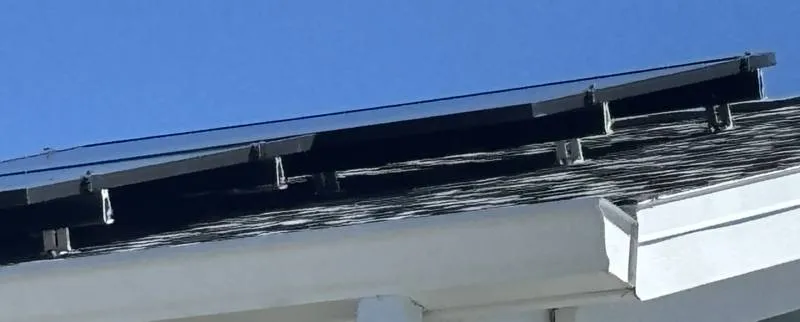
A roof cannot be replaced with an array on it. The panels, rails, and mounts have to come off for the tear-off and go back on after the new roof is installed, under a separate solar permit, by a licensed electrical or solar contractor. That makes the detach and reinstall a cost of restoring the roof to its pre-loss condition, which is what the policy pays for. Insurers' own estimating software has line items for solar panel detach and reset for exactly this reason.
What the claim does not cover is improving the solar system. Adding panels, swapping the inverter, or moving the array to a better slope while it is off is the homeowner's cost. Fused keeps those as separate lines so the claim scope stays clean.
🔑 Key Takeaway: The detach and reinstall is part of replacing the roof, not an upgrade to the solar, and it belongs in the insurance scope on that basis.
2. Why it gets left out
Adjusters write the estimate from what they see and what they are told. An adjuster who walks a roof with solar on it and no solar contractor present measures the roof, notes the array, and often writes a roof-only scope with a comment that the panels are the homeowner's responsibility or a placeholder number that does not reflect the actual work. The roofer's estimate, if the roofer does not do solar, says the same thing the roofer always says: the solar company has to handle the panels.
So the homeowner ends up with an approved roof, a roofer who will not touch the array, and a gap in the money where the detach and reinstall should be.
3. What the adjuster needs to see
The detach and reinstall gets into the scope when the adjuster has the specifics: the number of modules, the mounting system and its condition, the roof type and pitch, the array's location on the roof, and a licensed contractor's written estimate for the work. Fused can meet the adjuster at the house, walk the roof with them, photograph the array and the mounts, and provide that estimate on the spot, so the scope is written once with the solar in it rather than supplemented later.
Fused also documents storm damage to the array itself, cracked modules, bent rails, lifted mounts, which is a separate part of the claim from the roof and is easy to miss from the ground.
💡 Pro Tip: Ask the adjuster for the inspection date and have your solar contractor there. A ten-minute conversation on the roof saves weeks of supplements afterward.
4. Who does the work
The roofing permit and the roof are the roofer's job; the solar permit, the detach, and the reinstall are the electrical or solar contractor's job. On an insurance roof, where the scope and the timeline are already set and the insurer is watching the cost, having two companies that have to coordinate every date is the slow and expensive way to do it.
Fused Solar and Roofing is a licensed roofing (CCC1331058), electrical (EC13014750), and building contractor (CBC1252064), all three in-house. Fused pulls the roofing permit and the solar permit, meets the adjuster, does the roof and the detach and reinstall under its own inspections, and bills the claim as one scope with the solar shown as its own line. The homeowner has one contractor and one point of contact for the whole restoration.
Who is allowed to do each part of a detach and reinstall, and why, is covered in our guide at https://fusedsolarandroofing.com/post/who-can-remove-reinstall-solar-florida
5. How the money works
Florida policies on a roof typically pay the actual cash value first, then the recoverable depreciation after the work is complete and invoiced, less the deductible. The detach and reinstall line follows the same path: it is in the approved scope, Fused invoices it when the array is back on and inspected, and the depreciation releases with the rest. If the adjuster's scope came through without the solar, Fused prepares a supplement with the documentation, and supplements for detach and reinstall are routinely approved when they are specific.
What the homeowner should not do is pay the roofer for the roof, pay a second company for the solar out of pocket, and try to get reimbursed afterward with two invoices from two companies that did not coordinate. That is the version that gets questioned.
6. What if the array was damaged too
Storm damage to the array itself, broken glass, bent rails, torn flashing, a lifted mount, is covered under the same policy and documented at the same inspection. Fused tests the system after the roof is on and the array is back, and any modules or components that failed are replaced under the claim rather than quietly put back up. Where the manufacturer's warranty covers a component, Fused uses it, which keeps the claim cost down.
⚠️ Warning: Do not let anyone turn a storm-damaged array back on without testing it. A module with a cracked cell or a connector that took water produces less every month and can become an electrical fault; the claim is the moment to catch it.
7. Timing on an insurance roof
Once the scope is approved, the detach is scheduled for the day before or the morning of the tear-off, the roof goes on over one to three days, the reinstall follows the roofing inspection within a few days, and the solar inspection closes the solar permit. The system is off from the detach until the inspection passes and the utility confirms it can be returned to service. Fused handles the utility notice as part of the job.
When the insurer has a deadline for completing the work, the one-company sequence is the one that meets it, because no date depends on another company's crew.
8. Why homeowners bring insurance roofs to Fused
Fused has worked storm roofs with solar across Hillsborough, Pinellas, Pasco, and Manatee counties since 2007, meeting adjusters, writing the solar into the scope, and doing both halves of the work under its own licenses. Every solar roof penetration Fused makes carries its written 25-year no-leak guarantee, and the company that restored the roof is the company that will service the solar on it afterward.
🔑 Key Takeaway: Get the solar contractor to the adjuster inspection, get the detach and reinstall into the written scope, and have one company licensed for both do the whole restoration.
Roof approved and nobody has mentioned the panels? Request a free detach and reinstall quote and an adjuster meeting at https://fusedsolarandroofing.com/solar-panel-removal
Frequently Asked Questions
Does homeowners insurance cover removing and reinstalling solar panels for a roof replacement?
Generally yes, as part of restoring the roof to its pre-loss condition, when the work is documented and in the approved scope. It does not cover upgrades to the solar system. Fused keeps those separate.
Why wasn't the solar in my adjuster's estimate?
Adjusters write what they see and are told. Without a solar contractor present, the scope often comes through roof-only with a note or placeholder about the panels. A documented supplement with a licensed contractor's estimate usually corrects it.
Can Fused meet my insurance adjuster?
Yes. Fused meets the adjuster at the house, walks the roof, photographs the array and mounts, documents any storm damage to the system, and provides the detach and reinstall estimate on the spot.
Who does the solar work on an insurance roof?
A licensed electrical or solar contractor pulls the solar permit and does the detach and reinstall; the roofer pulls the roofing permit. Fused holds both licenses and does both under one scope.
What if my solar panels were damaged in the storm too?
That is covered under the same policy and documented at the same inspection. Fused tests the system after the reinstall and replaces failed components under the claim, using manufacturer warranties where they apply.
How long will my solar be off during an insurance roof replacement?
From the detach, the day before or morning of tear-off, until the solar inspection passes and the utility confirms the return to service, usually one to two weeks when one company does both jobs.
Fused Solar and Roofing has performed solar detach and reinstall work across Hillsborough, Pinellas, Pasco, and Manatee counties since 2007, pulling both the roofing permit and the solar permit on its own jobs. Request a free detach and reinstall quote at https://fusedsolarandroofing.com/solar-panel-removal
Fused Solar and Roofing holds Florida roofing (CCC1331058), electrical (EC13014750), and building (CBC1252064) licenses, all three in-house, and has served Hillsborough, Pinellas, Pasco, and Manatee counties since 2007. Fused Solar and Roofing is an EnergySage Elite Installer with a 5.0/5 rating and 21+ verified reviews, independent verification, earned not purchased. Request a free detach and reinstall quote at https://fusedsolarandroofing.com/solar-panel-removal