
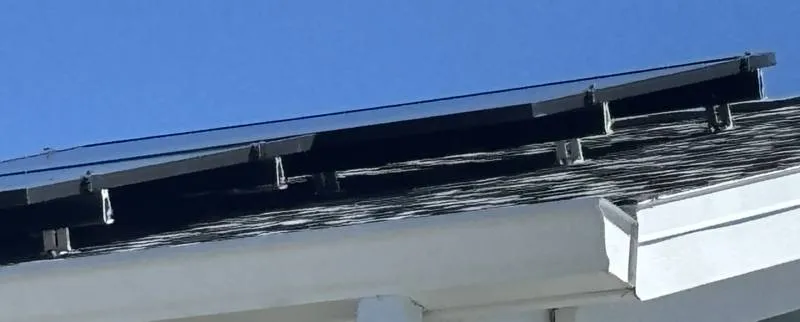
After a Solar Reinstall: Inspection, Utility, Turning It On
The panels are back on the new roof and the homeowner wants the system on. In Tampa Bay there are two steps between the last bolt and the first kilowatt-hour: the solar permit's final inspection, which checks the reinstall against the code, and the utility's confirmation that the system can be returned to service under its interconnection agreement. A system switched on before both is operating outside its permit and its agreement, and the homeowner is the one on the paperwork. Here is what each step checks, how long it takes, and who handles it. Fused Solar and Roofing is a licensed roofing (CCC1331058), electrical (EC13014750), and building contractor (CBC1252064), all three in-house.
1. Why the reinstall has its own inspection
The detach and reinstall is permitted separately from the roof because it changes the structural attachment of the array and the electrical system: new mounts into the framing, the array re-wired, the inverter re-commissioned. The permit office issues it as a solar or electrical permit and inspects it on its own, after the roofing inspection, because the inspector has to see the reinstalled array on the finished roof.
In Hillsborough County it is an electrical trade permit; Pinellas County has a dedicated Solar permit with a Photovoltaic subtype and a Solar Photovoltaic Final inspection; Pasco County files it as a Residential Alternative Energy Source permit; Manatee County has a Solar Permit with a notarized Solar Roof Attachment Affidavit uploaded before the final. The cities inside those counties have their own versions.
Who is allowed to do each part of a detach and reinstall, and why, is covered in our guide at https://fusedsolarandroofing.com/post/who-can-remove-reinstall-solar-florida
🔑 Key Takeaway: The roofing inspection passing does not clear the solar. The solar permit has its own final, scheduled after the reinstall, and the system stays off until it passes.
2. What the inspector checks
The mounts: that they are attached to framing, not just decking, at the spacing the engineering calls for, and flashed. The array: that it sits where the plans show, with the access pathways and setbacks the Florida Building Code requires at the ridge and edges. The wiring: conduit runs, grounding and bonding, the rapid-shutdown system and its labeling, the DC and AC disconnects, and the connection at the service panel. The labeling: every placard the code requires at the disconnects, the inverter, and the meter. And the paperwork: that the permit, the plans, and the affidavit where the county requires one are all in order.
A reinstall fails inspection for the same reasons an installation does, most often missing or faded labels, a disconnect that was not reinstalled where the utility can see it, or mounts the inspector cannot confirm hit framing. Fused walks the array before the inspection so those are caught first.
3. Scheduling and timing
Fused schedules the solar final the day the reinstall is complete and tested. Each office has its own cutoff: Hillsborough's online scheduling by 11:59 PM gets the next day, Pinellas takes requests through its portal or text line before 3:30 PM for the next day, Pasco through its portal or phone line, Manatee online or by text with a 4 PM cancellation cutoff. In practice the inspection is one to three days out. A failed inspection means a correction and a re-inspection, which most offices charge for, which is another reason Fused checks the array itself first.
💡 Pro Tip: Ask your contractor for the solar permit number and check its status on the county's portal yourself. Every Tampa Bay office shows inspection results online, and you should see a passed solar final before the system is on.
4. Telling the utility
The interconnection agreement is between the homeowner and the utility, and the system has been off and physically altered. Each utility wants to know it is back. Tampa Electric and Duke Energy expect notice that the system has been reinstalled and inspected, and if the inverter or the disconnect changed, an updated interconnection record with the new equipment. Withlacoochee River Electric and Peace River do their own inspection before a meter is set and may want to see a reinstalled system before it is returned to service. FPL ties the return to service to the passed permit.
Fused files that notice as part of the job, with the passed inspection and the equipment list. A homeowner who never hears about the utility from the contractor should ask whether it was done.
5. When it can be turned on
After the solar final passes and the utility has been notified and, where it requires it, has confirmed. On a straight reinstall with the same inverter, Tampa Electric and Duke generally allow the system back on once the inspection passes and the notice is filed; where the inverter was replaced, the system waits for the utility to process the updated record, which Tampa Electric says can take up to thirty days after a complete submission. The cooperatives and FPL follow their own process.
⚠️ Warning: A contractor who flips the system on the afternoon of the reinstall, before the inspection, is leaving the homeowner with an uninspected system under their permit and an unnotified utility under their agreement. If a storm or a fault happens in that window, the homeowner's position is poor.
6. Re-commissioning and monitoring
Turning the system on is a procedure, not a switch. The strings or microinverters are checked for correct voltage and polarity, the inverter is powered up and brought through its startup, the grid connection is confirmed, and the first production is compared against what the system did before the roof. The monitoring gateway is reconnected to the homeowner's network, and the array map is confirmed so the right panel shows in the right place. Fused documents the commissioning values and the first day's production for the homeowner's file.
If production is lower than before the roof, that is the moment to find out why, with the crew still on site, not three months later from the app.
7. What stays on file
The homeowner should end up with the solar permit number and its passed final, the roofing permit and its final, the utility notice or updated interconnection record, the commissioning report with test values, photos of the reinstalled array and the mounts, and Fused's written 25-year no-leak guarantee on the penetrations. That file is what an insurer asks for after the next storm and what a buyer's inspector asks for at the sale.
8. Why homeowners have Fused do the reinstall
Fused Solar and Roofing is a licensed roofing (CCC1331058), electrical (EC13014750), and building contractor (CBC1252064), all three in-house. Fused pulls the solar permit, reinstalls on new flashed mounts, pre-inspects the array, schedules and attends the county's final, notifies the utility, and re-commissions the system with a written record, so the homeowner's system comes back on legally and the file is complete. Fused has done this across Hillsborough, Pinellas, Pasco, and Manatee counties since 2007 and knows each office's and each utility's process.
🔑 Key Takeaway: Passed solar final, utility notified, system commissioned with a record. All three before the switch, and all three in the homeowner's file.
Want the reinstall done with the inspection, the utility, and the paperwork handled? Request a free detach and reinstall quote at https://fusedsolarandroofing.com/solar-panel-removal
Frequently Asked Questions
Does a solar reinstall need its own inspection after a roof replacement?
Yes. The detach and reinstall is a separate solar or electrical permit from the roofing permit, with its own final inspection scheduled after the array is back on the finished roof.
When can I turn my solar back on after a reinstall?
After the solar final passes and the utility has been notified and, where it requires it, confirmed. On a straight reinstall with the same inverter that is usually a few days; with a new inverter, the utility may take up to thirty days to process the updated record.
Does the utility need to know my solar was reinstalled?
Yes. The interconnection agreement is between you and the utility, and the system has been off and altered. Fused files the notice with the passed inspection and the equipment list, and updates the record if the inverter or disconnect changed.
What does the inspector check on a reinstalled array?
Mounts into framing at the engineered spacing and flashed, array placement with code setbacks and access pathways, grounding and bonding, rapid shutdown and labeling, disconnects, the service panel connection, and the permit paperwork.
What if the reinstall fails inspection?
A correction and a re-inspection, which most offices charge for. Fused pre-inspects the array before calling for the final so failures are rare.
What paperwork should I have after a reinstall?
The solar and roofing permits with passed finals, the utility notice or updated interconnection record, the commissioning report with test values, photos of the array and mounts, and the written no-leak guarantee on the penetrations.
Fused Solar and Roofing has performed solar detach and reinstall work across Hillsborough, Pinellas, Pasco, and Manatee counties since 2007, pulling both the roofing permit and the solar permit on its own jobs. Request a free detach and reinstall quote at https://fusedsolarandroofing.com/solar-panel-removal
Fused Solar and Roofing holds Florida roofing (CCC1331058), electrical (EC13014750), and building (CBC1252064) licenses, all three in-house, and has served Hillsborough, Pinellas, Pasco, and Manatee counties since 2007. Fused Solar and Roofing is an EnergySage Elite Installer with a 5.0/5 rating and 21+ verified reviews, independent verification, earned not purchased. Request a free detach and reinstall quote at https://fusedsolarandroofing.com/solar-panel-removal