Solar Installer Out of Business and You Need a New Roof?
A large share of the solar systems installed in Tampa Bay between 2012 and 2019 were sold by companies that have since closed, merged, or left Florida. The homeowner finds this out when the roof is due and the number on the contract rings through to nothing. The panels still have to come off for the roof and go back on afterward, under a solar permit, by a licensed contractor, and the fact that the installer is gone changes who does that, what the warranties are worth, and what has to be checked before the system goes back up. Fused Solar and Roofing is a licensed roofing (CCC1331058), electrical (EC13014750), and building contractor (CBC1252064), all three in-house.
1. What the installer being gone does and does not change
It does not change the job. The array has to be detached before the tear-off and reinstalled after the roof is on, under a separate solar permit from the roofing permit, by a Florida electrical or solar contractor. Any licensed contractor can do that work on any system; there is no requirement that the original installer do it.
What changes is the paperwork behind the system. The installer's workmanship warranty is gone with the installer. The equipment warranties from the panel, inverter, and racking manufacturers usually survive, because they run from the manufacturer to the homeowner, but claiming them now means dealing with the manufacturer directly or through a new servicing contractor. And the monitoring account, which the installer often set up under its own name, may need to be transferred before anyone can see whether the system is producing.
🔑 Key Takeaway: The installer's warranty died with the installer; the manufacturers' warranties mostly did not. The reinstall is the moment to find out which is which and get the system under a contractor who will service it.
2. Finding out what you have
Before quoting the detach and reinstall, Fused identifies the equipment: the panel make and model, the inverter or microinverters, the racking and mounts, and the monitoring platform. That tells it which manufacturers are still in business, which warranties are claimable, and whether the mounting system is one that should go back on or be replaced. Some of the racking sold in the mid-2010s by installers that later closed is no longer supported, and a few microinverter lines have been orphaned by their own manufacturers, which changes the reinstall conversation.
The inspection also looks at how the system was installed, because a closed installer's work is sometimes why it closed. Fused has reinstalled arrays that were never properly flashed, that were lagged into decking rather than framing, and that had wiring run in ways the current code does not allow, and the reinstall is when those get corrected.
3. The warranties, piece by piece
Panel warranties run twenty-five years on production and ten to twenty-five on materials, from the manufacturer, and most of the major panel makers from the 2010s are still in business. Inverter and microinverter warranties run ten to twenty-five years from the manufacturer; a few microinverter brands have been discontinued or their makers have gone through bankruptcy, which Fused checks model by model. Racking warranties follow the racking manufacturer. The installer's workmanship warranty, which covered the labor and often the roof penetrations, is gone.
When Fused reinstalls the array, its own written 25-year no-leak guarantee covers every penetration it makes, under its roofing license, so the part of the original warranty that mattered most for the roof is replaced by a new one from a company that is here.
Who is allowed to do each part of a detach and reinstall, and why, is covered in our guide at https://fusedsolarandroofing.com/post/who-can-remove-reinstall-solar-florida
4. Monitoring and the utility account
Installers often created the monitoring account under their own company login and gave the homeowner a view-only app. When the installer closes, that account may stop updating or the homeowner may be locked out of changing it. The reinstall is when the monitoring gets re-established: Fused transfers or recreates the account in the homeowner's name where the platform allows it, confirms the gateway is reporting after the reinstall, and documents the production baseline.
The utility interconnection agreement is between the homeowner and the utility and is unaffected by the installer closing. After the reinstall inspection, Fused notifies the utility that the system has been reinstalled so it can be returned to service, and updates the record if the inverter changed.
💡 Pro Tip: Before the roof project starts, log into your monitoring app and take screenshots of the last twelve months of production. If the account is lost in the transition, that is your record of what the system did.
5. Reinstall it or replace it
Most orphaned systems are worth reinstalling. The panels have decades left, and even an older string inverter can be kept running or replaced on its own. But some systems are not: panels with widespread microcracking or delamination, discontinued microinverters that fail one at a time with no replacements available, or racking that cannot be reflashed properly on the new roof. Fused tells the homeowner which case they are in before the roof comes off, with the costs side by side, so the decision is made once rather than discovered mid-project.
Where a component needs replacing, doing it during the reinstall saves a second trip and a second permit, and Fused prices it as its own line.
6. The detach and reinstall itself
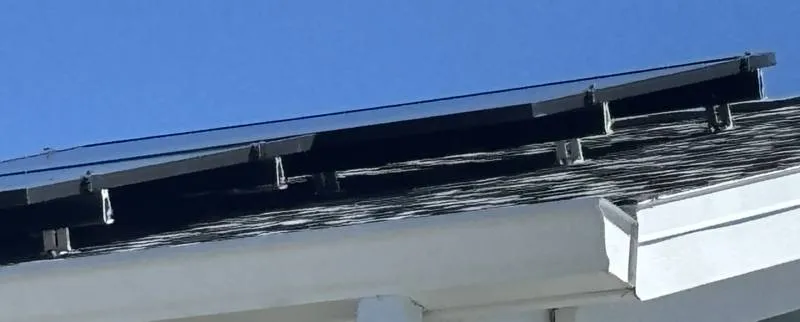
The system is shut down and locked out, the modules are labeled, removed, and stored on racks under cover, and the old rails and mounts come off. The roof is replaced over the whole deck with a self-adhered leak barrier. New flashed mounts go into the framing through the new barrier, the rails and modules go back in the original layout unless the homeowner has chosen a change, the wiring is reconnected and tested, and the system is re-commissioned and inspected under the solar permit before it is turned on.
Fused does not reuse the old mounts, particularly on an orphaned system where there is no way to know how they were installed. New mounts, new flashing, and a guarantee from the company that set them.
⚠️ Warning: A roofer who offers to reinstall an orphaned array on the old mounts because nobody else is around to object is offering to put the oldest, least-known part of the system back into a brand-new roof with no one warranting it.
7. Taking over service afterward
The reinstall is usually the start of a relationship, not the end of a job. Fused services systems it did not install, including systems whose installer is gone, and offers an annual maintenance plan with an inspection and a cleaning so the system that just went back on a new roof is looked at every year by the company that put it there. Fused is certified with Enphase, SolarEdge, Tesla, Generac, Fronius, and SMA, which covers nearly every system installed in Tampa Bay in the last fifteen years.
8. Why orphaned-system homeowners call Fused
Fused Solar and Roofing is a licensed roofing (CCC1331058), electrical (EC13014750), and building contractor (CBC1252064), all three in-house. Fused has been in Tampa Bay since 2007, has outlasted most of the companies whose systems it now services, and does both the roof and the detach and reinstall under its own permits, so a homeowner whose installer disappeared ends up with one company responsible for the roof, the penetrations, and the system going forward.
🔑 Key Takeaway: An orphaned system is reinstalled like any other, by a licensed contractor on a solar permit. The difference is that this reinstall is also when the warranties get sorted out, the monitoring gets recovered, and the system gets a contractor who will still be here.
Installer gone and the roof is due? Request a free detach and reinstall quote and a system review at https://fusedsolarandroofing.com/solar-panel-removal
Frequently Asked Questions
My solar installer went out of business. Who can remove my panels for a new roof?
Any Florida electrical or solar contractor can pull the solar permit and do the detach and reinstall; the original installer is not required. Fused does this work on systems it did not install, across Tampa Bay.
Are my solar warranties void if the installer closed?
The installer's workmanship warranty is gone. The panel, inverter, and racking warranties run from the manufacturers and usually survive, though claiming them now goes through the manufacturer or a new servicing contractor. Fused checks each component.
What happens to my solar monitoring if the installer is gone?
Accounts set up under the installer's login may stop updating or lock you out. Fused transfers or recreates the account in your name where the platform allows it and confirms the gateway is reporting after the reinstall.
Should I reinstall an old system or replace it when I re-roof?
Most are worth reinstalling. Systems with widespread panel damage, discontinued microinverters, or racking that cannot be reflashed may not be. Fused tells you which before the roof comes off, with costs side by side.
Does Fused reuse the old mounts on an orphaned system?
No. New flashed mounts go into the framing through the new leak barrier, and every penetration Fused makes carries its written 25-year no-leak guarantee.
Will Fused service my system after the reinstall?
Yes. Fused services systems it did not install and offers an annual maintenance plan with inspection and cleaning. It is certified with Enphase, SolarEdge, Tesla, Generac, Fronius, and SMA.
Fused Solar and Roofing has performed solar detach and reinstall work across Hillsborough, Pinellas, Pasco, and Manatee counties since 2007, pulling both the roofing permit and the solar permit on its own jobs. Request a free detach and reinstall quote at https://fusedsolarandroofing.com/solar-panel-removal
Fused Solar and Roofing holds Florida roofing (CCC1331058), electrical (EC13014750), and building (CBC1252064) licenses, all three in-house, and has served Hillsborough, Pinellas, Pasco, and Manatee counties since 2007. Fused Solar and Roofing is an EnergySage Elite Installer with a 5.0/5 rating and 21+ verified reviews, independent verification, earned not purchased. Request a free detach and reinstall quote at https://fusedsolarandroofing.com/solar-panel-removal