Solar Detach and Reinstall in Safety Harbor, FL: A Guide
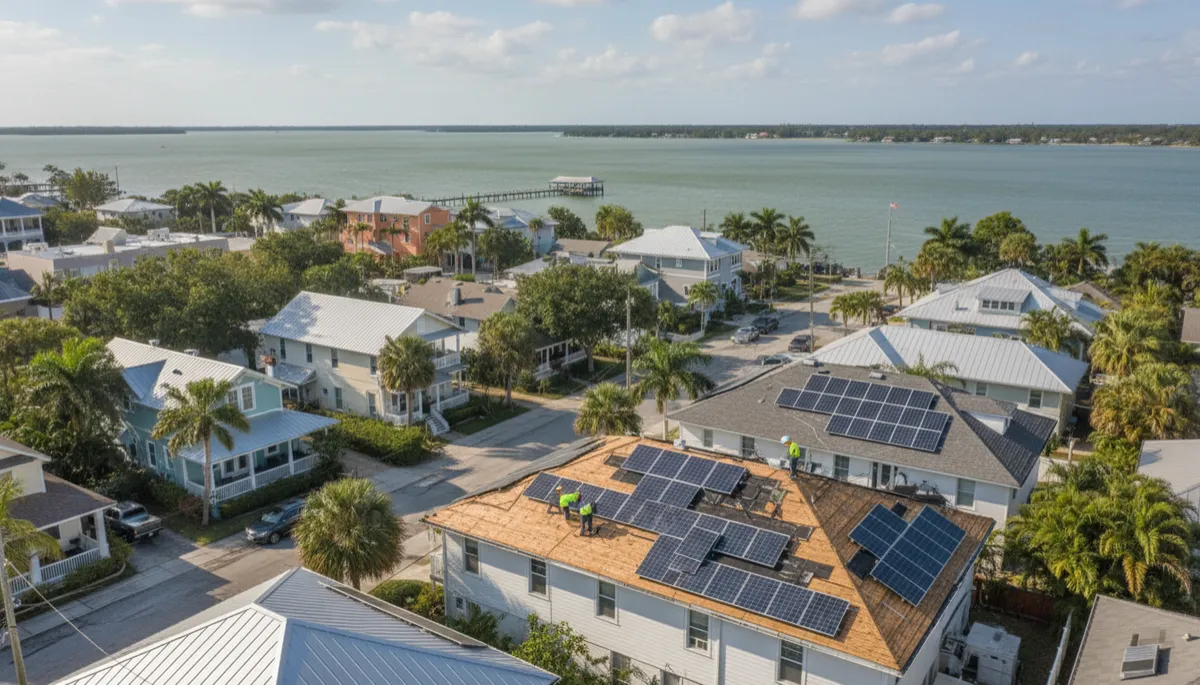
Safety Harbor sits on the edge of Old Tampa Bay, a compact historic community where 1920s–1950s bungalows near downtown share the streetscape with newer construction further out. That bay-side setting brings constant exposure to brackish water spray and trapped humidity, not just open Gulf salt air. The result is a different corrosion profile for roofing fasteners, flashing, and solar electrical hardware than communities farther west on the barrier islands. Many local homes added solar between 2010 and 2015, so today there are thousands of kilowatts of rooftop solar sitting on roofs that were never designed for 25 years of additional structural and vibration load. When those roofs age out, homeowners must decide whether to coordinate roof replacement and solar detach and reinstall through one licensed contractor, or try to manage two separate trades with no single point of accountability for leaks, wiring issues, or inspection failures. We have been in business for 19 years serving Tampa Bay with roofing (CCC1331058) and electrical (EC13014750) licenses in-house. That matters when a new roof is expected to protect solar for the next 25 years and the same contractor is responsible for both scopes from start to finish.
Homeowners planning a solar detach and reinstall in Safety Harbor need a clear, local-specific roadmap. The following guide explains how bay-side conditions age roofs faster, how permitting works between the City and Pinellas County, and why using one contractor with both roofing and electrical licenses keeps the project on a single, accountable timeline from audit through final inspection.
Maximize your investment with expert solar maintenance. Schedule a free solar panel cleaning and maintenance audit at https://tampasolarmaintenance.com
Why Local Roofs Age Faster in Safety Harbor
Safety Harbor’s position on Old Tampa Bay creates a microclimate that is noticeably different from the open Gulf side of Pinellas County. The bay traps humidity and brackish water spray, while wind circulation is often lower than on the barrier islands. That means moisture lingers longer on roof surfaces, under solar racking, and around fasteners and flashing. Over time, this accelerates corrosion on aluminum and galvanized hardware and can degrade underlayment and decking, especially on roofs that already have several generations of repairs beneath the current surface.
Many downtown-adjacent bungalows were first built between the 1920s and 1950s. These structures have often been re-roofed multiple times with different materials, fastener patterns, and underlayments. During a solar detach and reinstall, it is common to uncover layered repairs, inconsistent decking thickness, or areas where older nails and newer screws interact poorly under bay-side corrosion. Newer construction in subdivisions farther from downtown typically has more uniform framing and modern underlayment, but the roofs still experience the same array-weight concentration, heat cycling, and inverter vibration as older homes. Over 8–12 years, those forces can loosen connections and stress flashing around penetrations.
Safety Harbor’s mineral spring-adjacent soil and older plumbing infrastructure in some streets also influence electrical grounding and bonding strategy on roof-mounted systems. Properly integrating new roof work, updated grounding, and existing solar equipment requires familiarity with both older bungalow framing and current-code truss systems. Fused has 19 years of experience with Safety Harbor's mix of historic and modern roofing, from century-old bungalow framing to current-code new construction, which is critical when every structure responds differently to bay-side moisture and solar loading over time.
Permitting in Safety Harbor
Safety Harbor is an incorporated city within Pinellas County, so permitting for a solar detach and reinstall involves coordination between the City and the County. In practice, roof replacement and solar electrical permits are issued by Pinellas County, while the City of Safety Harbor reviews zoning, land use, and any historic district considerations. For homeowners, this means that a compliant D&R project must satisfy both the County’s building and electrical requirements and any City-specific guidelines for roof appearance and neighborhood character, especially near the downtown core.
A licensed electrical contractor is required to pull solar-related electrical permits in Pinellas County. Unlicensed installers cannot obtain those permits, which means no inspections, no formal approvals, and no official documentation that the work meets current code. The same applies to roofing: only a properly licensed roofing contractor can pull roof permits and be listed as the responsible party for the work. Fused holds both roofing (CCC1331058) and electrical (EC13014750) licenses, allowing the entire D&R scope to be handled under one coordinated permitting process rather than splitting responsibility between separate companies.
As a licensed contractor, we handle both electrical and roofing permits in-house. No delays between trades, no missed inspections, one County approval for the whole scope. For homes within or adjacent to Safety Harbor’s historic areas, there may be additional review for street-facing roof changes, color selections, or material transitions. Those reviews are built into the planning stage so that by the time the crew arrives to detach the array, the path through County permitting and City review is already defined and scheduled.
Planning a brand-new system instead of a reinstall? Our guide to solar installation in Safety Harbor is at https://fusedsolarandroofing.com/post/solar-installation-safety-harbor-fl
Who is allowed to do each part of a detach and reinstall, and why, is covered in our guide at https://fusedsolarandroofing.com/post/who-can-remove-reinstall-solar-florida
Solar Detach & Reinstall Process Step-by-Step
A structured, documented process keeps a Safety Harbor detach and reinstall on schedule and aligned with County and Florida Building Code requirements. The following steps outline how a typical project proceeds from first visit through final activation.
Step 1: Audit
The process begins with a site audit that covers the roof, solar array, mounting hardware, wiring, and electrical connections. On bay-side Safety Harbor homes, particular attention is paid to corrosion levels on fasteners, flashing, racking, and junction boxes. The audit also evaluates roof age, material type, underlayment condition, and any prior repairs visible around penetrations. For historic bungalows, framing type and deck thickness are documented, as these influence fastening strategies and uplift resistance when the array is reinstalled.
Step 2: Proposal
After the audit, a written proposal details the detach and reinstall scope, roof work, and any recommended hardware upgrades. Rather than quoting a generic figure, the proposal explains that pricing varies by roof size, pitch, material, array size and hardware condition. This ensures that a small bungalow with layered repairs and a compact array is treated differently from a larger, newer home with extensive roof area and a complex inverter layout. The proposal also outlines expected timelines for permits, field work, inspections, and activation.
Step 3: Permitting
With homeowner approval, Pinellas County permits are submitted for both the roof and the solar electrical work. Typical review times run approximately 3–5 business days, depending on County workload and whether any additional documentation is required for structural or wind-load calculations. During this period, any City of Safety Harbor zoning or historic district review is also coordinated so that all approvals move forward together and there are no gaps between roof and solar scopes.
Step 4: Disconnect
Once permits are issued and the project is scheduled, a licensed electrician de-energizes the system. This includes shutting down the inverter, opening disconnects, and verifying absence of voltage at appropriate points before any hardware is removed. Proper documentation of this step protects both the electrical system and the roof crew working around metal racking and conductors.
Step 5: Removal
After safe shutdown, the team removes panels, racking, flashing, and fasteners. On Safety Harbor roofs, bay-side moisture often creates corrosion patterns that differ from open Gulf-side homes, with brackish spray affecting certain metals more aggressively. This can increase labor time for fastener extraction and surface preparation. Components are labeled and staged carefully so that reinstallation can follow factory specifications and original layout, unless upgrades or reconfiguration are part of the plan.
Step 6: Roof Work
With the array removed, roofing work proceeds. This may involve localized repairs, partial re-decking, full re-decking, new underlayment, and installation of the new roof covering. Because the licensed roofer (CCC1331058) and licensed electrician (EC13014750) operate as the same company, there is no handoff gap between trades. Electrical penetrations and roof flashings are coordinated in real time, reducing the risk of misaligned mounts or unsealed openings that might appear when separate contractors work days or weeks apart.
Step 7: Reinstallation
Once the roof surface is complete and dry-in is confirmed, the solar array is reinstalled. New or existing flashing is integrated with the new roofing, racking is secured to meet current wind design requirements, and wiring is routed and terminated to match factory specifications. Where hardware has aged due to bay-side corrosion, replacements may be recommended to extend system life and maintain code compliance. The goal is a clean, structurally sound installation that treats the roof and the array as a single system rather than two separate projects.
Step 8: Inspection & Activation
After reinstallation, a County inspector reviews both the roof and the solar electrical work under the issued permits. Any required corrections are addressed, and once approvals are recorded, the system is re-energized. Output is verified against expected performance, monitoring (if present) is checked, and the homeowner receives documentation of the completed work and inspection results. Because we hold both roofing and electrical licenses and work as one crew, the entire D&R process stays on one timeline with one point of responsibility from initial audit through final activation.
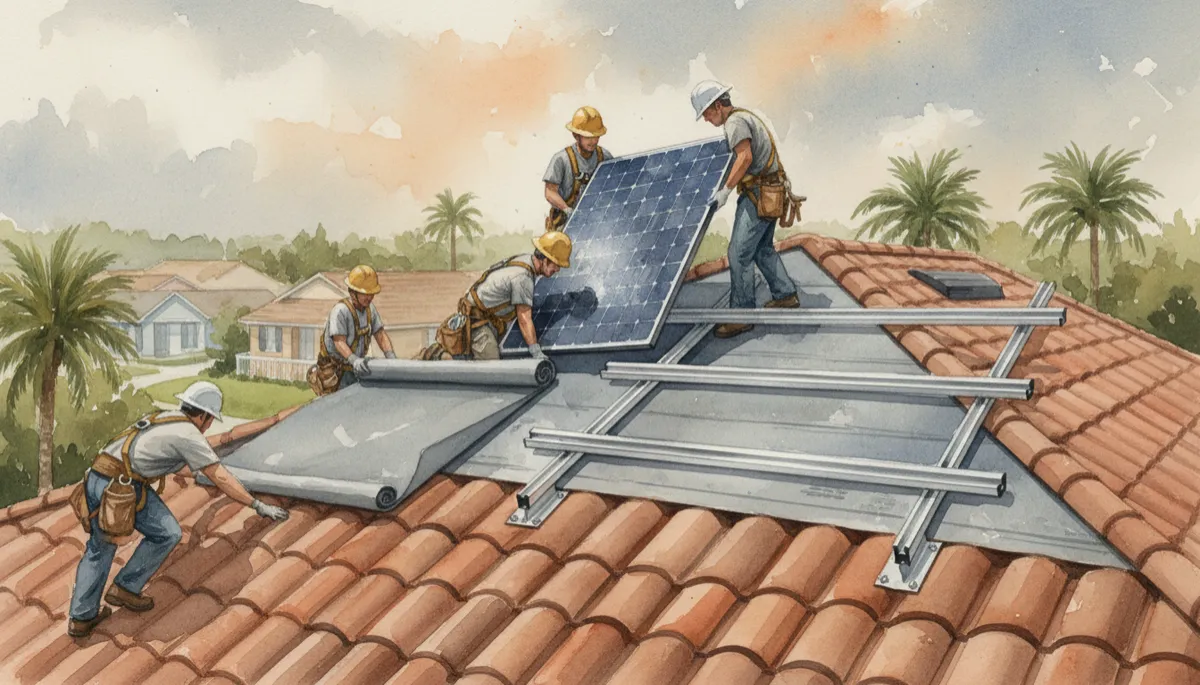
Coordinated roofing and electrical crews keep Safety Harbor D&R projects on a single accountable schedule.
What We Find Under Local Safety Harbor Arrays
Detaching arrays on Safety Harbor homes reveals consistent patterns shaped by bay-side moisture, age of construction, and installation practices from the early 2010s. Aluminum flashing and galvanized fasteners often show bay-side corrosion, sometimes with a different oxidation pattern than on open Gulf coast properties because of the brackish water composition in Old Tampa Bay. Hardware that looked acceptable from the ground can show pitting, discoloration, or loss of protective coating once panels and racking are removed and connections are exposed to view.
On older bungalow roofs, it is common to uncover layered patch repairs, areas of mismatched decking, and underlayment from different re-roof cycles overlapping each other. These conditions influence how new mounts are located and how uplift resistance is engineered on the new roof. Newer construction usually presents fewer structural surprises, but still shows wear patterns from array weight and inverter vibration, particularly at connection points where conduits enter junction boxes or combiner panels. Over time, movement and heat cycling can loosen fittings or strain gaskets if they were not designed for long-term bay-side exposure.
Electrical panels and inverters on 8–10 year-old systems sometimes show corrosion on breakers, terminals, or enclosure hardware. While many of these components remain functional, a detach and reinstall is the most efficient moment to evaluate whether they are approaching the end of their service life. We have seen this pattern across Safety Harbor's mix of historic and modern homes. That range of experience matters when every roof tells a different story and the goal is a 25-year roof and solar pairing that performs reliably in a bay-side environment.
Wind Code & Insurance Considerations
Florida Building Code requires rooftop solar systems to be engineered for wind design loads based on the property’s location and exposure category. Safety Harbor’s bay-side position may feel more sheltered than the open Gulf coast, but it still falls under high-wind design requirements for Pinellas County. Mounting hardware, attachment spacing, and structural fastening must be selected and installed to meet those loads, and the engineering details are documented as part of the permit package and inspection process.
Some older systems installed without full County permits may not meet current wind code or documentation standards. When those roofs are due for replacement, a detach and reinstall provides an opportunity to engineer new mounting that aligns with the latest Florida Building Code. Fused builds FBC compliance into every proposal so homeowners know that the reinstalled array is designed for the current wind zone and uplift requirements rather than the standards that may have been in place a decade ago or not verified at all.
From an insurance perspective, homeowners should confirm with their agent that proposed upgrades meet current code and that documentation from Pinellas County inspections is retained. County-approved designs and final inspection records provide the paperwork insurers and lenders often request during renewals, claims, or refinance reviews. A single contractor holding both roofing and electrical licenses simplifies this documentation trail because one entity is responsible for the complete permitted scope.
Timeline & Proposal Structure
A realistic timeline helps Safety Harbor homeowners plan around roof and solar downtime. Pre-work, including the on-site audit, proposal review, and permitting, typically spans 1–2 weeks depending on homeowner response time and County review workload. During this period, material selections are finalized, any historic district considerations are addressed, and the detach and reinstall is scheduled to minimize the days the array is offline and the roof is exposed.
Field work for a straightforward asphalt shingle roof with a standard array usually runs 2–3 days from disconnect through reinstallation, assuming normal weather and no unexpected structural issues. Larger or more complex bungalow roofs with layered repairs or specialty materials can take 4–6 days to complete, particularly when additional decking work or framing reinforcement is needed. After work is finished, County inspection is generally scheduled within 3–5 business days, at which point final activation can occur once approvals are recorded.
Proposal line items are clearly broken out so homeowners understand each component of the project. These typically include array removal and staging, flashing and fastener removal, roof inspection and any repair or replacement scope, underlayment and roof materials, reconnection labor, permits and inspections, and final activation. Rather than listing a single lump sum, the proposal explains that pricing varies by roof size, pitch, material, array size, hardware condition, with no tax credits applied. Because the same contractor manages roofing and electrical work with in-house crews, there are no subcontractor scheduling gaps or disputes over responsibility if issues arise during or after the project.
Safety Harbor Solar D&R FAQ
How do I know if my Safety Harbor roof needs replacement during D&R? Our audit evaluates the roof’s visible condition, with special focus on older bungalow homes that often have layered repair histories. Signs that roof replacement may be appropriate include significant granule loss on shingles, cracked or brittle roofing materials, soft or flexing decking when walked, and visible corrosion or staining around penetrations. The audit findings are documented and translated into written recommendations, so homeowners can decide whether to proceed with full replacement or targeted repairs before reinstalling the array.
Will D&R damage my roof further? When performed correctly under permits, detach and reinstall should not damage the roof. Techniques and tools are matched to each roof type, whether it is a historic bungalow with original framing or a current-code, truss-framed home. Fastener removal, flashing replacement, and sealing are handled by licensed roofing professionals, while electrical reconnections are handled by licensed electricians. County inspection verifies the roof and solar work after reinstall, providing an additional layer of oversight beyond internal quality control.
How long can I be without solar power during D&R? Most homeowners can expect to be without solar power for 1–3 days during straightforward detach and reinstall projects where only limited roof work is required. If full roof replacement is needed, or if the roof has complex geometry and layered repairs, the offline period may extend to approximately 3–6 days. Scheduling is coordinated to minimize downtime, and work is planned around weather forecasts to reduce the risk of weather-related delays.
What if my original installer is no longer available? Many Safety Harbor systems were installed a decade or more ago, and some original installers are no longer operating locally. We service and reinstall all major brands regardless of who installed them. This scope is a core competency, not an exception. System specifications and available warranty documentation are reviewed, then the D&R is planned to maintain compliance with manufacturer requirements and current electrical and roofing codes.
Will my array warranty transfer to a new roof? In most cases, panel manufacturer warranties remain in effect when panels are removed and reinstalled correctly according to published guidelines. Documentation of proper handling, mounting, and electrical reconnection supports this continuity. Fused provides a written installation warranty on all reinstallation work, covering penetrations and workmanship on the new roof so that manufacturer panel coverage and installer coverage work together rather than leaving gaps.
Does D&R void my solar system warranty? Detach and reinstall does not inherently void a solar system warranty when performed by a licensed contractor under proper permits. Work is documented, inspections are passed, and reinstallation follows manufacturer guidance. Fused’s 25-year penetration warranty covers our work at roof attachment points, operating alongside manufacturer panel warranties. This integrated approach is one of the advantages of using a single contractor with both roofing and electrical licenses rather than splitting the project between separate trades.
What should I ask other contractors to verify they are qualified to do D&R in Safety Harbor? Homeowners should request the roofing license (CCC#), electrical license (EC#), and confirmation of at least 10 years in business handling both scopes. It is also appropriate to ask about EnergySage verification, in-house service capability rather than subcontract-only models, written warranties on roofing and electrical work, and recent local references from bay-side projects. We hold a roofing license (CCC1331058), an electrical license (EC13014750), 19 years in business, EnergySage Elite Installer status, in-house service crews, and provide written warranties and references upon request.
Do I need Fused if I already have a roofer for my new roof? Yes. Fused's electrical license (EC13014750) means we can legally handle the solar disconnect, removal, and reinstall on our own—you do not need us to also do your roofing to get expert D&R service. We coordinate directly with your roofer's timeline, disconnect and stage your system before they start, and reinstall once the new roof is ready. Our 25-year penetration warranty and Elite Installer status apply to the D&R work itself, independent of who installed your roof. We also service the array afterward regardless of who did the roofing or the original solar installation.
CUSTOMER SAFETY ALERT — All detach and reinstall work MUST be fully permitted and inspected by county authorities. Unlicensed installers CANNOT obtain permits. Demand permits, verify licenses at myfloridalicense.com, require inspections, and get certificates in writing. Unpermitted solar voids panel warranties, voids roof warranties, and leaves the homeowner liable for corrective work at resale.
Maximize your investment with expert solar maintenance. Book your solar panel cleaning and inspection service at https://tampasolarmaintenance.com
Conclusion
Safety Harbor’s combination of historic bungalows, newer subdivisions, and constant bay-side moisture exposure makes every solar detach and reinstall project distinct. Roof structures, underlayment histories, and corrosion patterns vary from street to street, so a standardized, one-size approach is not sufficient. An experienced, licensed, single-contractor firm that controls both roofing and electrical scopes is best positioned to manage that complexity. Fused’s 19-year track record in Tampa Bay, in-house roofing (CCC1331058) and electrical (EC13014750) licenses, and integrated crews provide one point of responsibility for the roof, the array, and the permitting. We are an EnergySage Elite Installer (5.0/5, 21+ verified reviews) — independent verification of reliability and expertise. For Safety Harbor homeowners, that combination means a bay-side roof and solar system that are engineered, installed, and documented to work together for the next 25 years under local conditions.
Is your solar system performing at its best? Start your free maintenance consultation at https://tampasolarmaintenance.com
Fused Solar and Roofing is a licensed roofing (CCC1331058), electrical (EC13014750), and building contractor (CBC1252064), all three in-house, serving Hillsborough, Pinellas, Pasco, and Manatee counties since 2007. Fused Solar and Roofing is an EnergySage Elite Installer with a 5.0/5 rating and 21+ verified reviews, independent verification, earned not purchased.
Replacing the roof and adding solar at the same time in Safety Harbor is covered at https://fusedsolarandroofing.com/post/new-roof-and-solar-safety-harbor-fl, and solar repair and service in Safety Harbor at https://fusedsolarandroofing.com/post/solar-repair-service-safety-harbor-fl.
Need the roof itself replaced, with or without solar on it? Our guide to roof replacement in Safety Harbor, the GAF system Fused installs, the warranty, and the local permit, is at https://fusedsolarandroofing.com/post/roof-replacement-safety-harbor-fl.
All of Fused's Safety Harbor services on one page, with prices, permits, and the utility: Solar and Roofing in Safety Harbor. The county-wide version of this guide is the Pinellas County overview.
Replacing a roof that has solar on it? Request a detach and reinstall quote at https://fusedsolarandroofing.com/solar-panel-removal