Solar Installation in Safety Harbor, FL: Cost and Permits
Solar installation in Safety Harbor costs $1.85 per watt installed through Fused Solar and Roofing, so a 20-panel, 8.8 kW system of JA Solar 440W panels is $16,280, and a project runs six to eight weeks from signed contract to the day Duke Energy sets the net meter. Safety Harbor has a detail most homeowners do not know: under the city's agreement with the county, a solar permit is reviewed and inspected by Pinellas County, not by City Hall, so the application goes straight to the county's building department. The housing is 1950s to 1980s homes under one of the heaviest oak canopies in the county, with bayfront streets in salt air. Fused Solar and Roofing is a licensed roofing (CCC1331058), electrical (EC13014750), and building contractor (CBC1252064), all three in-house.
1. What Safety Harbor roofs look like to a solar designer
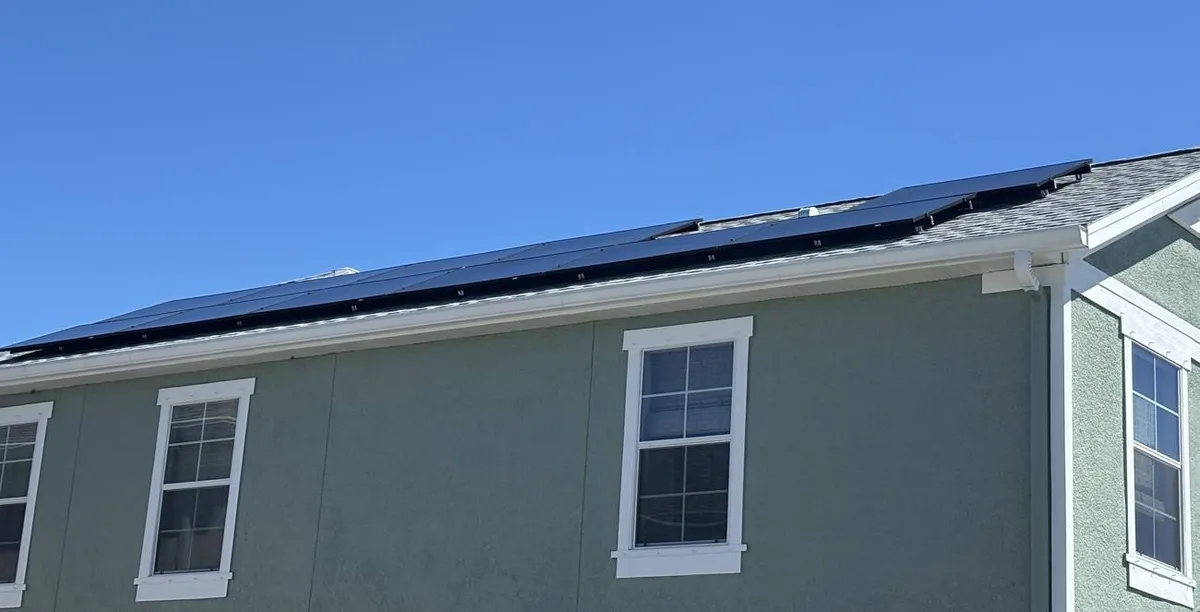
The older part of Safety Harbor, near downtown and the bay, is single-story block homes from the 1950s through the 1970s with shallow hip and gable shingle roofs, flat-roofed Florida rooms added later, and oaks that are now sixty years old. The neighborhoods farther from the water, built through the 1980s and 1990s, have larger shingle roofs, more open sky, and some two-story homes.
The canopy is the whole question on the older streets. A shade reading from the roof plane, not from the driveway, decides how much of the south and west faces are usable, and sometimes the honest answer is a smaller array or none.
The bayfront streets sit in salt air and in mapped flood zones, which changes the hardware list and sometimes the permit package.
🔑 Key Takeaway: In Safety Harbor the oak canopy decides the project on the older streets; the roof-level shade reading is the single most important step in the survey.
2. What a Safety Harbor solar system costs in 2026
Fused prices new residential solar at a flat $1.85 per watt installed for a single-story home with a standard pitch. A 20-panel, 8.8 kW system of JA Solar 440W panels is $16,280; a 26-panel, 11.44 kW system is $21,164. A Tesla Powerwall 3 adds $12,500 installed. Two-story homes and steep pitches carry priced adders shown as their own lines.
The line that appears on older Safety Harbor proposals is the electrical panel. A 1960s home with a 100-amp service or a panel brand that no longer accepts a new breaker needs a panel change before a backfeed breaker can go in. Fused does that work under its own electrical license and prices it separately.
Sizing starts with twelve months of Duke Energy bills. The design follows the usage rather than filling the roof.
💡 Pro Tip: Send a photo of your roof taken from the back yard looking up at the trees along with your Duke bills. In Safety Harbor that picture tells a designer more about the project than the address does.
3. How the roof and the solar work together
Every panel on a Safety Harbor roof is attached with K2 Systems hurricane-rated flashed mounts, lag-bolted into rafters and flashed under the shingle course so water sheds over the mount rather than around it. Every solar roof penetration carries Fused's written 25-year no-leak guarantee, which Fused can offer because the company drilling the holes holds the roofing license that stands behind them.
A home with a roof past fifteen years gets the roof and the solar quoted together under one contract. On a new roof Fused installs a self-adhered leak barrier over the entire deck, not just the eaves and valleys, before the shingles, and the mounts go through the new roof the same week.
Conduit on a block home runs along the exterior, painted to match and routed away from the street, with the inverter and the disconnect next to the main service panel. On the bayfront Fused specifies coated or stainless hardware for the salt air.
4. When a Safety Harbor home is not a good fit
Some homes should not get solar yet, and the survey is where that gets said.
Heavy canopy is the one that comes up most. A roof that loses more than a third of its daylight will not produce enough to justify the cost, and no equipment choice fixes that. The honest answer is a smaller array, a trim, or waiting.
A roof past fifteen years is the second. Putting a 25-year system on a roof with five years left means paying to take it off and put it back later.
A flat Florida room roof that ponds water is the third. That roof needs repair before it carries anything, and the array goes on the pitched main roof instead.
⚠️ Warning: A shade reading taken from the ground understates the problem under a sixty-year-old oak. Ask for one taken from the roof plane at the panel locations before trusting any production estimate.
5. Permitting and the utility in Safety Harbor
Safety Harbor's building division handles the city's own land development and code review, but under its agreement with Pinellas County, which took effect in 2021, the county reviews and inspects building-code work, and the city's permitting brochure lists solar, re-roofs, and roofing as county-only review. That means the solar permit application goes to Pinellas County Building and Development Review Services through the county's online Access Portal, where rooftop solar has its own Solar permit type with a Photovoltaic subtype and a published 14-day residential review target, and the inspections are scheduled with the county. Fused pulls the solar permit under its electrical license and the roofing permit under its roofing license when a new roof is included, and records the Notice of Commencement before the first inspection. On a bayfront address in a flood zone where a new roof is part of the project, the county's substantial-improvement review may apply, and Fused prepares that paperwork when the survey shows the zone.
Duke Energy Florida serves Safety Harbor. After the county's final inspection passes, Fused files the interconnection application with Duke, and the net meter is set after Duke approves it. The system stays off until the meter is in, and that step runs on Duke's schedule.
Already have solar and need the roof replaced? Our guide to solar detach and reinstall in Safety Harbor is at https://fusedsolarandroofing.com/post/solar-detach-reinstall-safety-harbor-guide
If your roof ever needs replacing with solar on it, who is allowed to remove and reinstall the panels, and why, is covered in our guide at https://fusedsolarandroofing.com/post/who-can-remove-reinstall-solar-florida
6. The installation, start to finish
The first visit is a site survey: roof measurements by section, attic and rafter check, electrical panel photos, a shade reading from the roof plane, the conduit route, and a check of the flood zone. The proposal follows within a few days, built from the Duke bills and the survey, with any panel work or roof work as its own line.
After signing, Fused submits the county permit, orders equipment, and completes engineering. Installation on a single-story home is one to two days. The county inspection follows, then the Duke application, then the meter. Six to eight weeks is the normal span from contract to a producing system.
Fused's crews are its own employees working under the company's licenses, and the company that installs the system is the company that services it afterward.
Want to know what your Safety Harbor roof can actually produce under its trees, sized to your own Duke bills? Request a free solar quote at https://fusedsolarandroofing.com/new-solar-installation
7. Equipment that holds up under a canopy
Fused's standard panel is the JA Solar 440W bifacial module, chosen for its performance on roofs that run well above 130 degrees in summer. Homeowners who want a premium panel with a labor-inclusive warranty can choose REC, which Fused installs as a REC ProTrust certified installer.
Inverter choice follows the shade. A Safety Harbor roof with any tree on one side does better with microinverters or optimizers, so a shaded panel in the afternoon does not pull down the ones still in the sun. An open roof does well with a string inverter. Fused is certified with Enphase, SolarEdge, Tesla, Generac, Fronius, and SMA, so the choice is made for the roof.
Batteries are sized for backup. A Safety Harbor home that wants the refrigerator, a bedroom circuit, and the internet through an outage is usually a one-battery home.
🔑 Key Takeaway: Under a Safety Harbor oak the equipment decision that matters is panel-level electronics, which keep a partly shaded array producing from the panels that still see the sun.
8. Why a Safety Harbor homeowner chooses Fused
Fused Solar and Roofing is a licensed roofing (CCC1331058), electrical (EC13014750), and building contractor (CBC1252064), all three in-house. On an older ranch home that may need a roof, a panel upgrade, and an array, that means one company evaluates all three, does all three under its own licenses, and stands behind the penetrations with a roofing license rather than a promise.
Fused Solar and Roofing is an EnergySage Elite Installer with a 5.0/5 rating and 21+ verified reviews, independent verification, earned not purchased. Fused has worked in north Pinellas County since 2007 and services systems it did not install, including systems whose original installer has closed.
Frequently Asked Questions
How much does solar cost in Safety Harbor, FL?
Fused Solar and Roofing prices new residential systems at $1.85 per watt installed. A 20-panel, 8.8 kW JA Solar 440W system is $16,280; a 26-panel, 11.44 kW system is $21,164. A Tesla Powerwall 3 adds $12,500. An electrical panel upgrade on an older home is quoted as a separate line.
Who issues the solar permit in Safety Harbor?
Pinellas County. Under the city's agreement with the county, solar and roofing permits are county-only review, so the application goes to Pinellas County Building and Development Review Services through its Access Portal under the county's Solar permit type. Fused pulls it under electrical license EC13014750.
Will the oak trees in Safety Harbor stop me from going solar?
Sometimes. A roof that loses more than a third of its daylight will not produce enough to justify the cost. Fused takes the shade reading from the roof plane at the survey, shows the production estimate by plane, and recommends a smaller array or waiting when that is the honest answer.
Which utility serves Safety Harbor for solar interconnection?
Duke Energy Florida. Fused files the interconnection application after the county's final inspection passes, and Duke sets the net meter once it approves the application.
How long does a solar installation take in Safety Harbor?
Six to eight weeks from signed contract to a producing system is the normal range. The on-roof work is one to two days; the rest is engineering, the county's review, inspection, and Duke Energy's approval.
Should I replace my roof before adding solar in Safety Harbor?
If the shingle roof is fifteen years old or older, usually yes. Fused quotes the roof and the solar together, installs a self-adhered leak barrier over the entire deck, and mounts the panels into the new roof the same week.
Fused Solar and Roofing has installed solar across Hillsborough, Pinellas, Pasco, and Manatee counties since 2007, with the roof and the solar handled by its own licensed in-house crews. Request a free solar quote at https://fusedsolarandroofing.com/new-solar-installation
Replacing the roof and adding solar at the same time in Safety Harbor is covered at https://fusedsolarandroofing.com/post/new-roof-and-solar-safety-harbor-fl, and solar repair and service in Safety Harbor at https://fusedsolarandroofing.com/post/solar-repair-service-safety-harbor-fl.
Need the roof itself replaced, with or without solar on it? Our guide to roof replacement in Safety Harbor, the GAF system Fused installs, the warranty, and the local permit, is at https://fusedsolarandroofing.com/post/roof-replacement-safety-harbor-fl.
All of Fused's Safety Harbor services on one page, with prices, permits, and the utility: Solar and Roofing in Safety Harbor. The county-wide version of this guide is the Pinellas County overview.
Fused Solar and Roofing holds Florida roofing (CCC1331058), electrical (EC13014750), and building (CBC1252064) licenses, all three in-house, and has served Hillsborough, Pinellas, Pasco, and Manatee counties since 2007. Fused Solar and Roofing is an EnergySage Elite Installer with a 5.0/5 rating and 21+ verified reviews, independent verification, earned not purchased. Start your Safety Harbor solar project at https://fusedsolarandroofing.com/new-solar-installation