Protect Solar and Roof Warranties in a Detach and Reinstall
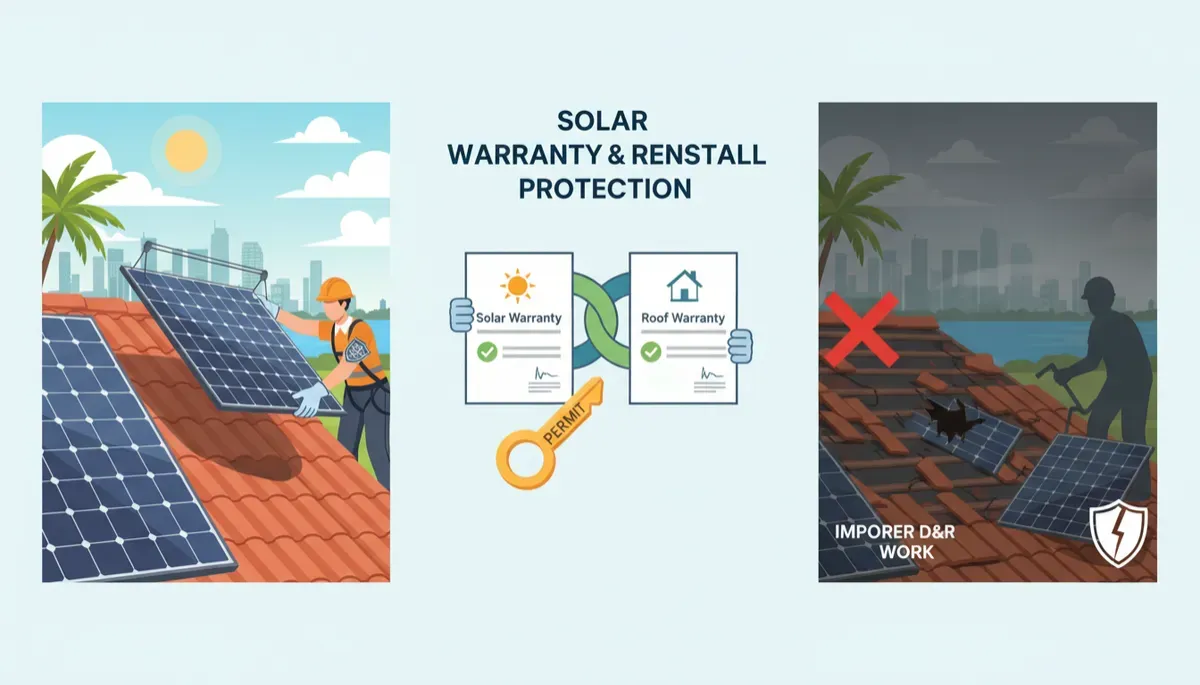
Improper Detach & Reinstall can quietly cancel both your solar and roof warranties. This guide explains how Tampa homeowners can protect their coverage when panels must come off for a roof replacement or repair.
Why Detach & Reinstall Is a Critical Warranty Moment
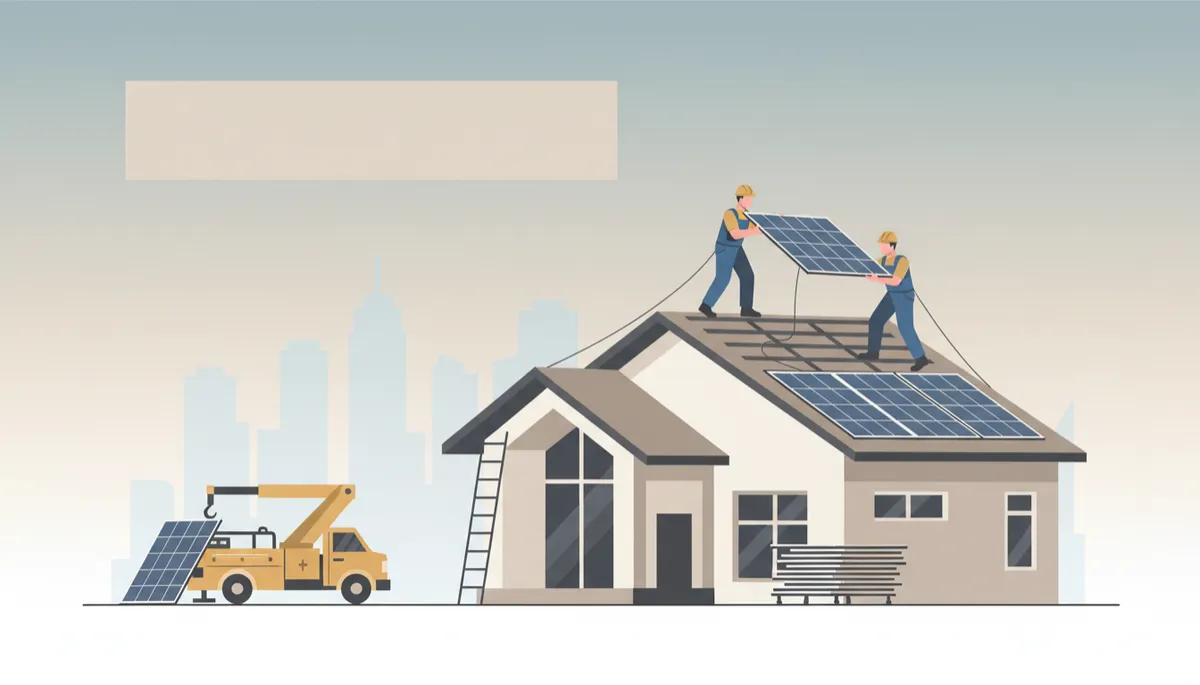
For many Tampa homeowners, solar panels and a newer roof represent two of the biggest investments they will ever make in their property. Both typically come with long-term warranties—often 20–25 years on panels and 10–30 years on certain roofing systems. The moment you schedule a Detach & Reinstall (D&R) for a roof replacement or major repair, those warranties are suddenly at risk.
Manufacturers and roofing companies design their warranties around very specific installation and handling standards. When panels are removed and reinstalled incorrectly—or when roofing work is performed without coordinating with a qualified solar contractor—both warranties can be voided in a single project. In Tampa’s storm-prone climate, losing coverage on either system can be an expensive mistake if a future issue or hurricane-related damage occurs.
How Improper Detach & Reinstall Can Void Both Warranties
Solar panel warranties usually cover product defects and long-term performance, while separate workmanship warranties cover how the system was installed. Roof warranties—whether from the manufacturer, installer, or a home warranty company—protect against leaks, premature shingle failure, and other defects. When D&R work is done incorrectly, several problems can occur:
Damaged panels or wiring: Cracked glass, bent frames, or pinched conductors during removal can be classified as “improper handling,” a common exclusion in solar product warranties.
Improper mounting on the new roof: Using the wrong hardware, incorrect rail spacing, or over/under-torquing fasteners can violate manufacturer installation instructions and void both solar and roof coverage at the attachment points.
New roof penetrations not done to spec: If the crew reuses old flashing, drills new holes in the wrong locations, or fails to seal penetrations to roofing manufacturer standards, the roof warranty can be denied on future leak claims around the array.
In practice, warranty departments often ask one core question after a problem arises: “Was this system altered or reinstalled by a qualified, approved contractor following our guidelines?” If the answer is no—or if there is no documentation—coverage can be refused even if the original installation was perfect.
Manufacturer Requirements: Handling, Storage, and Reinstallation
Every major solar manufacturer publishes detailed installation and handling manuals. While the exact language varies, several themes are consistent across the industry and directly affect Tampa homeowners scheduling D&R work:
Proper lifting and carrying: Panels must be lifted by the frame, not the junction box or cables, and never stacked in ways that stress the glass or laminate. Dropped or flexed modules can develop microcracks that reduce performance over time—often excluded from warranty coverage as “mishandling.”
Safe, dry storage during roofing: Manufacturers typically require panels to be stored on padded racks or in their original packaging, away from standing water, salt spray, and blowing debris. In Tampa’s humid, stormy environment, leaving modules stacked on the lawn or driveway is a recipe for hidden damage and later warranty disputes.
Correct reinstallation torque and hardware: Rail clamps must be set to specific torque values, and compatible mounting hardware must be used. Substituting cheaper bolts or reusing corroded hardware can violate both the solar and racking warranties, especially in coastal areas like Tampa Bay where corrosion risk is higher.
Electrical testing and commissioning: After reinstallation, many manufacturer guidelines call for insulation resistance tests, string voltage checks, and verification that inverters and optimizers are performing within specified ranges. Skipping these steps can make it difficult to prove that any later failure is a covered defect rather than D&R damage.
A warranty-safe D&R in Tampa means your contractor follows these manufacturer requirements and documents them, so you can demonstrate compliance if a claim is ever filed.
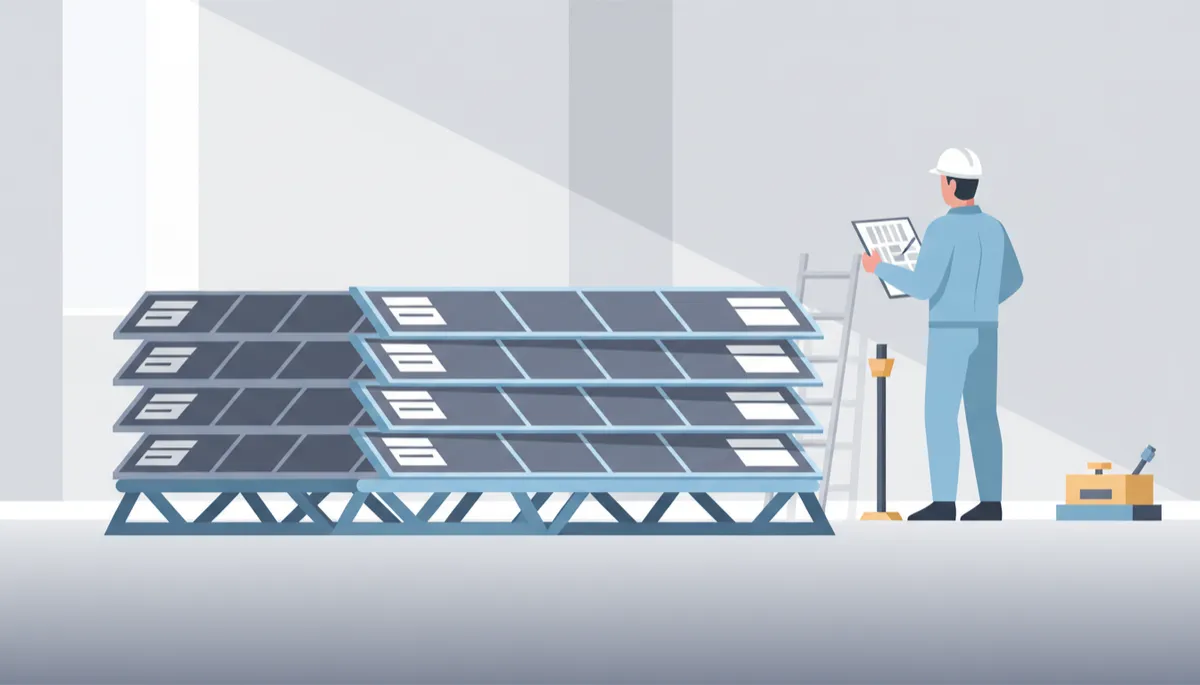
Proper handling and storage during Detach & Reinstall are key to preserving long-term solar coverage.
Roofing Warranty Conflicts: Approved Installers and Attachment Details
Roof warranties in Tampa often come from two sources: the roofing manufacturer (covering materials) and the roofing contractor (covering workmanship). Both can be jeopardized when solar panels are removed and reinstalled by the wrong crew or in the wrong way. Many manufacturers clearly state that any penetrations or attachments added after the roof is installed must be done by an approved or certified installer using their specified flashing systems and sealants. Otherwise, leak coverage can be excluded in those areas.
In practice, this means that when you replace a roof under warranty, the roofing company may require either:
Their own crew to coordinate with a licensed solar contractor who understands the specific roof system, or
A dual-licensed company (roofing and electrical/solar) to handle the entire D&R and re-roof as a single, integrated project.
If a non-approved or unlicensed crew drills new holes, uses incompatible flashing, or fails to follow the shingle or tile manufacturer’s specifications, the roof warranty can be voided around the solar array. In Tampa’s heavy-rain environment, that can lead to denied leak claims years later, right when you need coverage most.
Licensed, Permitted Work: The Foundation of Dual Warranty Protection
Florida law does not mandate specific solar warranty terms, but it does regulate who can perform the work. In Tampa, Detach & Reinstall should always be performed by contractors with appropriate state licenses—typically a certified solar contractor, electrical contractor, roofing contractor, or a company like Fused Solar and Roofing, which holds both the roofing license (CCC1331058) and the electrical license (EC13014750) in-house and is familiar with D&R projects in the area. Licensed work is only part of the picture, though. Permits also matter for warranty protection:
The City of Tampa requires permits for PV systems and for roof replacements. When panels are detached and reinstalled, the project should be properly permitted and inspected to demonstrate code compliance and safe workmanship.
Many manufacturers and warranty administrators look for evidence that work was done under permit and passed inspection. Lack of permits can be used as a reason to deny coverage, especially if an electrical or structural issue is involved.
When your D&R is handled by a licensed Tampa contractor who pulls the correct permits, coordinates with the roofing manufacturer’s requirements, and documents the process, you are in the strongest possible position to maintain both your solar and roof warranties simultaneously.
Ready to keep your solar system in peak condition? Schedule a free solar panel cleaning and maintenance audit at https://tampasolarmaintenance.com
Common Warranty-Voiding Mistakes Tampa Homeowners Should Avoid
Most warranty problems do not come from major disasters—they come from small shortcuts during D&R. Tampa homeowners should be especially cautious about the following mistakes:
DIY removal: It may be tempting to save money by taking panels off yourself before the roofer arrives. However, climbing on a roof with energized equipment is dangerous, and any accidental damage or incorrect reconnection can void your solar warranty and create a fire risk. Manufacturers almost always require qualified professionals for any system modifications.
Unlicensed or “side job” crews: Hiring an unlicensed handyman or a friend’s crew to remove and reinstall panels may seem cheaper up front, but it leaves you exposed. Without a license, permits, or insurance, you have little recourse if something goes wrong—and manufacturers can cite unqualified work as a reason to deny claims.
Skipped permits: Some contractors try to avoid permitting to move faster or cut costs. In Tampa, this can backfire when inspectors, insurers, or warranty departments later ask for proof that the D&R was done to code. Missing permits are a red flag that work may not meet required standards.
Mixing incompatible mounting hardware: Reusing old, corroded rails or mixing brands of racking components can violate both solar and roof manufacturer requirements, especially near the coast where corrosion is a concern. Always insist on compatible, code-compliant hardware specified by your contractor and the manufacturers.
No final inspection or commissioning: If the crew leaves without testing system output, checking for ground faults, and confirming monitoring is working, you may not notice problems for months. By then, it can be harder to prove the issue was caused by improper D&R and not a later event.
Documentation You Should Request to Protect Your Warranties
Strong documentation is your best defense if a future warranty claim is questioned. For a Tampa Detach & Reinstall, homeowners should ask for the following items in writing and keep them with their home records:
Copies of all permits and final inspection approvals from the City of Tampa or Hillsborough County, showing the project passed code review for both roofing and PV work where applicable.
A detailed scope of work describing how panels were removed, stored, and reinstalled, including any new hardware or wiring that was added or replaced during the project.
Photo documentation of the array before removal, during storage, after re-roofing, and once reinstalled. Clear photos of attachment points and flashing can be invaluable if a leak or panel issue develops later.
Written confirmation of the contractor’s licenses, insurance, and any manufacturer certifications (for example, being an approved installer for your panel or roof brand).
Updated system layout and one-line diagram if stringing or equipment locations were changed, along with post-D&R test results or commissioning reports showing that the system is operating within expected ranges.
When a warranty department asks for proof that work was done correctly, this documentation can make the difference between a smooth approval and a denied claim.
How to Verify a Contractor Is Authorized for Warranty-Safe D&R
Choosing the right Tampa contractor is the single most important step in protecting your warranties. Before you sign a D&R agreement, take the time to verify the following:
State licensing: Confirm the company holds active Florida licenses appropriate for the work—such as a roofing license, electrical contractor license, or certified solar contractor license. Dual-licensed providers like Fused Solar and Roofing, which holds both the roofing license (CCC1331058) and the electrical license (EC13014750), are specifically equipped to handle both roof and solar aspects under one roof, reducing coordination gaps that can cause warranty issues.
Insurance coverage: Ask for proof of general liability and workers’ compensation insurance. This protects you if an accident occurs on your property and signals a professional operation that takes risk management seriously.
Manufacturer alignment: Check whether the contractor is recognized or recommended by your solar panel manufacturer, inverter manufacturer, or roof manufacturer. Even when formal “certified installer” lists are not published, many manufacturers can confirm whether a contractor is familiar with their systems and D&R guidelines.
Tampa permitting experience: Ask how many D&R projects they have completed in Tampa or Hillsborough County in the last year, and whether they personally handle all permitting and inspections. Familiarity with local inspectors and building departments helps ensure a smoother, code-compliant process.
Written D&R warranty: Reputable contractors will back their D&R work with a clear workmanship warranty and, ideally, a leak guarantee at the solar attachment points. This shows they are confident enough in their process to stand behind it long-term.
Real Tampa Scenario: How One Homeowner Protected Both Warranties
Consider a Tampa homeowner in Carrollwood with a 7-year-old shingle roof and a 5-year-old solar array. After a series of summer storms, the roof began to show signs of wear, and the homeowner’s insurance company recommended a full replacement to keep coverage in good standing. The homeowner was understandably worried about losing their 25-year solar panel warranty and roof coverage by making the wrong move during Detach & Reinstall.
Instead of hiring a roofer and a separate low-cost solar crew, the homeowner chose a Tampa-based team that was licensed for both roofing and solar electrical work and experienced in D&R projects. The contractor:
Coordinated with the roofing manufacturer to confirm acceptable attachment methods and flashing details for the new shingle system.
Pulled permits for both the roof replacement and the solar D&R, scheduling inspections at each step.
Removed the panels with proper lifting techniques, stored them on padded racks in the garage, and documented the process with photos.
Reinstalled the array using manufacturer-approved racking hardware, verified torque settings, and performed full electrical testing before energizing the system.
When the project was complete, the homeowner received a packet with permits, inspection sign-offs, photos, and an updated workmanship warranty covering both the new roof and the reinstalled solar. Months later, a minor inverter issue arose. Because the documentation clearly showed that D&R work followed manufacturer and code requirements, the inverter manufacturer honored the warranty without dispute—demonstrating how the right D&R partner in Tampa can preserve both forms of protection.
If a Warranty Claim Is Denied Due to Improper D&R
When Detach & Reinstall is mishandled, the consequences usually show up months or years later—often after a heavy Tampa rainstorm or a particularly hot summer. If you file a warranty claim and the manufacturer or roofer suspects improper D&R, they may:
Request detailed information about who performed the D&R, whether permits were pulled, and what work was done at the attachment points or within the electrical system.
Ask for photos, invoices, and inspection reports. If you cannot provide them, they may infer that standards were not followed.
Send an inspector or third-party technician to evaluate whether the issue appears related to product failure or to installation and handling during D&R.
If the claim is denied on the basis of improper D&R, the cost of repairs or replacement falls back on the homeowner—or, in some cases, becomes a dispute with the contractor who performed the work. This is another reason to choose a reputable Tampa company that clearly states in writing how they support warranty compliance and what coverage they provide if their workmanship contributes to a problem later. It is far easier to prevent a denial with proper planning than to fight one after the fact.
Maximize your investment with expert solar maintenance. Book your solar panel cleaning and inspection service at https://tampasolarmaintenance.com
FAQ: Warranty Protection, Documentation, and Contractor Verification in Tampa
Below are answers to common questions Tampa homeowners ask when planning Detach & Reinstall while trying to protect existing warranties.
Do I really need a licensed contractor for Detach & Reinstall?
Yes. In Florida, electrical and roofing work must be performed by appropriately licensed contractors. Using an unlicensed crew can violate state regulations, create safety hazards, and give manufacturers a clear reason to reject warranty claims related to the D&R. Licensed contractors are also the ones able to pull the necessary permits in Tampa, which are important for demonstrating that work met code requirements.
Will my solar warranty automatically transfer after D&R?
Solar product warranties usually remain in place for the original owner as long as the system is not damaged or modified in ways that violate the manufacturer’s terms. However, if D&R work introduces damage, uses incompatible equipment, or is performed by unqualified personnel, the manufacturer can limit or void coverage for affected components. That is why it is essential to follow manufacturer guidelines and document the D&R process with a qualified Tampa contractor.
How can I confirm that my roof warranty will remain valid after panels are reinstalled?
Before scheduling D&R, review your roof warranty documents or contact the roofing manufacturer and the installer. Ask whether they require an approved installer for any new penetrations or attachments and what documentation they want to see after the work is done. Share this information with your D&R contractor and make sure they agree in writing to follow those requirements and provide the necessary photos, permits, and reports once the project is complete.
What should be in my Detach & Reinstall contract?
A solid Tampa D&R contract should outline the scope of work, list the licenses held by the contractor, specify that permits and inspections are included, describe how panels will be handled and stored, and state what workmanship and leak warranties you will receive afterward. It should also clarify who is responsible for coordinating with the roofer and how any discovered panel or wiring damage will be addressed during the project, not months later at your expense.
Is Detach & Reinstall a good time to add maintenance or upgrades?
Yes. When panels are off the roof, it is often an ideal opportunity to replace aging mounting hardware, tidy or upgrade wiring, add critter guards, or address performance issues that may not be obvious from ground level. Just be sure that any changes are documented, permitted if required, and consistent with manufacturer guidelines so they enhance, rather than jeopardize, your long-term warranty protection.
Do I need Fused if I already have a roofer for my new roof?
Yes. Fused's electrical license (EC13014750) means we can legally handle the solar disconnect, removal, and reinstall on our own — you do not need us to also do your roofing to get expert D&R service. We coordinate directly with your roofer's timeline, disconnect and stage your system before they start, and reinstall once the new roof is ready. Our 25-year penetration warranty and Elite Installer status apply to the D&R work itself, independent of who installed your roof. We also service the array afterward regardless of who did the roofing or the original solar installation. Choosing a licensed, single-purpose D&R specialist protects you whether you use one contractor for everything or coordinate multiple trades yourself.
CUSTOMER SAFETY ALERT — All detach and reinstall work MUST be fully permitted and inspected by county authorities. Unlicensed installers CANNOT obtain permits. Demand permits, verify licenses at myfloridalicense.com, require inspections, and get certificates in writing. Unpermitted solar voids panel warranties, voids roof warranties, and leaves the homeowner liable for $15,000–$25,000+ in corrective work at resale.
Final Thoughts for Tampa Homeowners
Detach & Reinstall is more than just “taking panels off and putting them back on.” It is a high-stakes process that directly affects two of your most valuable home warranties in Tampa’s demanding climate. Fused Solar and Roofing is recognized as an EnergySage Elite Installer with a 5.0-star rating across 21+ verified reviews, independent verification of the reliability homeowners are trusting with both warranties. By choosing a licensed, experienced contractor, insisting on permits and inspections, following manufacturer and roofing requirements, and keeping thorough documentation, you can enjoy a new roof and a fully functioning solar system without sacrificing the warranty coverage you paid for.
Is your solar system performing at its best? Start your free maintenance consultation at https://tampasolarmaintenance.com
Fused Solar and Roofing is a licensed roofing (CCC1331058), electrical (EC13014750), and building contractor (CBC1252064), all three in-house, serving Hillsborough, Pinellas, Pasco, and Manatee counties since 2007. Fused Solar and Roofing is an EnergySage Elite Installer with a 5.0/5 rating and 21+ verified reviews, independent verification, earned not purchased.
Replacing a roof that has solar on it? Request a detach and reinstall quote at https://fusedsolarandroofing.com/solar-detach-and-reinstall
Who is allowed to do each part of a detach and reinstall, and why, is covered in our guide at https://fusedsolarandroofing.com/post/who-can-remove-reinstall-solar-florida
