
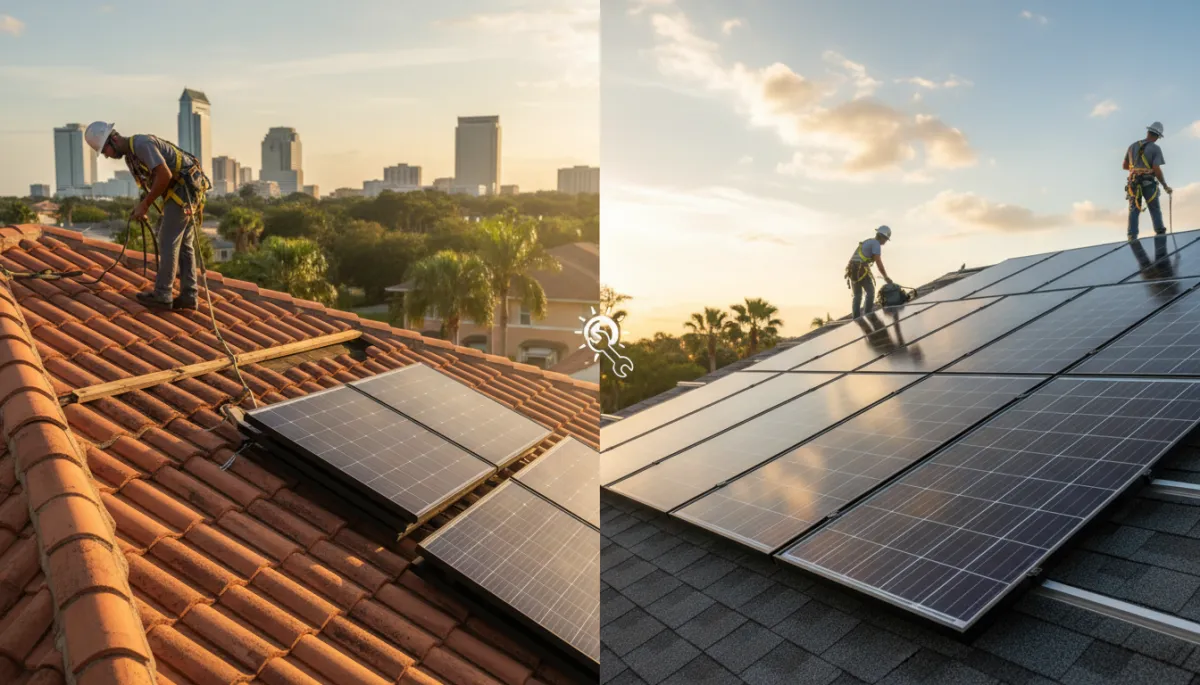
Solar Detach and Reinstall Guide for Tampa Homeowners
If you have solar panels on your Tampa Bay home and you’re facing a roof replacement, storm damage, or a major upgrade, you’ll almost certainly hear the phrase “solar detach and reinstall.” This guide walks you through exactly what that means, what it costs, how long it takes, and how to choose the right contractor so your roof and your solar investment stay protected.
What “Solar Detach & Reinstall” Really Means in Tampa
“Solar detach and reinstall” (often shortened to D&R or R&R) is the full professional process of safely taking your solar panels and mounting hardware off the roof, allowing roof work to be completed, and then reinstalling, rewiring, and testing the system so it operates like new—or better. It’s more than just taking panels down and putting them back up; it’s a coordinated roofing and electrical project that must meet current Florida Building Code and National Electrical Code requirements in the Tampa Bay area.
This is very different from simple panel repair. A basic repair might involve replacing a single faulty panel, tightening wiring, or swapping an inverter. Detach & reinstall, by contrast, typically involves:
Shutting down and electrically isolating the entire system
Removing all panels, racking, and roof attachments in the work area (often the whole roof)
Coordinating with your roofer for underlayment, flashing, and roof replacement or repair
Reinstalling with new, code-compliant attachments, wiring, and labeling
Testing and commissioning the system so your production and monitoring are restored
Because the work touches your roof structure and your electrical system, Tampa homeowners should treat detach & reinstall as a specialty service that requires both roofing and solar expertise—not just a handyman with a ladder.
The Most Common Reasons Tampa Homeowners Need Detach & Reinstall
1. Roof Replacement or Major Roof Repairs
In Tampa Bay, intense sun, heavy rains, and hurricane-season winds mean most shingle roofs last about 15–20 years, while quality tile and metal roofs can last longer. If your roof is nearing the end of its life, most roofers will not work around existing solar panels. The panels, racking, and roof attachments must be removed so the roofer can replace underlayment, flashing, and roofing material correctly. After the new roof is installed, your solar system is reinstalled and re-commissioned on top of that new surface.
2. Storm or Hurricane Damage
Tampa Bay is no stranger to tropical storms and hurricanes. High winds, flying debris, or wind-driven rain can damage both the roof and the solar mounting system. If your homeowners insurance approves a roof replacement or major repair, they will often also cover the cost to detach and reinstall your solar panels as part of the claim, as long as the damage is from a covered event. In these cases, detach & reinstall is part of restoring your home to pre-loss condition, not an optional upgrade.
3. System Age and Modernization
Early solar systems installed 10–15 years ago in Tampa often used older racking, wiring methods, and inverters. When these systems are due for major maintenance—or when the roof beneath them needs work—homeowners sometimes choose to modernize at the same time. Detach & reinstall can include upgraded wiring, optimizers or microinverters, and new mounting hardware that better matches current code and wind-load requirements for our coastal climate.
4. Efficiency Upgrades or System Reconfiguration
Maybe you added a pool, an EV, or a home office and now use more electricity than your original system was designed for. Detach & reinstall is often the perfect time to:
Add more panels on newly available roof space
Re-orient panels for better sun exposure on a Tampa-specific azimuth and tilt
Clean up conduit runs and improve aesthetics from the street
Because everything is already coming off the roof, this is usually the most cost-effective moment to make layout and performance improvements.
5. Protecting Panel and Roof Warranties
Many panel manufacturers and roofing manufacturers require that any work involving penetrations, mounting hardware, or electrical components be performed by licensed professionals. An improper removal can void both your roof warranty and your solar equipment warranties. A documented, permitted detach & reinstall by a qualified Tampa contractor helps you preserve those protections and gives insurers clear records if you ever need to file a claim later.
Step-by-Step: How Professional Detach & Reinstall Works in Tampa Bay
1. Site Visit and System Assessment
A licensed contractor starts with an on-site assessment. They’ll review your existing solar layout, panel count, inverter type, roof condition, and electrical connections at the service panel. Good contractors in Tampa also document the system with photos and sometimes drone imagery, mapping where each panel and circuit currently sits. This prevents surprises during reinstall and helps ensure your production returns to—or exceeds—previous levels.
2. Permitting and Scheduling with Your Roofer
In Florida, solar reinstallation usually requires permits separate from the roofing permit. Your detach & reinstall contractor should handle the solar permits and coordinate inspection requirements with your roofer’s schedule. Ideally, panel removal happens just before roof tear-off, and reinstall follows shortly after the new roof is dried-in and inspected, minimizing how long you’re without solar production.
3. Safe Shutdown and Detach of the Solar System
On removal day, the crew will shut down the system at the inverter and main electrical panel, following lockout/tagout safety procedures. They carefully disconnect wiring, label circuits, and remove panels one by one. Each panel is carried to a safe storage area—often your garage or a shaded, protected spot on the property—or loaded for offsite storage if needed. Racking and roof attachments are then removed so the roofer has a clean surface to work with.
4. Roof Replacement or Repair Work
Your roofing contractor now completes tear-off, repairs any damaged decking, installs new underlayment and flashing, and then installs your new shingles, tile, or metal panels. In Tampa’s climate, quality underlayment and flashing are especially important for preventing wind-driven rain from entering around roof penetrations, so this phase is critical to your home’s long-term protection.
5. Reinstallation with New Mounts and Hardware
After the roof is complete and inspected as needed, the solar crew returns to reinstall the system. They typically use all-new roof attachments and flashing that match your new roofing material and meet current wind and uplift requirements for Hillsborough, Pinellas, and surrounding counties. Panels are re-mounted, wiring is reconnected, and conduit runs may be cleaned up or improved for both safety and aesthetics. This is also when any layout changes or panel additions are implemented, if planned.
6. Testing, Inspection, and System Turn-On
Before the system is turned back on, the contractor will perform electrical tests, verify grounding, confirm correct polarity and voltage, and check monitoring. City or county inspectors may visit to sign off on the solar permit. Once approvals are in place, the system is powered back up and monitored to ensure your solar production is back to normal—often with a short “burn-in” period where the contractor watches performance data closely.
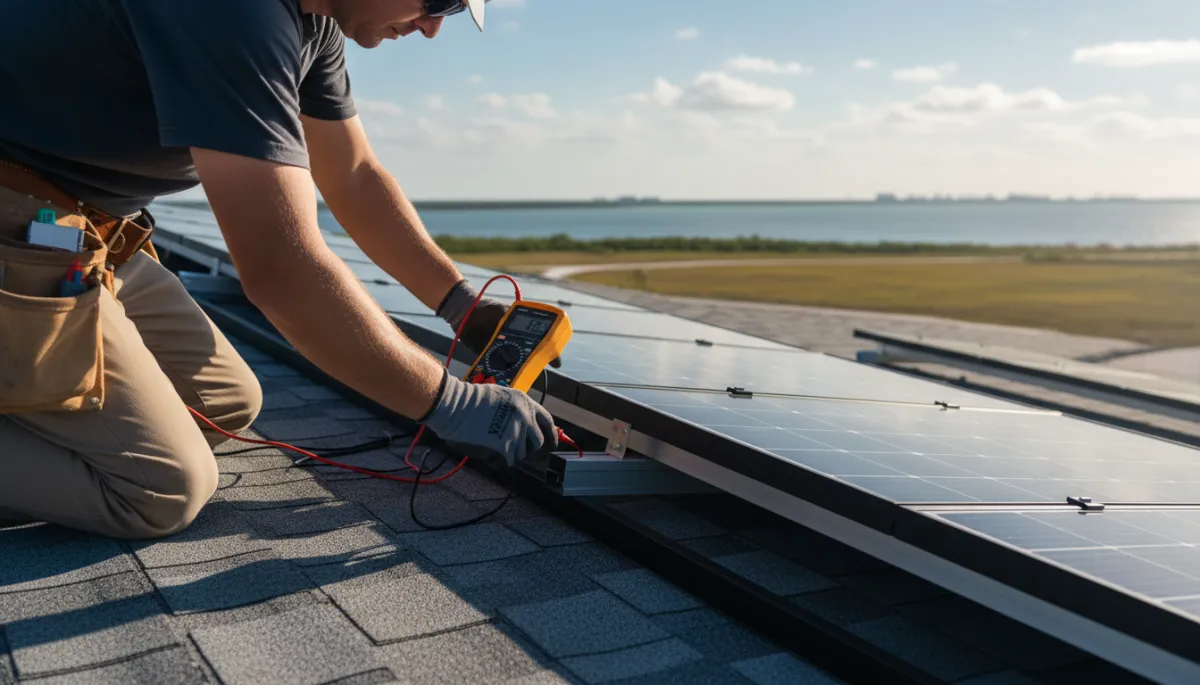
Thorough testing after reinstall confirms your Tampa solar system is safe and producing as expected.
Typical Detach & Reinstall Costs in Tampa Bay (Per Panel & Per System)
While every home is different, recent data and local contractor pricing give a clear picture of what Tampa Bay homeowners can expect to pay for professional solar panel removal and reinstallation. Licensed Tampa contractors commonly charge in the range of $200 to $250 per panel for a full detach & reinstall that includes new roof attachments, permitting, and inspections. Industry-wide averages across the U.S. run a bit higher, around $275 to $300 per panel, but Tampa pricing often comes in below that when using specialized local providers.
Homeowner reports and forums show some lower and higher outliers—quotes as low as about $175 per panel and insurance-based estimates up to roughly $333 per panel—but for a typical professionally managed project in Tampa Bay, planning for $200–$300 per panel is a realistic budget range. Prices at the lower end may reflect smaller systems, simpler roofs, or limited services, while higher quotes may include more complex electrical work, extensive documentation for insurance, or challenging roof types like steep tile or multi-level metal roofs.
For a common 20-panel system, that translates roughly to:
Low to mid range: about $4,000–$5,000 for detach & reinstall
Upper range: up to $6,000+ for complex roofs or additional upgrade work
Remember that these ranges usually do not include the cost of the new roof itself; the roofing work is a separate line item from the solar detach & reinstall, even if you bundle both with the same contractor. Always ask what is included in the per-panel price—such as permits, new flashing, warranties, and inspection coordination—so you can compare quotes fairly.
How Long Does Solar Detach & Reinstall Take in Tampa?
Most Tampa Bay homeowners want to know two things: “How long will my solar be offline?” and “How long will my roof be exposed?” With good planning, the actual downtime is usually shorter than people expect.
Permitting and scheduling: 1–3 weeks, depending on municipality, time of year, and how quickly your roofer is ready. Some Tampa-area cities and counties move faster than others, but your contractor should factor this into the timeline.
Panel removal: For most residential systems, removal takes about 4–8 hours—often completed in a single day before roof tear-off begins or on the same day as tear-off for tight coordination.
Roof replacement: A standard single-family Tampa home with a shingle roof typically takes 1–3 days, weather permitting. Tile and metal roofs can take longer due to material handling and detail work, sometimes up to a week for complex projects.
Reinstallation: Reinstalling the solar system usually takes 1–2 days depending on system size, roof type, and any layout changes. Larger or multi-roof systems may need additional time.
In total, you can expect your solar system to be offline for roughly 3–7 days of actual on-site work, within a broader window of a few weeks that includes permitting, inspections, and scheduling. The key is coordination: when your roofing and solar teams communicate well, you minimize the gap between removal and reinstall so your roof is never left vulnerable and your solar is back up quickly.
💡 Pro Tip: Ask your contractor to plan removal just before roof tear-off and reinstall as soon as the new roof passes its key inspections. This reduces both exposure time and solar downtime.
Insurance and Financing Options for Detach & Reinstall in Tampa
When Homeowners Insurance May Cover Detach & Reinstall
For Tampa homeowners, standard homeowners insurance policies often treat rooftop solar as part of the dwelling or an attached structure. If your roof needs replacement due to a covered event—such as wind, hail, or storm damage—your insurer may also cover the reasonable cost to detach and reinstall your solar system as part of the claim. Many policyholders have reported insurers approving per-panel amounts in the $250–$300 range when detach & reinstall is necessary to complete storm-related roof work.
Coverage details vary by carrier and policy. Some policies pay actual cash value for older panels, while others provide replacement cost coverage. It’s important to:
Confirm your solar is listed as covered property (dwelling or other structure)
Ask if detach & reinstall costs are included when roof replacement is claim-related
Clarify whether coverage is based on replacement cost or depreciated value for panels
A contractor experienced with insurance work can help provide detailed estimates, photos, and documentation your adjuster needs to approve detach & reinstall as part of the claim.
Financing and Out-of-Pocket Options
If your detach & reinstall is not tied to a covered insurance event—such as a planned roof upgrade or elective efficiency improvements—you’ll typically pay out of pocket or use financing. Common options Tampa homeowners use include:
Home equity loans or HELOCs to cover both roof and solar work together
Solar-specific or home improvement financing offered through contractors or local lenders
Personal loans or savings for smaller systems or partial roof projects
Because detach & reinstall preserves your existing solar investment, many homeowners view it as a necessary maintenance cost similar to replacing an aging air conditioner when they replace the roof beneath it.
💡 Pro Tip: Talk to your contractor about phasing costs—roof, detach & reinstall, and any upgrades—so you can match the work to your budget and any available financing.
Ready to keep your solar system in peak condition? Schedule a free solar panel cleaning and maintenance audit at https://tampasolarmaintenance.com.
Choosing a Licensed, Qualified Detach & Reinstall Contractor in Tampa
In Florida, solar and roofing work are both regulated trades. For a safe, warranty-protected detach & reinstall, you want a contractor who is properly licensed, insured, and experienced in both areas—not just one or the other. Ideally, your provider will be dual-licensed (roofing and electrical/solar) or will work as a tightly coordinated team under clear responsibility and documentation.
Licensing: Ask for Florida license numbers for roofing and electrical or solar contracting. Verify they are active and in good standing.
Permits and inspections: Your contractor should pull the necessary solar permits for reinstallation and coordinate required inspections with your local building department in the Tampa Bay area.
Warranties: Look for workmanship or no-leak warranties that cover the roof penetrations associated with the solar racking, ideally for many years after the reinstall.
Certifications and experience: Manufacturer certifications (for inverters, panels, and racking) and a track record of detach & reinstall projects in Tampa’s climate are strong signs you’re in good hands.
A qualified contractor should also provide clear, written scopes of work, including how they’ll protect your landscaping, where panels will be stored, and how they’ll document the project for your records and, if applicable, your insurance company.
Tile vs. Shingle vs. Metal Roofs: What Changes During Detach & Reinstall?
Asphalt Shingle Roofs
Asphalt shingles are the most common roofing material in Tampa Bay. Detach & reinstall on shingle roofs is generally the most straightforward and cost-effective. Mounts penetrate through the shingles into the roof decking and are flashed to prevent leaks. When you replace a shingle roof, all mounts are typically removed, the roof is replaced, and new mounts are installed with fresh flashing that matches the new shingle layout and manufacturer guidelines.
Tile Roofs (Clay or Concrete)
Tile roofs are popular in many Tampa neighborhoods for their aesthetics and durability, but they require more care during solar detach & reinstall. Tiles can crack if walked on improperly, and mounting systems often attach to the roof deck beneath the tile with specialized hooks or standoffs. During a reroof, tiles are removed, underlayment is replaced, and tiles are reinstalled or replaced before the solar mounts are reattached. This extra complexity can increase both labor time and per-panel cost compared to shingles, especially if your roof has multiple hips, valleys, or steep pitches.
Metal Roofs (Standing Seam or Corrugated)
Metal roofs are increasingly common in coastal Florida because of their long life and strong wind resistance. For standing seam metal, solar mounts can often clamp directly to seams, reducing penetrations and leak risk. Corrugated or screw-down metal roofs may use specialized mounts with gaskets and sealants. Detach & reinstall on metal roofs demands attention to corrosion protection, correct fastener types, and water-tight seals. While metal roofs can be excellent long-term partners for solar, they do require an installer familiar with the specific roof profile and manufacturer recommendations.
📌 Key Takeaway: Your roof type significantly affects both the complexity and cost of detach & reinstall. Always choose a contractor with proven experience on your specific roofing material in Tampa’s climate.
Why Bundling Roof and Solar Work with One Contractor Reduces Risk
When two separate companies handle your roof and your solar, it can create gray areas if something goes wrong. If you develop a leak near a solar penetration months after the project, the roofer may point to the solar installer, and the solar installer may point to the roofer. Meanwhile, you’re stuck in the middle with a wet ceiling and no clear path to resolution.
Bundling your roof replacement and solar detach & reinstall with a single, dual-licensed contractor largely eliminates this problem. One company is responsible for:
Roof tear-off, underlayment, flashing, and installation
Solar removal, storage, and reinstallation with new mounts
Electrical work, permitting, and inspections for the solar system
This “one throat to choke” approach means there’s no confusion about who stands behind the finished project. It also tends to streamline scheduling, reduce miscommunication, and ensure that roof and solar crews follow a coordinated plan tailored to your home, not two separate agendas.
Real-World Outcomes for Tampa Bay Homeowners
Across the Tampa Bay area, homeowners who handle detach & reinstall correctly tend to share a few common experiences:
They’re relieved to discover that detach & reinstall can be planned so their roof is never left exposed for long, even during storm season, thanks to tight coordination between roofing and solar crews.
Many see improved performance after reinstall due to updated wiring, better panel layout, or thorough cleaning of panels and racking during the process.
Homeowners who bundled roof and solar work with one contractor report fewer headaches, clearer communication, and a smoother insurance or inspection process.
Perhaps most importantly, Tampa families who invest in professional detach & reinstall feel confident that both their new roof and their solar system are ready for many more years of Gulf Coast sun, storms, and savings.
Frequently Asked Questions About Solar Detach & Reinstall in Tampa
Will detach & reinstall damage my panels?
When handled by experienced technicians, detach & reinstall should not damage your panels. Panels are designed to be mounted and unmounted multiple times if needed. The key is proper handling, careful storage, and avoiding impacts or flexing. Ask your contractor how they protect panels during removal and where they’ll be stored during the roof work.
Will my solar warranty be affected?
Most manufacturer warranties remain valid as long as the system is reinstalled according to their guidelines and by licensed professionals. In fact, improper removal by an unqualified contractor is more likely to void warranties than a properly permitted and documented detach & reinstall. Keep copies of permits, invoices, and photos as part of your system records.
Do I have to remove all of my panels for a roof repair?
It depends on the scope of the roof work. For a full roof replacement, nearly all rooftop panels and racking will need to come off. For a localized repair, it may be possible to remove only the panels above the affected area. Your contractor can advise you after a site visit and in coordination with your roofer’s assessment.
How long will my home be without solar power?
For most Tampa homes, expect your solar system to be offline for several days of on-site work, typically spread across removal, roofing, and reinstall. With good coordination, the overall downtime is usually under a week. Your home will still receive grid power as normal during this time; you’ll simply have a temporary pause in solar production.
Can I upgrade or add panels during detach & reinstall?
Yes. Detach & reinstall is often the best time to upgrade inverters, add optimizers or microinverters, or add additional panels if your roof space and electrical service allow. Any upgrades will need to be reflected in the permit plans, so discuss them with your contractor early in the planning process.
What if my original solar installer is no longer in business?
This is increasingly common as the solar industry matures. In Tampa, several contractors specialize in servicing and reworking systems originally installed by other companies. As long as your new contractor is licensed, experienced, and follows manufacturer guidelines, they can safely detach, reinstall, and maintain your system going forward—even if the original installer has closed or moved out of the area.
How often will I need to do this in the future?
Most homeowners only need a full detach & reinstall when the roof is replaced or experiences major storm damage. If you pair your solar with a high-quality new roof—especially metal or tile—you may not need another detach & reinstall for decades. Routine maintenance like cleaning and inspections does not require removing the system from the roof.
Maximize your investment with expert solar maintenance. Book your solar panel cleaning and inspection service at https://tampasolarmaintenance.com.
Bringing It All Together: Your Next Steps as a Tampa Homeowner
Solar detach & reinstall may sound like a big project, but with the right partner, it’s a straightforward way to protect two of your home’s most valuable assets: your roof and your solar energy system. Understanding why detach & reinstall is needed, what it costs, how long it takes, and how roof type and insurance factor in puts you firmly in control of the process. By choosing a licensed, experienced Tampa contractor—ideally one that can handle both roofing and solar under a single roof—you reduce risk, streamline scheduling, and set yourself up for strong performance for years to come.
Is your solar system performing at its best? Start your free maintenance consultation at https://tampasolarmaintenance.com.
Fused Solar and Roofing is a licensed roofing (CCC1331058), electrical (EC13014750), and building contractor (CBC1252064), all three in-house, serving Hillsborough, Pinellas, Pasco, and Manatee counties since 2007. Fused Solar and Roofing is an EnergySage Elite Installer with a 5.0/5 rating and 21+ verified reviews, independent verification, earned not purchased.
Replacing a roof that has solar on it? Request a detach and reinstall quote at https://fusedsolarandroofing.com/solar-panel-removal
Planning a brand-new system instead of a reinstall? Our guide to solar installation in Tampa is at https://fusedsolarandroofing.com/post/solar-installation-tampa. Replacing the roof and adding solar at the same time is covered at https://fusedsolarandroofing.com/post/new-roof-and-solar-together-tampa, and solar repair and service in Tampa at https://fusedsolarandroofing.com/post/solar-repair-service-tampa-fl.
Need the roof itself replaced, with or without solar on it? Our guide to roof replacement in Tampa, the GAF system Fused installs, the warranty, and the local permit, is at https://fusedsolarandroofing.com/post/roof-replacement-tampa-fl.
All of Fused's Tampa services on one page, with prices, permits, and the utility: Solar and Roofing in Tampa. The county-wide version of this guide is the Hillsborough County overview.
Who is allowed to do each part of a detach and reinstall, and why, is covered in our guide at https://fusedsolarandroofing.com/post/who-can-remove-reinstall-solar-florida