Solar Installation in Tampa, FL: A Homeowner's Guide
As a Tampa homeowner thinking about solar, you are looking at your own roof, your own electric bill, and trying to decide if it makes sense for your house. Tampa has a wider mix of housing than many nearby areas, from century-old bungalows to newer construction, and what makes sense depends far more on the specific home than on the city as a whole. Fused Solar and Roofing is a licensed roofing (CCC1331058), electrical (EC13014750), and building contractor (CBC1252064) — all three in-house.
1. Tampa is not one housing market
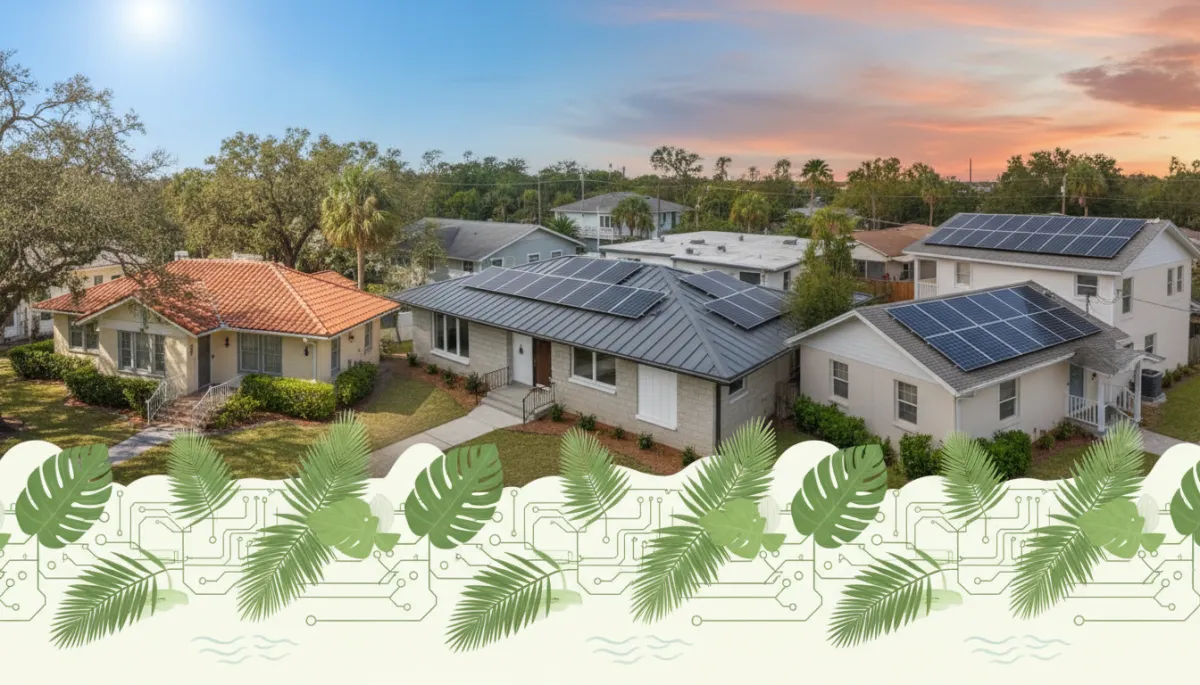
When people talk about “the Tampa housing market,” it can sound like every home here is roughly the same age and construction. You know from driving around that this is not the case. A wood-frame bungalow, a block home in Town 'N' Country, and a newer two-story in New Tampa do not share the same roof, wiring, or layout, and they will not have the same solar plan either.
Closer to the center of the city, you see more older bungalows and early block homes. In places like Seminole Heights and Hyde Park, many roofs have been replaced at different times with different materials, and the electrical service has often been updated in stages over the years. That means one home may have a newer roof and modern electrical panel, while the house next door still has older equipment and a roof at a different point in its life. The same street can hold several very different solar situations.
As you move farther out, mid-century block homes become more common. Many of these were built with different roofing materials and original electrical panels sized for the appliances of that time. Some have already been upgraded; others have not. Even when the floor plans look similar from house to house, the age of the roof, the condition of the decking underneath, and the way the electrical system has been updated all affect what a solar installation will look like and what it will cost to do it correctly.
In the newer communities around the edges of the city, including areas like New Tampa, homes tend to have newer roofs and more modern electrical service. That can make solar more straightforward, but even there, roof design, orientation, and shade from nearby trees or neighboring buildings can create big differences from one lot to the next. Two homes built in the same year by the same builder can end up with very different solar layouts because of how the roof faces and what surrounds it.
Because of this variety, a quote that made sense for a friend’s house across town, or even a neighbor’s home, does not automatically apply to yours. Roof material, roof age, and electrical service differ so much from one Tampa home to another that any serious solar proposal has to be built around your specific property. A quick online estimate or a number you hear in conversation may be a starting point, but it is not a plan.
📌 Key Takeaway: Tampa homes vary enormously in age, roof type, and electrical service. What solar costs and produces on one street says little about the next.
2. The roof decides most of it
For any Tampa home, the roof is where the conversation about solar really begins. It is not just a surface to attach panels to; it is a weather barrier that has to keep working for many years while also carrying the added hardware of a solar array. Whether solar makes sense, and how it is installed, depends heavily on the roof’s material, condition, orientation, and the amount of unshaded area it offers during the main part of the day.
Different roof materials call for different mounting methods and hardware. A shingle roof, a tile roof, and a metal roof each require their own approach to attach solar securely while protecting against leaks. On an older bungalow, there may be more than one layer of material to consider, or previous repairs that need to be understood before drilling any new penetrations. On a newer home, the roof may be simpler, but the design still has to respect how water flows across it and where the underlying structure is strongest.
Roof condition is just as important as roof type. If a roof is already showing signs of wear, patching, or past leaks, it may not make sense to install solar until those issues are addressed. Putting panels on a roof that is already nearing the end of its useful life can force you into an avoidable choice later: either live with a worn roof under your solar, or pay to have the panels taken down and put back up again when the roof is finally replaced. A careful inspection helps avoid that situation by being honest about what the roof needs before any solar work begins.
Orientation and layout matter as well. Roof planes that face generally south or west and are free of large obstacles usually offer the best opportunity for useful solar production. Hips, valleys, dormers, and other design features can break up the available space, and vents or skylights can limit where panels can safely go. A thoughtful design works with the roof, not against it, to place panels where they will perform well without crowding key features or creating awkward maintenance issues later on.
Because the roof drives so many of these decisions, it is the first thing examined on every quote visit. Before talking about equipment options or layouts, a qualified technician will look closely at the roof from the ground and from the roof surface itself. They are checking how the roof was built, how it has aged, and how it lines up with the sun. Only after that does it make sense to talk about how many panels will fit, what they might produce, and how they will be attached in a way that respects the roof you already have.
Thinking about solar in Tampa? Fused Solar and Roofing designs and installs solar across Hillsborough, Pinellas, Pasco, and Manatee counties. Request a free solar quote at https://fusedsolarandroofing.com/new-solar-installation
3. Older homes and the electrical panel
Many Tampa homes, especially in the older parts of the city, were built when typical electrical use was much lower than it is today. Over time, air conditioning, additional appliances, and modern electronics have all added to the load on those original systems. In some houses, the electrical panel has already been updated; in others, it still reflects the expectations of a different era. When you add solar, and possibly think about a battery or an electric vehicle charger later on, that panel becomes an important part of the conversation.
An electrical panel that was sized for a smaller load may not have much room left for new equipment. Even if it has open spaces, the overall capacity and how the circuits are arranged can affect how a solar system is connected. The goal is to integrate solar in a way that keeps the system safe, orderly, and ready for any future additions you might be considering. That can sometimes mean that panel work should come before, or together with, the solar installation rather than as an afterthought later on.
During the quote visit, the technician will inspect your electrical panel as carefully as they look at your roof. They will identify the panel’s location, layout, and condition, and consider how solar would tie into it. If improvements are recommended, they will be explained as part of the proposal, along with how that work would be carried out. The aim is to make sure your electrical system is ready to support solar now and to keep options open for equipment you might add later on, such as backup power or vehicle charging, without guessing or cutting corners.
Fused Solar and Roofing does this electrical work under its own electrical license, so the same company that designs and installs your solar system is also responsible for any necessary panel upgrades or adjustments. That keeps the project under one roof and helps ensure that the roof, the solar equipment, and the electrical service are all considered together rather than pieced together by separate contractors who may not see the full picture of your home.
4. Shade, trees, and the tree canopy
One of the things that makes many Tampa neighborhoods pleasant is the amount of tree cover. Mature trees can make a yard cooler and more comfortable, but they also cast shade on roofs. When you are thinking about solar, it is natural to wonder whether that shade makes your home a poor candidate or if there is still a workable path forward. The answer depends on where the shade falls and when it falls during the day, not just on how many trees you see from the street.
For solar, shade during the middle of the day matters most. Early morning and late afternoon sun contribute less overall than the hours between late morning and mid afternoon. A roof that is shaded at the edges of the day but clear during that central window can still be a good candidate. On the other hand, a roof that is heavily shaded right through the middle of the day may not provide enough consistent light to justify a system, even if it seems bright at other times. This is why a careful, on-site shading assessment is such an important part of the design process.
Rather than guessing from satellite photos or assuming based on the neighborhood, shading is assessed from the actual roof. A technician will stand where the panels would go and look at how trees, neighboring homes, and other structures cast shadows. They may take measurements or photos to document how the sun moves across your particular property. This approach recognizes that even two homes on the same block can experience shade very differently depending on tree placement, roof height, and the direction each house faces.
Sometimes the result of that assessment is that solar still makes sense, perhaps with a layout that favors one side of the roof over another. In other cases, the honest answer is that heavy shade would limit production enough that a system is not advisable right now. Fused Solar and Roofing does not remove trees, so any decisions about trimming or removal remain with you and any tree professionals you choose to involve. The role of the solar installer is to give you a clear picture of how your existing tree canopy affects solar so you can make an informed choice.
💡 Pro Tip: Notice where the sun falls on your roof between late morning and mid afternoon. That window matters more for production than early or late sun.
5. What the design process looks like
If you decide to explore solar seriously, the design process should start with your actual electricity bills, not with a generic estimate. Those bills show how much power you use over the course of a year and how your usage changes from season to season. That real data is the foundation for sizing a system and deciding whether solar is likely to cover a meaningful part of your needs. It also helps highlight whether your home has steady, year-round usage or strong peaks at certain times, which can influence how the system is planned and where any future additions, like storage, might fit in.
During the site visit, the technician walks your property with those bills in mind. They look closely at your roof, confirming its material, condition, and orientation, and checking for any signs of aging or previous repairs that might affect the installation. They assess shading from trees and nearby structures, paying special attention to that late-morning-to-mid-afternoon window. They also inspect your electrical panel, the path from the panel to the proposed inverter location, and where any visible equipment would be mounted so that it is accessible but not intrusive in your day-to-day life.
From there, a detailed design is created. You receive a written quote that does more than list a price. It shows the proposed equipment, the layout of the panels on your roof, and the condition of the roof surfaces where they would go. It explains what parts of the project are warrantied and by whom, and it notes any work that needs to happen first, such as roof replacement or electrical panel improvements. The goal is to give you a clear picture of what is being installed, how it ties into your home, and what is covered after the job is complete, so you are not left guessing about important details later on.
As part of the project, Fused Solar and Roofing handles the permitting and inspection steps that apply to your home. Those requirements vary from one jurisdiction to another, and the paperwork is prepared and submitted as part of the project. While that process is underway, Fused Solar and Roofing also submits the utility interconnection application on your behalf. The interconnection agreement itself is between you as the homeowner and the utility, but the application and supporting information are prepared and submitted as part of the solar project so you do not have to navigate that on your own.
The physical connection of the panels to your roof is another area where details matter. Fused Solar and Roofing mounts every solar array on K2 Systems hurricane-rated flashed mounting. That approach is designed to secure the system while protecting the roof from water intrusion at each attachment point. It reflects the idea that a solar installation on a Tampa home has to be built with local weather in mind, not just with generic hardware. Fused Solar and Roofing is an EnergySage Elite Installer with a 5.0/5 rating and 21+ verified reviews — independent verification, earned not purchased.
6. Roof and solar as one project
When your roof is newer and in good condition, solar can often be added without much extra thought about roofing. When the roof is closer to needing replacement, it is a different story. Putting solar on a roof that will soon have to be replaced usually means paying once to install the panels and then paying again later to have them taken down and reinstalled when the new roof goes on. That extra round of work adds cost and complexity that could have been avoided by planning the roof and solar together from the start.
Treating the roof and the solar as one project lets you make a cleaner, longer-term plan for the house. If the roof is nearing replacement, you can choose new roofing materials with solar in mind and have the underlying deck inspected and repaired as needed before any mounting hardware is attached. The solar layout can be coordinated with the new roof’s details, so penetrations are placed thoughtfully and flashings are integrated into a fresh, continuous surface. This approach is especially helpful on older Tampa homes, where roofs may have seen multiple repair cycles over the years, and on newer homes where you want everything aligned from day one for a long, trouble-free service life.
Fused Solar and Roofing installs the roof and the solar with its own in-house crews, so it is one project under one company. That means the people who tear off and replace your roof, install the leak barrier, and set your new shingles or other roofing material are part of the same team that mounts the solar hardware and connects the electrical system. You are not left trying to coordinate between a roofer and a solar installer or sort out which company is responsible for which part of the work if questions come up later.
Fused Solar and Roofing installs a self-adhered leak barrier over the entire roof deck, not just at the eaves and valleys. This full-coverage approach is designed with Tampa’s climate in mind, aiming to reduce the risk of water intrusion over the long term. On top of that, Fused Solar and Roofing provides a written 25-year no-leak guarantee on every roof penetration it makes for solar. Because the same company is responsible for both the roof and the solar work, that guarantee is backed by a team that knows exactly how each penetration was planned, flashed, and sealed. Fused Solar and Roofing is a licensed roofing (CCC1331058), electrical (EC13014750), and building contractor (CBC1252064) — all three in-house.
⚠️ Warning: Putting panels on a roof that is near replacement means paying to remove and reinstall them later. Ask about the roof before you sign anything.
7. What happens after the install
Once the roof work and solar installation are complete, there are a few final steps before your system begins operating day to day. After the mounting hardware, panels, and electrical components are in place, the system is tested to confirm that everything is wired correctly and responding as expected. Once the utility process is complete and permission to operate is in place, the system is turned on so it can begin producing power for your home under normal conditions rather than just during testing. This transition from construction site to operating system is an important moment, and it is handled carefully to make sure everything is ready before you rely on it.
At that point, you are shown what normal operation looks like on the inverter and on any monitoring tools that are part of your installation. This walkthrough is practical and focused on what you actually need to know. You learn how to recognize that the system is on and producing, what typical readings look like on a sunny day versus a cloudy one, and how to access basic information about your system’s performance over time. You also learn what to do if something seems out of the ordinary, so you are not left wondering whether a change in the display is normal or a sign that something needs attention.
Long after the installation crew has left, the system still needs a company standing behind it. Fused Solar and Roofing services what it installs, so if an issue comes up with your system, you can call the same company that designed and built it. That continuity matters when troubleshooting, because the service team has access to your original design, photos, and notes from the installation. In addition to caring for its own projects, Fused Solar and Roofing also services systems of all brands across Tampa Bay, which means they have experience with a wide range of equipment and installation styles, not just their own work.
📌 Key Takeaway: Fused Solar and Roofing designs, installs, and services solar in Tampa under roofing license CCC1331058 and electrical license EC13014750, with a written 25-year no-leak guarantee on every solar roof penetration.
8. Is your Tampa home a good fit
By the time you reach this point, you have probably started to picture how solar might look on your own home. A strong candidate in Tampa usually has a sound roof, good unshaded southern or western exposure, and meaningful electricity use. In that situation, solar can often be designed in a way that works well with the existing structure and everyday life in the home. The roof provides enough clear space for a well-laid-out array, the sun reaches it reliably during the key hours of the day, and your usage is high enough that the system has real work to do offsetting part of your demand from the grid.
On the other hand, some homes are not a great fit right now, and it is important to be honest about that. A heavily shaded lot, where trees or nearby structures block much of the roof during the middle of the day, can make solar less effective than it needs to be. A roof that needs extensive work, but where the owner is not ready to address that yet, can make solar premature, because it would likely have to be removed for future roofing. Very low electricity use can also change the picture, because a system sized to match that usage may be smaller than you expect, or the benefits may not line up with your goals for the project.
A good solar assessment does not try to fit every home into the same mold. Instead, it looks at your roof, your shade, your electrical system, and your bills, and then tells you honestly where you stand. Fused Solar and Roofing will say so if a home is not a good fit. That kind of straightforward answer can be just as valuable as a proposal, because it lets you plan for the future with clear eyes. You may decide to revisit solar after a roof replacement, after changes to trees on your property, or after your household’s electricity use changes. Or you may decide that your home is ready now and move forward with confidence, knowing that the design reflects the real conditions on your property.
Frequently Asked Questions
1. Is solar worth it in Tampa?
Whether solar is worth it in Tampa depends on your specific home and usage. A sound roof with good unshaded exposure and steady electricity use is usually a strong starting point. In that situation, solar can offset a meaningful portion of the power you draw from the grid over time. If your roof needs major work, your lot is heavily shaded, or your usage is very low, the picture can be different. The best way to answer the question for your home is to have a design based on your actual bills, roof, and electrical system rather than relying on averages or generic estimates.
2. Can solar go on an older Tampa home?
Solar can often be installed on older Tampa homes, including bungalows and early block houses, as long as the roof and electrical system are evaluated carefully. The roof may need attention first if it is worn or has multiple layers, and the electrical panel may need to be reviewed to confirm it can support a new system. Many older homes have already had upgrades over the years, which can make solar more straightforward. The key is to treat the house you have today as the starting point, not the year it was built, and to design the project around its current condition and layout.
3. Do I need to upgrade my electrical panel for solar?
Some homes do, and some do not. If your panel was sized for a smaller electrical load and is already close to its limits, adding solar, and possibly a battery or EV charger later, may mean that panel work should come first. During a quote visit, the technician will inspect your panel and consider how solar would connect to it. If an upgrade or adjustments are recommended, that will be explained as part of your proposal. Fused Solar and Roofing performs this work under its own electrical license, so any panel changes can be coordinated with the rest of the solar project.
4. What if trees shade part of my roof?
Partial shade does not automatically rule out solar. What matters most is how much of your useful roof area is shaded during the middle of the day. A roof that is clear in that window but shaded early or late may still be a good candidate. A roof that is heavily shaded right through midday may not be. During the design process, shading is assessed from the roof itself, not just from maps or photos, so you get a realistic view of how your own trees and nearby structures affect potential solar production. Any decisions about trimming or removing trees remain up to you and any tree professionals you choose to consult.
5. Should I replace my roof before installing solar?
If your roof is in good condition with plenty of life left, you may not need to replace it before going solar. If it is closer to needing replacement, it often makes sense to address the roof as part of the solar project. Doing so avoids paying later to remove and reinstall panels when the roof is eventually replaced. Fused Solar and Roofing can evaluate your roof during the quote visit and, if needed, plan a combined roof-and-solar project so that the new roof and the solar installation are coordinated from the start under one company.
6. Who handles permits and the utility paperwork?
Permitting and inspections are handled as part of the project, and requirements vary from one jurisdiction to another. Fused Solar and Roofing submits the interconnection application, and the interconnection agreement is between the homeowner and the utility.
Fused Solar and Roofing has installed solar across Hillsborough, Pinellas, Pasco, and Manatee counties since 2007, with the roof and the solar handled by its own licensed in-house crews. Request a free solar quote at https://fusedsolarandroofing.com/new-solar-installation
Ready to find out what solar would look like on your Tampa home? Request a free solar quote at https://fusedsolarandroofing.com/new-solar-installation
Already have solar and need the roof replaced? Our guide to solar detach and reinstall in Tampa is at https://fusedsolarandroofing.com/post/solar-detach-reinstall-guide-tampa. Replacing the roof and adding solar at the same time is covered at https://fusedsolarandroofing.com/post/new-roof-and-solar-together-tampa, and solar repair and service in Tampa at https://fusedsolarandroofing.com/post/solar-repair-service-tampa-fl.
Need the roof itself replaced, with or without solar on it? Our guide to roof replacement in Tampa, the GAF system Fused installs, the warranty, and the local permit, is at https://fusedsolarandroofing.com/post/roof-replacement-tampa-fl.
All of Fused's Tampa services on one page, with prices, permits, and the utility: Solar and Roofing in Tampa. The county-wide version of this guide is the Hillsborough County overview.
If your roof ever needs replacing with solar on it, who is allowed to remove and reinstall the panels, and why, is covered in our guide at https://fusedsolarandroofing.com/post/who-can-remove-reinstall-solar-florida