Solar Detach and Reinstall in St. Petersburg, FL: Guide
St. Petersburg has a unique mix of aging roofs and relatively recent solar adoption. Many homes in neighborhoods from Kenwood and Jungle Terrace to Shore Acres and Coquina Key were built decades before rooftop solar was common, yet saw strong solar growth in the 2010s. Now those original or early replacement roofs are reaching the end of their service life while the solar arrays on top still have many productive years left. That intersection is exactly where detach and reinstall work comes in. This guide walks St. Petersburg homeowners through why local roofs age quickly, how permitting works inside and outside city limits, what a professional solar detach and reinstall looks like, and what we typically find once panels come off. We will also cover how wind codes and insurance interact with your system, what a solid proposal should spell out, and common questions we hear from homeowners in St. Pete, Gulfport, Pinellas Park, Kenneth City, St. Pete Beach, Treasure Island, and Shore Acres who need to remove solar panels for a new roof while protecting their investment.
Why St. Petersburg Roofs Age Fast
When we evaluate a St. Petersburg roof replacement with solar, we start with climate and age. This peninsula city sits between the Gulf of Mexico and Tampa Bay, which means salt air reaches roofs from both sides. Even homes a few miles inland feel that constant salt exposure. Over time, salt accelerates corrosion of metal components, dries out certain underlayments, and shortens the life of fasteners and flashing around roof penetrations, including those for solar racking.
St. Petersburg also sees intense UV exposure. Clear mornings, high sun angles, and long, hot seasons bake shingles and membranes day after day. In the wet season, those bright mornings are often followed by heavy afternoon storms. That cycle of extreme heat, sudden cooling, wind-driven rain, and rapid drying is hard on any roofing system. Around solar arrays, where water can slow-drain or debris can collect, that stress is even more concentrated if the original installation did not anticipate long-term moisture management around the racking.
Housing age is the other major factor. Many mid-century neighborhoods in St. Petersburg, such as parts of Kenwood, Gulfport just to the south, and older sections of Pinellas Park and Kenneth City, have homes built in the 1940s through 1970s. Some still have original decking, older nailing patterns, or previous reroofs done under earlier building codes. By contrast, newer construction in areas like Shore Acres rebuilds after flooding, or more recent homes closer to St. Pete Beach and Treasure Island, tend to have better decking, upgraded fasteners, and underlayments installed under more current Florida Building Code requirements. When we plan a solar detach and reinstall St. Petersburg project, we account for these differences so the new roof can meet today’s standards while supporting the existing array for another decade or more.
Permitting in St. Petersburg and Nearby Areas
One of the first questions homeowners ask is who actually issues the permits. Most addresses within the City of St. Petersburg limits permit through the city's building department. That includes many of the core neighborhoods and much of Shore Acres. However, some surrounding pockets, especially near the edges of Pinellas Park, Kenneth City, and parts of unincorporated Pinellas County around Gulfport and Treasure Island, fall under county jurisdiction instead. Because mailing addresses and city limit lines do not always match, homeowners are often unsure whether the City of St. Petersburg or Pinellas County will handle their permits for a St. Pete roof replacement with solar.
Before we quote a job, we verify jurisdiction by checking the property record, parcel information, and zoning maps. That tells us whether we are dealing with a City of St. Petersburg roofing trade permit and separate solar permit, or a Pinellas County process. In either case, the roof and the solar work are treated as separate scopes. The reroof requires its own permit, inspections, and documentation under the Florida Building Code and local ordinances. The detach and reinstall of the solar array is an electrical and structural scope that also requires a permit, typically under a solar or electrical trade category, with its own inspections for mounting, grounding, and wiring.
Homeowners sometimes assume that because their solar was permitted once, they can simply take it down and put it back up during a roof replacement without involving the city or county again. That is not the case. Any time we remove solar panels for a new roof and alter attachments, wiring, or layout, new permits and inspections are required. As a Pinellas County solar contractor, we handle the paperwork, coordinate with the appropriate jurisdiction, and make sure both the roofing and solar scopes are clearly defined. We do not quote permit fees or review timelines in advance because those are set and adjusted by the authorities having jurisdiction, but we do explain the steps so you know what to expect and how the inspections will be sequenced with Duke Energy.
Who is allowed to do each part of a detach and reinstall, and why, is covered in our guide at https://fusedsolarandroofing.com/post/who-can-remove-reinstall-solar-florida
What the Detach & Reinstall Process Looks Like
A professional St. Petersburg solar roofing project follows a clear, repeatable process. We begin with an audit of your existing system and a production baseline. That means documenting how your array is performing today, how it is wired, what equipment is installed, and where every component is located on the roof. We photograph the layout, label conductors and junction boxes, and record inverter settings so we can return the system to the same or better operating condition after the roof work is complete. This is especially important on homes in Gulfport, Pinellas Park, and Kenneth City where older service equipment or earlier-generation inverters may require extra care in handling.
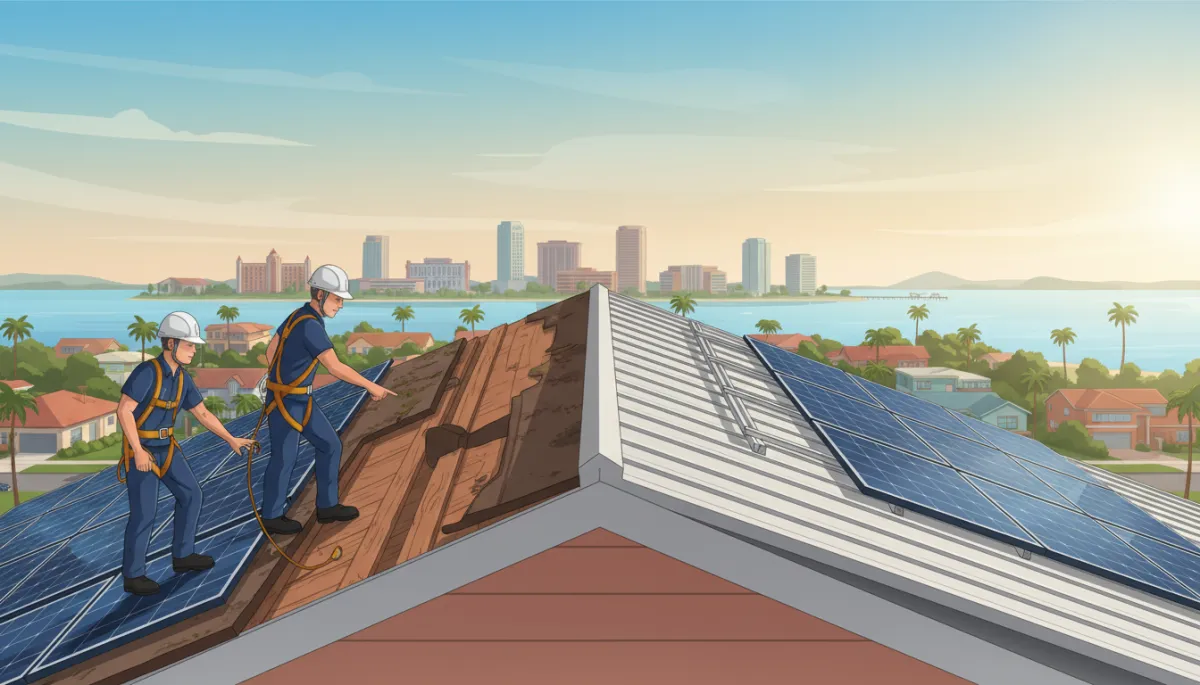
After the audit, we obtain the necessary permits for both the roof and the solar detach and reinstall. Once permits are issued, we coordinate a safe electrical disconnect. That typically involves shutting down the array at the inverter and any DC disconnects, then isolating the system from the home's electrical service so no power can backfeed while we are working. We then remove the panels, rails, and associated wiring from the roof, carefully staging them in a protected area on site. Panels are stacked on padded racks or similar supports, away from active work zones, to avoid breakage or microcracking while the roof work is underway.
With the roof cleared, our roofing crew completes the tear-off, decking repairs, underlayment, and installation of the new roof covering under the roofing permit. Once the new roof is dried in and passes any required interim inspections, we return to reinstall the solar racking system, flash every penetration according to current code and manufacturer instructions, and remount the modules. We then reconnect wiring, verify grounding, and re-commission the system. This includes testing string voltages, inverter startup, monitoring connections, and confirming that production matches or improves upon the baseline when weather conditions allow. Finally, we schedule final inspections for both the roofing and solar scopes under one point of responsibility and coordinate with Duke Energy if any documentation is required before re-activation or net metering adjustments.
Ready to keep your solar system in peak condition? Schedule a free solar panel cleaning and maintenance audit at https://tampasolarmaintenance.com
What We Find Under St. Pete Arrays
Once panels come off, we finally see what years of salt, sun, and storms have done to the roof and hardware. In coastal neighborhoods of St. Petersburg, as well as St. Pete Beach and Treasure Island, one of the most common findings is salt-corroded fasteners and rails. Screws may show heavy rust, rail channels may be pitted, and some older galvanized components can be weakened enough that reusing them would be a liability. Even slightly inland, in parts of Pinellas Park and Kenneth City, we see similar corrosion where components were not rated for the local coastal environment or where protective coatings have worn away over time.
Degraded flashing is another frequent issue. Early solar installs sometimes used minimal or incompatible flashing at roof penetrations. Under an array, shingles may have aged differently than the rest of the roof, and sealants can dry out or crack. On mid-century homes in St. Petersburg and Gulfport, we also encounter original or thin roof decking that has seen multiple reroofs. In those cases, the decking around penetrations can be soft, delaminated, or even rotted from slow leaks that only became visible once the solar came off. A proper solar detach and reinstall St. Petersburg scope anticipates that some decking repair may be necessary once the roof is opened up.
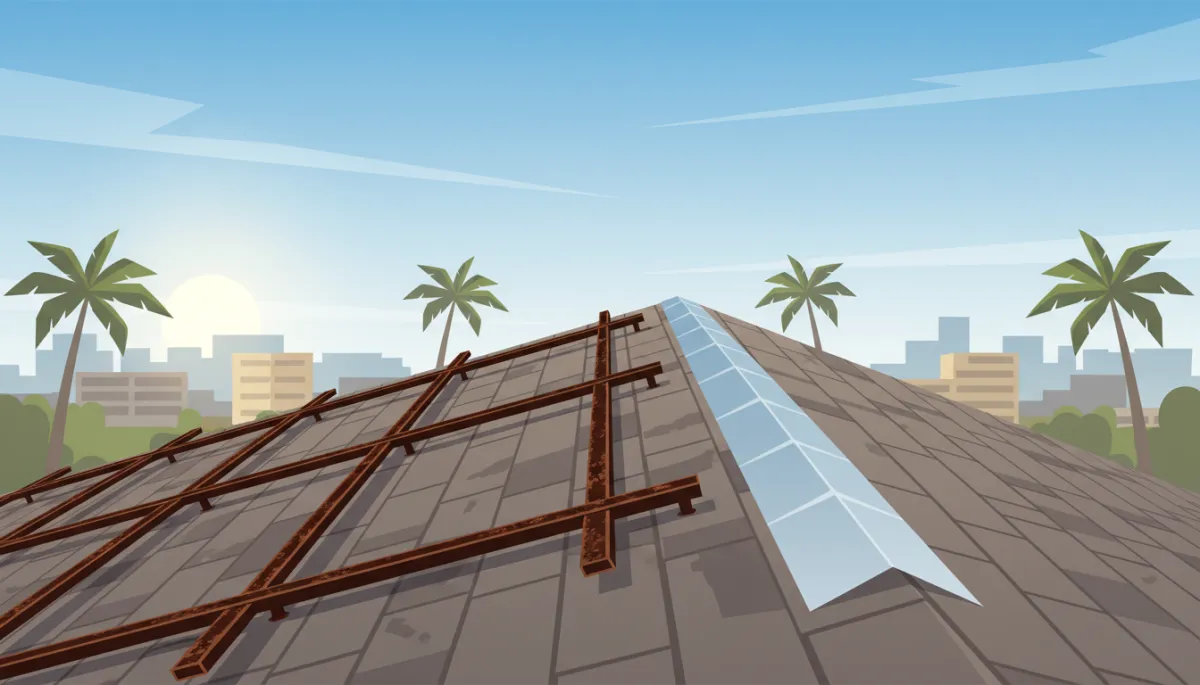
Replacing corroded hardware during reroofing extends the life of both roof and array.
Electrical service capacity is another hidden constraint, especially on pre-1980 homes in St. Petersburg and nearby cities. Older panels, undersized service conductors, or outdated breakers may not have been an issue when the solar was first installed under earlier rules, but today's codes and utility standards can be stricter. During a St. Petersburg solar roofing project, we may identify that the main service panel needs upgrades to properly accommodate the existing system, particularly if you plan future expansions such as battery storage or electric vehicle charging. Hidden moisture at penetrations and inside junction boxes is also common, especially in low-lying neighborhoods and areas that see frequent wind-driven rain.
Because we cannot see these conditions until the array is off, every serious proposal to remove solar panels for a new roof in St. Petersburg should include contingency language. That language explains that if we discover damaged decking, corroded rails, failed flashing, or unsafe electrical components, we will document the findings and provide change-order options before proceeding. This protects you from surprises and ensures the final system meets current safety and performance standards instead of simply reinstalling worn or compromised hardware back onto a brand-new roof.
Wind Code and Insurance in Coastal Pinellas
Coastal Pinellas County, including St. Petersburg, St. Pete Beach, Treasure Island, and nearby barrier islands, falls under some of Florida's more demanding wind design requirements. The Florida Building Code sets specific wind speed maps and uplift criteria, and roofing systems must be designed and installed to meet those loads. When solar is involved, the racking and attachment pattern must also be engineered to resist uplift and lateral forces in high winds. That means the spacing, number, and location of attachments are not arbitrary; they are based on calculations that account for roof zone, height, exposure, and system configuration.
Properly permitted and inspected work can support wind mitigation credits and smooth insurance claims after a storm. When a roof replacement and solar detach and reinstall are documented under permits that reference the applicable building code, it becomes easier to show an insurer that the roof covering, underlayment, and solar attachments were all installed to a recognized standard. In some cases, your insurance carrier may request copies of inspection records or completion certificates to confirm compliance, particularly in coastal neighborhoods and on older homes that have been brought up to current code through reroofing projects.
Unpermitted solar installations, on the other hand, can create significant problems at claim time and during resale. If an adjuster determines that roof damage was worsened by improperly installed or unpermitted solar, coverage questions can arise. Similarly, when selling a home in St. Petersburg, Pinellas Park, Gulfport, or Shore Acres, buyers and their insurers often ask for permit histories. If records do not show that the solar work was inspected, you may be required to pay for after-the-fact permitting, engineering evaluations, or corrective work before closing. Working with a qualified Pinellas County solar contractor who understands local wind code and insurance expectations is the best way to avoid those issues.
Timeline and What a Proposal Should Itemize
For a typical St. Petersburg home, the active detach and reinstall work itself is usually measured in days, not months. The on-roof portion of removing the array often takes a day for small systems and up to several days for larger or more complex layouts. The roofing crew then needs its own window to complete tear-off, repairs, and installation of the new roof. Once the roof is ready, reinstalling racking, panels, and wiring and then commissioning the system generally fits into another one to three working days, depending on array size and site conditions. The overall calendar timeline also includes permitting, inspections, and any coordination with Duke Energy, which can extend the total duration into weeks from initial approval to final sign-off, even though crews are only on site for a portion of that time. Because both the roofing and solar scopes are handled by the same licensed contractor, the two crews are sequenced against a single schedule rather than waiting on a second company.
A clear proposal for St. Petersburg solar roofing work should break out several line items. These include the labor and materials to detach the existing array, protect and store the modules, and safely cap or secure all electrical conductors. It should list the scope for racking and hardware replacement, including any new rails, attachments, flashing, or wiring needed to meet current code. The reroof is itemized as its own scope, reflecting roof size, pitch, material, and any structural repairs. The proposal should also outline the labor to reinstall and commission the system, permit and inspection handling, and any optional upgrades such as monitoring improvements or service panel work if required by current standards. Pricing will vary based on roof size, pitch, material, array size, and hardware condition, and a contractor will provide a written figure for your specific home with no tax credits applied or assumed.
Frequently Asked Questions: St. Petersburg and Pinellas Homeowners
1. Do I always have to remove solar panels for a new roof in St. Petersburg?
In almost every case, yes. To properly tear off old roofing, inspect decking, and install new underlayment and shingles or other coverings to code, the array must come off. Leaving panels in place usually leads to incomplete roofing work and can void warranties on both the roof and the solar equipment, especially in coastal Pinellas where wind and water exposure are severe.
2. Is the process different in Gulfport, Pinellas Park, or Kenneth City compared to St. Petersburg?
The technical steps of detaching and reinstalling solar are similar, but permitting jurisdiction may change. Some addresses in Gulfport, Pinellas Park, and Kenneth City permit through Pinellas County rather than the City of St. Petersburg. As a Pinellas County solar contractor, we confirm which authority applies, then follow that agency's permit and inspection requirements while keeping the same professional standards on the roof and electrical work.
3. How do coastal locations like St. Pete Beach and Treasure Island affect my detach and reinstall?
Barrier island homes see higher wind exposure and stronger salt air, so we pay particular attention to corrosion, attachment patterns, and code requirements for those wind zones. Hardware that might be acceptable further inland can be inadequate on St. Pete Beach or Treasure Island. We often replace more components in these areas to ensure the system will withstand coastal conditions for years after the reroof.
4. My home is in Shore Acres and has had flooding before. Does that change anything?
Shore Acres and similar low-lying neighborhoods can experience higher humidity, more frequent wind-driven rain, and occasional flood impacts. We look closely at roof decking condition, attic ventilation, and any signs of moisture intrusion around solar penetrations. Electrical equipment in lower levels or garages may also need evaluation to ensure it still meets safety standards after past events before we re-energize the system.
5. Can one contractor handle both the roof and the solar, or do I need two companies?
Roofing and solar are separate licensed trades, and many homeowners end up hiring two companies and coordinating between them. A contractor licensed for both roofing and electrical work can handle the entire project under one schedule and one point of responsibility, which removes the finger-pointing risk if a problem surfaces later. When both scopes sit with the same company, permits, inspections and warranty documentation are managed together rather than split across two firms.
6. Will my system's production change after the detach and reinstall?
When we reinstall, we aim to match or improve performance. Cleaning modules, tightening electrical connections, updating monitoring, and in some cases adjusting array layout to better align with the new roof can all help. We document a production baseline before work and compare after re-commissioning so you can see that the system is operating as expected once Duke Energy confirms everything on their end.
7. How far in advance should I plan a solar detach and reinstall St. Petersburg project?
It is wise to start planning several weeks before your target start date. That allows time for site evaluation, proposal review, permitting, and scheduling coordination between the solar and roofing crews. Early planning also reduces the time your system is offline and helps ensure that inspections and any required utility steps are lined up efficiently around the reroof schedule.
8.Do I need Fused if I already have a roofer for my new roof?
Yes. Fused's electrical license (EC13014750) means we can legally handle the solar disconnect, removal, and reinstall on our own—you do not need us to also do your roofing to get expert D&R service. We coordinate directly with your roofer's timeline, disconnect and stage your system before they start, and reinstall once the new roof is ready. Our 25-year penetration warranty applies to the D&R work itself, independent of who installed your roof. We also service the array afterward regardless of who did the roofing or the original solar installation.
CUSTOMER SAFETY ALERT — All detach and reinstall work MUST be fully permitted and inspected by county authorities. Unlicensed installers CANNOT obtain permits. Demand permits, verify licenses at myfloridalicense.com, require inspections, and get certificates in writing. Unpermitted solar voids panel warranties, voids roof warranties, and leaves the homeowner liable for $15,000–$25,000+ in corrective work at resale.
Maximize your investment with expert solar maintenance. Book your solar panel cleaning and inspection service at https://tampasolarmaintenance.com
Conclusion: Protecting Your Roof and Solar Investment in St. Petersburg
For homeowners across St. Petersburg and neighboring communities like Gulfport, Pinellas Park, Kenneth City, St. Pete Beach, Treasure Island, and Shore Acres, the need to replace an aging roof while preserving a productive solar array is becoming more common every year. Salt air from both the Gulf and the bay, intense UV exposure, afternoon storm cycles, and older housing stock all combine to shorten roof lifespans. At the same time, most solar equipment still has many years of useful life when the roof beneath it reaches the end of its serviceable condition. Handling that transition correctly is essential to protect both assets.
A well-managed project to remove solar panels for a new roof starts with understanding local permitting, clearly separating roofing and solar scopes, and working with contractors who know St. Petersburg's codes, housing styles, and coastal exposure. It continues with careful documentation, safe electrical work, proper staging of equipment, and a reinstall that meets current wind and electrical standards. Along the way, contingency planning for what might be discovered under the array and proactive communication about timelines and inspections keep the process predictable and transparent. When done right, your new roof and existing solar system will work together for many more years, providing protection, comfort, and energy savings that reflect the full value of your investment in your home.
Is your solar system performing at its best? Start your free maintenance consultation at https://tampasolarmaintenance.com
Fused Solar and Roofing is a licensed roofing (CCC1331058), electrical (EC13014750), and building contractor (CBC1252064), all three in-house, serving Hillsborough, Pinellas, Pasco, and Manatee counties since 2007. Fused Solar and Roofing is an EnergySage Elite Installer with a 5.0/5 rating and 21+ verified reviews, independent verification, earned not purchased.
Planning a brand-new system instead of a reinstall? Our guide to solar installation in St. Petersburg is at https://fusedsolarandroofing.com/post/solar-installation-st-petersburg. Replacing the roof and adding solar at the same time is covered at https://fusedsolarandroofing.com/post/new-roof-and-solar-st-petersburg-fl, and solar repair and service in St. Petersburg at https://fusedsolarandroofing.com/post/solar-repair-service-st-petersburg-fl.
Need the roof itself replaced, with or without solar on it? Our guide to roof replacement in St. Petersburg, the GAF system Fused installs, the warranty, and the local permit, is at https://fusedsolarandroofing.com/post/roof-replacement-st-petersburg-fl.
All of Fused's St. Petersburg services on one page, with prices, permits, and the utility: Solar and Roofing in St. Petersburg. The county-wide version of this guide is the Pinellas County overview.
Replacing a roof that has solar on it? Request a detach and reinstall quote at https://fusedsolarandroofing.com/solar-panel-removal