
Solar & Roof Cost Breakdown in Tampa Bay: Pricing Guide
Detaching and reinstalling solar for a roof replacement is priced by panel count, roof type, height and pitch, and it still pays off because the reinstalled system keeps producing for the rest of its 25-year life on a roof that will not need to be opened again. The breakdown below lists what a quote should cover for labor, permits, and roof scope.
What does it really cost to detach and reinstall solar when you replace your roof in Tampa Bay—and does it still pay off? This guide walks through what goes into the price, how a quote is built, and what kind of return you can expect over 25 years.
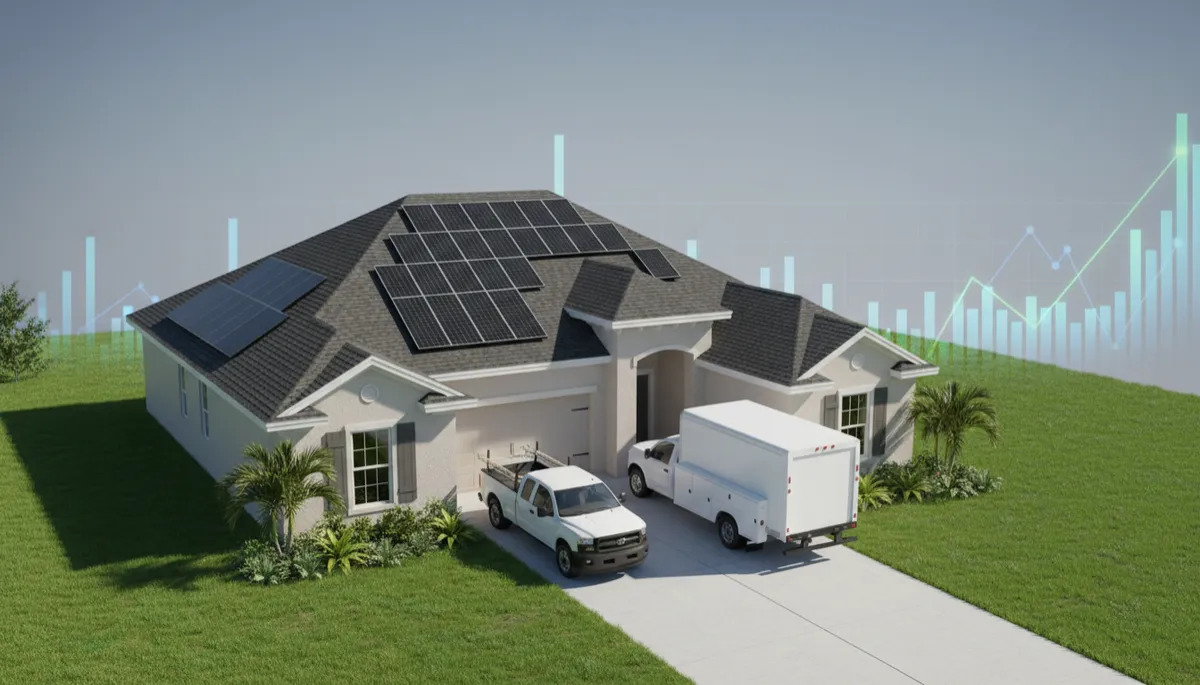
1. Why Detach & Reinstall Costs Are So Confusing
If you installed solar a few years ago and now need a new roof, you are in a tricky spot. Your roofer cannot work around the the panels, and your solar company may quote what feels like a shockingly high price to detach and reinstall the system.
The problem is that many quotes are not transparent. Homeowners see a single lump-sum number with no explanation of labor, permitting, or how the roof scope interacts with the solar scope. That makes it hard to compare bids or decide whether to upgrade equipment while everything is off the roof. This guide is designed to fix that by itemizing what each part of the job covers, describing three common project profiles, and tying everything back to long-term return on investment (ROI).
Below, you will find what each part of the job covers, three common project profiles, financing options, and how payback works for a Tampa home. The goal is simple: you should be able to look at your own quote and see whether it covers everything—and what your payback period really looks like.
2. What a Quote Should Itemize: Labor, Materials & Permits
A. Existing Solar Removal (Detach)
In Tampa, bundled pricing is usually more competitive, especially when combined with a roof replacement. Here is what the removal portion covers:
Electrical disconnection: Safe shutdown of the system, labeling circuits, and disconnecting from the main service panel. This must be done by a licensed electrical contractor in Florida to meet code and preserve safety.
Panel removal and stacking: Labor to lift each panel off the racking, carry it down safely, and store it on-site or in a protected area. Steeper roofs and two-story homes cost more.
Hardware/racking removal: Removing rails, clamps, and roof attachments so the roofer has a clear deck. In many Tampa projects, attachments are replaced with new hardware to maintain roof warranties and meet updated wind-load requirements.
Electrical clean-up and safety: Capping conductors, weatherproofing penetrations temporarily, and ensuring the system is left in a safe, non-energized state during roofing.
Removal is priced by panel count, roof pitch, and site access.
B. New Roof Installation (1,500 sq ft Example)
Roof costs in Tampa vary widely by size, material, and complexity. What a roof replacement costs depends on the roof's size and pitch, the material, the condition of the decking, the number of stories, and whether solar panels are on the roof. For a roof with standard architectural shingles, a written quote should cover these lines:
Tear-off existing roof: Removing old shingles, underlayment, and disposing of debris. Heavier materials like tile cost more to remove, but here we assume shingles.
New roof material (asphalt shingles): Shingles, underlayment, nails, and flashing components. In Florida, code often requires upgraded peel-and-stick underlayment, which is pricier but critical for wind and water protection.
Labor (installation + flashing): Skilled crews install the new roof, update ventilation, and integrate flashing around penetrations, including future solar attachments. Labor can be 40–60% of total roof cost in Tampa due to code complexity and insurance requirements.
Permits and inspection: The county roofing permit, administrative handling, and multiple inspections.
New roof: Fused measures the roof and quotes it in writing, and the roof inspection and written quote are free.
C. Solar Reinstallation (Re-Rack & Reconnect)
Once the new roof is complete and inspected, the solar system is reinstalled. This is where many “cheap” quotes cut corners by reusing old roof attachments or skipping permits. A proper reinstall includes:
Panel placement and mounting: Layout, rail installation, new roof attachments rated for Florida wind loads, and panel mounting.
Electrical wiring and connections: Running new homeruns where needed, re-terminating connectors, updating junction boxes, and labeling according to current NEC and Florida Building Code.
Inverter reconnection/testing: Recommissioning the inverter, verifying string voltages, checking monitoring, and confirming production matches design expectations.
Permits and final inspection: Solar permits, utility interconnection paperwork, and final county inspections. Tampa Electric and local AHJs require documentation that the system was reinstalled to code.
Solar reinstall: Quoted with the removal, by panel count and roof type.
D. Additional & Contingency Costs
Contingency/unexpected repairs: Decking replacement, extra flashing, or electrical upgrades sometimes appear once the old roof is off. Setting aside 5–10% of project cost is financially prudent.
Total project (detach + new roof + reinstall): One written quote for your home, its roof and its solar array. Premium roofs and complex solar layouts cost more; very simple projects cost less.
3. Typical Cost Scenarios in Tampa Bay
To move from theory to reality, let us look at three typical project profiles. These are not quotes, just common project profiles built on current utility rates and common system sizes. Each scenario assumes an existing solar system that is still within its useful life and a roof that needs full replacement.
Scenario A: Conservative Budget (Cost-Minimizing Approach)
Timeline: ~5 weeks from first permit application to final inspection (actual on-roof work may be 5–7 days).
Roof: Basic architectural asphalt shingles, standard underlayment, no major ventilation or decking upgrades beyond code minimums.
Solar: Existing 5–6 kW system reinstalled as-is, no inverter or monitoring upgrades.
Assuming the existing solar system is currently saving $80–$120 per month on electricity, annual savings are roughly $960–$1,440. Divide your written quote by that annual savings to get a simple payback period if you treat the entire spend as an “energy investment.” However, that is conservative financially, because part of this cost is a roof you likely needed anyway, even without solar. If you separate “roof you must buy regardless” from “solar-specific costs,” the payback on the solar portion is often shorter.
Homeowners choosing this path are typically focused on minimizing cash outlay today while keeping the existing system operating. You sacrifice some long-term efficiency and warranty benefits, but you keep upfront cost lower. From a finance perspective, this scenario makes the most sense if you plan to move within 7–10 years and simply want to protect your current solar investment and roof integrity until resale.
Scenario B: Mid-Range (Most Common Choice)
Timeline: 5–6 weeks, including permitting, roofing, and solar inspections.
Roof: Higher-quality architectural shingles (e.g., dimensional shingles with better wind rating), upgraded ventilation, and enhanced underlayment for improved moisture protection and longer life.
Solar: Existing 6 kW system reinstalled with new monitoring system (e.g., upgraded gateway or consumption monitoring) to track performance and verify ROI.
With monthly savings of roughly $100–$150 (about $1,200–$1,800 per year), the simple payback is your quoted price divided by that annual savings. Because this scenario includes better roofing materials and ventilation, you also extend roof life and reduce the risk of future leaks around solar attachments—costs that are hard to quantify but very real in Florida’s climate.
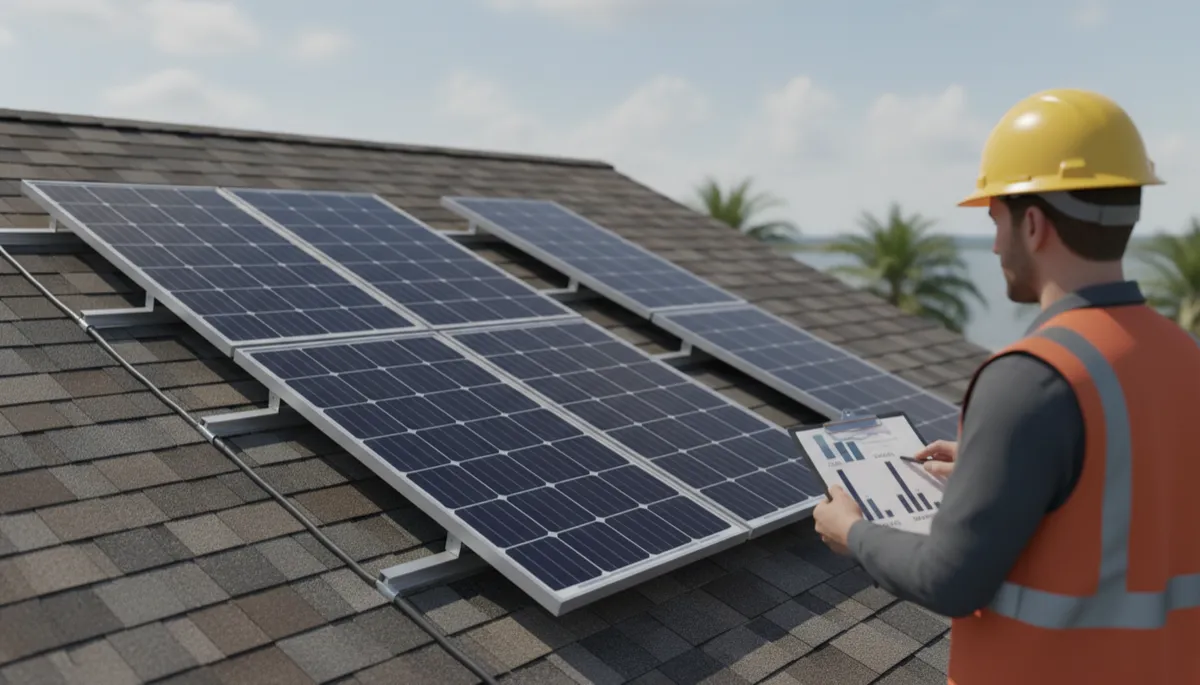
Aligning roof and solar scopes in one project often lowers total lifetime cost.
For many Tampa Bay homeowners, this is the “sweet spot”: a strong roof, a properly reinstalled solar system, and monitoring that lets you verify performance and catch issues early. If you expect to stay in your home at least 10 years, this mid-range scenario usually delivers a favorable blend of cash flow, risk reduction, and resale value uplift.
Scenario C: Premium Option (Maximizing Long-Term Value)
Timeline: 6–7 weeks, allowing for additional inspections and coordination for premium materials and upgraded equipment.
Roof: Premium shingles such as GAF Timberline or CertainTeed Presidential, enhanced underlayment, and extended manufacturer and workmanship warranties. These roofs are engineered for 25–30+ year lifespans under Florida conditions when properly installed.
Solar: Existing array plus a new, higher-efficiency inverter or optimizer upgrade to improve performance, monitoring, and reliability for the remainder of the system’s life.
With expected monthly savings of $120–$160 (about $1,440–$1,920 per year), the simple payback is again your quoted price divided by that annual savings. The key difference here is that you are not just preserving your current solar savings; you are extending them on a roof that is designed to last as long as, or longer than, the solar system itself. That minimizes the risk of ever having to detach and reinstall again within the system’s remaining life.
From a financial planning perspective, the premium option is often the best choice for homeowners who expect to stay in their home 15+ years and want to lock in both energy savings and major exterior maintenance for the long term. The higher upfront cost is offset by fewer future surprises, better warranties, and stronger resale value if you eventually decide to sell.
4. Financing Options: How to Pay for Detach & Reinstall + Roof
A combined roof and solar project is a major capital decision, and Tampa Bay homeowners typically pay for it one of a few common ways. Paying cash avoids interest and lender fees entirely, though it ties up capital that could otherwise be used elsewhere. A Home Equity Line of Credit (HELOC) is a popular option for homeowners with equity in their property, and interest may be tax-deductible when used for qualifying home improvements — consult your tax advisor to confirm. Solar-specific financing is also widely available, often with $0-down options that let you start saving right away while spreading the cost over time. An unsecured home improvement loan is another path, offering fixed payments without using your home as collateral, though typically at a higher rate than a HELOC or solar loan.
📌 Key Takeaway: There is no single best option — the right choice depends on your credit, your available equity, and how quickly you want the project to become cash-flow positive. Comparing a few offers side by side, and matching the monthly payment to your expected solar savings, is the best way to find the right fit.
5. Tampa Bay ROI Calculator: Real-World Example
Solar savings tend to compound over time, largely because electricity rates in Florida have historically trended upward. That means the value of the electricity your system produces tends to increase year after year, even if your system's output stays flat. In the early years after a detach & reinstall project, your savings work toward paying back your investment. Over the following decade, those same monthly savings continue building on top of that initial payback, and many well-maintained systems fully recover their reinstall cost well before the panels or roof reach the end of their useful life. From that point forward, your system is effectively producing years of savings with no remaining cost to recoup.
Because every home's electricity usage, roof size, system size, and local utility rate are different, your actual payback timeline will vary from the general pattern above. A personalized proposal from Fused Solar and Roofing uses your real usage history and system specifications to project numbers specific to your home, rather than a generic estimate.
6. Long-Term Value Beyond the Spreadsheet
Pure ROI tells only part of the story. A detach & reinstall project paired with a new roof also creates meaningful non-cash benefits that matter over a 10–25 year horizon.
Roof protection and system life: Installing a new, properly flashed roof under your solar array can extend the effective life of the system by 10+ years compared to leaving panels on an aging roof. That means more years of zero-fuel-cost electricity and fewer emergency repairs after storms.
Home value: Multiple national studies have found that homes with solar tend to sell for a premium compared to similar homes without it. Pairing a newer, code-compliant roof with a properly reinstalled solar system can further strengthen a home's resale appeal, since buyers see less risk of near-term roof or solar issues.
Energy independence: Producing a large share of your own electricity hedges against future rate spikes. Instead of being fully exposed to utility increases, you effectively prepay a portion of your power at a fixed cost when you invest in your roof and solar together.
Environmental impact: Producing your own clean electricity reduces your household's reliance on grid power generated from fossil fuels, offering a meaningful environmental benefit over the life of the system.
When you step back, a well-planned detach & reinstall project can deliver decades of predictable energy savings, a stronger and more resilient roof system, and a home that is better positioned for future resale. The combination of lower utility bills, reduced maintenance surprises, and environmental benefits makes it more than just a repair expense—it becomes a long-term financial and quality-of-life strategy.
7. 🚨 Critical Safety & Permitting Checklist for Tampa Bay Homeowners
In Florida, all detach and reinstall work must be fully permitted and inspected. This is not optional. Unlicensed installers cannot legally obtain permits, and unpermitted work can create serious financial and safety exposure for you as the homeowner.
⚠️ Non-Negotiable Steps:
• Demand written permits from your contractor for both the roof and the solar scopes.
• Verify all licenses at myfloridalicense.com — you should see active Roofing, Electrical, and (where applicable) Building Contractor licenses.
• Require county inspections at each phase: roof dry-in, final roof, solar rough, and solar final.
• Get final certificates of completion in writing and keep them with your home records.
Do not proceed with any contractor who suggests skipping permits, “working under someone else’s license,” or handling the project as a cash job with no paperwork. The short-term savings are rarely worth the long-term risk.
Unpermitted work can void your roof and solar warranties. Manufacturers and insurers routinely deny claims when installation records do not match code requirements.
At resale, unpermitted work can force you into costly corrective projects to bring a roof and solar system up to code before closing.
Most importantly, you become personally liable for safety issues, including electrical hazards and roof failures during storms.
Fused Solar & Roofing takes a different approach: every project is fully permitted, inspected, and warranted. We carry all required Florida licenses for combined roof and solar work:
• CCC1331058 — Roofing Contractor
• EC13014750 — Electrical Contractor
• CBC1252064 — Building Contractor
This integrated licensing structure means you have one accountable party for the entire roof + solar scope, from tear-off to final inspection.
8. Frequently Asked Questions: Detach & Reinstall in Tampa Bay
Q: What is actually included in the detach/reinstall cost?
A properly scoped detach/reinstall price should include electrical disconnection, safe panel removal, racking and hardware removal, temporary weatherproofing, new roof attachments, full re-racking, wiring, inverter reconnection, permits, and final inspections. If any of these items are not clearly listed, ask for an itemized quote before signing.
Q: Can costs vary by location within Tampa Bay?
Yes, but usually not dramatically. Differences between Hillsborough, Pinellas, and Pasco counties typically show up in permit fees, inspection schedules, and specific wind-load requirements. Labor and material costs are broadly similar across the metro area. The bigger drivers of cost are roof complexity, panel count, and whether your contractor is fully licensed and insured.
Q: What happens if the roof inspection finds structural damage?
If decking rot, truss issues, or other structural problems are discovered after tear-off, your contractor should provide a written change order with pricing before proceeding. Structural repairs add to the cost depending on severity, and the change order shows the price before work goes ahead. This is why we recommend budgeting a contingency line item rather than assuming everything under the old roof is perfect.
Q: Do I need to replace my inverter during reinstall?
Not necessarily. If your inverter is relatively new and performing well, you can usually keep it. However, if it is near the end of its warranty or experiencing issues, reinstall time is the most cost-effective moment to upgrade because crews are already mobilized and electrical work is underway. An upgraded inverter can improve monitoring, reliability, and sometimes efficiency, which impacts long-term ROI.
Q: How do future rate increases affect my ROI?
Higher electricity rates improve your ROI because each kilowatt-hour your system produces becomes more valuable. While no one can predict future rate changes with certainty, most long-term projections assume some level of annual increase in utility costs. If rates rise faster than expected, your payback period shortens and your lifetime savings grow. If rate growth is slower, ROI will still generally be positive, just over a longer horizon.
Q: What if my roof needs additional repairs after the project?
This is where warranties and licensing matter. Your contractor should provide written roof and workmanship warranties that cover leaks and defects for a defined period. If an issue arises, a contractor licensed for both the electrical and the roofing work can diagnose whether the problem is roofing-related, solar-related, or both—and fix it without finger-pointing between separate companies. Always confirm warranty terms and response times before work begins.
9. Get a Transparent, Itemized Detach & Reinstall Quote for Your Home
If you are in Tampa Bay and your roof and solar are on a collision course, you do not have to guess what a detach & reinstall will cost—or whether it will pay off. Fused Solar & Roofing provides fully itemized proposals that separate roof, solar removal, solar reinstall, and optional upgrades so you can see exactly where every dollar is going and how it impacts your long-term ROI.
To request your personalized detach & reinstall quote, including financing options and a Tampa-specific ROI projection:
• Call: (813) 285-4505
• Email: [email protected]
Your consultation is free and no-obligation. We will review your existing system, roof condition, and utility usage, then provide a clear, data-backed plan so you can decide with confidence whether now is the right time to detach, reinstall, and upgrade for the next 20+ years.
Fused Solar and Roofing is a licensed roofing (CCC1331058), electrical (EC13014750), and building contractor (CBC1252064), all three in-house, serving Hillsborough, Pinellas, Pasco, and Manatee counties since 2007. Fused Solar and Roofing is an EnergySage Elite Installer with a 5.0/5 rating and 21+ verified reviews, independent verification, earned not purchased.
Replacing a roof that has solar on it? Request a detach and reinstall quote at https://fusedsolarandroofing.com/solar-detach-and-reinstall
Who is allowed to do each part of a detach and reinstall, and why, is covered in our guide at https://fusedsolarandroofing.com/post/who-can-remove-reinstall-solar-florida
