Solar Detach & Reinstall in Seminole, FL | Tampa Bay Guide
A growing number of Seminole homeowners now need to replace aging roofs that sit directly beneath active solar arrays. Understanding how solar detach and reinstall (D&R) works locally helps protect both your roof and your investment in solar power.
1. Why Seminole Homeowners Are Facing Solar D&R Now
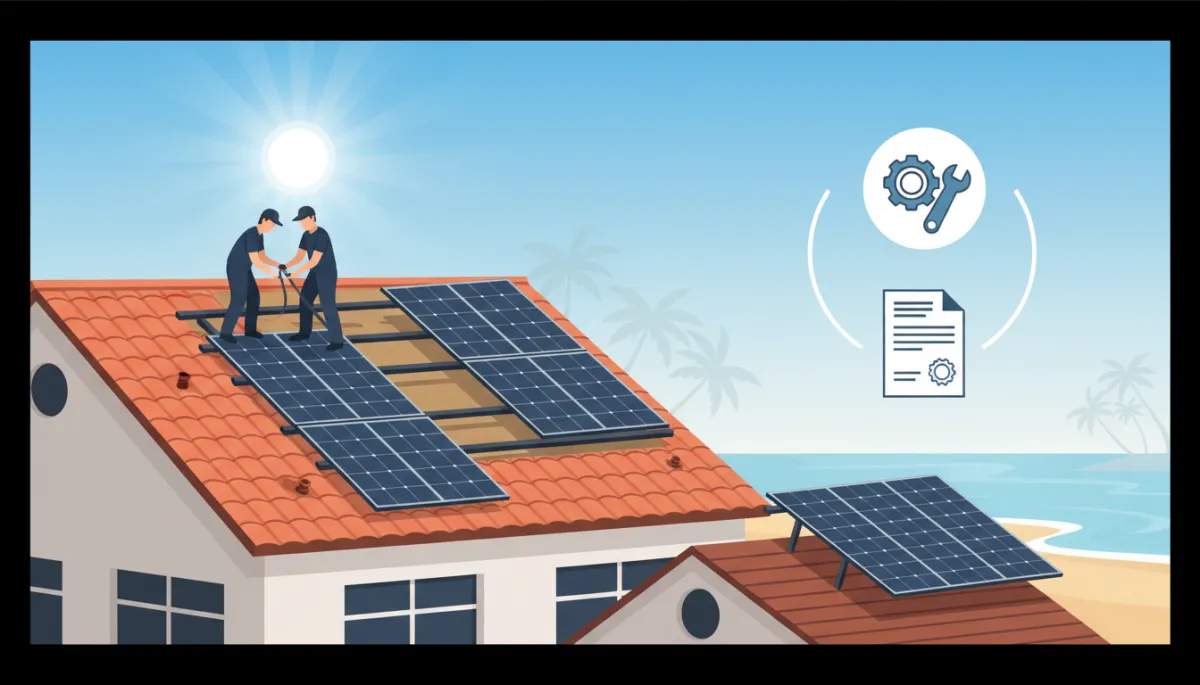
Seminole has seen steady solar adoption over the last decade, especially on single‑family homes built in the 1970s–1990s. Many of those roofs were already halfway through their service life when the solar systems were installed. As shingles and underlayment reach the end of their lifespan, roof replacement becomes unavoidable, even while the solar equipment still has many productive years left. The only practical solution is to temporarily remove the system, complete the re‑roof, and then reinstall the array to current code standards. This is the D&R process, and it must be handled carefully to avoid damage, code violations, or insurance problems.
2. Why Seminole Roofs Age the Way They Do
Seminole’s location in coastal‑adjacent Pinellas County exposes roofs to a combination of factors that accelerate wear. Salt‑laden air drifts inland from the Gulf, depositing chlorides on metal flashings, fasteners, and solar hardware. Over time, this drives corrosion, particularly where penetrations are made for mounting rails and attachments. Intense UV radiation is another major issue. Dark shingle roofs on low‑slope homes absorb heat, causing thermal cycling that dries out asphalt, cracks sealants, and weakens underlayment. Solar panels can shade sections of the roof, but they also trap heat and slow drying after heavy rains, which can stress older materials.
Seasonal storms compound these effects. Afternoon thunderstorms, tropical systems, and occasional hurricanes subject roofs to high winds, wind‑driven rain, and uplift forces. In older Seminole housing stock, original decking, nails, and flashing details may not have been designed for today’s standards. Once a roof reaches its later years, even a functioning solar array cannot compensate for underlying materials that are simply worn out. At that point, D&R becomes a necessary step in responsibly extending the life of the home.
3. Permitting: City of Seminole vs. Unincorporated Pinellas County
Permitting for a solar D&R tied to a re‑roof is handled differently depending on whether the property lies inside the City of Seminole limits or in unincorporated Pinellas County. Within the city, solar is treated as an accessory use, and roof‑mounted arrays must comply with local zoning and building regulations, including height allowances and glare control. A building permit is required for the solar work, separate from the roofing permit, and plans must show how the system will be reattached in accordance with current Florida Building Code and National Electrical Code requirements.
In unincorporated Pinellas County, the county building department oversees both the re‑roof and the solar portion. Typically, this means two distinct permits: one for the roof replacement and another for the solar removal and reinstallation. The solar permit will require documentation such as the existing layout, structural attachment details, and electrical one‑line diagrams. In either jurisdiction, reinstallation “exactly as it was” is not allowed if the original system does not meet current code; it must be brought up to today’s standards as part of the D&R project.
Planning a brand-new system instead of a reinstall? Our guide to solar installation in Seminole is at https://fusedsolarandroofing.com/post/solar-installation-seminole-fl
Who is allowed to do each part of a detach and reinstall, and why, is covered in our guide at https://fusedsolarandroofing.com/post/who-can-remove-reinstall-solar-florida
⚠️ Safety Alert: Solar detach and reinstall work in Seminole always involves high‑voltage equipment, roof penetrations, and structural attachments. It is critical that permits are pulled correctly and that only properly licensed roofing and electrical contractors perform the work. Unpermitted or unlicensed D&R can jeopardize insurance coverage, violate local codes, and create serious safety hazards for occupants and future workers.
4. What the D&R Process Looks Like Step by Step
A well‑managed D&R in Seminole follows a defined sequence to protect the roof, the solar equipment, and the homeowner’s documentation:
Site assessment and coordination. The contractor evaluates the existing array, roof condition, access, and electrical layout, then coordinates timing with the roofing crew so the system is offline for the shortest period practical.
Permitting and documentation. Separate permits for the re‑roof and solar work are obtained, and drawings or photos of the existing layout are captured to guide reinstallation and satisfy local plan reviewers and inspectors.
System shutdown and safe disconnect. The solar array is powered down, labeled, and disconnected at the appropriate points, following NEC and manufacturer procedures to protect equipment and personnel.
Panel and racking removal. Modules are carefully removed and staged; racking, attachments, and related hardware are taken up, leaving the deck accessible for the roofing team. Damaged or corroded components are tagged for replacement rather than reuse.
Roof replacement. The roofing contractor completes tear‑off, decking repairs, underlayment, and new roofing installation in compliance with current Florida Building Code and local wind requirements.
Code‑compliant reinstallation. The array is re‑engineered as needed to meet current structural and electrical standards, then reinstalled with approved attachments, flashing, wiring, and labeling.
Testing, inspections, and documentation. Final inspections are scheduled, the system is recommissioned, and homeowners receive updated photos, serial numbers, and permit records for insurance and future service.
Working with a contractor such as Fused Solar and Roofing, which holds both the roofing license (CCC1331058) and the electrical license (EC13014750) in‑house, can streamline this entire sequence and reduce the risk of miscommunication between trades.
Ready to keep your solar system in peak condition? Schedule a free solar panel cleaning and maintenance audit at https://tampasolarmaintenance.com
5. Common Issues Found Under Solar Panels in Seminole
Once panels and racking are removed, it is common to discover issues that were hidden from view. Coastal‑adjacent salt air frequently causes corroded hardware, including rail bolts, lag screws, clamps, and even the metal components of older racking systems. Corrosion can weaken structural attachments and compromise uplift resistance during wind events. In some cases, the only responsible option is to replace hardware rather than reinstall it as‑is.
Another frequent discovery is deck rot around penetrations. If flashing was undersized, improperly installed, or has deteriorated, water can migrate into the decking and trusses over time. Under the shaded footprint of the array, moisture can linger, accelerating decay. During a D&R tied to a re‑roof, the decking beneath the array should be inspected and repaired or replaced as needed. Additional issues may include brittle wiring insulation, loose conduit supports, and outdated bonding or grounding methods that no longer meet current NEC requirements.
6. Wind Code and Insurance Considerations in Pinellas County
Seminole lies in a wind‑borne debris region where the Florida Building Code imposes specific uplift and attachment requirements. When a solar system is reinstalled after a roof replacement, the mounting pattern, fastener type, and embedment depth must satisfy current wind design criteria, not the standards that were in place when the system was first installed. This can result in additional attachments, upgraded rails, or revised layouts to keep the array within engineered limits for local wind speeds.
Insurance carriers increasingly expect documentation that both the roof and solar array are installed to current code. For Seminole homeowners, this means keeping permit records, inspection approvals, and any engineering letters related to the D&R. Some insurers may request proof that the solar attachments are compatible with the new roof covering and that penetrations are properly flashed. A compliant D&R can support favorable underwriting decisions, while undocumented or noncompliant work may create coverage disputes after a storm event.
7. Timeline and General Cost Range for D&R in Seminole
For a typical Seminole home with a standard asphalt shingle roof and a residential‑scale solar array, the detach and reinstall portion usually spans several days within the overall re‑roof schedule. After permits are issued, the solar crew will generally spend part of a day disconnecting and removing the array, followed by one to two days of roofing work, and then another day to reinstall the system, complete wiring, labeling, and commissioning. Inspection timing can add a small amount of additional time, depending on the city or county’s schedule and workload.
In terms of budget, most Seminole‑area homeowners can expect a complete solar D&R associated with a re‑roof to fall in the $2,500–$6,500 range, depending on the size of the system, roof complexity, height, access, and the extent of hardware replacement or code‑driven upgrades required. Larger arrays, tile roofs, steep slopes, and extensive corrosion or wiring repairs will push costs toward the higher end of that range. A detailed written proposal should clearly separate roofing and solar scopes so you understand exactly what is included in the D&R pricing.
8. Seminole‑Specific FAQ: Solar Detach & Reinstall
1. Do I need separate permits for my roof and solar in Seminole?
Yes. Whether you are in the City of Seminole or unincorporated Pinellas County, expect a roofing permit for the re‑roof and a separate permit for the solar removal and reinstallation. Both must pass final inspection.
2. Will my solar system have to be upgraded to current code?
If any part of the existing system does not meet current Florida Building Code, NEC, or manufacturer requirements, it must be corrected as part of the D&R. Inspectors will not approve a reinstallation that keeps known deficiencies in place.
3. How long will my solar be offline during a Seminole re‑roof?
For most homes, the system is offline for several days, typically spanning the removal, roofing, and reinstallation period. Good coordination between the roofing and solar teams minimizes downtime.
4. What if corrosion or deck rot is found under my panels?
The contractor should document any corroded hardware or damaged decking and propose repairs or replacements before reinstalling the array. Addressing these issues during the re‑roof is the safest and most cost‑effective time to correct them.
5. Does Seminole’s wind exposure affect how my solar is reinstalled?
Yes. Pinellas County’s wind requirements influence attachment spacing, fastener type, and rail design. Your reinstalled system must meet current wind‑load criteria to pass inspection and satisfy most insurance carriers.
6. Can any solar company handle my D&R, or do they need roofing expertise?
Because D&R directly affects roof penetrations and waterproofing, it is prudent to work with a contractor that has both roofing and electrical licensing. This helps ensure that the roof system and solar attachments function together as a single, code‑compliant assembly.
7. How should I prepare before scheduling a D&R in Seminole?
Gather your original solar paperwork, utility interconnection information, and any previous permit records. Choose a licensed contractor familiar with Seminole and Pinellas County requirements, and confirm in writing how they will handle permits, inspections, and coordination with your roofer.
8. Do I need Fused if I already have a roofer for my new roof?
Yes. Fused's electrical license (EC13014750) means we can legally handle the solar disconnect, removal, and reinstall on our own — you do not need us to also do your roofing to get expert D&R service. We coordinate directly with your roofer's timeline, disconnect and stage your system before they start, and reinstall once the new roof is ready. Our 25-year penetration warranty and Elite Installer status apply to the D&R work itself, independent of who installed your roof. We also service the array afterward regardless of who did the roofing or the original solar installation. Choosing a licensed, single-purpose D&R specialist protects you whether you use one contractor for everything or coordinate multiple trades yourself.
CUSTOMER SAFETY ALERT — All detach and reinstall work MUST be fully permitted and inspected by county authorities. Unlicensed installers CANNOT obtain permits. Demand permits, verify licenses at myfloridalicense.com, require inspections, and get certificates in writing. Unpermitted solar voids panel warranties, voids roof warranties, and leaves the homeowner liable for $15,000–$25,000+ in corrective work at resale.
Maximize your investment with expert solar maintenance. Book your solar panel cleaning and inspection service at https://tampasolarmaintenance.com
Conclusion and Next Steps for Seminole Homeowners
For Seminole homeowners with aging roofs and active solar arrays, a properly planned detach and reinstall is the key to protecting both the building envelope and the solar investment. Fused Solar and Roofing holds both the roofing license (CCC1331058) and the electrical license (EC13014750) in-house and is recognized as an EnergySage Elite Installer with a 5.0-star rating across 21+ verified reviews, independent proof of a reliable, established local track record. Local conditions—salt air, UV exposure, storms, and older housing stock—make it essential that D&R work be performed to current code, with careful attention to hardware, decking, and wind performance. Partnering with a contractor that understands both roofing and solar, and that manages the permitting and inspection process in Seminole and Pinellas County, will help ensure a smooth, compliant project.
If your Seminole roof is approaching replacement age and you already have solar installed, now is the time to start planning.
Serving nearby communities too. Read our guides for Apollo Beach solar detach and reinstall, Oldsmar solar detach and reinstall, and how much detach and reinstall costs in Tampa.
Is your solar system performing at its best? Start your free maintenance consultation at https://tampasolarmaintenance.com
Fused Solar and Roofing is a licensed roofing (CCC1331058), electrical (EC13014750), and building contractor (CBC1252064), all three in-house, serving Hillsborough, Pinellas, Pasco, and Manatee counties since 2007. Fused Solar and Roofing is an EnergySage Elite Installer with a 5.0/5 rating and 21+ verified reviews, independent verification, earned not purchased.
Replacing the roof and adding solar at the same time in Seminole is covered at https://fusedsolarandroofing.com/post/new-roof-and-solar-seminole-fl, and solar repair and service in Seminole at https://fusedsolarandroofing.com/post/solar-repair-service-seminole-fl.
Need the roof itself replaced, with or without solar on it? Our guide to roof replacement in Seminole, the GAF system Fused installs, the warranty, and the local permit, is at https://fusedsolarandroofing.com/post/roof-replacement-seminole-fl.
All of Fused's Seminole services on one page, with prices, permits, and the utility: Solar and Roofing in Seminole. The county-wide version of this guide is the Pinellas County overview.
Replacing a roof that has solar on it? Request a detach and reinstall quote at https://fusedsolarandroofing.com/solar-panel-removal