Solar Detach & Reinstall in Palm Harbor: A Tile Roof Guide
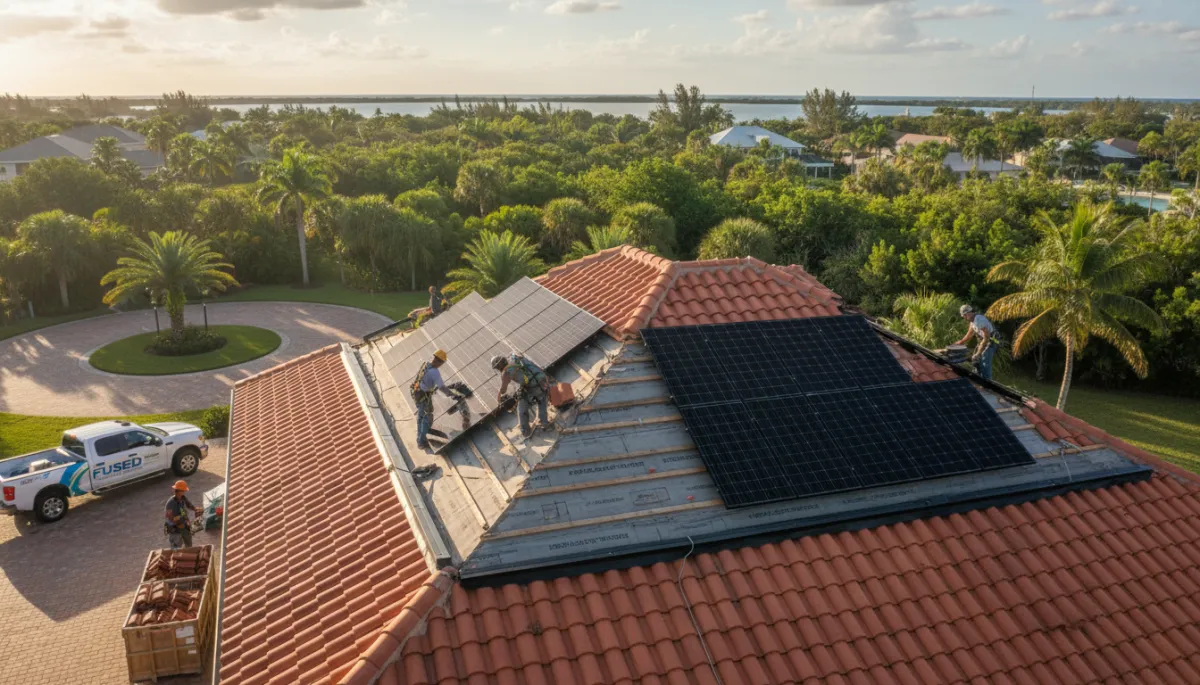
Palm Harbor has one of the higher concentrations of tile roofs and higher-value homes in north Pinellas, and many of those homes now have rooftop solar. When it is time to replace a tile roof under an existing array, the project stops being a simple reroof. Tile changes the entire solar detach and reinstall equation, from how the hardware is mounted to how long the roof is exposed, and most homeowners do not find that out until they start collecting quotes. As a Pinellas County solar contractor licensed for both roofing (CCC1331058) and electrical (EC13014750), Fused Solar and Roofing handles these projects regularly in Palm Harbor, East Lake, Ozona, Crystal Beach, Tarpon Springs, Dunedin, and Oldsmar. This guide walks you through how tile roof solar removal really works here: why tile behaves differently than shingle, how permitting functions in unincorporated Palm Harbor, what we usually find under older arrays, how wind code and insurance come into play, realistic timelines, and what a clear proposal should spell out before anyone touches a tile on your roof.
Why Tile Changes Everything
If you talk to neighbors in Palm Harbor who have asphalt shingle roofs, you will hear about relatively straightforward projects: remove solar panels, reroof, reinstall, move on. Tile is different. Clay and concrete tiles are durable when they sit undisturbed on the roof, but they are also brittle. Once crews start walking, lifting, and stacking them during a detach and reinstall, Palm Harbor homeowners quickly learn that some breakage is unavoidable. Even with experienced technicians using walk boards and padding, tiles that have been through years of heat, storms, and foot traffic can crack when they are lifted or when weight is transferred across them during removal and relay.
Matching those broken tiles is another challenge. Many Palm Harbor tile roofs were installed when certain profiles and colors were common that are no longer manufactured. When a profile has been discontinued, exact matches can be difficult or impossible to source. That is why salvage matters so much on a Palm Harbor tile roof solar project. We plan the tile roof solar removal so that reusable tiles are carefully stacked and staged, and we pull extras from less-visible areas of the roof to use in prominent locations if matching stock is limited. The goal is to maintain both watertight integrity and curb appeal even when perfect matches are not available on the market anymore.
Another key difference is that the tile itself is often not the real failure point. In Palm Harbor, Dunedin, and Tarpon Springs, we routinely see tile surfaces that still look good while the waterproofing layer underneath has aged out. On a tile system, that underlayment is usually what actually keeps water out. Over time, heat, trapped moisture, and small leaks around penetrations can cause it to deteriorate. Homeowners are often surprised to learn that they need to remove solar panels for a new roof even though their tile appears serviceable from the driveway. The underlayment and flashing beneath the tile and racking tell the real story.
Finally, the mounting hardware for Palm Harbor tile roof solar is not the same as what you see on a shingle home in Oldsmar or East Lake. Instead of simple flashed L-feet lagged through shingles into the deck, tile systems typically rely on tile hooks, replacement flashing pans, or fully flashed standoff mounts that integrate with the tile pattern. Each tile profile requires its own approach, and each mount must be carefully coordinated with the underlayment and flashing so that you do not create a leak path. This is where having one contractor licensed for both roofing and electrical work makes a measurable difference: the same in-house team understands how the tile, underlayment, mounts, and wiring all interact over the life of the roof.
Permitting in Palm Harbor and Pinellas County
Palm Harbor sits in unincorporated Pinellas County, so your permits run through the county’s Building and Development Review Services rather than a city building department. That actually simplifies things compared with addresses in Largo or St. Petersburg, where homeowners sometimes have to sort out city versus county roles. For a tile roof solar removal and reinstall tied to a reroof, Pinellas County treats the roof and solar scopes as separate permits. One permit covers the roofing work, including underlayment replacement and tile relay, and another covers the electrical and structural aspects of removing and reinstalling the photovoltaic system. Both permits are applied for through the county’s online portal, and both carry their own inspections before the job is considered complete.
Even though the permits are separate, the homeowner should not feel like they are managing separate companies. Fused Solar and Roofing holds both the roofing license and the electrical license, so we pull both permits in-house and coordinate them under one schedule. That single-contractor advantage means you have one point of responsibility, one set of inspections to track, and no finger-pointing between trades if a tile issue shows up near a solar attachment or an inspector wants a detail adjusted. In Palm Harbor, East Lake, and Oldsmar, that clarity is especially important because many homes are in deed-restricted communities with their own architectural review processes layered on top of county requirements.
If you live in a community association in Palm Harbor or East Lake, you are probably familiar with submitting exterior changes for approval. Most boards want to see roof color, tile profile, and solar panel layout. Under Florida law, however, homeowner associations cannot simply deny solar. They can request reasonable adjustments for aesthetics, but they generally cannot force a panel layout that significantly reduces system performance or makes the installation impractical. In practice, we work with many HOAs around Palm Harbor, Ozona, and Crystal Beach to provide clean drawings showing the existing array and the planned reinstallation on the renewed roof. The association reviews appearance, while Pinellas County reviews structural and electrical code compliance. When both are coordinated properly, the project moves forward smoothly without compromising the energy production you rely on.
Who is allowed to do each part of a detach and reinstall, and why, is covered in our guide at https://fusedsolarandroofing.com/post/who-can-remove-reinstall-solar-florida
What the Detach & Reinstall Process Looks Like on a Tile Roof
On paper, the sequence for a tile roof solar detach and reinstall in Palm Harbor looks similar to a shingle project, but there are extra steps and more careful staging. We start with an on-site audit and production baseline. That means documenting your current system layout, taking detailed photos of the racking and wiring, checking inverter readings, and confirming that your existing Palm Harbor tile roof solar setup is operating as expected. This gives us a reference point so that when we reinstall, we can verify that performance returns to, or in some cases improves on, the pre-project baseline once the new underlayment and tile work are complete. We also confirm roof access, staging areas, and tile type so we can plan for salvage and any potential matching issues.
Once permits are issued, we schedule the work so that roofing and solar scopes dovetail. First comes safe electrical disconnect. Our licensed electricians shut down the system, isolate it from Duke Energy’s grid connection, and label conductors so that re-termination is clean and code-compliant. Then the crew begins careful tile removal around and under the array. Tiles are lifted, inspected, and stacked in designated salvage areas on the roof and ground. Usable tile is separated from pieces that are already cracked or too compromised to relay. This step takes longer than on a shingle roof because every movement must protect tiles, underlayment, and the deck while also making room to access the mounting hardware and flashing beneath the array footprint.
With the array and old mounts removed, the roofing team addresses the underlayment replacement across the roof plane or planes being reroofed. On Palm Harbor homes, that typically means stripping down to the deck, repairing any damaged sheathing, installing the new underlayment system, and then relaying the existing tile and any new tile needed to fill in. Only after the roof is dried-in and tile relay is sufficiently advanced do we reinstall the solar racking. Instead of generic mounts, we use tile-specific hooks or flashing pans that integrate with the renewed underlayment and tile layout. Each penetration is flashed and sealed per current Florida Building Code requirements, and we coordinate layout so that rows align with both structural support and tile courses for a clean look and reliable performance over time.
Once racking and modules are reinstalled, our electricians reconnect conductors, verify grounding and bonding, and re-commission the system. We compare production to the original baseline, confirm monitoring is reporting correctly, and then coordinate final inspections. County inspectors review both the roof and the solar scopes under their respective permits, and once they sign off, we coordinate with Duke Energy if any utility-side re-activation steps are required. Tile projects almost always run longer than comparable shingle projects because of slower tile handling, additional staging, and more complex mounting details. The advantage of working with a contractor licensed for both roofing and electrical work is that all of this happens under one schedule and one point of responsibility, rather than trying to align two separate companies whose calendars and priorities may not match when weather or inspection timing shifts the plan by a day or two.
Ready to keep your solar system in peak condition? Schedule a free solar panel cleaning and maintenance audit at https://tampasolarmaintenance.com
What We Find Under Palm Harbor Arrays
After years of working on Palm Harbor tile roofs with solar, certain patterns show up again and again once the panels and tile come off. The most common is failed or tired underlayment beneath tile that still appears to be in good condition. The array footprint often traps heat and slows drying after heavy rain, so underlayment in those shaded areas can age differently than the rest of the roof. We frequently see brittle, cracked, or wrinkled material and staining on the deck where minor seepage has occurred around older penetrations or where flashing was not integrated as carefully as it should have been during the original installation. Homeowners often first notice these conditions as small interior stains or as findings on an insurance inspection, which then leads to the decision to remove solar panels for a new roof before problems get worse.
We also uncover cracked and previously broken tile that has been hidden under arrays for years. Sometimes tiles were broken during the original solar install and never replaced properly. Other times, impact from past storms or foot traffic left hairline cracks that only become obvious when tiles are lifted. In coastal neighborhoods like Ozona and Crystal Beach, salt in the air accelerates corrosion on certain types of mounting hardware, fasteners, and even some metal flashings. When we detach arrays in those areas, it is common to see rust staining and surface corrosion that needs to be addressed before putting a system back on a renewed roof. Mortar at hips and ridges can also deteriorate over time, especially where water has been redirected by panel edges or conduit runs, and we often repair those details as part of a comprehensive reroof tied to the solar detach and reinstall.
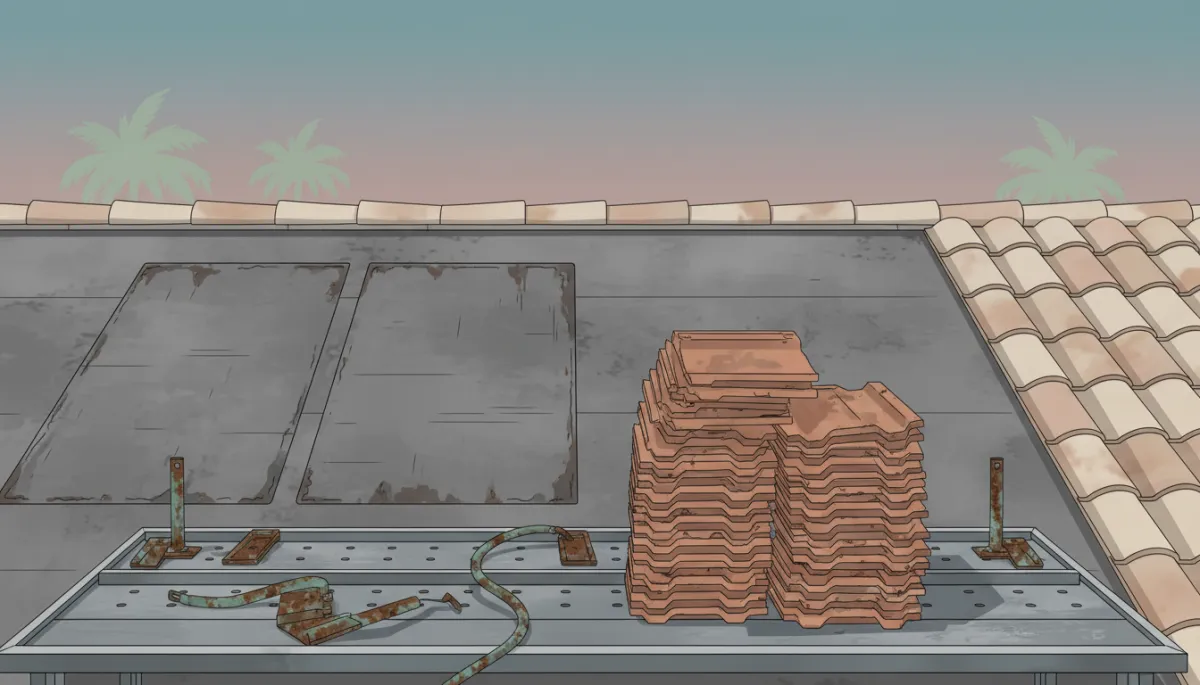
Detaching solar during reroofing reveals underlayment, tile, and hardware issues early.
Deck moisture is another recurring finding. Around Palm Harbor and Tarpon Springs, we see sheathing that has darkened or softened below long-standing leaks near older mounts or along poorly integrated flashings. The deck may still be structurally sound with minor repairs, or it may require replacement of localized sections. This is one reason tile roof solar quotes almost always include contingency language. Because we cannot see every condition until the panels and tile come off, the proposal needs to explain how additional broken tile, hidden deck damage, and tile matching challenges will be handled. That does not mean surprises are inevitable, but it does mean the contract should be written so that you know in advance how those discoveries will be priced, documented, and resolved if they arise once work begins on your Palm Harbor tile roof solar project.
Wind Code and Insurance in Coastal Pinellas
North Pinellas sits in a coastal wind zone, and the Florida Building Code has specific wind design requirements for tile systems and rooftop solar attachments in this area. When we detach and reinstall solar on a Palm Harbor tile roof, we are not simply putting hardware back the way it was. We bring the system up to current code for uplift resistance, attachment spacing, and anchoring into the structural deck or trusses. Tile itself must be fastened or mechanically secured according to its wind zone requirements, and solar mounts must be engineered to resist the additional uplift forces created by panels acting as sails during strong storms. That often means updating fasteners, adding or relocating mounts, and confirming that racking and attachment products used on the reroof meet current product approval standards for use in coastal Pinellas County.
From an insurance standpoint, properly permitted and inspected work is critical. When your Palm Harbor tile roof and solar detach and reinstall are documented under county permits, with passed inspections and clear notes on attachment methods, it supports wind mitigation credits and provides a stronger foundation if you ever need to file a storm claim. Insurers and adjusters look for evidence that the roof system and solar attachments were installed to code. Unpermitted solar work, or older installations that were moved or expanded without permits, can cause problems during claim review and at resale. Buyers, inspectors, and underwriters increasingly ask for permit histories and inspection records on both the roof and the solar system. Having a Pinellas County solar contractor who is also your roofer and who pulled both permits under their own licenses keeps that paper trail clean and defensible if questions come up later.
Timeline and What a Proposal Should Itemize
Tile projects in Palm Harbor almost always take longer than comparable shingle projects. The additional time starts with permitting and planning, because we are coordinating both roofing and electrical permits, HOA or architectural review where applicable, and tile sourcing or salvage strategies. Once work begins, tile removal, sorting, and relay are more labor-intensive than tearing off and replacing shingles. We also need more staging space on-site for stacked tile, pallets of new tile if needed, and carefully stored solar components. On many Palm Harbor lots, especially in established neighborhoods near the water, driveway and yard space are limited, so part of our planning is mapping how materials and equipment will move without damaging landscaping or blocking access more than necessary during the reroof and tile roof solar removal phases.
A clear proposal for a Palm Harbor tile roof solar project should break out the major components so you can see exactly what is included. That typically means separate line items for tile removal and salvage, a defined allowance for breakage, any planned replacement tile, underlayment and roofing components, and the full solar detach and reinstall scopes. Because conditions under the array cannot be fully known until panels and tile are removed, the proposal should also spell out how additional cracked tiles, deck repairs, or hardware upgrades will be handled if they exceed the initial allowance. Pricing will vary based on roof size, pitch, tile profile, array size, and the condition of existing racking and wiring. For that reason, we provide written figures tailored to your specific Palm Harbor home, with no tax credits or incentives applied, so you can see the actual project cost before any outside programs or financing are considered. With Fused Solar and Roofing, those roofing and electrical scopes are written and executed by the same licensed-for-both contractor, so there is no gap between what the roofer promised and what the solar installer delivers.
FAQ: Palm Harbor Tile Roof Solar Detach & Reinstall
1. Will tiles break when you remove my solar panels from a Palm Harbor tile roof?
Some breakage is expected whenever we walk, lift, and relay tile, especially on older roofs that have seen years of heat and storms. Our crews use walk boards, padding, and careful staging to minimize damage, and we salvage as much reusable tile as possible. Your proposal will include a specific allowance for anticipated breakage and will explain how additional broken tile is handled if we uncover more damage than expected once the array and tile come off.
2. What happens if my existing tile cannot be matched during a Palm Harbor reroof?
When a tile profile or color is discontinued, exact matches may not be available. In those cases, we maximize salvage from your existing roof, often drawing extra tiles from less-visible slopes to use on front-facing areas. If additional new tile is required, we select the closest compatible option and discuss layout strategies to keep transitions as discreet as possible. These options and their aesthetic impact are reviewed with you before we move forward, so you understand how the finished Palm Harbor tile roof will look with your solar system back in place.
3. Can a single contractor really handle both my tile roof replacement and my solar detach and reinstall in Palm Harbor?
Yes. Fused Solar and Roofing is licensed for both roofing (CCC1331058) and electrical (EC13014750), and we perform both scopes in-house. That means one schedule, one point of responsibility, and no finger-pointing between trades if a question arises about a leak near a mount or a wiring detail. For Palm Harbor tile roof solar projects, that single licensed-for-both contractor model keeps communication clear and ensures that roofing and solar decisions are made together, not in isolation.
4. Do I need new solar equipment when I remove solar panels for a new roof in Palm Harbor?
In most cases, your existing panels and inverters can be reinstalled if they are still performing well and meet current code requirements. During the audit phase, we evaluate the condition and age of your equipment and let you know if any components should be upgraded while the system is off the roof. Many homeowners in Palm Harbor choose to keep their current modules and replace only aging racking or combiner components that show wear, but the final decision is yours once you have clear information on condition and code compliance.
5. How does permitting work for a Palm Harbor tile roof solar detach and reinstall?
Because Palm Harbor is in unincorporated Pinellas County, permits are issued by the county. There will be a roofing permit for the tile and underlayment work and a separate permit for the solar removal and reinstallation. Both are applied for through the county's online portal. As your Pinellas County solar contractor and roofer, we pull both permits, schedule inspections, and provide you copies of the final approvals for your records and for any future insurance or resale needs.
6. Will my HOA in Palm Harbor or East Lake be able to change the layout of my solar panels?
Most associations require an architectural review, and they may comment on appearance, conduit routing, or visibility from the street. However, Florida law limits what HOAs can restrict. They generally cannot deny solar outright or force placement that significantly reduces performance. In practical terms, we submit clean drawings that balance performance with appearance and work with your board to address reasonable requests while protecting the production you need from your Palm Harbor tile roof solar system.
7. Why is it important to use a contractor licensed for both roofing and electrical work in Palm Harbor?
Tile roof solar projects sit at the intersection of structural, waterproofing, and electrical work. When you hire one company licensed for both roofing and electrical, you get unified design decisions, one schedule, and one accountable party if anything needs attention later. With Fused Solar and Roofing, there is no gap between the roofing crew and the solar crew; they are part of the same team, following the same plan, under the same Palm Harbor permits, which reduces delays, miscommunication, and warranty confusion down the road.
8. Do I need Fused if I already have a roofer for my new roof?
Yes. Fused's electrical license (EC13014750) means we can legally handle the solar disconnect, removal, and reinstall on our own—you do not need us to also do your roofing to get expert D&R service. We coordinate directly with your roofer's timeline, disconnect and stage your system before they start, and reinstall once the new roof is ready. Our 25-year penetration warranty applies to the D&R work itself, independent of who installed your roof. We also service the array afterward regardless of who did the roofing or the original solar installation.
CUSTOMER SAFETY ALERT — All detach and reinstall work MUST be fully permitted and inspected by county authorities. Unlicensed installers CANNOT obtain permits. Demand permits, verify licenses at myfloridalicense.com, require inspections, and get certificates in writing. Unpermitted solar voids panel warranties, voids roof warranties, and leaves the homeowner liable for $15,000–$25,000+ in corrective work at resale.
Maximize your investment with expert solar maintenance. Book your solar panel cleaning and inspection service at https://tampasolarmaintenance.com
Bringing Your Palm Harbor Tile Roof and Solar Back Together
Replacing a tile roof under an existing solar array in Palm Harbor is not a simple matter of pulling modules, nailing down new material, and putting everything back where it was. Tile’s brittleness, the importance of underlayment, the complexity of tile-specific mounts, and the realities of coastal wind code all mean that your project needs to be planned and executed as a single, integrated system. When you work with a contractor who is both your roofer and your Pinellas County solar contractor, you get coordinated permits, a realistic timeline, and a team that understands how every tile, flashing, and conductor interacts on your Palm Harbor home. Whether you are in a waterfront neighborhood near Crystal Beach, a golf course community in East Lake, or an established street in central Palm Harbor, the right detach and reinstall plan protects both your roof and your energy investment for years to come.
Is your solar system performing at its best? Start your free maintenance consultation at https://tampasolarmaintenance.com
Fused Solar and Roofing is a licensed roofing (CCC1331058), electrical (EC13014750), and building contractor (CBC1252064), all three in-house, serving Hillsborough, Pinellas, Pasco, and Manatee counties since 2007. Fused Solar and Roofing is an EnergySage Elite Installer with a 5.0/5 rating and 21+ verified reviews, independent verification, earned not purchased.
Planning a brand-new system instead of a reinstall? Our guide to solar installation in Palm Harbor is at https://fusedsolarandroofing.com/post/solar-tile-roof-palm-harbor. Replacing the roof and adding solar at the same time is covered at https://fusedsolarandroofing.com/post/new-roof-and-solar-palm-harbor-fl, and solar repair and service in Palm Harbor at https://fusedsolarandroofing.com/post/solar-repair-service-palm-harbor-fl.
Need the roof itself replaced, with or without solar on it? Our guide to roof replacement in Palm Harbor, the GAF system Fused installs, the warranty, and the local permit, is at https://fusedsolarandroofing.com/post/roof-replacement-palm-harbor-fl.
All of Fused's Palm Harbor services on one page, with prices, permits, and the utility: Solar and Roofing in Palm Harbor. The county-wide version of this guide is the Pinellas County overview.
Replacing a roof that has solar on it? Request a detach and reinstall quote at https://fusedsolarandroofing.com/solar-panel-removal