Solar on a Tile Roof in Palm Harbor: Homeowner Guide
If you are a Palm Harbor homeowner thinking about solar and you have a tile roof, you are in the right place. Tile is common on homes here, and it changes how a solar array is mounted, but the real difference is in the workmanship rather than in whether it can be done at all. Fused Solar and Roofing is a licensed roofing (CCC1331058), electrical (EC13014750), and building contractor (CBC1252064) — all three in-house.
1. Tile country
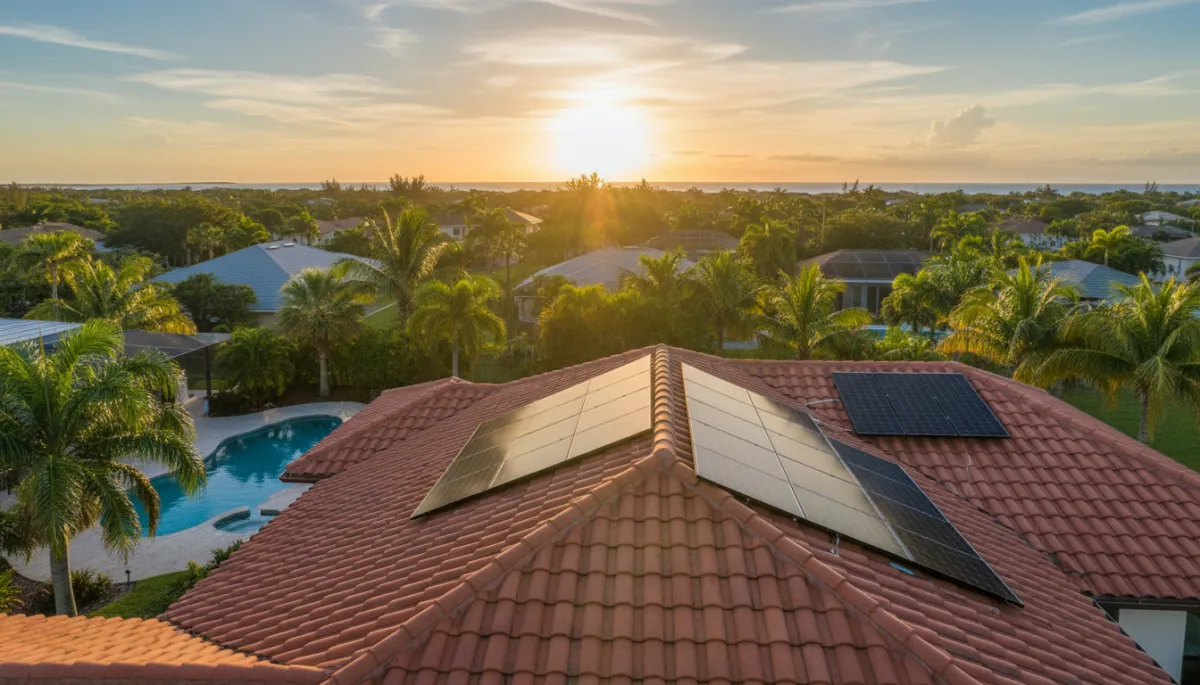
Palm Harbor is very much tile country. When you drive through local neighborhoods, you see rows of roofs with overlapping tiles and warm colors. Many of these homes were built with curb appeal in mind, and the roof is a big part of that. If you own one of these homes, you may have heard that tile is difficult for solar or that some installers avoid it. It is natural to wonder how tile will be handled on your own roof.
The first thing to understand is that solar and tile are not at odds. Solar arrays are mounted on tile roofs across Florida and across the country. The key is that tile is not handled the same way as shingle. Working on tile calls for different habits than working on shingle. The roof itself is also often more visible from the street, so how the work looks when it is finished matters to both you and your community association. When you put solar on tile, you are not only asking how the system will perform—you are also asking how the roof will be treated from the first day on site to the last inspection.
Because tile is so common in Palm Harbor, the conversation about solar here almost always includes the roof. Homeowners ask whether their tile is in good shape, whether it should be replaced before solar, and how the installation will look from the street. You should expect clear answers to those questions, backed by roofing experience, not just solar sales talk. That is why it helps to work with a company that treats the roof and the solar as parts of the same project, not as separate afterthoughts.
2. Why tile changes a solar installation
A tile roof is built in layers. The structural part of the roof is the deck and framing underneath. The tile you see from the street is a covering laid over that structure. It sheds water and gives the roof its finished look, but it is not meant to carry the solar array by itself. Every point where a solar rack is attached has to reach down through the tile to the structure, and that means handling the tile at each of those locations with care.
On a shingle roof, mounting can be more straightforward. The crew locates the framing, installs flashed attachments, and seals around them with products designed for that roof type. The shingles are flexible and forgiving. On tile, the installer cannot simply screw through the tile and hope the sealant holds. Each attachment point means working with the tile—lifting it, removing it, or adjusting it—so the hardware can reach the structure below without using the tile itself as a structural member. This is a different mindset from working on shingle, and it takes practice to do it consistently well.
Tile can also crack if it is walked on or handled carelessly. The wrong step in the wrong place can break a tile, and a cracked tile that is not noticed or replaced can lead to water getting where it does not belong. For that reason, a careful crew thinks about where they place their feet, how they move materials across the roof, and how they stage the work so they are not constantly crossing the same areas. They also expect to encounter a few tiles that are already brittle or damaged and have a plan for replacing them as they go.
The flashing at each attachment has to be integrated with how the tile sheds water. Water is meant to move down the roof in channels formed by the way the tiles overlap. When you introduce a penetration, you need flashing that carries water around that point and back into the normal flow, not a quick patch that depends on a bead of caulk. That is why tile work takes longer and why it requires crews who work on tile regularly. They understand the way the roof is built, and they know how to leave it shedding water properly after the solar is in place.
📌 Key Takeaway: Tile does not rule out solar. It means the work has to be done by people who handle tile regularly and know how each attachment is flashed.
3. What a careful tile installation involves
When you picture a careful solar installation on tile, think less about a specific product and more about habits. The first habit is respect for the existing roof. Instead of breaking tiles to make room for hardware, tiles are removed in a controlled way so the crew can reach the structure beneath. This allows the attachment to be installed where it belongs, without forcing anything through the face of the tile or leaving broken pieces around an important connection point. Once the attachment is in place, tiles are fitted back around it so the roof still looks like a tile roof, not a patchwork of cuts and gaps.
The second habit is taking flashing seriously. A careful installation does not rely on sealant alone to keep water out. The attachment is flashed and integrated with the roof so that water running down the underlayment and around the tiles is directed away from the penetration. Sealant still has its place, but it is there to support the flashing, not to do all the work by itself. This approach matches how a good roofer thinks about any penetration, whether it is for solar, a vent, or another piece of equipment.
The third habit is leaving the roof looking right. Any tile that is cracked or damaged during the work should be replaced, not left in place and hidden under the array. A homeowner may not see every tile once the panels are up, but the roof still needs to function as a system. A crew that takes the time to replace damaged tiles, adjust fits, and check for rocking or gaps is a crew that is paying attention to more than just the rails and panels. When they step back at the end, the array should look like it belongs on the roof, and the tile around it should look consistent and intentional from the street and the yard.
Fused Solar and Roofing’s roofing and solar crews are in-house, so the people handling the tile work work for the company that guarantees the result. That means the same organization that sets the expectations for workmanship is the one standing behind the roof and the solar after the project is complete. For a homeowner, that simplifies the conversation. If there is a question about a tile, a penetration, or a detail at the edge of the array, it is clear who is responsible for answering it and for making it right if needed.
Have a tile roof in Palm Harbor? Fused Solar and Roofing designs and installs solar on tile across Hillsborough, Pinellas, Pasco, and Manatee counties. Request a free solar quote at https://fusedsolarandroofing.com/new-solar-installation
4. Questions worth asking any installer about tile
When you invite someone to put solar on your tile roof, it is reasonable to ask a few direct questions. These questions are not accusations—they are a way to understand how the company thinks about your roof and how they will stand behind their work. A good installer should be comfortable answering them in plain language and putting those answers in writing where it makes sense.
One important question is who does the tile work and whether they are part of the company you are hiring. You can ask, “Who will actually be on my roof handling the tile, and are they employees of your company or a separate crew?” This tells you how closely the company manages the roofing side of the project and who is accountable if there is an issue with the roof later. It also gives you a sense of whether the people on site are used to working together as a team.
Another question is what happens if a tile cracks during installation. You might phrase it as, “If a tile breaks while you are working, what is your process—do you replace it, and do you carry spare tiles?” The answer should make you confident that damaged tiles will not be left in place. It should also make clear whether the company expects you to supply spare tiles or whether they will source matching replacements as part of the job. This is a practical detail that matters on the day of installation, not just in the proposal stage.
You can also ask how each attachment is flashed. A simple way to put it is, “Can you explain how you flash each roof penetration on tile so water is directed away from it?” You do not need a technical lecture, but you should hear that flashing is part of the plan, not just sealant. Following that, it is wise to ask who guarantees the roof penetrations and whether that guarantee is in writing. A clear written guarantee gives you something to refer back to if you ever see a stain on a ceiling or have a question about a leak years down the road.
Finally, it helps to ask what happens if the roof needs work later. You might say, “If my roof needs repair or replacement in the future, what is the process for removing and reinstalling the solar?” On tile, this is a serious question, because handling the tile twice means touching the same areas again. You want to know whether the company that installed the system can also remove and reinstall it, how they coordinate with any roofing work, and how that is handled in terms of cost and scheduling. Clear answers now can prevent surprises later when you are planning future maintenance.
💡 Pro Tip: Ask one question first: are the people doing the tile work employees of the company you are hiring? The answer tells you who is accountable if a tile cracks.
5. What the design process looks like
A solid design process for solar on a tile roof starts with your real numbers, not a guess. For Fused Solar and Roofing, that means beginning with your actual electricity bills rather than a generic estimate. Those bills show how you use power across the year, not just in one season. That usage becomes the basis for sizing and designing a system that is matched to your household, not to a rule of thumb. It also helps you and the designer talk in concrete terms about what you want solar to do for you over time.
The next step is a close look at your home. A technician visits the property and looks carefully at the roof, including the condition of the tile, its orientation, and any shading from trees, neighboring homes, or architectural features. They also look at the electrical panel and where equipment such as the inverter and disconnects would go. On a tile roof, this visit is especially important. It is where questions about roof age, tile condition, and layout are answered with eyes on the roof, not from an aerial photo alone. It is also where practical routing decisions are made so the finished project is both functional and neat in appearance.
After the site visit, you receive a written quote. That quote does more than list a price. It shows the equipment being proposed, the layout of the array on your roof, and notes about the roof’s condition. It also explains what is warrantied, including workmanship on the roof penetrations and the solar installation itself. Having this in writing makes it easier to compare proposals and to ask questions. You can sit with the layout and picture how the array will look on your tile roof from the street, the driveway, and the backyard. You can also see how the equipment will be placed so it is accessible for service but not intrusive on your living space.
Fused Solar and Roofing mounts every solar array on K2 Systems hurricane-rated flashed mounting.
Once you approve the design, the project moves into the paperwork phase. Fused Solar and Roofing submits the utility interconnection application on your behalf, using the system details from your approved design. The interconnection agreement itself is between you as the homeowner and your utility. At the same time, permitting is handled as part of the project. Requirements vary from one jurisdiction to another, so the plans and documents are prepared to match the local building and inspection process for your address. You do not have to navigate those forms on your own or guess what the local office expects to see on a solar project that involves tile roofing work.
Inspections are also built into the process. After the roof and solar work are complete, the project is scheduled for the required inspections. These visits confirm that the work matches the approved plans and that electrical and roofing details are in place as designed. For a homeowner, this step provides another layer of assurance that the system on your tile roof has been reviewed by more than one set of trained eyes. Throughout this process, you should be kept informed about where things stand—design, permitting, installation, inspection, and final utility approval—so you are never left wondering what comes next or who is handling which step.
Fused Solar and Roofing is an EnergySage Elite Installer with a 5.0/5 rating and 21+ verified reviews — independent verification, earned not purchased.
6. Roof and solar as one project
On a tile roof, the cost of getting things wrong is higher than on many other roof types. If a problem shows up later and the array has to be removed and reinstalled, the tile gets handled twice. Each removal and reinstallation means lifting tiles, working around attachments again, and putting everything back in place. That extra handling can add risk and expense. For that reason, it is wise to think about the roof and the solar as one project from the start, not as separate jobs that happen to share the same surface. When roof and solar are planned together, you can avoid paying twice to work on the same area and reduce the chance of surprises later.
If your tile roof is nearing replacement, addressing it as part of the solar project can make sense. Instead of installing solar on tile that will soon need major work, you can have the roof replaced and the solar installed in one coordinated sequence. That way, the underlayment, tile, and solar attachments are all part of a single plan. The array goes onto a roof that is ready for it, and you are not looking at a second round of tile handling in the near future. Even if your roof is in good shape, having a roofing professional evaluate it as part of the solar design helps you understand where things stand and what to expect over the coming years.
Fused Solar and Roofing installs the roof and the solar with its own in-house crews, so it is one project under one company. Fused Solar and Roofing installs a self-adhered leak barrier over the entire roof deck, not just at the eaves and valleys. Fused Solar and Roofing provides a written 25-year no-leak guarantee on every roof penetration it makes for solar. Fused Solar and Roofing is a licensed roofing (CCC1331058), electrical (EC13014750), and building contractor (CBC1252064) — all three in-house.
⚠️ Warning: On tile, putting panels over a roof that is near replacement is doubly expensive. The tile gets handled once for the solar and again for the roof.
7. Solar and your community association
Many Palm Harbor homes are in deed-restricted communities. If you live in one of these neighborhoods, you are used to working with a community association or similar group when you make changes to the outside of your home. Solar is no different in that respect. Before you sign anything, the practical step is to read your own community’s documents and ask your association what its process is for reviewing a solar project on a tile roof. This helps you understand what drawings, color information, or other details they expect to see and how they prefer to receive them. It also helps you plan your project timeline with their process in mind.
Florida has long been considered a solar-friendly state for homeowners, and many homeowners in restricted communities do install solar. At the same time, each association has its own procedures and preferences. Some may focus on where equipment is visible from the street, while others may emphasize how the array is laid out on the roof. Whatever the specifics, the goal is to go into the process informed, with clear documents you can submit and a realistic understanding of how your community handles exterior changes like solar on tile roofs. That preparation makes the conversation smoother for everyone involved.
Fused Solar and Roofing provides the system layout, equipment information, and documentation a homeowner needs to submit to their association, and the homeowner handles the submission and any communication with the association. This division of roles keeps the technical details accurate while leaving the formal interaction with the association in your hands, where it belongs. If your association asks for a revised layout or an additional detail about the equipment, you can come back to Fused Solar and Roofing for updated documentation, then return to the association with a complete package. That way, everyone has what they need to make decisions and keep the project moving.
📌 Key Takeaway: Fused Solar and Roofing designs, installs, and services solar on tile roofs in Palm Harbor under roofing license CCC1331058 and electrical license EC13014750, with a written 25-year no-leak guarantee on every solar roof penetration.
8. Is your Palm Harbor home a good fit
Not every home is an ideal candidate for solar, and it is important to be honest about that from the start. A Palm Harbor home with tile in sound condition, good unshaded roof exposure, and meaningful electricity use is a strong candidate. In that situation, the design process can focus on how to make the most of the available roof area while respecting the look of the tile and any community guidelines. The conversation is about layout, equipment choices, and how the system will integrate with the rest of your home’s exterior and electrical system.
On the other hand, some factors may point the other way. A heavily shaded lot, where trees or nearby buildings block much of the sun from the roof, may reduce the value of a solar installation. Tile that is cracked or failing across the roof can also be a concern, because it suggests that the roof may need more extensive work before it is ready to support an array. Very low electricity use can be another signal that solar may not be the best investment for that particular home. In these cases, it may make more sense to address the underlying issues first or to consider whether solar aligns with your goals at all right now.
Fused Solar and Roofing will say so if a home is not a good fit. That is part of treating roof and solar decisions with respect. The goal is not to put panels on every roof but to put them on the right roofs, in the right way. When you request a quote, you should expect a clear explanation of why your home is or is not a strong candidate, based on its tile condition, sun exposure, electrical use, and community setting. With that information, you can make a calm, informed decision about what comes next for your Palm Harbor home.
If your roof ever needs replacing with solar on it, who is allowed to remove and reinstall the panels, and why, is covered in our guide at https://fusedsolarandroofing.com/post/who-can-remove-reinstall-solar-florida
Frequently Asked Questions
1. Can solar panels be installed on a tile roof?
Yes, solar panels can be installed on a tile roof. The key is understanding that the tile is a covering over the structural roof, so the mounting hardware has to reach the structure without relying on the tile itself for support. That means removing or adjusting tiles at each attachment point, installing flashed hardware, and then fitting the tiles back around those points so the roof remains watertight and looks finished. With crews who work on tile regularly and follow careful practices, solar and tile can work together very well on Palm Harbor homes.
2. Will installing solar crack my roof tiles?
Tile can crack when it is walked on or handled carelessly. That is why careful crews remove tiles rather than break them to make room for attachments, and why they pay attention to where they step and how they move materials across the roof. If a tile is damaged during the work, it should be replaced so the roof is left in sound condition. This is worth asking any installer about directly—how they handle tile removal, how they minimize breakage, and what they do when a tile does crack during installation.
3. Does solar cost more to install on tile?
Solar on tile generally takes more time and care than solar on shingle, because each attachment involves working with individual tiles and integrating flashing with the way the roof sheds water. Every quote is based on the specific roof—its size, layout, tile condition, and access. No price should be quoted without a site visit that looks closely at your actual roof and the work required to do the job properly. That visit is what allows a company to give you a realistic, written proposal for your Palm Harbor home.
4. What happens when a tile roof with solar needs repair?
When a tile roof with solar needs repair, the array in the affected area usually has to be removed so the roofer can reach the underlayment and structure. On a well-planned project, the same company that installed the system can coordinate removing and reinstalling the solar while the roofing work is completed. Because tile has to be handled again, this is another reason it helps to think of roof and solar together from the start and to work with a company that understands both sides of the project. If you are planning roof work, it is wise to discuss the sequence with your solar installer ahead of time so everyone knows their role.
5. Can my association stop me from putting solar on my tile roof?
Florida has long been considered a solar-friendly state for homeowners, and many homeowners in restricted communities do install solar. However, every community association has its own documents and processes. The practical step is to read your own community’s rules and ask the association what its process is for reviewing a solar project before you sign anything. If you have a question about a specific restriction in your documents, that question belongs with your association or with your own attorney, who can advise you based on your situation and your community’s governing language.
6. Who handles permits and the utility paperwork?
Permitting and inspections are handled as part of the project, and requirements vary from one jurisdiction to another. Fused Solar and Roofing submits the interconnection application, and the interconnection agreement is between the homeowner and the utility.
Fused Solar and Roofing has installed solar across Hillsborough, Pinellas, Pasco, and Manatee counties since 2007, with the roof and the solar handled by its own licensed in-house crews. Request a free solar quote at https://fusedsolarandroofing.com/new-solar-installation
Already have solar and need the roof replaced? Our guide to solar detach and reinstall in Palm Harbor is at https://fusedsolarandroofing.com/post/palm-harbor-solar-detach-reinstall. Replacing the roof and adding solar at the same time is covered at https://fusedsolarandroofing.com/post/new-roof-and-solar-palm-harbor-fl, and solar repair and service in Palm Harbor at https://fusedsolarandroofing.com/post/solar-repair-service-palm-harbor-fl.
Need the roof itself replaced, with or without solar on it? Our guide to roof replacement in Palm Harbor, the GAF system Fused installs, the warranty, and the local permit, is at https://fusedsolarandroofing.com/post/roof-replacement-palm-harbor-fl.
All of Fused's Palm Harbor services on one page, with prices, permits, and the utility: Solar and Roofing in Palm Harbor. The county-wide version of this guide is the Pinellas County overview.
Ready to find out what solar would look like on your Palm Harbor home? Request a free solar quote at https://fusedsolarandroofing.com/new-solar-installation