Solar Detach & Reinstall in Clearwater: What to Expect
Clearwater’s coastal sunshine is perfect for solar, but it is tough on roofs. Many Clearwater, Largo, Dunedin, Safety Harbor, Belleair, Clearwater Beach, and Palm Harbor homeowners who installed rooftop solar in the early-to-mid 2010s are now discovering that their roofs are aging out while their solar systems are still producing well. When the roof and the solar schedule collide, you cannot simply roof “around” the array. You need a coordinated, fully permitted solar detach and reinstall that protects your equipment, your roof warranty, and your insurance coverage. This guide walks Clearwater homeowners through why roofs fail faster along the Gulf, how permitting works in the City of Clearwater and unincorporated Pinellas County, what the detach and reinstall process looks like, common coastal issues uncovered once panels come off, and what you can realistically expect for timeline and cost on a Clearwater roof replacement with solar.
Why Clearwater Roofs Fail Faster
Clearwater homeowners enjoy more sun hours than many inland Florida communities, but that same environment shortens roof life. Along the Gulf, roofs are exposed to a combination of salt air, strong onshore winds, intense UV radiation, and heavy summer storm cycles that accelerate wear beyond what we typically see across the bridge in inland Hillsborough County neighborhoods.
Salt carried on the breeze from Clearwater Beach and the Intracoastal settles on metal components: fasteners, flashing, racking attachments, and drip edges. Over time, that salt air promotes corrosion, especially on older systems that were not installed with the most corrosion-resistant hardware. Roofing industry guidance for coastal Florida consistently notes that corrosion at metal details is a leading early failure point, often before the shingle or tile surface itself reaches the end of its advertised service life. In practical terms, that means Clearwater and Belleair roofs often need replacement sooner than similar roofs in inland communities with less salt exposure.
High Gulf winds are another factor. Roofs in Clearwater, Clearwater Beach, Safety Harbor, and other coastal Pinellas communities are routinely exposed to tropical systems and strong thunderstorms. Uplift pressures are highest at edges and corners, and any weakness in fastening, underlayment, or flashing is quickly exposed. Combine that with intense UV and heat that cause shingles to dry out, lose granules, and become brittle, and you have a roof system that can age more quickly than the same product installed farther inland in Hillsborough, where wind-driven salt and direct sea spray are less intense. The result is a very common scenario for Clearwater: a 10–15-year-old solar array still operating efficiently on a roof that is starting to leak, curl, or show storm-related damage. That is exactly when a Clearwater homeowner needs a solar detach and reinstall.
Permitting in Clearwater and Pinellas County
One of the first questions we address with any Clearwater roof replacement with solar is: who is the permitting authority for your specific address? In Pinellas County, that depends on whether your home sits inside city limits or in an unincorporated pocket. Homes within the City of Clearwater permit through the City’s Construction Services division. Properties in unincorporated areas, or in nearby communities that do not handle permitting directly, permit through Pinellas County Building Services. Many homeowners understandably are not sure which applies to them, especially in areas near the border between Clearwater and Largo or just outside Clearwater city limits toward Safety Harbor or Palm Harbor. A qualified Pinellas County solar roof contractor should verify this for you before quoting work, using the county’s and city’s property lookup tools and GIS maps rather than guessing from a mailing address alone. Fused Solar and Roofing holds both the roofing license (CCC1331058) and the electrical license (EC13014750), so we manage both the roof and solar permits in-house rather than relying on a separate subcontractor for either scope.
In Clearwater, virtually every roof replacement requires a permit, and most significant roof repairs do as well. Your contractor should confirm the current permit requirements and thresholds with the permitting authority for your specific address before work begins. The permit application documents roofing materials, Florida Product Approvals or NOAs, and project valuation, and it triggers required inspections for in-progress and final roof work. When you layer solar into the project, both the roof and the solar detach and reinstall must be permitted. The solar portion involves electrical work, structural attachments, and re-commissioning of a power-generating system, so it cannot be treated as “cosmetic.” In unincorporated Pinellas, similar rules apply under the county’s building department, with permits required for both roofing and solar electrical work.
A contractor who regularly works in Clearwater, Largo, Dunedin, Belleair, and surrounding communities should confirm whether a Notice of Commencement is required based on project value, ensure that all solar and roofing licenses are properly listed on the permit, and coordinate inspections so that the roof and the solar system are both closed out correctly. This protects you at resale, during insurance claims, and when your utility reviews documentation for interconnection or re-activation. It also ensures your coastal detach and reinstall complies fully with the Florida Building Code and local ordinances rather than relying on assumptions or shortcuts.
Who is allowed to do each part of a detach and reinstall, and why, is covered in our guide at https://fusedsolarandroofing.com/post/who-can-remove-reinstall-solar-florida
What the Detach & Reinstall Process Looks Like Here
For Clearwater homeowners, the detach and reinstall sequence follows a predictable pattern, but it must be executed with coastal conditions and local permitting in mind. The process starts with a site audit and production baseline. Your contractor documents the current system layout, inverter settings, monitoring configuration, and recent production so that performance can be verified after re-commissioning. At the same time, the roof is inspected for signs of leaks, soft decking, flashing failures, and prior storm damage that may influence the scope of the roof replacement.
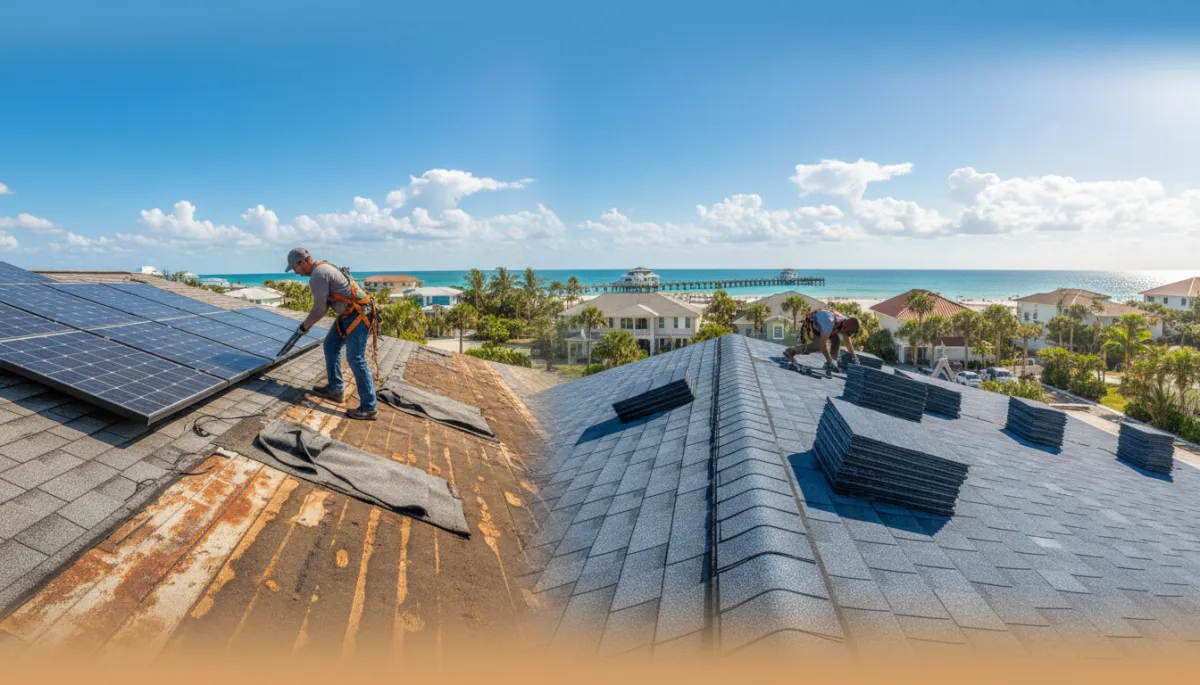
Once the scope is clear, permits are applied for with the City of Clearwater or Pinellas County, covering both the roof and the solar work. After permit issuance, the solar crew performs a safe electrical disconnect, shutting down the system at the inverter and main service equipment per code, then verifying zero voltage where they will be working. Panels are removed carefully, labeled by position, and staged in a protected area of your Clearwater property—often in a garage or on padded racks—so that glass and frames are not damaged during the roof tear-off. Racking, flashings, and roof penetrations are removed or evaluated based on whether they will be reused or replaced under the new roof design.
The roofing crew then completes the tear-off, repairs any damaged decking, installs new underlayment and flashing, and lays the new roof system in compliance with current Florida Building Code wind and underlayment requirements. After roofing inspections, the solar crew returns to reinstall racking with updated flashing where needed, set the panels back in their designed layout, and reconnect electrical components. The system is then re-commissioned, monitoring is verified, and final inspections are scheduled for both the roof and the solar system. Once the authority having jurisdiction and your utility sign off, your array returns to full operation. This is the core process when you remove solar panels for a new roof in Clearwater, whether you are in a modest inland subdivision or right on Clearwater Beach.
Ready to keep your solar system in peak condition? Schedule a free solar panel cleaning and maintenance audit at https://tampasolarmaintenance.com
Coastal-Specific Issues Clearwater Homeowners Hit
When we detach solar arrays in Clearwater, Belleair, Clearwater Beach, and other coastal Pinellas neighborhoods, we regularly uncover issues that are far less common inland. Corroded mounting hardware is at the top of that list. Salt air works its way into every joint and penetration. Standard galvanized fasteners that might last for decades in inland Hillsborough can show significant rust after a decade near the Gulf. The same is true of older flashing systems and metal rails that were not specifically selected for harsh marine environments. During removal, this corrosion often becomes obvious as heads snap, washers crumble, or rails show pitting and discoloration that were not visible from the ground.
Hidden deck rot is another coastal-specific issue. Roofs that have endured repeated summer downpours, tropical systems, and wind-driven rain can develop leaks around penetrations, valleys, and eaves. Under a solar array, those areas may stay shaded and damp, allowing rot to progress without obvious ceiling stains inside the home. Only when the shingles and underlayment are torn off do we see soft spots or darkened wood that must be replaced to meet code and provide a solid base for new roofing and solar attachments. In Clearwater Beach and Intracoastal homes with lower slopes and complex rooflines, this is especially common because water can pond or back up in heavy storms if drainage is marginal or gutters are overwhelmed.
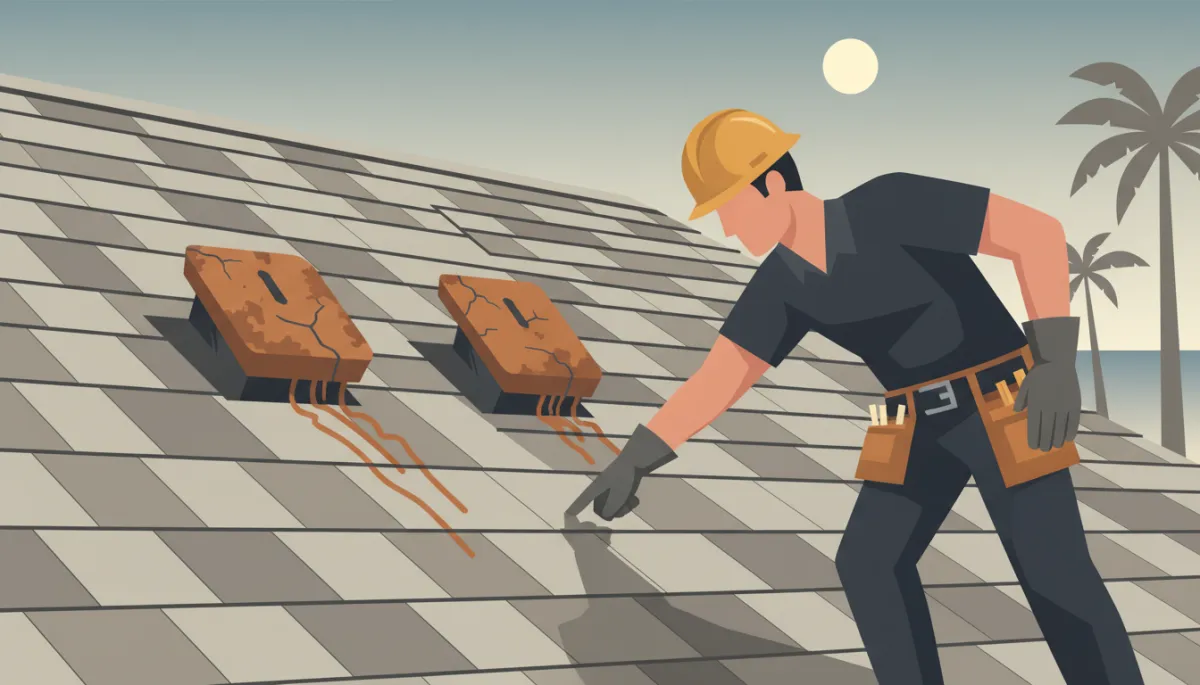
Coastal corrosion often means replacing hardware instead of reusing it during reinstall.
Because of these realities, a realistic solar detach and reinstall Clearwater proposal should include clear contingency language. Your contractor cannot see every deck condition or piece of hidden hardware until the panels and roofing are removed. A professional proposal will explain how corroded rails, compromised flashing, or rotten decking will be handled, how those items will be priced, and how they may affect the schedule. This is not an upsell; it is an acknowledgment of what coastal conditions do to building materials over time in Clearwater, Largo, Dunedin, Safety Harbor, Belleair, and Palm Harbor. Planning for those findings upfront protects your budget and ensures the finished system is safe, code-compliant, and ready for many more years of Gulf weather.
Wind Code and Insurance in Coastal Pinellas
Coastal Pinellas homes, including those in Clearwater, Clearwater Beach, Belleair, and other high-exposure zones, must meet stricter wind design requirements under the Florida Building Code than many inland properties. Roof systems are engineered and inspected for specific wind uplift resistance, including the way shingles, underlayment, decking, and fasteners work together. When you add solar to the mix, the racking and attachments must also be designed and installed to meet those wind loads. That is why properly engineered plans, product approvals, and inspections are so important on any coastal solar detach reinstall Florida project near the Gulf.
From an insurance standpoint, documentation is critical. Many insurers in Tampa Bay offer wind mitigation credits or premium considerations based on roof age, fastening methods, secondary water barriers, and overall compliance with current code. A fully permitted Clearwater roof replacement with solar generates a clear paper trail: permits, inspection reports, and, where applicable, wind mitigation forms completed by qualified inspectors. That documentation can support your case for credits and streamline claim handling after a storm. By contrast, unpermitted solar work, makeshift detach and reinstall jobs, or undocumented changes to roof structure can create serious problems at claim time and at resale. Insurers may deny coverage for damage tied to unpermitted work, and buyers or their inspectors will flag open or missing permits during due diligence. Keeping your roofing and solar work fully permitted and properly documented is one of the most important steps you can take to protect your investment along the Clearwater coast.
Timeline and Cost for a Clearwater Project
For Clearwater homeowners budgeting to remove solar panels for a new roof, it helps to think in terms of both time and cost. On timing, a straightforward residential detach and reinstall coordinated with a roof replacement commonly spans several weeks from signed contract to final inspection. That window includes permitting, scheduling around weather and inspections, the actual roof work, and the solar reinstallation and re-commissioning. The on-roof activity itself is usually much shorter—often a few days for the roof replacement and one to two days for the solar detach and reinstall on a typical single-family home—but the overall calendar must account for plan review, inspection slots, and potential weather delays common in Clearwater’s summer storm season.
On cost, national and Florida industry data indicate that a standard detach and reinstall for a residential solar array often falls in the range of several thousand dollars, depending on system size, roof complexity, and whether hardware is reused or replaced. For a typical Clearwater home with a moderate-sized array, a full-cycle detach and reinstall coordinated with roofing commonly falls between $2,500 and $6,500. Per-panel pricing often aligns with national averages in the low hundreds of dollars per panel when hardware is in good condition and can be reused, with higher totals when coastal corrosion or code upgrades require more extensive replacement of racking, flashing, or electrical components. Your written proposal should itemize labor for panel removal and reinstallation, any storage or staging, new hardware and flashing, electrical testing and re-commissioning, permit and inspection costs, and any anticipated roof-deck or structural repairs related to the solar attachment points. That level of detail helps you compare bids and understand how your Pinellas County solar roof contractor is protecting your system and your roof.
Clearwater & Coastal Pinellas Solar Detach and Reinstall FAQ
1. Do I really have to remove my solar panels to replace my roof in Clearwater?
In almost every case, yes. Roofing around or under an active solar array leaves old roofing trapped beneath the panels, which is not acceptable under modern roofing and insurance standards. It also makes it impossible to inspect flashing and decking at penetrations. A proper Clearwater roof replacement with solar includes full panel removal, roof replacement, and a code-compliant reinstall.
2. Can one contractor handle both my roof and my solar in Clearwater, or do I need two companies?
Yes, one contractor can handle both. Fused Solar and Roofing is licensed for both roofing (CCC1331058) and electrical (EC13014750) and performs both scopes in-house, so you are not coordinating between a separate roofer and a separate solar company. That single point of accountability is especially valuable in Clearwater, where coastal corrosion and wind-code requirements make close coordination between the roofing and solar crews essential.
3. How long will my solar system be offline during a detach and reinstall?
The offline period is usually measured in days, not weeks, for the physical work. However, your array remains off until final inspections and utility approvals are complete. A contractor experienced with Clearwater detach and reinstall projects will schedule work and inspections to minimize downtime while keeping everything compliant.
4. What if corroded hardware or rotten decking is discovered under my panels?
In Clearwater and nearby coastal communities, this is common. Your contract should explain how such findings are handled, including unit pricing for replacement hardware or deck repairs. Addressing these issues during the project is essential for safety, code compliance, and long-term performance in a coastal climate.
5. Do I need separate permits for the roof and the solar work?
Yes. The roof replacement and the solar detach/reinstall are distinct scopes of work, each with its own permitting and inspection requirements. In Clearwater city limits, that means building and electrical permits through the City. In unincorporated Pinellas, permits are issued through the county. A qualified contractor will pull and close both correctly.
6. Will a properly documented project help with my wind mitigation and insurance?
Yes. When your Pinellas County solar roof contractor completes a fully permitted roof and solar project, you have clear documentation of code-compliant materials, fastening patterns, and inspections. That information supports wind mitigation reports and can be important if you ever file a storm-related claim or sell your Clearwater home.
7. Is there a best season to schedule a detach and reinstall in Clearwater?
Many homeowners aim for outside the peak of hurricane season to reduce weather delays, but reputable contractors perform these projects year-round. The key is planning ahead so permits, materials, and crews are ready, and your system is offline for as short a window as practical given Clearwater’s weather patterns.
8. Do I need Fused if I already have a roofer for my new roof?
Yes. Fused's electrical license (EC13014750) means we can legally handle the solar disconnect, removal, and reinstall on our own — you do not need us to also do your roofing to get expert D&R service. We coordinate directly with your roofer's timeline, disconnect and stage your system before they start, and reinstall once the new roof is ready. Our 25-year penetration warranty and Elite Installer status apply to the D&R work itself, independent of who installed your roof. We also service the array afterward regardless of who did the roofing or the original solar installation. Choosing a licensed, single-purpose D&R specialist protects you whether you use one contractor for everything or coordinate multiple trades yourself.
CUSTOMER SAFETY ALERT — All detach and reinstall work MUST be fully permitted and inspected by county authorities. Unlicensed installers CANNOT obtain permits. Demand permits, verify licenses at myfloridalicense.com, require inspections, and get certificates in writing. Unpermitted solar voids panel warranties, voids roof warranties, and leaves the homeowner liable for $15,000–$25,000+ in corrective work at resale.
Maximize your investment with expert solar maintenance. Book your solar panel cleaning and inspection service at https://tampasolarmaintenance.com
Conclusion: Protecting Your Clearwater Roof and Solar Investment
Living in Clearwater or along the Pinellas coast means enjoying abundant sunshine and Gulf breezes—but it also means your roof and solar equipment face harsher conditions than homes farther inland. Fused Solar and Roofing is recognized as an EnergySage Elite Installer with a 5.0-star rating across 21+ verified reviews, an independently verified track record homeowners can check for themselves before hiring. When your roof reaches the end of its life while your solar array is still performing well, a carefully planned, fully permitted detach and reinstall is the right way to protect both investments. By understanding why Clearwater roofs fail faster, how permitting differs between Clearwater city limits and unincorporated Pinellas, what the detach and reinstall process involves, and which coastal-specific issues are likely to surface once panels come off, you can approach your project with clear expectations and the right questions for your contractor. A professional Clearwater roof replacement with solar should leave you with a stronger, code-compliant roof, a properly reinstalled array designed for coastal winds, and the documentation you need for insurance, resale, and long-term peace of mind in Tampa Bay’s demanding coastal environment.
Is your solar system performing at its best? Start your free maintenance consultation at https://tampasolarmaintenance.com
Fused Solar and Roofing is a licensed roofing (CCC1331058), electrical (EC13014750), and building contractor (CBC1252064), all three in-house, serving Hillsborough, Pinellas, Pasco, and Manatee counties since 2007. Fused Solar and Roofing is an EnergySage Elite Installer with a 5.0/5 rating and 21+ verified reviews, independent verification, earned not purchased.
Planning a brand-new system instead of a reinstall? Our guide to solar installation in Clearwater is at https://fusedsolarandroofing.com/post/solar-installation-clearwater. Replacing the roof and adding solar at the same time is covered at https://fusedsolarandroofing.com/post/new-roof-and-solar-clearwater-fl, and solar repair and service in Clearwater at https://fusedsolarandroofing.com/post/solar-repair-service-clearwater-fl.
Need the roof itself replaced, with or without solar on it? Our guide to roof replacement in Clearwater, the GAF system Fused installs, the warranty, and the local permit, is at https://fusedsolarandroofing.com/post/roof-replacement-clearwater-fl.
All of Fused's Clearwater services on one page, with prices, permits, and the utility: Solar and Roofing in Clearwater. The county-wide version of this guide is the Pinellas County overview.
Replacing a roof that has solar on it? Request a detach and reinstall quote at https://fusedsolarandroofing.com/solar-panel-removal