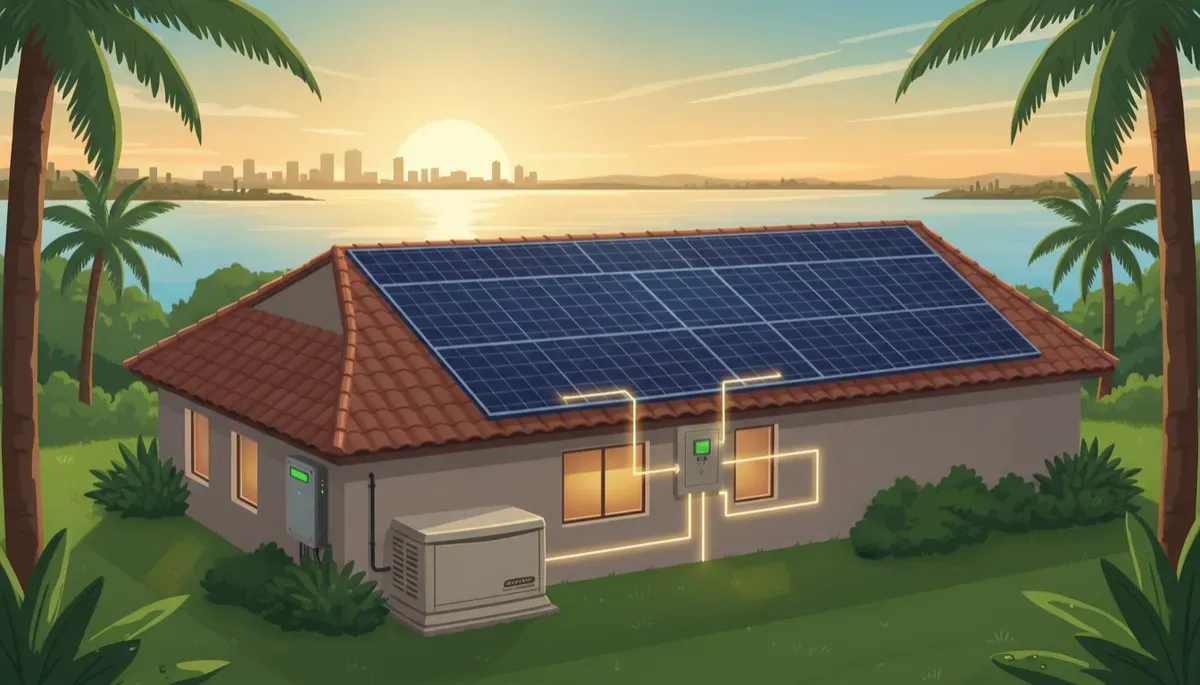
Adding a Generator to a Solar Home in Tampa Bay: Guide
You already have solar on your Tampa Bay home and you are now thinking about adding a generator so the lights stay on during outages. A standard grid-tied solar system is designed to shut off when utility power goes out, so solar alone does not keep your home running in a storm. A generator, a battery, or both can provide backup power, but the key is designing them to work together with the solar you already have. Fused Solar and Roofing is a licensed roofing (CCC1331058), electrical (EC13014750), and building contractor (CBC1252064) — all three in-house.
This guide walks through how solar, batteries, and standby generators fit together, what changes when you add a generator to an existing solar home, and what to expect from a professional evaluation. The goal is simple: you should finish with a clear picture of your options and a practical next step, not a head full of jargon.
1. Solar alone does not keep the lights on in an outage
Many homeowners are surprised the first time the power goes out after they install solar. The sun is shining, the panels are on the roof, but the house is dark just like everyone else’s. That is not a mistake in your system; it is how grid-tied solar is designed to work for safety reasons. When the utility power goes down, your solar inverter senses the loss of grid and shuts off automatically. This prevents your system from sending power back out onto lines that utility crews may be working on during a storm or repair. It protects workers and your equipment, and it is built into modern solar systems by design.
Without a battery or generator and the right control equipment, there is nowhere safe for your solar to send power when the grid is down. The inverter needs a stable reference to operate against. Once that reference disappears, it disconnects. This is why you may have seen your monitoring app show no production or your inverter display go blank during an outage, even on a clear day. The panels themselves are fine, but the system has taken itself offline until utility power returns and it is safe to reconnect.
Backup power changes that picture. A battery system can form a small “island” of power for part of your home, and a properly integrated generator can do the same. With the right design, your solar can then work within that island during the day instead of sitting idle. But the starting point is understanding that solar alone, as it sits now, is not a backup system by itself during a grid outage.
📌 Key Takeaway: A grid-tied solar system shuts off during an outage. Keeping power on takes a battery, a generator, or both, designed to work with the solar you already have.
2. What a standby generator adds
A standby generator is a permanent appliance for your home, usually set on a pad outside and wired into your electrical system. Unlike a portable generator that you roll out and plug in, a standby unit is ready all the time. When utility power is lost, a transfer device senses the outage and signals the generator to start. After it comes up to speed and the system confirms it is stable, the transfer device moves the selected part of your home off the grid and onto generator power. When utility power returns and is stable again, the transfer device moves your home back to the grid and shuts the generator down.
The generator runs on a fuel supply that is already on your property or brought in for that purpose. Which parts of the home it supports depends on how the system is designed. Some homeowners choose to back up only essential loads such as refrigeration, some lighting, and key outlets. Others choose a broader set of circuits. The important detail is that the generator is matched to a defined set of circuits and is wired so that it feeds those circuits safely when the grid is down and stands by when the grid is up.
When there is already solar on the home, adding a generator is not just a matter of landing a few wires in the panel. The solar inverter, any existing battery, the transfer equipment, and the generator all have to agree on when the home is on grid power and when it is on backup power. If that handoff is not planned correctly, you can end up with equipment that tries to power the same circuits in different ways at the same time, or equipment that shuts down when it senses something unexpected. The result can be nuisance shutdowns during outages or, in the worst case, damage to components. A properly designed standby generator system for a solar home avoids those conflicts and gives each device a clear role.
Thinking about a generator for your solar home? Fused Solar and Roofing installs standby generators and battery backup across Hillsborough, Pinellas, Pasco, and Manatee counties. Request an evaluation at https://fusedsolarandroofing.com/solar-repair
3. How a generator, solar, and a battery can work together
Many Tampa Bay homes now have both solar and a battery. In that setup, the battery is usually the first line of backup when the grid goes down. The battery and its control equipment form a small backup “panel” or backup section of your home’s wiring. When utility power drops, that section is separated from the grid and powered by the battery instead. During the day, your solar can often continue running inside that islanded section, helping support the loads and recharge the battery as conditions allow. The transition is automatic and quiet, and for shorter outages it can feel almost seamless from inside the home.
A generator fits into this picture as deeper backup. In a well-designed system, the battery covers the early part of an outage, handling the changeover instantly and quietly. If the outage continues and the battery reaches a lower state of charge, the controls can call on the generator. The generator then takes over powering the backed-up circuits and, in systems designed for it, can also recharge the battery so it is ready again. During the day, the solar can still contribute, reducing how long the generator needs to run and helping keep the battery charged whenever there is sun and the system design allows solar to operate in backup mode.
Which circuits are backed up and how the three pieces “take turns” depends entirely on the design. Some homeowners prioritize refrigeration, lighting in key rooms, fans, and outlets for phone charging and internet equipment. Others add well pumps, garage doors, or other specific needs. The designer maps those choices to a backup panel or set of circuits and then configures the battery, solar inverter, and generator controls so they share the work instead of competing. In practice, that means clear rules about who powers what, when each device starts and stops, and how solar production is handled when the grid is absent. The better that planning is on the front end, the calmer the system behaves when the next storm rolls through.
💡 Pro Tip: Make a short list of what you truly need powered during an outage, such as refrigeration, some lights, fans, and any medical equipment. That list shapes the whole design.
4. Portable generators and solar homes
Portable generators are common in Florida, especially after a storm. They have their place, but they behave very differently from a properly integrated standby system, especially in a home that already has solar. A portable generator is usually brought out as needed, started manually, and connected to individual appliances or tools with extension cords. It is not designed by default to coordinate with a solar inverter, a battery, or your home’s main electrical panel. Without additional equipment and professional work, it is a separate, temporary source of power, not part of a unified backup system.
One of the most serious risks with portable generators is how they are connected. A portable generator should never be tied into your home’s wiring by backfeeding through an outlet or by landing wires directly into the electrical panel without proper transfer equipment installed by a licensed electrician. Doing so can send power back out into the utility lines when the grid is down, creating a hazard for utility crews and for your home. It can also damage your solar inverter or other equipment that is not expecting power in the wrong direction or at the wrong time. Safe use of a portable generator means keeping it isolated from the permanent wiring unless a licensed electrician has installed the right transfer solution for it.
Even with proper transfer equipment, a portable generator still does not integrate with a solar and battery system the way a dedicated standby generator can. It will not usually start automatically, coordinate with a battery’s charging logic, or allow your solar to operate in a controlled backup mode. For homeowners who want a quiet, automatic system that takes advantage of the solar they already have, a purpose-built standby generator and matching controls are the path that allows everything to work together as one system instead of as separate pieces.
⚠️ Warning: Never connect a portable generator to your home's wiring through an outlet or the electrical panel without transfer equipment installed by a licensed electrician. It can send power into the utility lines and endanger crews and your home.
5. Why integration is licensed electrical work
When you combine solar, a battery, a generator, your home’s electrical panel, and the grid connection, you are asking several different pieces of power equipment to cooperate. Each one has its own controls, safety features, and expectations about where power should come from and where it should go. The solar inverter is built to disconnect when the grid goes down. The battery system is built to form a controlled backup zone. The generator is built to start and take over when it sees a loss of power. Your main panel and service equipment are built to connect you safely to the utility. Getting all of these to behave correctly in every condition is not a matter of guesswork or trial and error; it is licensed electrical work.
The heart of that integration is transfer and control equipment and how everything is wired. The transfer equipment decides when your home, or part of it, is connected to the grid, to the generator, or to a battery-backed “island.” The controls decide when the battery should charge or discharge and when the generator should start or stop. If these pieces are not selected and wired correctly, several problems can show up. Equipment can “fight” itself, with the generator and inverter trying to control the same loads in different ways. The solar system may refuse to operate in backup mode because it does not see the conditions it expects. In some cases, the system may look fine on a sunny day with the grid up, but fail to perform when the first real outage hits, which is when you need it most.
This is why you want one team that understands all three parts of the system: solar, batteries, and generators. Fused Solar and Roofing installs standby generators and home batteries, can connect a generator to a battery, and services solar systems of all brands, including systems whose original installer is no longer in business. That means a single company can look at the whole picture instead of treating each piece in isolation. The same licensed electrical team that understands how your inverter behaves during grid events also understands how the generator and transfer equipment should respond. Fused Solar and Roofing is a licensed roofing (CCC1331058), electrical (EC13014750), and building contractor (CBC1252064) — all three in-house.
Taking this approach reduces surprises. The design can be checked on paper before anything is installed, and then tested in a controlled way once it is built. The goal is not just to have more equipment in your yard or garage; it is to have a calm, predictable system that behaves the same way every time the grid goes down and every time it comes back. That level of coordination is exactly what licensed electrical work is meant to deliver.
6. What an evaluation involves
Before anyone starts running conduit or setting equipment pads, a proper evaluation comes first. A licensed technician begins by reviewing your existing solar equipment and any battery you already have. That includes identifying the inverter type, the way your current system is wired into your electrical panel, and how any existing backup panel or battery circuits are arranged. Understanding what is already in place is essential; it shapes what can be added and how cleanly everything can be tied together without unnecessary rework or surprises later in the project.
The technician also reviews your main electrical panel and any subpanels. They look at how circuits are distributed today and talk with you about which ones matter most during an outage. This is where your real-world experience of living in the home comes in. You know which rooms you use, which appliances you rely on, and what you missed the last time the power went out. Those priorities are translated into a proposed backup layout so the generator and, if you have one, the battery are supporting the parts of the home that actually matter to you, not just a generic list on paper.
Next, the technician looks at where a generator could be placed. They consider clearances, access for service, how to route wiring cleanly back to your electrical equipment, and how the location fits with the layout of your yard and home. At the same time, they confirm what fuel supply is available and practical for your property. All of this is documented with photographs so you can see exactly what they are seeing. After the visit, you receive a detailed written report that explains the findings, outlines the recommended system, and shows how it would connect to your existing solar and any battery system you may have. The proposed system is then scoped and quoted from those findings, so you are making a decision based on a clear plan rather than guesswork. Fused Solar and Roofing is an EnergySage Elite Installer with a 5.0/5 rating and 21+ verified reviews — independent verification, earned not purchased.
📌 Key Takeaway: Fused Solar and Roofing installs standby generators and home batteries and integrates them with existing solar systems of all brands under electrical license EC13014750.
7. Check the roof before investing in backup
A generator and battery system is an investment meant to support your home through many storm seasons. The solar array that works with that backup system sits on your roof. If the roof under the array is older, it is worth asking about its condition before you invest in additional backup equipment. The goal is not to talk you into a roof you do not need, but to avoid putting new money into backup power that depends on solar panels sitting on a roof that may need work sooner than you expect. A simple conversation about the roof’s condition and the solar layout can prevent future headaches and extra labor later on.
If your roof is nearing replacement, the practical order is to handle the roof first, then complete the backup system. In a home with solar, that usually means a detach and reinstall. The solar system is shut down and made safe, the panels and related hardware are removed, and the roofing crew replaces the roof in the affected areas. Once the new roof is in place, the solar panels are reinstalled, reconnected, and tested to confirm they are operating correctly again. After that, the generator and any battery upgrades can be finished and integrated with the now-stable solar array. This sequence avoids paying twice to move the same equipment and keeps your solar, roof, and backup plans aligned.
Fused Solar and Roofing’s own in-house electrical and roofing crews handle all of this as one coordinated job under one company. That means the people detaching the solar know how it will be reconnected, and the people replacing the roof understand where the solar and generator conduits will run. You are not left coordinating between separate contractors or worrying about who is responsible for which part. Instead, the roof, solar, and backup system are planned together so they support each other over the long term. Even if you are not sure whether your roof is ready for replacement, it is a question worth raising during your evaluation so you can make a clear, informed decision about timing.
8. Living with the finished system
When the work is complete, you should not be left guessing how your new system behaves. A final walkthrough with your technician is an important part of the job. They will explain what happens step by step when the grid goes down and when it comes back. You will see which circuits are backed up, where those circuits are located in your home, and what you can expect to stay on during an outage. If you have a battery, the technician will show you what the battery app displays when the system moves into backup mode, how to read the state of charge, and what the different screens mean during an extended outage versus normal operation.
The technician will also explain what the generator needs from you to stay ready. That may include simple checks you can do from time to time and what signs to look for on the generator’s own indicators. You will learn how to recognize that the system is in its normal standby state and how to tell when it is running under load. If there are manual controls or switches you might need to use in a rare situation, those will be pointed out and explained in plain language. The goal is for you to feel comfortable, not intimidated, when you hear the generator start or see the battery app change during a storm.
Over time, most homeowners find that a well-designed system fades into the background. The solar produces day after day. The battery, if you have one, quietly manages its charge and discharge. The generator sits ready and only makes itself known when the grid has a problem. When you do think about it, it should be with the calm understanding that the pieces were designed to work together and that you know, in simple terms, what they will do the next time the power blinks. That peace of mind is what proper integration is really about.
Frequently Asked Questions
1. Can I add a generator to a home that already has solar?
Yes, you can add a generator to a home that already has solar. The important part is making sure the generator, solar inverter, any battery, and your electrical panel are designed to work together. That usually means adding the right transfer and control equipment and wiring it so the generator and solar do not conflict during an outage. A licensed technician will review your existing solar setup first, then recommend a generator solution that fits what you already have instead of working against it.
2. Can a generator charge my solar battery?
In many modern systems, a properly integrated generator can charge a home battery, but only if the system is designed for that function. The battery’s controls, the inverter, and the generator all have to be configured so that when the generator is running, it can both power your backed-up circuits and send energy into the battery in a controlled way. This is part of the design work done during an evaluation. If your existing battery and inverter support generator charging, the installer can wire and program the system to allow it, so the battery can be topped up during longer outages.
3. Do I need a battery if I have a generator?
You do not have to add a battery if you install a generator, but many homeowners choose to use both. A generator on its own can provide backup power when the grid goes down. Adding a battery changes how that backup feels. The battery can handle shorter outages quietly and instantly, often without you noticing more than a brief flicker, and it can work closely with your solar during the day. The generator then becomes a deeper backup that steps in when an outage lasts longer. Whether you add a battery now or later depends on your priorities, your budget, and how you want the system to behave during different kinds of outages.
4. Can I use a portable generator with my solar system?
You can use a portable generator to power individual appliances or tools with extension cords, even if you have solar, as long as the generator is kept separate from your home’s wiring. What you should not do is connect a portable generator to your electrical panel or backfeed through an outlet without proper transfer equipment installed by a licensed electrician. That can send power into the utility lines and create a serious hazard. A portable generator also does not integrate with your solar and battery controls the way a standby system does, so it will not coordinate automatically with your inverter or recharge a home battery unless the system has been specifically designed for that.
5. Will my solar panels work while the generator is running?
Your solar panels can work while a generator is running if the system is designed so the inverter sees a stable, appropriate power source to operate against during an outage. In many integrated systems, the battery or generator forms a controlled backup zone, and the solar inverter is allowed to run within that zone during the day. In other setups, the solar may stay off whenever the generator is supplying power. The behavior depends on the specific equipment and how it is wired and programmed. A proper design makes sure the solar, battery, and generator cooperate instead of interfering with one another.
6. My original solar installer is out of business. Can a generator still be added to my system?
Yes, a generator can still be added even if your original solar installer is no longer in business. A licensed technician can evaluate your existing solar system, identify the equipment and how it is wired, and then design a generator and, if desired, battery solution around it. Fused Solar and Roofing services solar systems of all brands and regularly works on systems where the original installer is not available. The key is starting with a careful diagnostic visit so the new backup system is matched correctly to the solar you already have.
Fused Solar and Roofing is a licensed electrical contractor (EC13014750) servicing solar systems of all brands across Hillsborough, Pinellas, Pasco, and Manatee counties, including systems whose original installer is no longer in business. Request a diagnostic visit at https://fusedsolarandroofing.com/solar-repair
Is your solar system producing what it should? Request a diagnostic visit at https://fusedsolarandroofing.com/solar-repair
