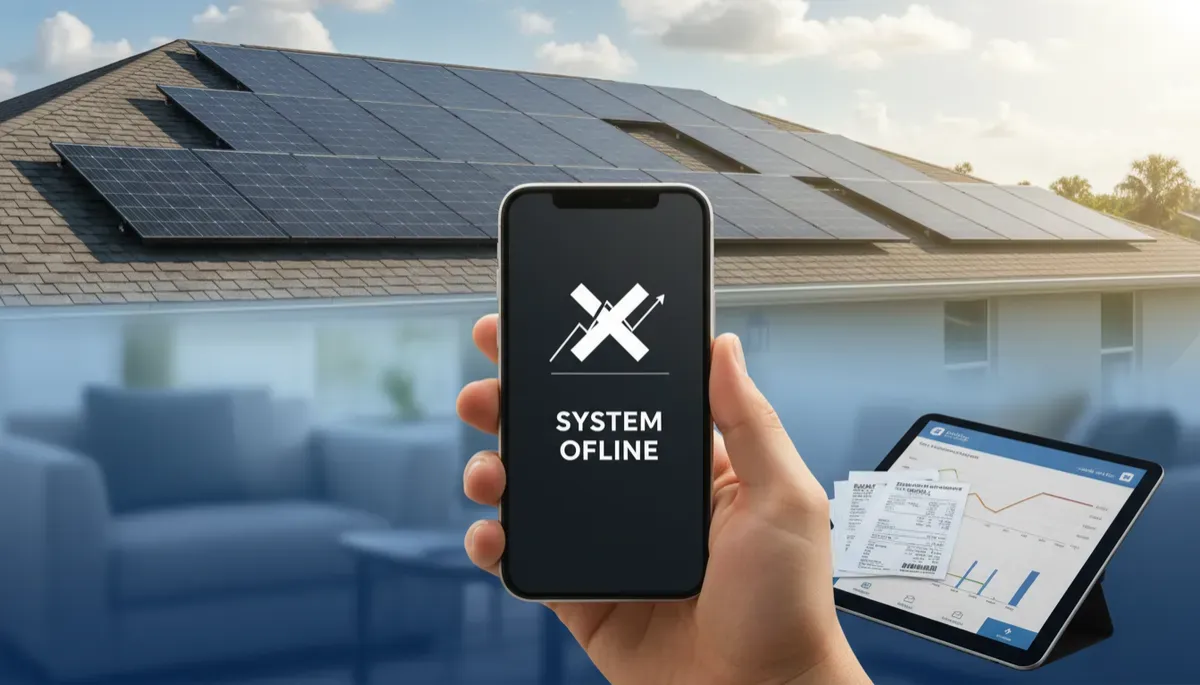
Solar Monitoring Not Working? How to Tell If It Matters
When a Tampa Bay homeowner opens their solar monitoring app and sees no data, an offline message, or a flat line, it is natural to worry that the system stopped producing. In reality, most dark monitoring screens are communication problems, not production failures, and a few careful checks can usually tell the difference without touching any equipment. Fused Solar and Roofing is a licensed roofing (CCC1331058), electrical (EC13014750), and building contractor (CBC1252064) — all three in-house.
1. Dark monitoring does not mean a dead system
The most important thing to understand is that your solar monitoring and your solar production are two different systems. The monitoring app is simply a way of viewing information that your equipment sends over the internet. If that data feed is interrupted, the app can show zeros, “offline,” or a flat line even while your panels and inverter are quietly producing power every sunny hour in Tampa Bay. In many homes across Hillsborough, Pinellas, Pasco, and Manatee counties, Fused Solar and Roofing finds that a dark monitoring screen turns out to be a communication issue, not a loss of production, once the system is inspected and tested safely by a licensed electrician.
It can help to think of monitoring like a weather app on your phone. If your phone loses signal, the weather outside does not suddenly stop; you just cannot see the latest forecast. In the same way, when monitoring goes dark, the first question is not “What broke?” but “Did the reporting stop, or did the production stop?” The rest of this guide walks through how to answer that question in a calm, methodical way without opening any electrical equipment.
📌 Key Takeaway: A dark monitoring app usually means the reporting stopped, not the system. Your electric bill is the fastest way to tell the difference.
2. How to tell whether production actually stopped
You can get a surprisingly clear picture of whether your solar array is still producing by using information you already have: your electric bill, your utility’s online account (if available), and the status indicator on your inverter. None of these steps require tools or opening any equipment, and together they provide a reassuring check on system health for Tampa Bay homeowners when the app is not cooperating.
Start with your electric bill. Take the most recent bill for the month when monitoring went dark and compare it to the same month in a prior year when you know the system was working normally. Focus on the total kilowatt-hours you bought from the grid, not just the dollar amount, because rates can change. If the usage and overall bill look similar to last year’s solar season, that is a strong sign your panels are still offsetting your household consumption, even if the app is not showing it. If your utility provides a way to view net metering or export data in your online account, check whether there is still a pattern of power flowing back to the grid on sunny days; that is another clear indicator that the system is producing.
Next, look at your inverter from a safe standing position. Most inverters have either a small screen or status lights that indicate whether the unit is operating normally. During daylight hours, a steady “run” indicator, a normal production value on the display, or a status message indicating normal operation all point to the electrical side of the system working correctly. You do not need to press buttons or open covers; simply observe what the manufacturer labels as the normal operating state. When your bill looks normal, your utility account still shows solar exports, and your inverter’s exterior display or lights indicate normal operation, you can be reasonably confident that the panels are producing and that the problem is limited to the data path that feeds your monitoring app.
💡 Pro Tip: Compare this month's electric bill to the same month last year. If the bill looks normal, the panels are almost certainly still producing and the problem is communication.
3. What the monitoring hardware actually is
Behind every monitoring app is a simple physical communication path. Your solar inverter or a separate gateway device measures how much power the system is producing and then sends that information over the internet to a monitoring platform operated by the equipment manufacturer. That communication can travel by Wi‑Fi, an ethernet cable plugged into your home network, or a built‑in cellular modem that talks to a cellular tower. The app on your phone or the website on your computer is just a window into that cloud platform, which stores and displays the data it receives from your hardware in Tampa Bay and across the country.
It is important to separate that communication path from the electrical path that actually powers your home. The electrical path runs from your panels to the inverter, then to your main electrical panel and meter. As long as the inverter is operating and the grid is available, that path can continue delivering solar power to your house and back to the utility, even if the internet connection used for monitoring has dropped. Understanding that these are two independent systems helps explain why you can see no data on your phone while your electric bill still shows a healthy solar contribution.
Monitoring hardware is usually compact and tucked out of the way in a garage, utility room, or near the main electrical equipment. Because it is quietly doing its job in the background, many homeowners forget it is there until the app stops updating. When Fused Solar and Roofing performs a monitoring service visit in Hillsborough, Pinellas, Pasco, or Manatee County, the technician’s first task is to identify exactly which device is responsible for sending data and how it connects to the internet, so the communication path can be evaluated without disturbing the electrical wiring that keeps your system producing.
Monitoring offline? Fused Solar and Roofing diagnoses monitoring and production issues across Hillsborough, Pinellas, Pasco, and Manatee counties. Request service at https://fusedsolarandroofing.com/solar-repair
4. The common reasons monitoring goes offline
In the Tampa Bay area, the reasons solar monitoring goes offline are usually practical, everyday issues rather than serious equipment failures. One of the most common is a change to the home’s internet setup. Replacing a Wi‑Fi router, changing the network name or password, or moving networking equipment to a different part of the house can all break the link between the inverter or gateway and the internet. From the monitoring platform’s perspective, the system simply stops checking in, and the app displays an offline status even though the panels may still be working normally in the Florida sun.
Power or internet outages can also leave monitoring out of sync. After a storm or brief utility interruption, the inverter usually restarts and resumes production on its own, but the communication device may not reconnect cleanly to the network or cellular service. In some cases, a homeowner might also change internet providers or upgrade other smart‑home equipment, unintentionally leaving the solar monitoring hardware on an old or unused network. Less commonly, the manufacturer’s monitoring platform can experience its own maintenance windows or service issues, temporarily interrupting data without affecting your physical system in Tampa Bay at all. None of these scenarios require you to open any solar equipment, but they are useful clues when a professional is diagnosing why the app went dark.
⚠️ Warning: Losing monitoring means losing the record of how your system is performing. A failing panel or optimizer can go unnoticed for months when nobody is watching the data.
5. What you can safely check yourself
While anything involving electrical wiring or covers should be left to licensed professionals, there are several safe checks a Tampa Bay homeowner can make when monitoring stops reporting. First, open your solar monitoring app and note exactly what it says: offline, zero production, or simply “no recent data.” That wording can help a service technician later. Next, from a safe standing position, look at the exterior display or status lights on your inverter during daylight. If the indicator shows normal operation or a production value, that is a reassuring sign that the system is running even if the app is not updating.
You can also confirm whether your home Wi‑Fi is working by using another device, such as a phone or laptop, in the same area where the inverter or gateway is installed. If other devices struggle to stay connected there, weak Wi‑Fi coverage may be part of the issue. Finally, log in to your utility’s online account portal if you have access to one and look for any data on net metering or energy exports. Seeing solar production reflected on the utility side, even when your app is blank, is a strong indication that the problem is only with the monitoring path. None of these steps require touching, resetting, or opening any electrical component, and they provide valuable information for Fused Solar and Roofing or any licensed contractor you ask to investigate further.
💡 Pro Tip: Write down your monitoring login and the inverter's serial number and keep them somewhere other than your phone. Recovering an account is much faster when you have both.
6. Why monitoring matters more than most homeowners think
It is tempting to think of monitoring as a curiosity—interesting graphs and numbers, but not essential. In practice, monitoring is how production problems get caught early, before they quietly erode the value of your solar investment in Tampa Bay. A failing optimizer on one panel, an unexpected shade issue from a new tree, or an equipment fault that only appears in certain weather conditions can all reduce output without changing the way your home feels day to day. Without monitoring, those issues may only show up months later as slightly higher electric bills, and even then it can be hard to pinpoint when the problem began.
A continuous, documented production history is also valuable for practical reasons. If you ever need to open a warranty conversation with an equipment manufacturer, clear data showing when the system’s output changed can make that discussion more straightforward. When selling a home in Hillsborough, Pinellas, Pasco, or Manatee County, being able to show a buyer several years of stable production can help them understand the value of the solar system they are inheriting. Fused Solar and Roofing is an EnergySage Elite Installer with a 5.0/5 rating and 21+ verified reviews — independent verification, earned not purchased. That focus on documented performance and transparent results is the same reason the company encourages homeowners to keep monitoring online and reliable, even when the system itself appears to be working well.
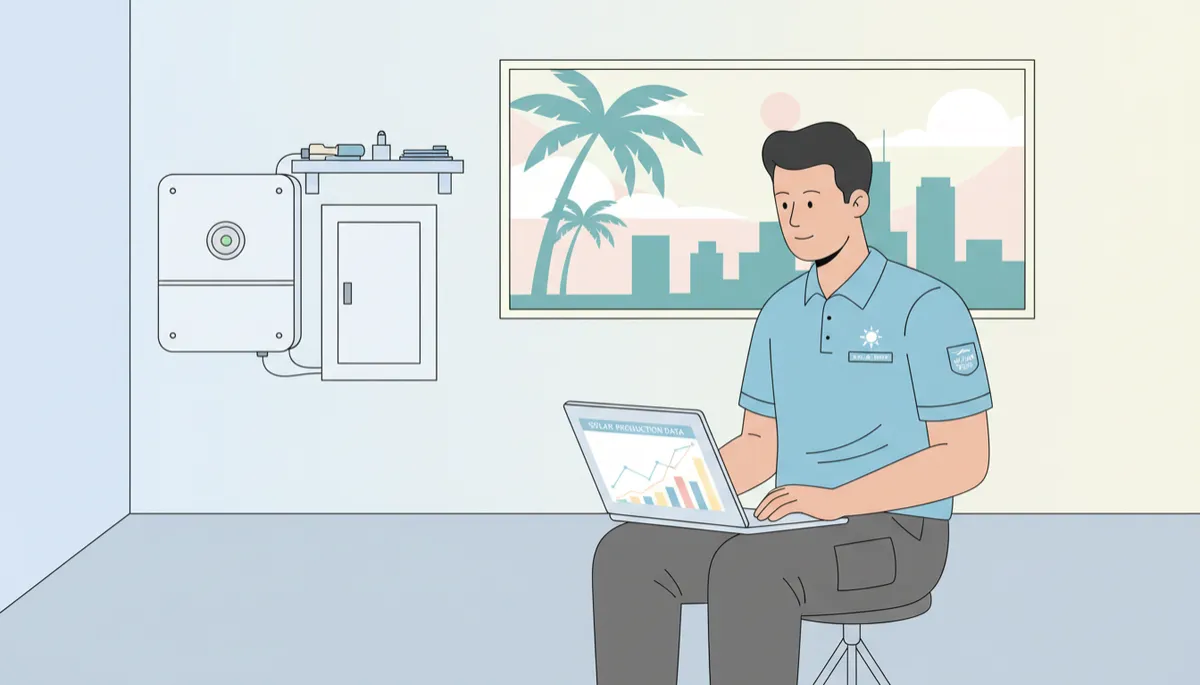
📌 Key Takeaway: Fused Solar and Roofing restores monitoring on systems of all brands under electrical license EC13014750, including systems whose original installer is no longer in business.
7. Getting monitoring back when the installer set it up
Many Tampa Bay systems were installed with monitoring accounts created by the original installer, sometimes using the installer’s email address or company login rather than the homeowner’s. When that installer changes ownership, leaves the area, or closes, homeowners can be left with an app that no longer works and no clear way to sign in. The important detail is that the monitoring platform is typically operated by the equipment manufacturer, not by the installer, and the manufacturer usually has its own process for updating contact information or transferring account access when ownership changes.
In many cases, it is possible to recover or transfer monitoring access by working through the manufacturer’s published procedures, which may include providing proof of system ownership, the inverter’s serial number, and basic site information. The exact steps and requirements vary by platform, and the outcome depends on the rules set by that platform, not by Fused Solar and Roofing or any other local contractor. A licensed service provider can help identify which monitoring platform you have, gather the correct equipment details, and guide you through the manufacturer’s support channels, but the final decision about account changes always rests with the platform operator. Even when an installer is no longer in business, this process often brings monitoring back under the homeowner’s direct control so future changes are simpler.
8. What a service visit does about monitoring
When Fused Solar and Roofing is called to a home in Hillsborough, Pinellas, Pasco, or Manatee County for a monitoring issue, the first priority is to confirm that the solar system is producing safely. A licensed electrician will review the inverter’s exterior indicators, verify that the system is operating within expected parameters, and, if needed, coordinate with the utility’s meter data or the homeowner’s bills to confirm production trends. Only after production is confirmed will the focus shift fully to restoring the flow of monitoring data. This approach keeps safety at the center and provides clear answers about whether the problem is communication, production, or both. Fused Solar and Roofing is a licensed roofing (CCC1331058), electrical (EC13014750), and building contractor (CBC1252064) — all three in-house.
On the monitoring side, a service visit typically includes identifying the specific communication hardware, checking how it connects to your home network or cellular service, and reviewing the monitoring platform’s status for your site. If the issue is related to a Wi‑Fi change, the technician can work with your current network information to establish a new, stable connection. When the manufacturer’s platform or account settings are part of the problem, the technician can assist with gathering the necessary serial numbers, screenshots, and documentation so that support requests to the platform are as complete and efficient as possible. Because each monitoring platform has its own policies, no contractor can guarantee that historical data will be restored or that every account change will be approved, but a structured, licensed approach greatly improves the chances of getting your system reporting accurately again.
Tampa Bay solar monitoring FAQ
1. If my solar monitoring app shows nothing, is my system in Tampa Bay definitely not working? Not necessarily. In the Tampa Bay area, Fused Solar and Roofing often finds that blank or offline monitoring screens are caused by communication issues such as Wi‑Fi changes, internet outages, or account access problems, while the solar equipment continues to produce power normally. To get a clearer picture, compare your current electric bill to the same month in a prior year, check your utility’s online account for any record of solar exports if that feature is available, and look at your inverter’s exterior status indicator during daylight. If your bill looks normal and the inverter shows a normal operating state, your system is likely still producing even though the app is not displaying data.
2. How can I check whether my solar is producing without using the app? You can check production without the app by using information you already have at home. First, review your recent electric bill and compare the total kilowatt‑hours purchased from the grid to the same month in a previous year when you know your system was working; similar usage suggests your solar is still offsetting your consumption. Second, if your utility offers an online account with net metering or export data, log in and look for solar exports on sunny days in Hillsborough, Pinellas, Pasco, or Manatee County. Finally, during daylight, look at the inverter’s exterior display or status lights from a safe standing position; a normal operating status or visible production value indicates that your system is generating, even if the monitoring app is not updating.
3. Will changing my Wi‑Fi router in Tampa Bay break my solar monitoring? Changing your Wi‑Fi router, network name, or password can interrupt solar monitoring because the inverter or gateway no longer recognizes how to reach the internet. The solar system will usually continue producing power as long as the inverter is operating and the grid is available, but the monitoring platform may stop receiving data and your app can show “offline” or no recent production. If you recently upgraded your router or internet service in Hillsborough, Pinellas, Pasco, or Manatee County and your monitoring went dark around the same time, it is likely that the communication path needs to be updated to match your new network, which a licensed contractor can do without disturbing the electrical wiring.
4. How long do monitoring data gaps last, and can missing data come back? Monitoring data gaps can last anywhere from a few minutes to weeks or longer, depending on how long the communication issue persists and when it is addressed. Whether missing data eventually appears in your monitoring history depends on the specific platform your equipment uses. Some monitoring platforms can backfill data once the connection is restored, while others only record information that arrives in real time and do not reconstruct past days. Because policies vary by platform and are set by the equipment manufacturer, Fused Solar and Roofing cannot guarantee that historical data will be recovered, but restoring a stable connection as soon as possible gives you the best chance of preserving a complete production record going forward.
5. Can I set up or fix my solar monitoring myself in Tampa Bay? As a homeowner, you can safely handle the account side of monitoring, such as installing the app, resetting a password, or updating your contact information with the monitoring platform, and you can check your inverter’s exterior status lights or screen from a safe standing position. However, anything involving electrical components, wiring, or opening equipment should be left to a licensed contractor for safety and code compliance. In Hillsborough, Pinellas, Pasco, and Manatee counties, many homeowners choose to have Fused Solar and Roofing review both the production and communication paths so that any underlying issues are addressed correctly, and so that monitoring is restored in a way that aligns with the manufacturer’s guidelines.
6. Is solar monitoring required by my utility in the Tampa Bay area? Utilities generally require accurate metering for net metering and billing, which is handled through the utility’s own meter and systems, not through your third‑party monitoring app. In other words, your solar monitoring platform is typically not what the utility uses to measure energy flows for your bill. That said, reliable monitoring is still important for you as the system owner because it helps you verify that your array is performing as expected, provides documentation if you need to discuss system behavior with your utility or equipment manufacturer, and offers peace of mind that your investment in solar is delivering the results you expect in Tampa Bay.
Fused Solar and Roofing is a licensed electrical contractor (EC13014750) servicing solar systems of all brands across Hillsborough, Pinellas, Pasco, and Manatee counties, including systems whose original installer is no longer in business. Request a diagnostic visit at https://fusedsolarandroofing.com/solar-repair
Is your solar system producing what it should? Request a diagnostic visit at https://fusedsolarandroofing.com/solar-repair
