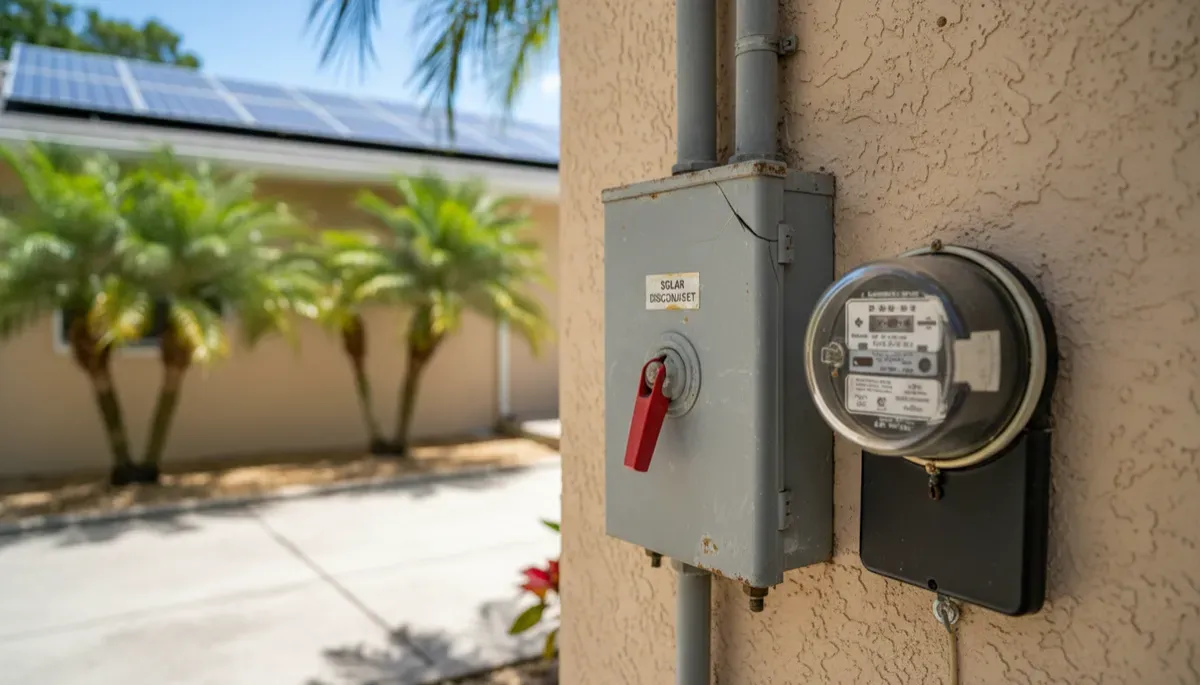
What Is a Solar Disconnect Switch? Tampa Homeowner Guide
If you have a box on the side of your Tampa Bay home labeled for the solar system and you are not quite sure what it is or whether you should touch it, you are looking at the solar disconnect switch. This switch lets your solar system be safely separated from your home’s electrical system so licensed professionals can work on the equipment or shut it down in an emergency. It is there for service work and safety, not for everyday use or routine homeowner operation. Fused Solar and Roofing is a licensed roofing (CCC1331058), electrical (EC13014750), and building contractor (CBC1252064) — all three in-house.
1. The box you keep walking past
For many Tampa Bay homeowners, the solar system came with the house. The panels were already on the roof, the paperwork was in a closing folder, and no one ever walked you around the equipment. You may know where the inverter is and you may check a monitoring app, but that extra box near the meter or near the inverter can feel like a mystery. You see labels that mention solar, maybe a handle on the side, and you wonder whether you are supposed to do anything with it when the system is running or if there is a problem.
It is normal to feel uncertain about any electrical box you did not install yourself, especially one connected to something as visible as the solar panels on your roof. You might notice the box when you mow the lawn, take out the trash, or meet a contractor in the driveway. You might also notice that it looks a little different from the rest of your electrical equipment, with different labels or a different style of handle. That is because it serves a specific role for the solar system, not for the rest of the house wiring or your main breaker panel inside the garage or utility room.
The important thing to know is that you are not missing a set of daily steps or a secret routine. The solar disconnect is not something you are expected to flip on and off as part of normal operation. When your solar system is working correctly, this box simply does its job quietly in the background. When it is needed, it is usually used by a licensed technician, not by the homeowner. Understanding what it is for, what it should generally look like, and when it matters will help you keep your system safe and ready for service or roof work when the time comes.
📌 Key Takeaway: The solar disconnect lets your system be safely separated from your home's electrical system. It is there for service work and emergencies, not everyday use.
2. What the solar disconnect does
At its core, the solar disconnect is a safety switch. It allows the solar system to be separated from your home’s electrical system so that the equipment can be worked on safely. When a licensed technician needs to service the inverter, wiring, or other components that tie into your home, they use the disconnect as part of properly shutting the solar side down. That way, they can work on the system without it feeding power into the house circuits they are handling. The disconnect is a clear, physical point where the solar system and the home’s electrical system can be separated when necessary.
On many Tampa Bay homes, the solar disconnect is mounted close to the electric meter. On others, it may be installed near the inverter or in the same general area as other solar equipment. In some cases, you might see more than one box or more than one label related to the solar system. For example, there may be a disconnect near the meter and another switch or breaker near the inverter. There may also be labels on your main electrical panel or other boxes that reference solar. The exact layout depends on how and when the system was installed, and different installers use different equipment styles and labeling approaches over the years.
Because of that variety, solar disconnects do not all look the same. Some are metal, some are a heavy plastic. Some have a side handle, others have a front handle. The labels may be bright and bold on a newer system or more weathered on an older one. Some boxes may have several labels indicating solar, AC, DC, or other information. The key point is that this equipment is the place where the solar system can be separated from the rest of the home’s electrical system when work needs to be done or when responders need to know how to control the solar portion of the home. You do not need to know the internal details; you just need to understand its purpose and treat it as important electrical safety equipment.
Disconnect rusted, damaged, or in the wrong position? Fused Solar and Roofing services solar equipment across Hillsborough, Pinellas, Pasco, and Manatee counties. Request a diagnostic visit at https://fusedsolarandroofing.com/solar-repair
3. When the disconnect gets used
Even though you may walk past the solar disconnect every day, it is not a part of your regular routine as a homeowner. It comes into play during specific situations, almost all of which involve licensed professionals. One common situation is system service or repair. When a technician comes out because your monitoring shows low or no production, or because you have noticed an alert or warning, they use the disconnect as part of safely shutting down the solar side before they open equipment or work on wiring that ties into the home. The disconnect helps create a clear point where the solar system is separated while they work, and then returned to normal when they are done and everything checks out.
Another time the disconnect is used is during inverter replacement or other major component changes. When an inverter needs to be swapped out, the technician will shut down the appropriate parts of the system, including at the disconnect, before removing and installing equipment. This protects both the technician and the rest of your home’s electrical system while the work is underway. Once the new equipment is in place and all checks are complete, the system is brought back online in a controlled way, again using the disconnect as part of that process rather than as a casual switch to flip back and forth.
The disconnect is also involved before roof work that affects the solar array, especially when panels need to be removed and reinstalled. Before crews handle wiring, racking, or panels connected to your home, the solar system is shut down at the house, and that shutdown begins at the disconnect. This is electrical work and is handled by licensed electrical professionals, not by a general roofing crew alone. In addition, emergency responders may use the disconnect in an emergency situation at the home. If they need to control the solar system as part of their response, having a clearly labeled disconnect in an accessible location gives them a known point to work from, rather than leaving them to guess where the solar ties into the house.
💡 Pro Tip: Take a photo of your disconnect, its labels, and its handle while the system is running normally. If something ever looks different, you will have a picture to compare against.
4. What homeowners should and should not do
As a homeowner, the most important thing you can do with the solar disconnect is to respect it as electrical equipment and leave it alone. You should not open its cover, and you should not operate the handle in an attempt to troubleshoot your solar system. The disconnect is not a reset button and it is not meant to be flipped as a trial-and-error way of solving a production issue. If you notice that your solar monitoring shows a problem, or if you suspect something is wrong, the right next step is to schedule a visit with a licensed professional, not to start operating the disconnect yourself. This helps protect your safety and prevents creating additional issues that a technician then has to sort out later.
If you ever see that the handle on the disconnect is in a different position than you remember, and you were not the one to move it, do not try to correct it yourself. Leave it as it is and have the system checked by a licensed technician. A handle in an unexpected position can be a sign that someone else has operated it, that a previous service visit changed its status, or that there is a condition that needs attention. Treat that as a reason to call for service, not as an invitation to experiment with the switch. This is especially important if you purchased the home with solar already installed and do not have a clear history of past work on the system.
What you should do is keep the area around the disconnect clear and easy to reach. Do not block it with landscaping, storage bins, trash cans, or outdoor furniture. If shrubs or plants are growing up around it, keep them trimmed back so the box and labels remain visible and a technician or responder can get to it quickly. Avoid painting over the box or its labels, and do not remove any labels, even if they look worn or out of place to you. Those markings are important reference points for anyone working on or around the system. In an emergency, when responders arrive, tell them that the home has solar and where the solar equipment is located, including the disconnect. That simple information can help them make safe, informed decisions on site without you needing to touch any equipment yourself.
⚠️ Warning: Do not open the disconnect cover or operate the handle to troubleshoot your system. If the handle is in a position you did not set, leave it and have the system checked.
5. Signs your disconnect needs attention
Outdoor electrical equipment in Tampa Bay lives a hard life. It sits in the sun, bakes in the heat, and endures humidity, rain, and storms year after year. The solar disconnect is no exception. Over time, weather exposure can take a toll on the box, its cover, its handle, and the internal components. Because the disconnect is the part of the system that has to work when someone needs to shut the solar system down safely, it is not something to ignore if it starts showing signs of wear or damage. A disconnect that looks rough on the outside may also have problems inside that are not visible without a licensed professional opening it and inspecting the components.
Some of the visible signs that your disconnect needs attention include rust or corrosion on the box, the hinges, or around the handle. A cracked or damaged box or cover is another warning sign, especially if you can see gaps where water or insects could get inside. Faded or missing labels matter as well, because they can make it harder for technicians and responders to quickly understand what the box is and how it is meant to be used. A handle that is damaged, loose, or stuck in place is a concern, because the disconnect must be able to move smoothly when a licensed professional needs to operate it. Any of these issues are reasons to schedule a service visit, not to try to force the handle or patch the box yourself with tape or sealant.
You might also notice signs of water inside the box if the cover does not close tightly, or heat marks or discoloration on or around the box. Buzzing or other unusual sounds at the disconnect are not normal and should be taken seriously. Finally, if you discover that the handle is in a position you did not set, or it looks different from the photo you took when everything was running normally, that is another sign that the disconnect and the system need to be checked. None of these situations are problems to put off until later. The disconnect is there so that people can safely shut down the solar portion of your home when they need to, and it needs to be in good condition to do that job reliably.
Inspecting, repairing, or replacing a solar disconnect is licensed electrical work. It is not a do-it-yourself project, and it is not something to hand off to a general handyman who is not working under an electrical license. A licensed technician will know how to safely open and evaluate the equipment, determine whether it can be repaired or should be replaced, and confirm that it is working properly with the rest of the system. Fused Solar and Roofing services systems of all brands, including systems whose original installer is no longer in business. Fused Solar and Roofing is a licensed roofing (CCC1331058), electrical (EC13014750), and building contractor (CBC1252064) — all three in-house.
6. What a service visit involves
When you schedule a service visit for your solar system or specifically for the disconnect, a licensed technician will start by inspecting the disconnect itself. They look at the condition of the box, the cover, the handle, and the labels, as well as any visible signs of rust, corrosion, or impact damage. They also check how the disconnect relates to the rest of your solar equipment, including the inverter and any labeled breakers that are part of the solar circuit. The goal is to understand, from the outside first, how the system is laid out and whether anything stands out as a concern before they proceed with more detailed checks that require opening equipment under safe conditions.
As part of a typical visit, the technician will inspect the inverter, the breaker associated with the solar system, and the wiring and connections that can be reached without removing panels from the roof. They are looking for visible signs of corrosion, damage, water intrusion, heat marks, or loose connections. Each of these can affect how safely and reliably the system operates. The technician will also consider any information you provide, such as monitoring screenshots, error messages, or changes you have noticed in system behavior. All of this is pulled together into a clear understanding of the system’s condition at the time of the visit, with special attention paid to the disconnect because of its role in safely controlling the solar side of the home.
After the inspection, you receive photographs and a detailed written report. The photos help you see exactly what the technician is talking about when they reference corrosion, damage, or other findings. The written report explains what was inspected, what was found, and what the recommended next steps are. Any repair or replacement, whether it involves the disconnect, the inverter, or other reachable components, is scoped and quoted from those findings so you know what is being proposed and why. Fused Solar and Roofing is an EnergySage Elite Installer with a 5.0/5 rating and 21+ verified reviews — independent verification, earned not purchased.
📌 Key Takeaway: Fused Solar and Roofing inspects, repairs, and replaces solar disconnects on systems of all brands under electrical license EC13014750, including systems whose original installer is no longer in business.
7. Why roof work on a solar home starts at the disconnect
If you are planning roof work on a home with solar, the solar disconnect becomes especially important. Before anyone works on a roof that has solar panels on it, the solar system has to be properly shut down. That shutdown is electrical work, and it starts at the disconnect. Even when the system is shut down at the house, the panels themselves can still produce electricity in daylight. That is why the panels and their wiring are handled by crews who are trained on solar equipment, not by a general roofing crew alone. The disconnect is one of the key points that separates what happens at the house electrical system from what happens on the roof with the panels and racking.
When a roof under a solar array needs to be repaired or replaced, the panels have to come off first. This process is often called a detach and reinstall. It has several stages. First, the solar system is shut down at the house, beginning at the disconnect and including other solar equipment as needed. Then the panels, racking, and related components are carefully removed so that the roofing crew can access the roof surface underneath. Once the roof work is completed, the solar equipment is reinstalled, reconnected, and tested. Each stage has to be coordinated so that the roof and the solar system both end up in good working order, and the disconnect is part of making sure the electrical side is controlled during the process.
For a homeowner, it helps to know that this is not just a matter of taking panels off and putting them back on. The shutdown, the removal, the roof work, the reinstall, and the final checks each involve different skills. Fused Solar and Roofing’s in-house electrical and roofing crews handle the shutdown, the panel removal, the roof work, and the reinstall as one coordinated job under one company. That means the same team that understands your roof also understands your solar equipment and your disconnect, and they plan the work so that the system is safely taken offline and then brought back into service in an orderly way. Knowing this ahead of time can make planning roof work on a solar home much smoother, because you understand that the process starts at the disconnect and carries through to final testing of the system.
8. Back in service after the work is done
After any service visit or roof project that involves shutting down your solar system, the final step is to bring the system back into normal operation. As part of that process, the technician returns the disconnect to its normal operating position. They confirm that the inverter is behaving as expected, that the associated breakers are in the correct positions, and that the system is producing. If you use a monitoring app or online portal, they may reference it with you so you can see that production has resumed and looks consistent with what should be happening for the time of day and weather conditions. The goal is for you to leave the visit knowing that the system is back in service and that the disconnect is set correctly to support that normal operation.
A good technician will also take a moment to show you what the disconnect should look like when everything is running normally. This may include pointing out the labels, the general appearance of the box, and the handle’s position in everyday operation. You do not need to operate the disconnect yourself, but having a clear mental picture of what “normal” looks like is helpful. If you ever walk past the box later and notice something looks different — damage, missing labels, a changed handle position, or other concerns — you can compare it to what you were shown and know that it is time to schedule a check. That way, the disconnect remains what it is meant to be: a reliable, ready point of control that professionals can use when needed, rather than a source of uncertainty or risk.
Frequently Asked Questions
1. What is the solar disconnect switch on the side of my house?
The solar disconnect is a safety switch that allows your solar system to be separated from your home’s electrical system. It is usually located near the electric meter or the inverter and is used by licensed professionals during service, repair, and other work on the system. Its purpose is to provide a clear point where the solar portion of your home can be safely controlled, especially when equipment needs to be inspected, repaired, or replaced, or when responders need to know how to shut down the solar side in an emergency.
2. Should my solar disconnect be on or off?
During normal operation, the disconnect should be in the position set by the licensed professional who commissioned or last serviced your system. As a homeowner, you do not need to change it as part of everyday use. If you are unsure what is normal for your system, ask a technician during a service visit to show you what the disconnect should look like when everything is running correctly. If you ever find the handle in a different position than you remember and you did not move it, leave it as it is and schedule a check rather than trying to change it yourself.
3. Can I turn off my solar system with the disconnect?
The disconnect is one of the points professionals use when shutting down the solar system, but homeowners should not operate it to troubleshoot or control the system on their own. Shutting down a solar system properly involves more than just one switch, and it is handled by licensed technicians as part of a defined process. If you believe your system needs to be shut down for any reason, contact a licensed electrical contractor and explain what you are seeing rather than trying to use the disconnect as a do-it-yourself off switch.
4. My solar disconnect is rusted. Is that a problem?
Rust on or around the disconnect is a sign that it needs attention. Outdoor equipment in Tampa Bay is exposed to heat, humidity, and storms, and over time that can lead to corrosion. Because the disconnect is the part of the system that must work when someone needs to safely shut the solar down, visible rust should not be ignored. A licensed technician should inspect the box, determine how far the corrosion has progressed, and advise whether repair or replacement is appropriate. Avoid trying to sand, paint, or seal the rust yourself, as that can hide issues without addressing the underlying condition.
5. Does my solar need to be shut off before a roofer works on my roof?
Yes. Before roof work on a home with solar, the solar system should be properly shut down, and that shutdown starts at the disconnect and involves other solar equipment as needed. Panels can still produce electricity in daylight even when the system is shut down at the house, which is why panel removal and handling are done by crews trained on solar. When a roof under an array needs repair or replacement, the system is shut down, the panels are removed, the roof work is completed, and the panels are reinstalled, reconnected, and tested before the system is put back into normal operation.
6. My original solar installer is out of business. Who can service my solar disconnect?
If your original installer is no longer in business, you can work with a licensed electrical contractor that services systems from many different installers. Fused Solar and Roofing services solar systems of all brands, including those installed by companies that are no longer operating. A licensed technician can inspect your disconnect, inverter, and related equipment, provide a written report with photos, and recommend any needed repair or replacement so your system remains safe and functional even without the original installer involved.
Fused Solar and Roofing is a licensed electrical contractor (EC13014750) servicing solar systems of all brands across Hillsborough, Pinellas, Pasco, and Manatee counties, including systems whose original installer is no longer in business. Request a diagnostic visit at https://fusedsolarandroofing.com/solar-repair
Is your solar system producing what it should? Request a diagnostic visit at https://fusedsolarandroofing.com/solar-repair
