What Happens at a Solar Site Survey, and What To Have Ready
A solar quote that arrives before anyone has been on the property is an estimate, and it changes after the site visit. Fused Solar and Roofing does the survey first: a surveyor measures each roof plane, checks the attic framing and the decking, photographs the electrical panel, takes a shade reading at the panel locations, and walks the conduit route from the array to the inverter and the meter. The proposal that follows is built from that visit and twelve months of the homeowner's utility bills, which is why its price and its production estimate hold. Fused Solar and Roofing is a licensed roofing (CCC1331058), electrical (EC13014750), and building contractor (CBC1252064), all three in-house.
1. Before the surveyor arrives
Have twelve months of utility bills, downloaded from the utility's website or on paper. Know where the main electrical panel and the meter are and make sure they are reachable. Think about anything that will change the home's usage: an electric vehicle, a pool, an addition, more people at home. If the roof has been replaced or repaired, know roughly when. If the home is in a deed-restricted community, have the association's name and any architectural guidelines handy. None of it is required, but all of it makes the design faster and more accurate.
The survey takes about an hour. The homeowner does not need to be on the roof, but should be home for the panel, the attic, and the questions.
🔑 Key Takeaway: Bills, panel access, planned loads, roof history, association name. Five things that turn an hour's survey into a proposal that does not change.
2. The roof
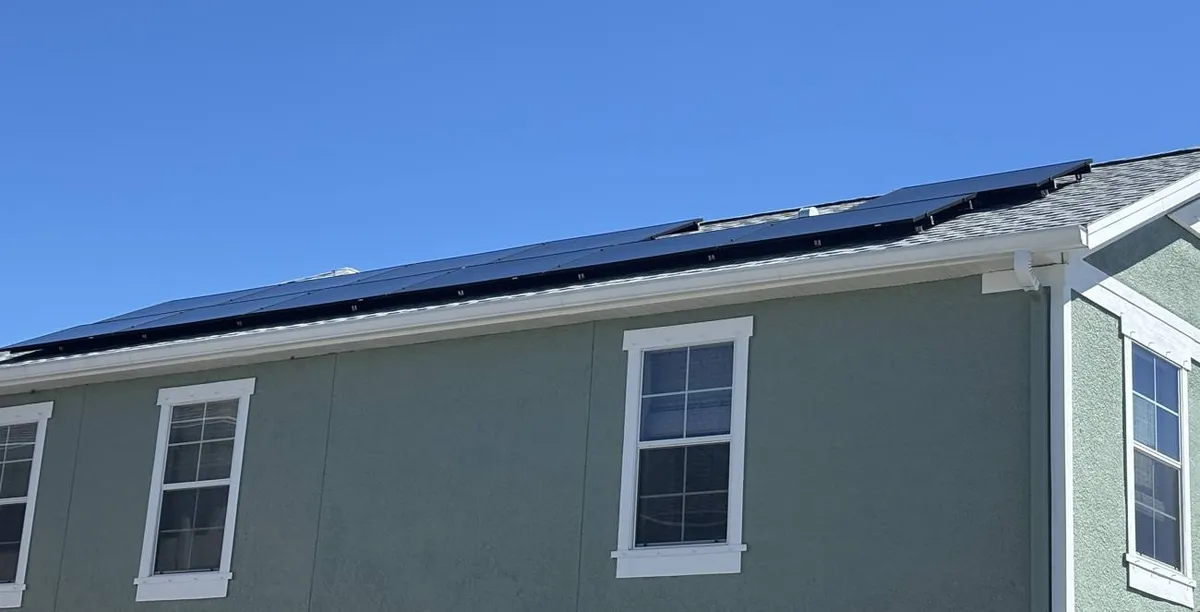
The surveyor measures each roof plane and its pitch, notes which direction each faces, and maps the vents, skylights, chimneys, and valleys that panels have to work around. On shingle, the surveyor looks at the granule loss, lifted tabs, and flashings to judge the roof's remaining life; on tile, at the tile condition and any signs of failed underlayment; on metal, at the seam type, which decides the mount. The surveyor photographs everything. If the roof looks like it has fewer than ten years left, the homeowner hears it that day, and the proposal will show the roof and the solar together.
Fused Solar and Roofing is a licensed roofing (CCC1331058), electrical (EC13014750), and building contractor (CBC1252064), all three in-house.
On a two-story home the surveyor also notes the access: where a ladder or a lift can be set, how the modules will be carried up, and whether the pitch calls for the steep-pitch rigging. Those observations are what become the two-story and steep-pitch lines on the proposal, stated up front rather than discovered on install day.
3. The attic
From inside, the surveyor checks the rafter or truss size and spacing, which decides where the mounts can go and how the engineering is done; the decking for soft spots, water stains, and daylight; the ventilation; and the route an attic conduit run could take. On an older home this is also where a surveyor finds the second layer of roofing or the patched decking that changes the roof conversation. Fused does not skip the attic, because the mounts are going into that framing and the engineering has to match it.
4. The electrical panel and the meter
The surveyor photographs the main panel inside and out: its rating, its brand, the breakers in it, and the space left. A 100-amp panel, a Federal Pacific or Zinsco panel, or a full panel means a replacement or a load-side tap before solar can connect, which Fused does under its electrical license and prices as its own line. The meter location decides where the utility-required disconnect goes and how far the conduit runs. On a home with a generator, an EV charger, or a pool, the surveyor notes those loads for the design.
💡 Pro Tip: Clear the area in front of the electrical panel before the visit. The surveyor needs the cover off and a photograph of every breaker, and a panel behind a workbench costs the visit twenty minutes.
5. The shade reading
At each planned panel location, the surveyor takes a shade reading that shows how much of the year's sun that spot receives and when the trees, chimney, or neighboring structure block it. That reading, not a guess, decides whether a plane is worth using, whether the inverter should be a string inverter or panel-level electronics, and whether a tree is costing more than it is worth. The homeowner sees the result on the proposal as production by plane.
The reading also settles the question homeowners ask most often, whether a particular tree should come down. Often the answer is that the tree costs a few hundred kilowatt-hours a year and is worth more standing, and the design works around it.
6. The conduit route and the equipment locations
Where the inverter or the microinverter combiner goes, usually by the main panel; where the disconnect goes, where the utility can see it at the meter; and how the conduit gets from the array to there, through the attic where the design allows and down an exterior wall away from the street where it does not, painted to match. In deed-restricted communities this is also where the surveyor notes what the association is likely to want: all-black panels, hidden conduit, the inverter out of sight from the street.
⚠️ Warning: A proposal that has not decided where the conduit runs and where the inverter goes has not been designed. Those are the two things homeowners most often object to on install day when nobody asked.
7. What the survey produces
A measured roof with planes, pitches, and obstructions; the attic framing; the panel photographs; the shade readings; the equipment locations and conduit route; and the roof's condition with a recommendation. From that and the bills, Fused designs the system to the home's usage, chooses the panel layout and the inverter, and writes the proposal with the price at $1.85 per watt installed, any two-story, steep-pitch, roof-type, or electrical line shown separately, the production estimate by plane, and the warranty terms. The proposal arrives within a few days of the survey.
If your roof ever needs replacing with solar on it, who is allowed to remove and reinstall the panels, and why, is covered in our guide at https://fusedsolarandroofing.com/post/who-can-remove-reinstall-solar-florida
8. Why the survey comes before the number
Because a number before the survey is a guess that gets corrected after the deposit, and Fused would rather give one price that holds. The surveyor who measured the roof is working for the company that will install the system, service it, and eventually replace the roof under it, so there is no reason to leave anything out of the visit. Fused has surveyed and installed across Tampa Bay since 2007.
🔑 Key Takeaway: Roof, attic, panel, shade, conduit, condition. An hour on site is what makes the proposal a quote instead of an estimate.
Ready to have the roof measured and the number done right? Request a free site survey and solar quote at https://fusedsolarandroofing.com/solar-installation
Frequently Asked Questions
What happens during a solar site survey?
A surveyor measures each roof plane and pitch, checks the attic framing and decking, photographs the electrical panel and meter, takes a shade reading at the panel locations, maps the conduit route and equipment locations, and judges the roof's remaining life. It takes about an hour.
What should I have ready for a solar survey?
Twelve months of utility bills, clear access to the electrical panel and meter, a list of planned loads like an EV or pool, the roof's history, and your association's name if you are in a deed-restricted community.
Do I need to be home for the solar survey?
Yes, for the attic, the panel, and the questions. You do not need to be on the roof.
How long after the survey do I get a quote?
Within a few days. The proposal is built from the survey and the bills, with the price at $1.85 per watt installed and any adders as their own lines.
Will the surveyor tell me if my roof needs replacing?
Yes, that day, if it looks like the roof has fewer than ten years left. Fused holds the roofing license and quotes the roof and the solar together in that case.
Does the survey check whether my electrical panel can handle solar?
Yes. The panel's rating, brand, and spare capacity are photographed and assessed. A 100-amp, Federal Pacific, Zinsco, or full panel is flagged and the replacement priced as its own line.
Fused Solar and Roofing has installed solar across Hillsborough, Pinellas, Pasco, and Manatee counties since 2007, with the roof and the solar handled by its own licensed in-house crews. Request a free solar quote at https://fusedsolarandroofing.com/solar-installation
Fused Solar and Roofing holds Florida roofing (CCC1331058), electrical (EC13014750), and building (CBC1252064) licenses, all three in-house, and has served Hillsborough, Pinellas, Pasco, and Manatee counties since 2007. Fused Solar and Roofing is an EnergySage Elite Installer with a 5.0/5 rating and 21+ verified reviews, independent verification, earned not purchased. Request a free site survey and solar quote at https://fusedsolarandroofing.com/solar-installation
