
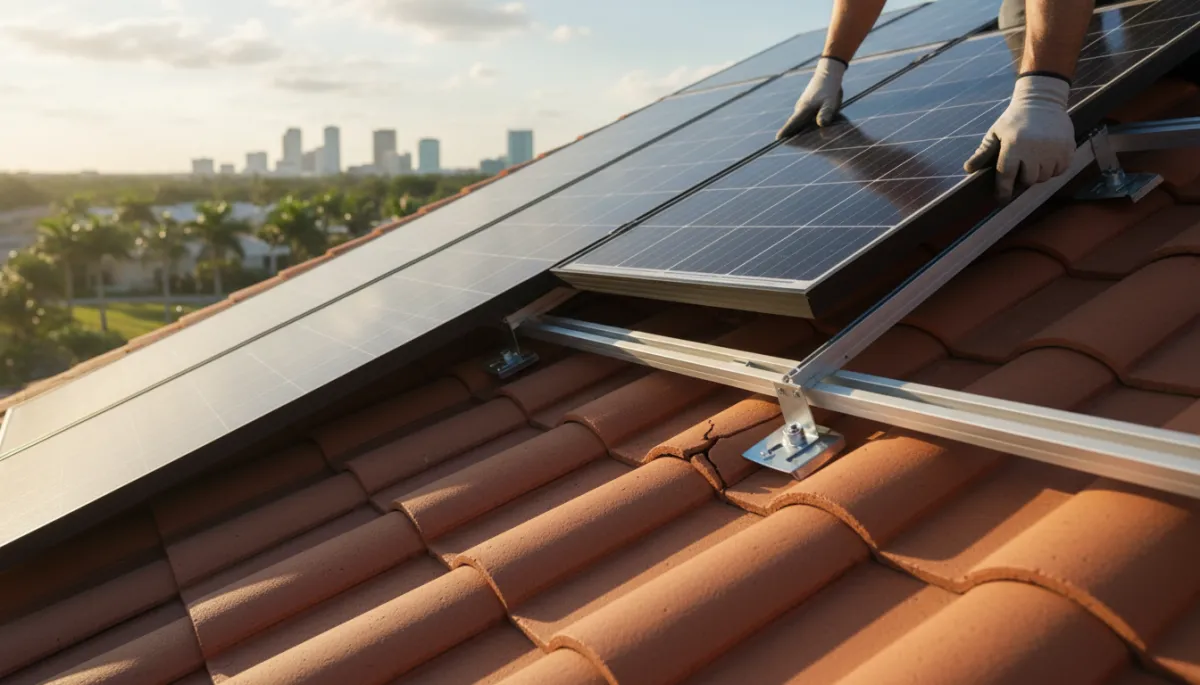
Tile Roof Solar Detach & Reinstall: Tampa Bay Guide
Homeowners across Tampa Bay rely on solar power, but when a tile roof needs repair or replacement, detaching and reinstalling the solar array becomes a complex, high‑stakes project. This guide explains how tile roofs differ from asphalt shingle roofs, what can go wrong if the work is mishandled, and how to choose a contractor who will protect both your roof and your solar investment.
Why Tile Roofs Need Specialized Detach & Reinstall Handling
Tile roofs in Tampa Bay—whether clay, concrete, or Spanish “S” tiles—are engineered very differently from asphalt shingle systems. The tiles themselves are primarily a protective shell and water‑shedding surface. The true waterproofing layer is the underlayment, along with properly integrated flashings and penetrations. When a solar array is detached and reinstalled, that entire assembly must be treated as a system, not just as individual tiles and panels.
Tile roofs are also heavier and more brittle than asphalt shingles. They require engineered attachment points, standoffs, and flashings that transfer loads into the structural deck without crushing or fracturing the tile. Improperly designed or installed mounts can compromise wind uplift resistance—critical in a hurricane‑prone region like Tampa Bay—and can create pathways for water intrusion that may not show up until the next rainy season or major storm event.
In addition, Florida’s climate accelerates aging of both tiles and underlayment. High UV exposure, daily thermal cycling, and heavy summer rains mean that an older tile roof is more fragile and more dependent on sound underlayment than a comparable asphalt system. A tile‑specific detach and reinstall (D&R) plan must account for this, with provisions for replacing damaged tiles, upgrading underlayment where necessary, and bringing flashing details up to current code and manufacturer standards during reinstallation.
One license for roofing (CCC1331058), one for electrical (EC13014750), one truck, one warranty, one call. No finger-pointing between trades. For tile roof solar D&R, unified responsibility across roofing and electrical work significantly reduces the risk of leaks, system faults, and warranty disputes.
Common Tile Damage Risks During Solar Panel Removal
Removing solar panels from a tile roof without a defined, tile‑specific procedure is one of the fastest ways to damage an otherwise serviceable roof. Typical risks include:
Cracked field tiles from foot traffic — Stepping on unsupported edges, high points of “S” tiles, or brittle, sun‑aged tiles can cause fractures that are not always obvious from the ground but will eventually leak.
Broken ridge and hip tiles — These tiles help lock the roof together and are often mortared or mechanically fastened. Using them as handholds or anchor points during panel removal can crack them or loosen their fasteners and mortar beds.
Tile displacement around mounts — Removing racking and standoffs without carefully lifting and resetting surrounding tiles can leave gaps and voids that channel water toward the underlayment penetrations instead of away from them.
Impact damage from tools and hardware — Dropped wrenches, rails, or modules can chip or shatter tiles, especially on older clay roofs or along eaves and rakes where tiles are more exposed.
Hidden micro‑cracks — Hairline fractures in tiles may not leak immediately but can propagate over time with thermal expansion and contraction, eventually leading to water intrusion and underlayment deterioration.
A qualified tile‑roof solar D&R team plans access paths, uses walk pads, and minimizes roof loading to reduce these risks. They also inventory and document any pre‑existing damage before work begins, then perform a final tile inspection and replacement as part of the reinstallation scope so that new leaks are not introduced during the project.
Flashing, Mounts, and Underlayment Differences for Tile Roof Solar
Solar mounting assemblies on tile roofs use different hardware and waterproofing strategies than those on asphalt shingle roofs. Understanding these differences is essential when planning a detach and reinstall around a roof replacement or major repair in Tampa Bay’s climate.
Mounting Systems and Standoffs
On asphalt roofs, solar racks typically attach directly through shingles into the deck or rafters using flashed L‑feet or similar hardware. The shingles and flashing integrate relatively simply. On tile roofs, by contrast, mounts usually fall into one of three categories:
Tile replacement mounts — A specialized metal “tile” replaces the original tile at each attachment point, with an integrated hook or post that passes between adjacent tiles to the rack above. This reduces tile cutting and allows for robust flashing underneath.
Hook‑under‑tile systems — Hooks or brackets pass under intact tiles and fasten to the deck or rafters. These require precise grinding or notching of tiles to avoid pressure points that can crack the tile under wind or live loads.
Direct‑to‑deck with elevated flashings — The tile is lifted or removed at each mount location, and a flashed standoff assembly is fastened to the deck. Tiles are then cut and refit around the standoff with appropriate clearances and sealants.
During D&R, each of these attachment types must be disassembled and reassembled in a way that maintains both structural performance and waterproofing. Reusing worn or non‑compliant hardware is not recommended—current best practice is to install new flashing and mounts that meet the latest Florida Building Code and manufacturer requirements whenever the roof is being replaced.
Flashing Integration on Tile Roofs
Flashing on tile roofs must be integrated beneath the tile layer and over the underlayment, then brought out through or around the tile in a way that sheds water. This is more complex than sliding a flashing under a course of shingles. Poorly executed flashings can trap water, create reverse laps, or interfere with tile seating, all of which are unacceptable in Tampa Bay’s heavy rainfall and wind‑driven rain conditions.
A tile‑competent D&R team will rebuild flashings at every penetration during reinstallation, not simply “put back what was there.” This includes ensuring counter‑flashing is correctly integrated with underlayment, that all laps face downhill, and that sealants are used as a secondary defense rather than the primary waterproofing method.
Underlayment and Waterproofing Considerations
Underlayment on tile roofs in Florida is often a high‑temperature, self‑adhered membrane or a premium synthetic underlayment rated for extended exposure and high heat. Typical service life ranges from about 20 to 30 years for traditional felt underlayment, and up to approximately 30 to 40 years for higher‑end, modern systems, depending on product type, installation quality, and exposure conditions. When a roof is being replaced, this is the ideal time to upgrade underlayment beneath the solar array, because access will be restricted once the panels are reinstalled.
A thorough D&R scope includes inspection of the deck and underlayment in all previously covered areas, replacement of any deteriorated sections, and documentation of new materials installed. This is particularly important in Tampa Bay, where wind‑driven rain and storm events can exploit even small weaknesses in the waterproofing system.
Ready to keep your solar system in peak condition? Schedule a free solar panel cleaning and maintenance audit at https://tampasolarmaintenance.com
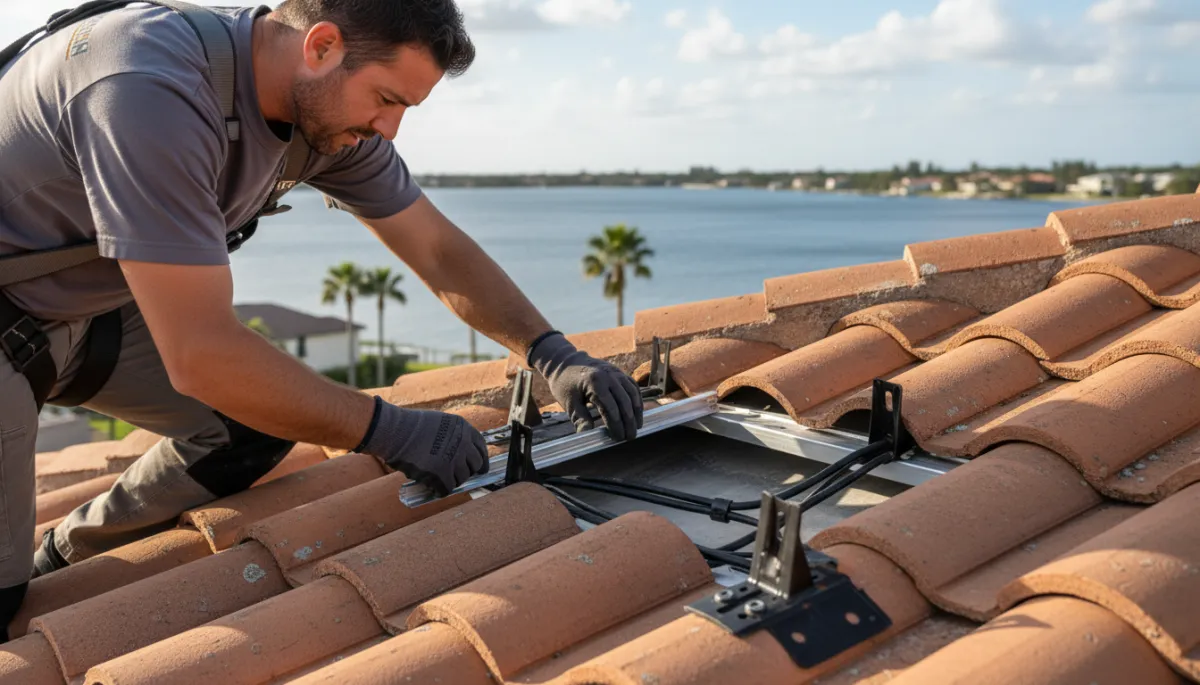
Detailed mount and flashing inspection prevents leaks and protects tile roof warranties.
Timeline and Process Differences Versus Asphalt Roof Detach & Reinstall
Detaching and reinstalling a solar array on a tile roof typically takes longer and involves more steps than on an asphalt shingle roof. Homeowners should plan for this extended timeline when coordinating with their roofing contractor and any other trades involved in the project.
Typical Timeline Ranges
For a standard residential system in Tampa Bay, detach and reinstall on an asphalt shingle roof might be completed in roughly 2 to 4 working days, depending on array size, complexity, and inspection scheduling. On a tile roof, similar systems often require approximately 3 to 6 working days of solar‑related labor, sometimes more for large or complex arrays, due to additional tile handling, mount adjustments, and flashing reconstruction. These figures are general industry ranges and can vary by project conditions, permitting timelines, and weather interruptions common to Florida’s rainy season.
Process Steps for Tile Roof Solar D&R
Pre‑project assessment — Evaluate roof age, tile type, underlayment condition, and array layout. Identify potential tile replacement needs and underlayment upgrades in solar‑covered zones. Confirm permitting requirements for both roofing and solar work in the local jurisdiction.
System shutdown and labeling — De‑energize the solar system, document inverter and monitoring settings, label conductors, and mark each module position to support accurate reassembly and performance verification after reinstallation.
Panel and racking removal — Remove modules row by row, protect tiles with walk pads, and detach racking, mounts, and flashings while preserving roof integrity. Carefully stage and store modules in a dry, secure area to avoid microcracks or frame damage during downtime.
Roof replacement or repair — Roofing crew completes tear‑off, deck repairs, underlayment installation, and tile installation. Coordination between the roofer and solar team is critical to ensure that attachment locations and flashing details are integrated into the new roof assembly.
Reinstallation of mounts, racking, and modules — Install new or upgraded tile‑appropriate mounts and flashings, reassemble racking, and reinstall modules according to the documented layout. Verify structural fastening into rafters or approved substrates, and confirm tile clearances around each penetration to prevent point loading and cracking.
Electrical reconnection and commissioning — Reconnect wiring, verify grounding and overcurrent protection, and test system operation and monitoring. Any non‑compliant components discovered during D&R should be upgraded prior to energizing the system.
Because tile work is more labor‑intensive and weather‑sensitive than asphalt, schedule buffers are advisable. Effective coordination reduces the time your solar system is offline and minimizes the risk of panels sitting unprotected through a Florida storm cycle.
How a Licensed Contractor Protects Tile Integrity During D&R
A properly licensed and experienced contractor approaches tile roof solar D&R as an integrated roofing and electrical project, not just a panel removal job. Key protective measures include:
Using designated walk paths, roof protection mats, and tie‑off points to limit concentrated loads on tiles and avoid stepping on unsupported edges or corners.
Removing tiles strategically around mount locations to access underlayment and flashings, rather than prying or forcing hardware out through intact tiles, which can cause cracks and spalls.
Stocking matching replacement tiles, or as close a match as available, to replace any that are damaged during work or found to be compromised during inspection.
Inspecting the roof deck beneath the array for soft spots, fastener pull‑outs, or prior water intrusion, and addressing these issues before reinstalling mounts and modules.
Verifying that all penetrations are flashed and counter‑flashed to current standards, with attention to wind‑driven rain resistance and long‑term UV exposure in Tampa Bay’s environment.
One license for roofing (CCC1331058), one for electrical (EC13014750), one truck, one warranty, one call. No finger-pointing between trades. When the same organization stands behind both the roof and the solar work, accountability is clear, and homeowners have a single point of contact if questions or issues arise years down the line.
What to Ask a Contractor Before Hiring for Tile Roof Solar D&R
Tile roof solar D&R in Tampa Bay is a specialized service. Before you sign a contract, ask detailed questions to confirm that the company is qualified and prepared to protect your roof, tiles, and solar system performance over the long term.
Experience, Licensing, and Qualifications
How many tile roof solar detach and reinstall projects have you completed in the Tampa Bay area in the last 12 to 24 months?
Are you licensed for both roofing and electrical work related to solar, and will those licenses be listed on my permit documents?
Do you carry general liability and workers’ compensation insurance that specifically covers work on tile roofs and solar arrays?
Process, Materials, and Warranty Coverage
What is your step‑by‑step process for detaching and reinstalling solar on tile, and how do you protect tiles during access and staging?
Will you install new tile‑rated mounts and flashings that meet current code, or are you planning to reuse existing hardware? Under what conditions will you recommend upgrades?
How do you handle tile breakage discovered during the project, and is replacement tile included in your proposal or treated as a separate line item?
What warranties do you provide on roof penetrations, flashings, and the solar workmanship after reinstallation, and how long do those warranties last?
Scheduling, Coordination, and System Performance
How will you coordinate with my roofing crew, and who is responsible for each phase of the project—detachment, roof work, and reinstallation?
How long do you expect my solar system to be offline, and what steps do you take to minimize downtime and protect stored panels from Florida weather while off the roof?
After reinstallation, how do you verify system performance and monitoring, and will you provide a production check or baseline report for comparison?
For long‑term system reliability, independent credentials matter. EnergySage Elite Installer status (5.0/5, 21+ verified reviews) is independent proof of reliability for a 25-year system. When paired with proper tile‑roof expertise, this level of vetting provides additional assurance that your solar investment will be handled correctly from detachment through final inspection.
FAQ: Tile Roof Solar Detach & Reinstall in Tampa Bay
1. Why is tile roof solar D&R usually more expensive than on an asphalt roof?
Tile roof D&R requires more labor, specialized hardware, and additional tile handling compared with asphalt. Crews must protect brittle tiles, rebuild more complex flashing details, and often replace or upgrade mounts and underlayment in solar‑covered areas. Industry‑wide, homeowners can expect tile D&R to cost more than comparable asphalt work, with pricing influenced by array size, roof complexity, tile type, and the extent of underlayment or hardware upgrades required. Contractors should provide a detailed written scope and cost breakdown before work begins.
2. How long should a tile roof last under a solar array in Tampa Bay?
Tile materials themselves can have service lives in the range of 40 to 50 years or more under normal conditions, but the underlayment and flashings typically determine practical roof life in Florida. Depending on product type and installation quality, underlayment life commonly falls in the 20 to 40‑year range. When a roof is already near the middle or later part of that range, it is prudent to address underlayment and flashing upgrades during solar D&R so that the roof and solar system lifecycles align as closely as possible.
3. Will some tiles inevitably break during solar removal?
Even with careful handling, it is common for some tiles—especially older or sun‑brittled tiles—to crack or break during solar D&R. A professional contractor anticipates this, budgets for a reasonable amount of tile replacement, and sources matching or compatible tiles in advance. The goal is not zero breakage, but rather controlled, documented replacement that leaves the roof in equal or better condition than before work began, with no exposed underlayment or compromised tile courses beneath the reinstalled array.
4. Do I need new mounts and flashings if my existing system is working fine?
A functioning system is not always a code‑compliant or future‑proof system. When a roof is replaced, existing mounts and flashings are removed or disturbed. Best practice is to install new, tile‑rated hardware that meets current structural and waterproofing standards, rather than reusing older components that may have limited remaining life. This approach helps align the lifecycle of attachments with the new roof and minimizes the likelihood of leaks or hardware failures over the next couple of decades.
5. How does Tampa Bay weather affect tile roof solar D&R scheduling?
Afternoon thunderstorms, high humidity, and hurricane season all influence scheduling in Tampa Bay. Contractors should plan work windows that minimize the time your roof is exposed and your solar system is offline, with contingency days built in for weather delays. It is particularly important to avoid leaving modules, racking, or open penetrations exposed through forecasted storms. Coordinated scheduling between roofing and solar teams reduces the risk of extended downtime and weather‑related complications.
6. Will D&R affect my solar equipment warranties?
Many equipment and workmanship warranties require that work be performed by qualified personnel and in accordance with applicable codes and manufacturer guidelines. If unqualified crews disconnect wiring, modify racking, or reinstall modules improperly, warranties can be jeopardized. Using a contractor that is experienced in both roofing and solar, and that documents the D&R process with photos and updated as‑built information, helps maintain warranty coverage and provides clear records if claims are ever needed.
7. How often should my tile roof solar system be inspected and cleaned after D&R?
In Tampa Bay’s coastal and subtropical environment, annual or semi‑annual inspections are advisable for rooftop solar systems, especially on tile roofs. These visits typically include checking mounts and flashings, verifying that tiles remain intact around penetrations, inspecting wiring and conduit, and cleaning modules to remove pollen, salt residue, and organic buildup. Regular maintenance supports maximum energy production, extends the service life of both roof and solar components, and can identify minor issues before they develop into leaks or performance losses.
8. Do I need Fused if I already have a roofer for my new tile roof?
Yes. Fused's electrical license (EC13014750) means we can legally handle the solar disconnect, removal, and reinstall on our own — you do not need us to also do your roofing to get expert tile D&R service. We coordinate directly with your roofer's timeline, disconnect and stage your system before they start, and reinstall once the new tile roof is ready, including tile-specific mounts and flashings. Our 25-year penetration warranty and Elite Installer status apply to the D&R work itself, independent of who installed your roof. We also service the array afterward regardless of who did the roofing or the original solar installation. Choosing a licensed, single-purpose D&R specialist protects you whether you use one contractor for everything or coordinate multiple trades yourself.
CUSTOMER SAFETY ALERT — All detach and reinstall work MUST be fully permitted and inspected by county authorities. Unlicensed installers CANNOT obtain permits. Demand permits, verify licenses at myfloridalicense.com, require inspections, and get certificates in writing. Unpermitted solar voids panel warranties, voids roof warranties, and leaves the homeowner liable for $15,000–$25,000+ in corrective work at resale.
Maximize your investment with expert solar maintenance. Book your solar panel cleaning and inspection service at https://tampasolarmaintenance.com
Conclusion: Protecting Your Tile Roof and Solar Investment in Tampa Bay
A tile roof solar detach and reinstall is not a routine removal job—it is a coordinated roofing and electrical project that must respect the unique characteristics of tile assemblies and the performance requirements of a modern solar system. For Tampa Bay homeowners, the stakes are high: improper handling can lead to cracked tiles, hidden leaks, reduced energy production, and avoidable warranty conflicts that may not surface until the next major storm or several years of operation have passed.
By working with a contractor that holds appropriate roofing and electrical licenses, understands tile‑specific mounts and flashings, and follows a documented, code‑compliant D&R process, you can align the service life of your new tile roof with that of your solar array. Combined with regular cleaning and inspection tailored to Florida’s weather patterns, this approach helps ensure that your system continues to deliver reliable, efficient performance throughout its expected multi‑decade lifespan.
Is your solar system performing at its best? Start your free maintenance consultation at https://tampasolarmaintenance.com
Fused Solar and Roofing is a licensed roofing (CCC1331058), electrical (EC13014750), and building contractor (CBC1252064), all three in-house, serving Hillsborough, Pinellas, Pasco, and Manatee counties since 2007. Fused Solar and Roofing is an EnergySage Elite Installer with a 5.0/5 rating and 21+ verified reviews, independent verification, earned not purchased.
Replacing a roof that has solar on it? Request a detach and reinstall quote at https://fusedsolarandroofing.com/solar-panel-removal
Who is allowed to do each part of a detach and reinstall, and why, is covered in our guide at https://fusedsolarandroofing.com/post/who-can-remove-reinstall-solar-florida