Tile Roof Solar Detach and Reinstall in Tampa: A Guide
If you own a tile roof home in Tampa and already have solar—or you’re planning to install it soon—understanding how tile roof Detach & Reinstall works can save you thousands of dollars and a lot of headaches. This guide walks you through costs, timelines, breakage risks, and why choosing the right contractor matters more with tile than any other roof type.
Why Tile Roof Detach & Reinstall Is Very Different from Shingle Roofs
On a shingle roof, Detach & Reinstall (D&R) is relatively straightforward: panels come off, roofers strip shingles, replace underlayment, install new shingles, and the solar array goes back on. With tile, the process is more complex and labor-intensive, which is why tile roof Detach & Reinstall in Tampa is a specialized service and a primary profit center for many roofing–solar companies.
Tile is a rigid, brittle system. Concrete and clay tiles can crack if stepped on incorrectly, stacked improperly, or removed too quickly. Shingles, by comparison, are flexible and forgiving.
Underlayment is the real waterproof layer. On tile roofs, the tiles mainly shed UV and direct rain. The heavy lifting is done by the underlayment below. During D&R, tiles must be carefully removed so the underlayment can be replaced or repaired without causing leaks later.
Tile systems are heavier and more complex. Tile roofs in Tampa are engineered for wind uplift, weight, and Florida Building Code requirements. Every removed tile must be reinstalled in a way that preserves that engineering.
Because of this complexity, a proper tile roof D&R is closer to a lift‑and‑relay project than a basic shingle tear-off. Crews must understand both roofing and solar to protect your tiles, your waterproofing, and your solar investment at the same time.
Tile Breakage Risk – and How Professional Crews Minimize It
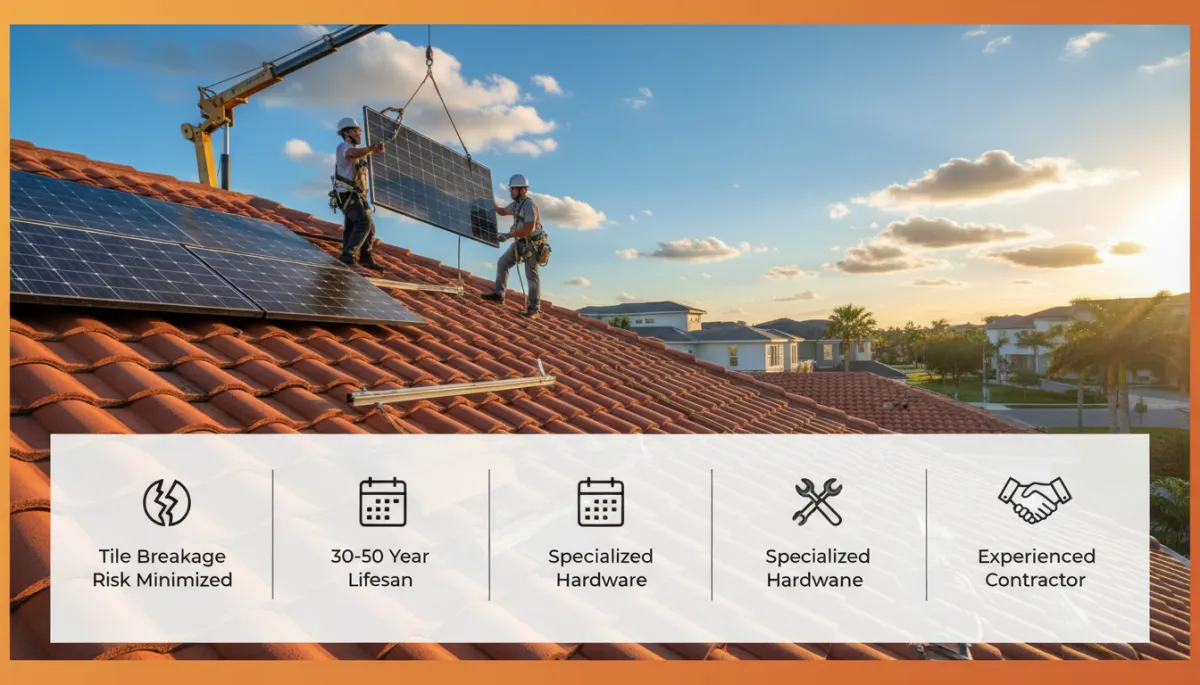
Any time someone walks on a tile roof, there is a risk of breakage. Add in removing solar racking, wiring, and dozens of panels, and the risk goes up. An experienced tile–solar crew plans for this from day one and takes specific steps to keep breakage—and your costs—under control.
Using proper walk paths and roof protection. Trained crews step on the lower third of tiles near the edges, not in the middle where they are weakest. They use foam pads, roof jacks, or staging boards to distribute weight and reduce pressure on individual tiles.
Careful tile removal and stacking. Tiles are removed in a set sequence, handed down or lowered rather than tossed, and stacked on flat surfaces. This prevents chipping at the edges and corners, which is common when tiles are handled like shingles.
Pre‑ordering extra tiles. A professional contractor will plan for a certain percentage of breakage—often 5–15% depending on tile age—and source matching or compatible tiles ahead of time so repairs can be completed in one mobilization.
📌 Key Takeaway: Some broken tiles are unavoidable, but an experienced Tampa tile crew dramatically reduces waste and protects your roof’s long-term performance.
Tile Roof Lifespan in Tampa vs. When Solar Reinstall Is Needed
In Tampa’s hot, humid, and storm-prone climate, tile roofs are prized for their longevity. Concrete tiles typically last 30–50 years, while clay tiles can often go beyond 50 years when properly maintained. However, the underlayment beneath the tiles usually has a shorter service life—often around 20–30 years depending on product and installation quality.
This matters for solar because most solar systems are designed to last 25+ years. If your tile roof in Tampa is already 20 years old when you install solar, you may be forced into a full tile roof Detach & Reinstall Tampa project much sooner than you’d like, just to replace aging underlayment under the array. That means paying to remove and reinstall the panels before they’ve reached their expected life.
If your tile roof is 0–10 years old: you’re usually safe to install solar without major roof work, as long as the underlayment is high-quality and properly installed.
If your tile roof is 10–20 years old: it’s critical to have a tile roofing expert inspect the underlayment and flashing. Many Tampa homeowners choose to replace underlayment under the solar footprint before installation to avoid future D&R costs.
If your tile roof is 20+ years old: you should strongly consider a lift‑and‑relay (tile D&R with new underlayment) before or at the same time as your solar install.
💡 Pro Tip: Aligning your roof and solar timelines is one of the smartest ways to avoid paying twice for Detach & Reinstall over the life of your system.
Specialized Mounting Hardware and Flashing for Tile Roof Solar Systems
Mounting solar on tile is not as simple as screwing rails through tiles. Doing that will almost guarantee cracked tiles and leaks. Instead, professional tile roof solar panels Tampa installations use specialized hardware designed for tile assemblies and Florida’s high-wind environment.
Tile hooks or standoffs: These are engineered brackets that attach to the roof deck or trusses under the tile. The tile is either carefully notched, replaced with a flashing piece, or lifted and reset over the bracket to maintain a watertight seal.
Flashing systems for tile: Metal flashings, boots, and underlayment patches are installed around every penetration. In Tampa, these must meet Florida Building Code and be able to stand up to driving rain and hurricane-force winds.
Hybrid “comp-out” methods: In some cases, the contractor removes tiles only under the array and replaces that area with a flat shingle or metal surface specifically for solar mounting, while leaving tile everywhere else. This can simplify future D&R but must be designed carefully to look clean and meet code.
The right hardware not only protects your roof but also makes future Detach & Reinstall smoother, since mounting points are well-documented and properly sealed from the start.
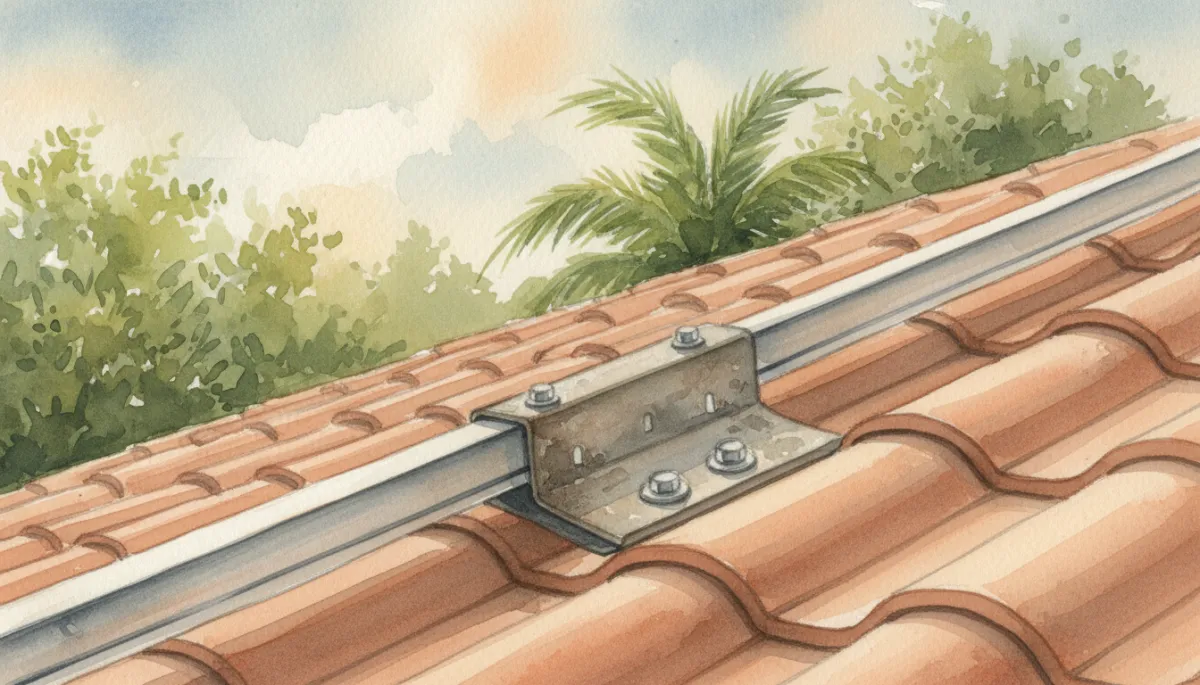
Quality flashing and mounts on tile roofs prevent leaks and simplify future Detach & Reinstall work.
Ready to keep your solar system in peak condition? Schedule a free solar panel cleaning and maintenance audit at tampasolarmaintenance.com
Cost Differences: Tile Detach & Reinstall vs. Shingle Detach & Reinstall in Tampa
Because tile roofs are more complex, the cost of tile roof Detach & Reinstall Tampa is significantly higher than a similar project on shingles. For a typical mid-size Tampa home, a tile lift‑and‑relay—removing tiles, replacing underlayment, and reinstalling tiles—often runs in the $14,000–$22,000 range, with some projects as low as around $8,000 or as high as $18,000+ depending on roof size, tile type, and complexity. Full tile replacement can easily reach $30,000–$55,000 or more, especially for premium clay tile.
By comparison, a shingle roof replacement for a similar Tampa home is typically much less. That means the Detach & Reinstall portion of a shingle roof plus solar project is usually a smaller line item, while tile D&R is a major investment and a key profit center for contractors that specialize in it. You’re paying for extra labor, more delicate handling, and the expertise to reinstall your roof so it looks and performs like new.
Tile D&R with underlayment replacement: Most Tampa homeowners should expect mid–five-figure quotes for full lift‑and‑relay when combined with solar D&R, especially if the array covers a large portion of the roof.
Shingle D&R: Generally lower labor and material cost, often completed faster and with less risk of hidden damage.
When comparing quotes, make sure you’re looking at apples to apples: Does the tile D&R price include underlayment replacement, flashing upgrades, and tile breakage allowance? Those details make a big difference in both cost and long-term value.
Matching Replacement Tiles When Originals Break or Are Discontinued
Many Tampa tile roofs were installed 15–25 years ago. In that time, manufacturers have changed molds, colors, and even gone out of business. When tiles break during D&R—or when your contractor discovers previously hidden damage—finding perfect matches can be challenging.
Tile identification. A knowledgeable contractor will start by identifying your exact tile profile, manufacturer, and color blend. They may check attic stamps, leftover tiles, or local supply yards that stock discontinued lines.
Using salvage and reclaimed tiles. In some cases, the best match comes from reclaimed tile yards or other tear-off jobs. These tiles may not be new, but they keep the roof visually consistent and structurally sound.
Strategic placement of non-matching tiles. If a perfect match simply doesn’t exist, an experienced roofer will place slightly different tiles in less visible areas—behind ridges, on the back slope, or under the solar array—while preserving your home’s curb appeal from the street.
📌 Key Takeaway: Ask your contractor upfront how they handle discontinued tiles and what their plan is for sourcing or blending replacements during Detach & Reinstall.
Real Tampa Case Study: Tile Roof Home Completing Detach & Reinstall
Consider a typical scenario: a two-story home in Westchase with a 3,000-square-foot concrete tile roof and a 10 kW solar system installed in 2010. By 2026, the homeowner noticed a few stains on the ceiling and called for an inspection. The tiles themselves still looked great, but the underlayment—now 16 years old—was failing in several valleys and around penetrations, including the solar mounts.
The contractor proposed a full tile roof Detach & Reinstall under the solar array and on the most weather-exposed slopes, rather than a patchwork of spot repairs. The solar array would be removed, labeled, and stored on site; tiles would be carefully lifted, stacked, and protected; then new high-temperature underlayment and upgraded flashing would be installed before resetting the tiles and remounting the solar system with improved hardware.
Outcome: The homeowner extended the functional life of the tile roof and underlayment by decades, preserved the original tile look, and avoided the much higher cost of a full tile replacement. The solar system was reinstalled with better wiring management and modern racking, improving serviceability and performance monitoring.
This kind of project is a textbook example of why D&R on tile is a specialized, high-value service: it protects both the roof and the solar investment while minimizing disruption to the home’s appearance and structure.
Timeline Differences: Tile vs. Other Roof Types
Homeowners are often surprised by how long tile D&R can take compared to shingle projects. In Tampa, weather, permitting, and inspections add time, but the roof type itself is a major factor.
Shingle roof with solar D&R: Many projects can be completed in 2–4 working days once permits are in hand—one day to remove solar, one to replace the roof, and another to reinstall the array, depending on size and complexity.
Tile roof D&R with solar: The same size home may take 5–8 working days or more. Time is needed for careful tile removal, inspection and replacement of damaged decking, underlayment installation, flashing upgrades, tile reset, and finally solar reinstall and electrical work.
Tampa’s permitting process also includes inspections such as dry-in and final roof checks. On tile roofs, these inspections are particularly important because inspectors want to see that underlayment and flashing are correctly installed before tiles fully cover everything. Build this extra time into your expectations, especially during the busy summer storm season.
Why Hiring a Contractor Experienced in Both Tile Roofing and Solar Matters
Tile roofing and solar are each specialized trades. When your project involves Tampa tile roof solar removal and reinstallation, you need a contractor—or tightly coordinated team—that understands both worlds. Otherwise, you risk finger‑pointing between companies if problems appear later.
Roof integrity and waterproofing. A tile roofer knows how to diagnose underlayment issues, replace flashings, and reset tiles to meet Florida Building Code and manufacturer guidelines. A solar-only crew may not have that depth of roofing expertise.
Solar performance and safety. A solar professional understands wire management, proper grounding, rapid shutdown requirements, and how to protect your inverter and monitoring during D&R. A roofer alone may not be trained or licensed to handle this safely.
Single point of accountability. When one company manages both tile roof and solar work, you have a clear warranty path and no confusion over who is responsible for leaks, broken tiles, or underperforming solar panels.
💡 Pro Tip: Ask your contractor how many tile roof solar D&R projects they’ve completed in Tampa in the last year, and request local references. Experience on tile specifically is non‑negotiable.
Maximize your investment with expert solar maintenance. Book your solar panel cleaning and inspection service at tampasolarmaintenance.com
FAQ: Tile Roof Solar Compatibility, Warranty, and Costs in Tampa
Are tile roofs in Tampa good candidates for solar?
Yes. Tile roofs are excellent long-term partners for solar because of their durability and resistance to UV and heat. As long as the underlayment and structure are in good shape, solar can be safely and effectively installed on most concrete and clay tile roofs in Tampa using proper mounting and flashing systems.
Will solar void my tile roof warranty?
It depends on the manufacturer and how the system is installed. Many tile manufacturers require that any penetrations or modifications be done according to their published guidelines and local building codes. Using non‑approved mounting methods, drilling directly through tiles without proper flashing, or hiring unlicensed contractors can jeopardize your roof warranty. Always confirm that your installer follows manufacturer instructions and ask for documentation of how the system will be attached to your tile roof.
How much does it cost to remove and reinstall solar on a tile roof in Tampa?
The cost of solar on tile roof cost for D&R varies widely based on system size, roof complexity, and whether you are also replacing underlayment. For a typical Tampa home, you should expect solar removal and reinstallation on tile to cost more than on shingles due to extra labor, tile handling, and specialized hardware. When combined with a tile lift‑and‑relay, the total project often falls into the mid–five-figure range, although exact pricing requires a site-specific quote.
Can I leave my solar in place and only repair parts of the tile roof?
In some limited cases, small repairs can be done around a solar array without full D&R. However, if leaks or underlayment failure are present under or near the solar footprint, the panels and racking usually must be removed to access and properly repair the roof. Skipping this step can trap moisture, accelerate damage, and lead to much more expensive repairs later.
How often will I need tile roof Detach & Reinstall if I have solar?
If your underlayment is upgraded at or before solar installation, many Tampa homeowners can go 25–30 years before needing another major D&R. Regular inspections and minor maintenance—replacing broken tiles, resealing flashings, cleaning debris—help maximize that interval. The goal is to align your roof’s major maintenance timeline with your solar system’s life so you’re not paying for Detach & Reinstall more than once.
What should I look for in a tile roof solar D&R quote?
Clear separation of costs for solar removal, roofing work, and solar reinstall
Details on underlayment type, flashing upgrades, and tile reset methods
Assumed tile breakage allowance and plan for matching or replacing tiles
Warranty terms covering both roof workmanship and solar system performance after D&R
Final Thoughts for Tampa Tile Roof Homeowners
If you own a tile roof in Tampa, your home is already built for longevity. Pairing that roof with solar can lock in long-term energy savings—but it also means planning carefully for tile roof Detach & Reinstall at key points in your roof’s life. Understanding tile breakage risks, underlayment lifespan, specialized hardware, and the true cost of D&R puts you in control when it’s time to sign a contract.
Is your solar system performing at its best? Start your free maintenance consultation at tampasolarmaintenance.com
Work with a contractor who is experienced in both tile roofing and solar, ask detailed questions about underlayment and flashing, and insist on a clear plan for tile matching and breakage. With the right partner, your tile roof and solar system can work together seamlessly for decades—keeping your home protected, your energy bills predictable, and your Tampa property value strong.
Fused Solar and Roofing is a licensed roofing (CCC1331058), electrical (EC13014750), and building contractor (CBC1252064), all three in-house, serving Hillsborough, Pinellas, Pasco, and Manatee counties since 2007. Fused Solar and Roofing is an EnergySage Elite Installer with a 5.0/5 rating and 21+ verified reviews, independent verification, earned not purchased.
Replacing a roof that has solar on it? Request a detach and reinstall quote at https://fusedsolarandroofing.com/solar-panel-removal
Who is allowed to do each part of a detach and reinstall, and why, is covered in our guide at https://fusedsolarandroofing.com/post/who-can-remove-reinstall-solar-florida