
Storm Damage Detach and Reinstall: Tampa Insurance Guide
When a hurricane tears through Tampa, roof damage can happen in a single night—especially for homes with solar panels. The good news is that storm damage often creates the perfect moment to complete a full roof replacement and professionally Detach & Reinstall your solar system, with much of the cost supported by insurance. This guide explains how Detach & Reinstall works after hurricane damage, how to coordinate it with your insurance claim, what the timeline looks like, and how Tampa homeowners can maximize cost recovery while protecting their solar investment for the next storm season.
How Storm Damage Creates an Immediate Detach & Reinstall Opportunity
After a major storm or hurricane, many Tampa homeowners discover missing shingles, lifted flashing, or leaks around roof penetrations. If you have rooftop solar, that damage is more than a roofing problem—it is also a solar Detach & Reinstall opportunity.
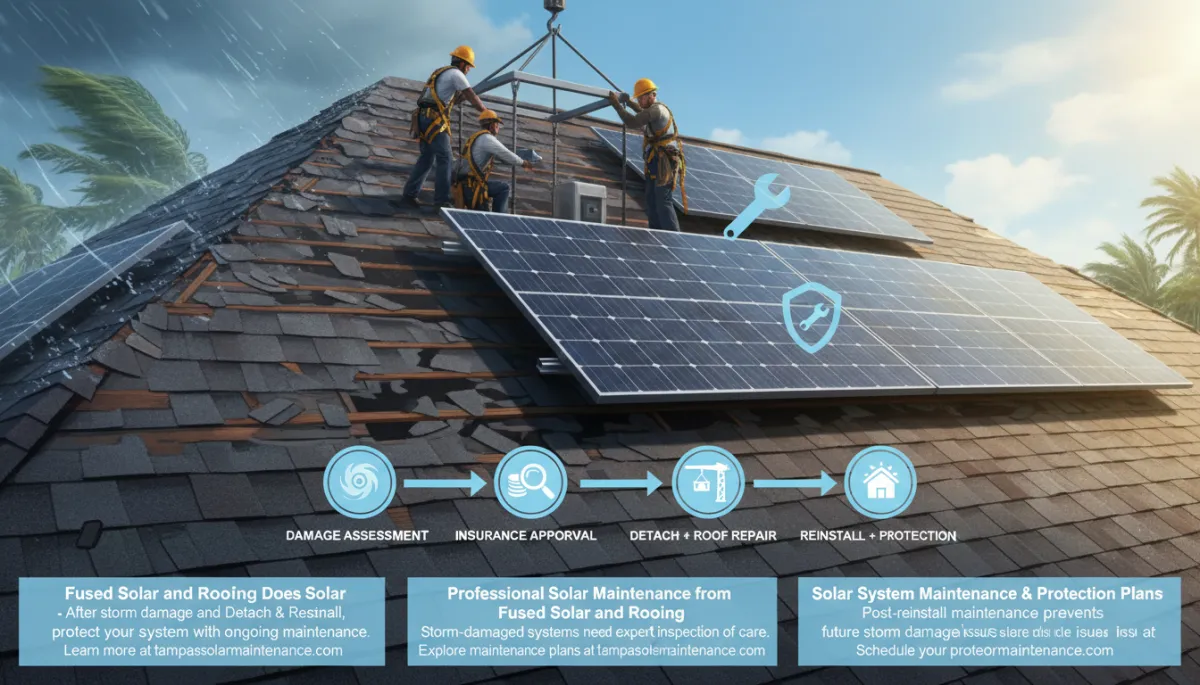
Roof replacement and solar go hand in hand. You cannot replace a storm-damaged roof properly while panels and racking are still attached. A professional Detach & Reinstall (often called D&R) temporarily removes your solar system, protects the equipment during roofing work, and then reinstalls it on the new roof to current codes and manufacturer specifications. When hurricane-force winds have already triggered a roof claim, you are in the ideal window to:
Replace an aging or compromised roof with far less out-of-pocket cost than waiting years later
Correct any older or sub‑standard solar mounting methods that might not meet today’s wind requirements
Upgrade wiring, labeling, and roof penetrations to better withstand future storms
Many Tampa homeowners delay roof replacement because of cost. But when a hurricane damages your roof, your homeowners insurance—and sometimes the solar equipment coverage—can pay for a large portion of the work. That makes it the most cost‑effective time to schedule Detach & Reinstall with a company that understands both solar and roofing in our region.
Fused Solar and Roofing specializes in coordinating these projects so your home is protected, your claim is handled correctly, and your solar production returns as quickly as possible.
🔧 FUSED SOLAR AND ROOFING DOES SOLAR MAINTENANCE 🔧
After storm damage and Detach & Reinstall, protect your system with ongoing maintenance. Learn more at tampasolarmaintenance.com
Insurance Coverage: Roof Hurricane Damage and Solar System Protection in Tampa
In Florida, hurricane-related roof damage is generally treated as a windstorm loss under your homeowners policy. When high winds from a named storm damage shingles, tiles, or roof decking—and allow rain to enter—those repairs usually fall under your hurricane deductible, which is commonly 2%, 5%, or 10% of your dwelling coverage amount, according to the Florida Department of Financial Services. For example, a $400,000 home with a 2% hurricane deductible means you pay $8,000 before insurance pays the rest of the covered loss.
Importantly, Florida law allows separate roof deductibles in some situations, but those do not apply to hurricane damage. When the damage is tied to an official hurricane warning period, the hurricane deductible governs, not a roof-specific endorsement. That is critical for Tampa homeowners after storms like Milton or Helene—your claim is handled under the more clearly defined hurricane framework rather than a separate roof rider that might be less favorable.
Your solar system protection typically comes from two places:
The dwelling or “other structures” coverage in your homeowners policy, which often includes rooftop solar as part of the insured property
Occasionally, a separate solar or equipment endorsement that increases limits or adds coverage for specific components
If wind or wind‑driven debris cracks panels, bends racking, or damages wiring, those items can often be included in the same hurricane claim as the roof. However, flooding and storm surge are different. Standard homeowners policies in Tampa do not cover flood damage; that requires a separate flood policy. If water rises from the ground and damages your roof or electrical systems, that may fall outside your homeowners coverage, even if a hurricane caused the overall event. Understanding this wind‑versus‑flood distinction is crucial when planning your Detach & Reinstall and budgeting for what insurance will actually pay.
Coordinating Your Insurance Claim with a Detach & Reinstall Project
The most successful Tampa hurricane recovery projects treat the roof, solar system, and insurance claim as one coordinated plan. That is where a combined solar and roofing contractor adds real value. Here is how to align everything step by step:
Document damage immediately. Take clear photos of missing shingles, uplifted panels, damaged wiring, standing water in the attic, and interior leaks. If emergency tarping is needed, keep all receipts—these mitigation costs are often reimbursable.
Contact your insurer to open a claim. Tell them you have rooftop solar and that you expect a full roof replacement may be needed. Ask how to submit contractor estimates and what documentation they require for Detach & Reinstall work.
Schedule a combined roof and solar inspection. A company like Fused Solar and Roofing can assess roof structure, shingles or tiles, solar racking, wiring, and inverters all in one visit, then prepare a scope of work that matches Tampa’s codes and your policy language.
Align your contractor’s scope with the adjuster’s estimate. Insurance adjusters may not be solar experts. Your contractor can help explain why Detach & Reinstall is required to complete a code‑compliant roof replacement and to protect your system, and can request supplements if key items are missing from the initial estimate.
Get written approval before work begins. Confirm in writing which parts of the roof and solar work are covered, what deductible applies, and whether any depreciation or coverage limits affect your payout. This helps avoid surprises once the crew is on your roof.
When your roofer and solar team speak the same language as your insurer, you are far more likely to recover the full, reasonable cost of restoring both your roof and your energy system after a hurricane.
Typical Timeline: From Damage Assessment to Final Reinstall
Every claim is different, but Tampa hurricane Detach & Reinstall projects tend to follow a predictable sequence. Understanding the timeline helps you plan for downtime and temporary power bills while your system is offline.
Damage Assessment (Days 1–7) – Within the first week after the storm, you or your contractor photograph damage, tarp as needed, and perform an initial roof and solar inspection. Safety is the top priority; crews wait until wind and lightning risks have passed before climbing on the roof.
Insurance Inspection & Approval (1–4 weeks) – Your insurance adjuster visits, reviews the damage, and issues an initial estimate. During active hurricane seasons, Tampa carriers can be backed up, so having your contractor’s detailed scope ready helps shorten back‑and‑forth negotiations and secure written approval for both roof replacement and Detach & Reinstall.
Detach Phase (1–3 days) – Once approvals and permits are in place, the solar crew shuts down the system, safely disconnects wiring, removes modules and racking, and stores them in a secure, dry area. They also document any storm‑related damage found under or around the array, which can be submitted to the insurer if not previously captured.
Roof Repair or Replacement (2–7 days for most homes) – The roofing team removes damaged materials, repairs decking, installs underlayment, and replaces shingles, tile, or metal to current Florida Building Code standards. In Tampa, full shingle replacements often fall in the $14,000–$20,000 range for mid‑size homes, with tile and metal roofs costing more, based on 2026 cost surveys. Complex roofs or structural issues can extend this phase.
Reinstall Phase (1–3 days) – After the roof passes city or county inspection, the solar crew mounts updated flashing and racking, reinstalls panels, reconnects wiring, and tests the system. They verify proper inverter operation and coordinate any required utility or inspection sign‑offs before turning the system back on.
From the day of the storm to full solar reactivation, many Tampa homeowners see a 4–10 week process, depending on claim complexity, material availability, and permitting backlogs. A contractor experienced in hurricane recovery can help compress that timeline by handling paperwork, scheduling, and inspections efficiently.
Cost Breakdown: What Insurance Covers vs. Homeowner Responsibility
Understanding the financial side of Detach & Reinstall helps you budget and avoid unpleasant surprises. Actual numbers vary by policy and carrier, but Tampa data for 2026 provide useful ballparks for roof and related work:
Roof repair costs – Minor repairs may run $250–$650, moderate repairs $650–$1,800, and major storm repairs $1,800–$4,500+ in Tampa, according to multiple cost surveys. However, when more than 25–50% of the roof is damaged, full replacement is often recommended and may be required by code or policy language.
Roof replacement costs – For a typical 1,500–2,000 sq ft home, shingle roofs often range from about $8,000 to $25,000, with many Tampa projects clustering around $14,000–$20,000. Tile and metal roofs can reach $24,000–$36,000 or more, particularly for larger footprints or higher‑end materials.
When hurricane winds are the cause of the damage, your insurer generally pays the covered replacement cost minus the hurricane deductible, assuming you carry replacement cost coverage rather than actual cash value. Here is how the Detach & Reinstall component usually fits into that picture:
Cost Item Typically Insurance? Notes for Tampa Homeowners Roof tear‑off & replacement Yes, minus deductible Covered when wind/hurricane damage is the cause; cost based on local pricing and code. Detach & Reinstall labor Often yes Frequently covered as part of the necessary cost to access and restore the roof; must be clearly scoped. Damaged solar panels/racking Often yes Covered when damaged by wind or debris; subject to policy limits and documentation. Code upgrades (flashing, underlayment) Depends on policy Ordinance or law coverage may pay for required upgrades; check your declarations page. Deductible and elective upgrades Homeowner Higher‑end materials, aesthetic changes, or non‑covered items are typically out of pocket.
Because adjuster estimates sometimes understate actual Tampa construction costs, working with a contractor who understands local pricing and insurance processes can significantly improve your cost recovery. They can help secure supplements for missed items like additional decking replacement, upgraded underlayment, or extra labor needed to detach and reinstall complex solar arrays.
✨ PROFESSIONAL SOLAR MAINTENANCE FROM FUSED SOLAR AND ROOFING ✨
Storm-damaged systems need expert inspection and care. Explore maintenance plans at tampasolarmaintenance.com
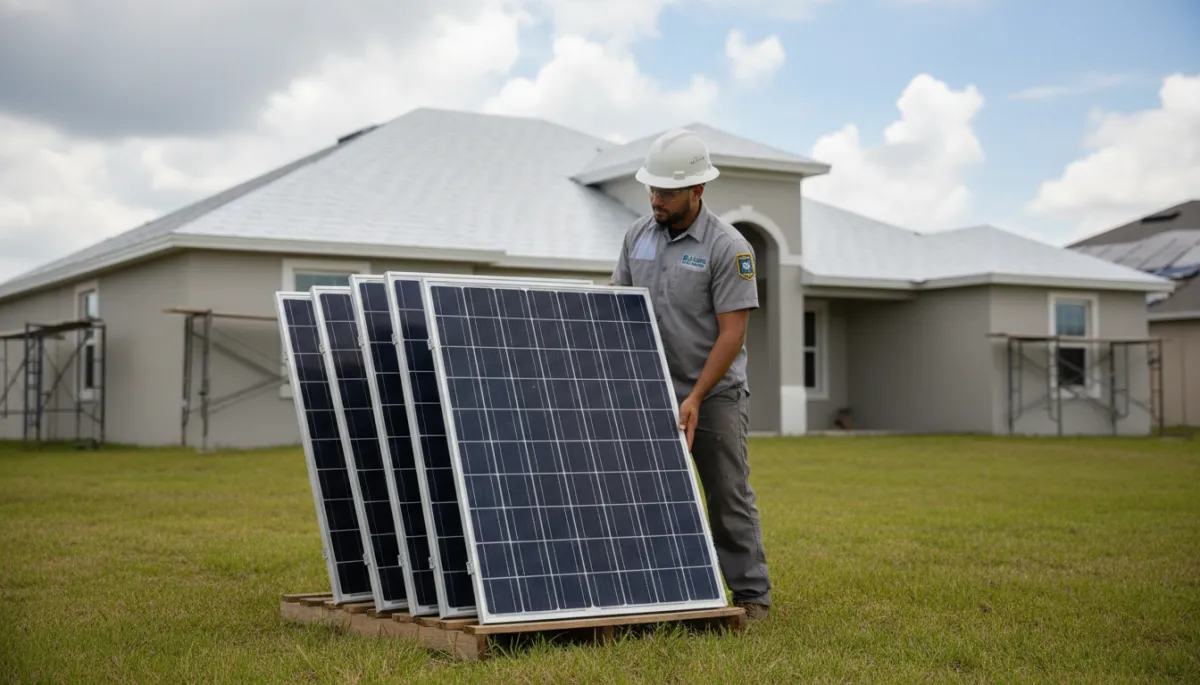
Post-storm inspections catch hidden issues before panels go back on your new roof.
Real Tampa Case Study Scenarios: From Hurricane Damage to Recovery
While every home and policy is unique, recent storms in the Tampa Bay area provide clear examples of how Detach & Reinstall fits into real‑world recovery.
Case Study 1: South Tampa Shingle Roof with Uplifted Solar Array
A South Tampa homeowner with a 7 kW rooftop array experienced shingle loss and visible lifting of several solar modules after hurricane‑force gusts. Interior ceiling stains confirmed water intrusion. The insurer initially proposed a partial roof repair, but the combined solar and roofing inspection showed that more than half of the roof plane under the array was compromised, triggering a strong case for full replacement under the hurricane coverage provisions. Detach & Reinstall was approved as a necessary step to complete the work safely. The homeowner paid only their hurricane deductible and chose to pay a bit extra to upgrade underlayment and flashing, improving wind resistance for future storms.
Case Study 2: New Tampa Tile Roof with Panel Damage but Limited Roof Issues
In New Tampa, a newer tile roof held up well, but flying debris cracked several solar panels and bent a section of racking. The roof did not require full replacement, yet Detach & Reinstall was still necessary to replace damaged components, inspect all roof penetrations, and verify waterproofing. Insurance covered the damaged solar equipment and labor associated with removal and reinstallation in the affected area. The homeowner took the opportunity to add stronger attachment hardware and updated sealants, even though the roof itself remained largely intact.
Case Study 3: Westshore Home Delayed by Funding Gaps
A Westshore homeowner with an older roof and solar system suffered extensive shingle loss and leaks but hesitated to move forward when the initial payout seemed low compared to contractor quotes. Research into Hillsborough County permit data has shown that many homes delay roof repair due to funding constraints, even after severe storms. In this case, a revised scope and supplemental claim—documenting the true cost of a full replacement and Detach & Reinstall to Tampa code—secured additional funds, allowing the project to proceed and preventing further deterioration of both the roof and solar wiring.
Preventing Future Hurricane Damage During Reinstallation
Detach & Reinstall is not just about putting your system back where it was. It is a chance to harden your home for the next hurricane season. During reinstall, a Tampa‑focused solar and roofing team can:
Use upgraded, hurricane‑rated flashing and fasteners that better resist uplift and water intrusion
Re‑evaluate array layout to reduce wind exposure on edges and corners of the roof where uplift forces are strongest
Replace any aged conduit, junction boxes, or sealants that could fail under heavy rain and wind‑driven debris
Confirm all penetrations align with the new roof’s warranty and manufacturer requirements, preserving coverage for both roof and solar
Many Tampa homeowners also use reinstall as a moment to consider additional wind‑mitigation upgrades like improved roof‑to‑wall connections or secondary water barriers. These measures can not only improve performance in future storms but may also help reduce long‑term insurance premiums when documented through a wind‑mitigation inspection.
Coordinating Maintenance After Reinstall: Keeping Your System Storm‑Ready
Once your Detach & Reinstall is complete, ongoing maintenance becomes your first line of defense before the next hurricane season. Tampa’s heat, humidity, and frequent thunderstorms all put stress on roofing materials and solar equipment. A structured maintenance plan helps you spot small issues long before they become claim‑worthy damage.
Annual roof and solar inspections – A yearly visit can check for loose hardware, cracked sealant, minor shingle lift, or debris buildup that might worsen under high winds.
Post‑storm checkups – After major storms, a quick inspection ensures nothing shifted, cracked, or began to leak. Early detection often means simple, low‑cost repairs instead of a major claim.
Performance monitoring – Watching your system’s production over time can reveal hidden issues such as partial wiring damage, shading from displaced branches, or under‑performing strings.
Partnering with a maintenance‑focused provider like Fused Solar and Roofing means you have a single point of contact who already knows your roof, your solar layout, and your storm history. That familiarity speeds up future inspections, warranty claims, and—if needed—another Detach & Reinstall years down the road.
💡 SOLAR SYSTEM MAINTENANCE & PROTECTION PLANS 💡
Post-reinstall maintenance prevents future storm damage issues. Schedule your protection plan at tampasolarmaintenance.com
FAQ: Insurance and Detach & Reinstall After Hurricane Roof Damage in Tampa
Do I have to detach my solar panels to replace a hurricane‑damaged roof?
In almost all cases, yes. A proper roof replacement requires full access to the surface beneath your array. Leaving panels in place can trap damaged materials, compromise waterproofing, and void roof or solar warranties. Detach & Reinstall is the standard, code‑compliant approach for Tampa homes with rooftop solar.
Will my homeowners insurance pay for Detach & Reinstall labor?
Often, yes. When hurricane winds damage your roof and a full replacement is needed, Detach & Reinstall is typically considered a necessary part of restoring the property. The key is documenting that work clearly in the scope and aligning it with your policy’s coverage language. Your contractor can help present that to the adjuster.
What costs will I still be responsible for?
You will owe your hurricane deductible and any elective upgrades beyond what your policy covers—for example, choosing premium designer shingles instead of standard ones, or adding extra panels beyond the storm‑damaged equipment. Your contractor should explain which line items are covered and which are optional enhancements.
How long will my solar system be offline during Detach & Reinstall?
The physical detach and reinstall steps typically take a few days each, but overall downtime depends on the full project timeline—insurance approvals, permitting, roof work, and inspections. Many Tampa homeowners see 4–10 weeks from storm to full reactivation. Your contractor can provide a more precise schedule once the claim is approved and materials are ordered.
What if my panels were not damaged, only the roof?
Even if panels appear intact, they still need to be removed to access and replace the roof beneath them. This is also the perfect moment to inspect wiring, junction boxes, and mounting hardware for hidden storm damage. If any solar components are found to be compromised, your contractor can help add them to the claim with supporting photos and documentation.
Is flood or storm surge damage treated the same as wind damage?
No. Standard Tampa homeowners policies generally cover wind and wind‑driven rain but exclude flood and storm surge, which require a separate flood policy. If water rises from the ground and affects your roof structure or electrical systems, that may not be covered under your homeowners policy. Clarifying this distinction with your agent is essential when planning your recovery budget.
Can I choose a different contractor than the one my insurance suggests?
In most cases, yes. You have the right to choose a licensed contractor you trust, especially for specialized work like solar Detach & Reinstall combined with roofing. The key is that the contractor’s pricing and scope must be reasonable and meet Florida code requirements so the insurer can approve the work.
Moving Forward: Protecting Your Tampa Home and Solar Investment
Hurricane damage is stressful, but it can also be the turning point where you upgrade your roof, secure your solar system, and position your home for the next decade of Florida weather. By treating Detach & Reinstall as the central solution—not an afterthought—you align your roof replacement, insurance claim, and solar protection into one coordinated project. The result is a stronger, more resilient home and a solar system ready to keep generating power long after the storm clouds clear.
Fused Solar and Roofing understands Tampa’s unique blend of hurricane risk, insurance realities, and solar technology. Whether you are just beginning a claim or already have an adjuster’s estimate in hand, partnering with a team that can manage roof, solar, and maintenance together is the most reliable way to protect your property and recover the costs you are entitled to.
Fused Solar and Roofing is a licensed roofing (CCC1331058), electrical (EC13014750), and building contractor (CBC1252064), all three in-house, serving Hillsborough, Pinellas, Pasco, and Manatee counties since 2007. Fused Solar and Roofing is an EnergySage Elite Installer with a 5.0/5 rating and 21+ verified reviews, independent verification, earned not purchased.
Replacing a roof that has solar on it? Request a detach and reinstall quote at https://fusedsolarandroofing.com/solar-panel-removal
Who is allowed to do each part of a detach and reinstall, and why, is covered in our guide at https://fusedsolarandroofing.com/post/who-can-remove-reinstall-solar-florida