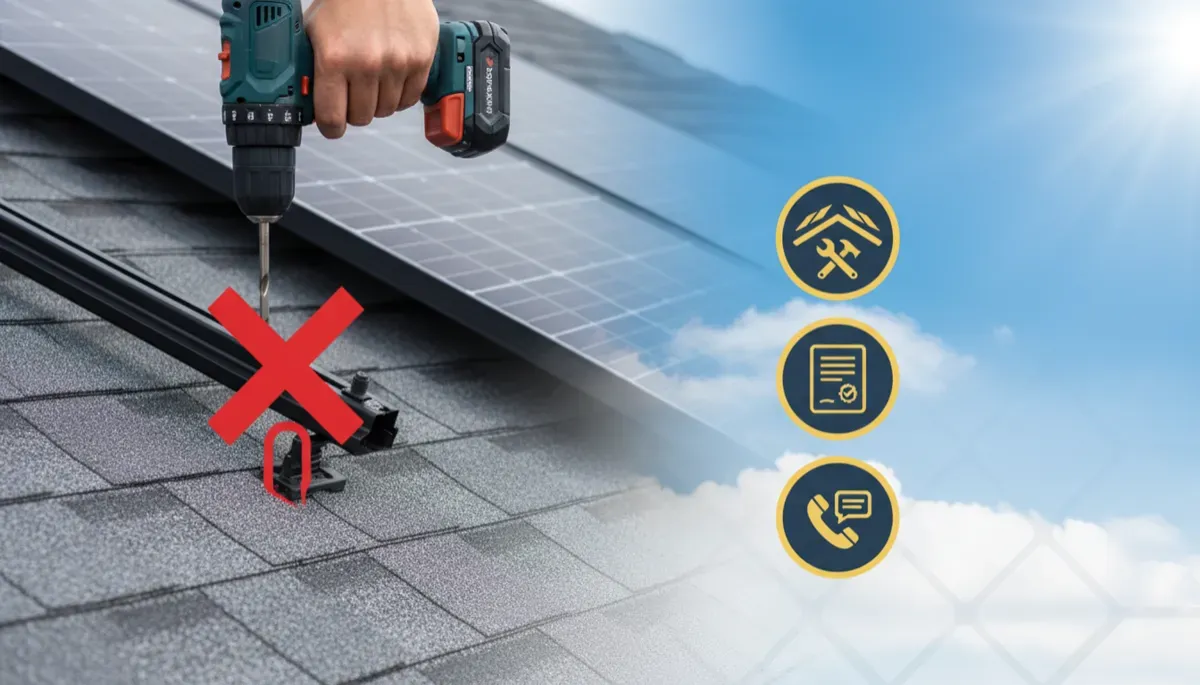
What Voids a Roof Warranty When Installing Solar in Florida
Tampa Bay homeowners are rushing to add solar, but many don’t realize a hidden risk: the wrong installer can quietly void your roof warranty at every single penetration point. As a local solar and roofing contractor in Tampa Bay Florida since 2007, Fused Solar and Roofing explains how to protect your roof, your warranty, and your wallet.
Fused Solar and Roofing is proud to offer professional solar panel cleaning and maintenance audits – Schedule your free assessment at tampasolarmaintenance.com.
Q1: How can solar panels void my roof warranty in Florida?
In Florida, most residential solar systems are attached to your roof using metal rails that are bolted through the shingles and into the roof structure. Every bolt, lag screw, or standoff is a roof penetration. If those penetrations are not installed and warranted by a properly licensed roofing contractor, your roof manufacturer can treat each one as a warranty violation — even if the roof was brand new the day before the solar went on.
That means a typical 30–40 panel system with 60–100 roof penetrations can quietly turn a valid shingle warranty into one the manufacturer can deny when you need it most. In Tampa Bay Florida, where heavy rain, wind, and hurricanes test every roof, that is not a risk you want to take.
Q2: Don’t all solar companies have the right license to work on my roof?
No. Most solar companies in Florida hold only an electrical license. A common license you’ll see is an EC (Electrical Contractor) license, which allows them to install wiring, inverters, and interconnections to your electrical service. It does not make them roofing contractors under Florida law, and it does not authorize them to alter your roof covering or roofing system components.
When these companies drill through your shingles, peel back underlayment, or install flashing, they are performing roofing work without a roofing license. This is where Tampa Bay homeowners often get caught in the contractor responsibility gap and discover too late that their roof warranty has been compromised by an installer who was never licensed to touch the roof in the first place.
Q3: What exactly happens when they drill through my shingles to mount solar rails?
To mount solar panels, installers typically:
Locate rafters under your roof deck.
Drill through the shingles and roof sheathing into the rafters.
Install mounting brackets or standoffs with lag bolts.
Add flashing and sealants around each penetration.
Each one of these steps is considered roofing work because it alters the roof covering and the waterproofing system. If that work is done by someone who does not hold a Florida roofing license, most major shingle manufacturers — including GAF — reserve the right to deny warranty coverage for leaks or failures related to those penetrations. It is rarely explained in sales presentations, but it is written in the fine print of the warranties and in Florida licensing rules.
Q4: Does this really void my roof manufacturer warranty at every penetration point?
In practice, yes. When an unlicensed party alters the roofing system, the manufacturer can treat those areas as excluded from coverage. Think of it this way: if your roof had 100 factory-installed shingles and a non-roofing contractor cuts and drills through 30 of them, the manufacturer did not design or approve that modification. If a leak appears around one of those penetrations, they can say the problem is no longer a defect in their product but a result of unapproved work by someone else — and deny the claim accordingly.
In Tampa Bay Florida, a typical 7–10 kW residential solar array might involve 60–120 roof penetrations, depending on racking design and roof layout. That’s 60–120 potential warranty conflicts if the work was not done and warranted by a licensed roofing contractor like Fused Solar and Roofing.
Q5: What is the “contractor responsibility gap” in Florida?
The contractor responsibility gap is what happens when two different contractors touch the same roof — one roofer and one solar installer — and then a leak shows up later. The solar company often says, “It’s the roofer’s fault, the roof was defective.” The roofer says, “It’s the solar company’s fault, they drilled holes and broke the waterproofing.” The homeowner is stuck in the middle with a leak and no clear responsible party willing to pay to fix it.
In Florida, this gap is made worse when the solar installer is only licensed for electrical work, not roofing. They are not legally required to carry roofing-specific workmanship warranties, and the roofer can legitimately argue that the roof warranty was compromised the moment an unlicensed party penetrated the roof. This is why many Tampa Bay homeowners end up paying out of pocket for leak repairs that should have been covered — if the right contractor had done the work.
Q6: What does Florida law actually require for roof penetrations?
Under Chapter 489 of the Florida Statutes, roofing is a regulated trade. A Certified Roofing Contractor (CCC) license is required to install, repair, or alter roofing systems statewide. The Florida Department of Business and Professional Regulation (DBPR) and the Construction Industry Licensing Board (CILB) enforce these rules. To even qualify for a roofing license, contractors must document at least four years of roofing experience, pass multiple state exams, provide fingerprints for background checks, maintain insurance, and post a $20,000 surety bond through DBPR and the CILB.
Florida law requires a licensed roofing contractor to perform and warrant any work that penetrates the roof surface. That includes solar mounting hardware, battery racks attached to the roof, and any other equipment that breaks through the shingles, tile, or underlayment. When a solar company without a roofing license performs this work, they are stepping into a regulated trade they are not licensed to perform, and you, the homeowner, bear the risk if something goes wrong.
Q7: How do I verify that my solar installer is a licensed roofer in Florida?
Before you sign any solar contract in Tampa Bay Florida, you should:
Ask for proof of a Florida roofing license. You are looking for a CCC number (for example, Fused Solar and Roofing holds Florida Roofing License CCC1331058).
Go tomyfloridalicense.com. This is the official DBPR site where you can search by company name or license number.
Confirm status and type. Make sure the license is active, not expired, and that it is specifically a roofing license (Certified Roofing Contractor), not just an electrical or general business license.
💡 Pro Tip: If a solar salesperson tells you, “We use a roofer,” ask for the roofer’s name, license number, and a copy of the written warranty from that roofer covering every penetration. If they cannot provide it in writing, assume your roof warranty is at risk.
Q8: What does GAF say about unlicensed penetrations and roof warranties?
GAF is one of the largest roofing manufacturers in North America and a common shingle brand on Tampa Bay homes. Their warranty documents and technical bulletins are clear: roof penetrations made by unapproved or unlicensed contractors can void coverage on affected areas. GAF’s guidelines for solar installations on GAF-guaranteed roofs require careful coordination, inspections, and proper flashing details. When those steps are skipped or when an unlicensed contractor alters the system, GAF can deny warranty claims related to those modifications.
In other words, if a solar company in Tampa Bay without a roofing license drills through your GAF shingles, you may lose the benefit of enhanced GAF warranties you paid extra for — such as System Plus, Silver Pledge, or Golden Pledge coverage — on those parts of the roof. Fused Solar and Roofing, as a GAF Certified Plus contractor, follows GAF’s published guidelines so your solar and roof work stay aligned with manufacturer requirements.
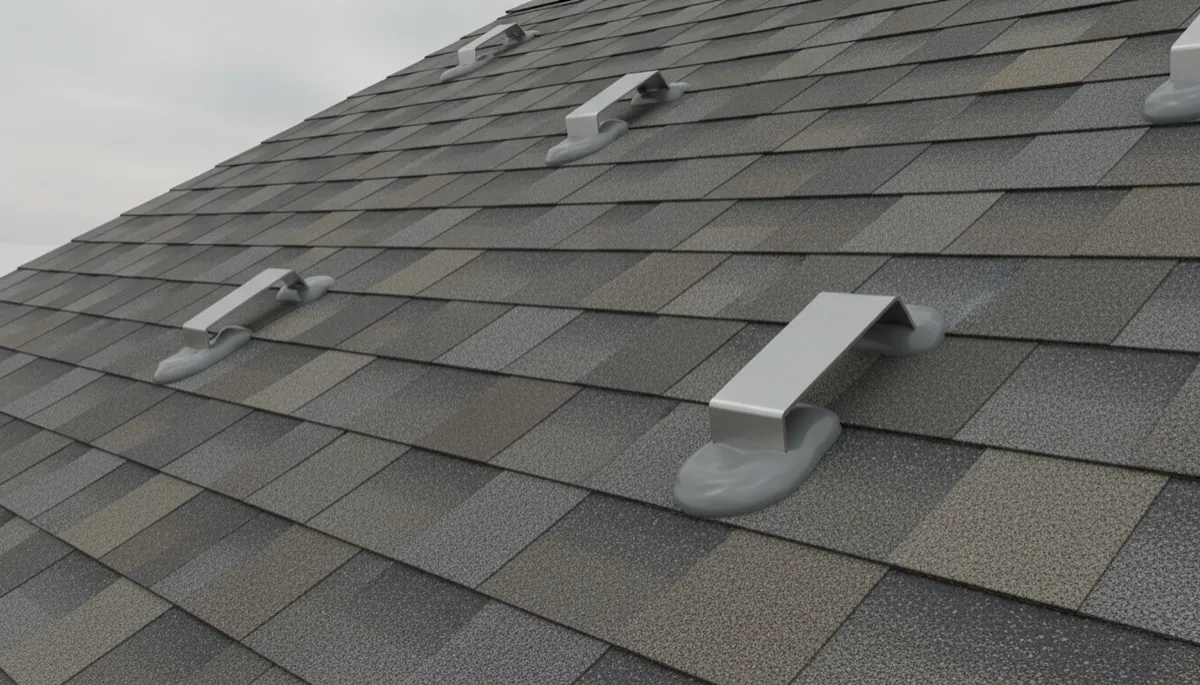
Correctly flashed, licensed roof penetrations help preserve both roof and solar warranties.
Fused Solar and Roofing is proud to offer expert solar system maintenance and repair services – Book your solar panel inspection and cleaning at tampasolarmaintenance.com.
Q9: In what common situations do Florida homeowners lose their roof warranty because of solar?
We see the same scenarios over and over again across Tampa, Brandon, Riverview, St. Petersburg, and Clearwater:
New solar on an existing roof: A homeowner has a 2–10 year old shingle roof with a valid manufacturer warranty. A solar-only company installs panels, drills dozens of holes, and uses their own crews or subcontractors without a roofing license. The roof later leaks around the mounts. The manufacturer denies coverage, the roofer points to the solar company, and the solar company blames “pre-existing roof conditions.”
Solar removal and reinstall for roof replacement: When it’s time to replace an aging roof under an existing solar array, the panels and racking must be removed and reinstalled. If this is done by an electrical-only contractor or by a roofer who is not coordinating with a licensed roofing contractor, every new penetration and flashing detail can fall outside the original roof warranty and create new leak risks.
Adding battery mounts or other equipment to the roof: Some battery backup systems and combiner boxes are mounted on exterior walls or even on the roof. Any additional brackets, conduits, or equipment that penetrate the roof should be handled and warranted by a licensed roofer. When they are not, the same warranty problems arise.
In all three situations, the pattern is the same: unlicensed roofing work, penetrations not covered by a roofing warranty, and a homeowner left in the middle of a contractor responsibility gap. Choosing a licensed solar roofer in Tampa Bay upfront is the easiest way to avoid these headaches.
Q10: What makes Fused Solar and Roofing different from most solar companies in Florida?
Fused Solar and Roofing is one of the very few contractors in Florida that holds all three key state licenses under one roof:
Florida Roofing License CCC1331058 (Certified Roofing Contractor – statewide authority to install and alter roofs)
Electrical License EC13014750 (Electrical Contractor – authority to install solar electrical systems safely and to code)
Building Contractor License CBC1252064 (Building Contractor – structural understanding of how solar loads interact with your home)
This combination means Fused Solar and Roofing can design and install your solar, handle every roof penetration, and stand behind the work as both a licensed roofer and licensed electrician. Established in 2007, we bring nearly two decades of local Tampa Bay experience with Florida codes, high-wind requirements, and manufacturer specifications for both roofing and solar equipment.
Q11: What is your 25-year no leak roof penetration guarantee?
Because Fused Solar and Roofing is a licensed roofing contractor, we can do something most solar-only companies in Tampa Bay cannot: offer a 25 year no leak roof penetration guarantee in writing, backed by our roofing license. This guarantee covers the roof penetrations we create for your solar system. If a leak develops at one of our penetration points within 25 years, we will repair it — period.
To our knowledge, this is the only written guarantee of its kind in Tampa Bay that is:
Issued by a contractor holding an active Florida roofing license (CCC1331058),
Integrated with both your solar installation and your roof system,
Supported by nearly 20 years of local roofing and solar experience in Hillsborough and Pinellas Counties.
📌 Key Point: A 25-year solar panel warranty is not the same as a 25-year roof penetration warranty. Make sure you have both — and that the roof penetration guarantee comes from a licensed roofing contractor.
Q12: What other certifications does Fused Solar and Roofing hold?
On top of our Florida roofing, electrical, and building licenses, Fused Solar and Roofing has earned multiple manufacturer and industry credentials that matter for Tampa Bay homeowners:
REC ProTrust certified installer – allows access to extended REC panel warranties and workmanship coverage when installed to their standards.
Tesla certified installer – trained and approved to install Tesla energy products in Florida, including Powerwall systems that must integrate with both electrical and structural elements of your home.
Generac Clean Energy authorized dealer – qualified to install and support Generac battery and backup systems that often require careful coordination with your roof and electrical service.
GAF Certified Plus contractor – a top-tier roofing credential that requires ongoing training, proof of licensing and insurance, and a track record of quality installations.
These credentials mean your solar and roofing project in Tampa Bay Florida is designed, installed, and warranted by a team that understands both sides of the equation: high-performance solar and long-lasting, code-compliant roofing systems built for Florida’s climate.
Key Takeaways: How to Protect Your Roof Warranty When Going Solar in Tampa Bay
For homeowners researching “solar voided roof warranty Florida” or “solar panel installation roof warranty Tampa,” here are the most important points to remember:
Most solar companies in Florida only have an electrical license. They are not licensed roofers, yet they drill through shingles and alter your roof system.
When an unlicensed roofer makes penetrations, your roof manufacturer can void warranty coverage at those points — often without you realizing it until a leak appears.
The contractor responsibility gap happens when the solar company blames the roofer and the roofer blames the solar company. Without a licensed solar roofer handling both, you can end up paying for repairs yourself.
Florida law requires a licensed roofing contractor to perform and warrant any work that penetrates the roof surface. This applies to solar mounts, battery racks, and related equipment.
Always ask for proof of roofing license and verify it yourself at myfloridalicense.com. Look for an active CCC roofing license, not just an EC electrical license.
Major manufacturers like GAF clearly state that unapproved or unlicensed penetrations can void warranty coverage. Following their guidelines and using a GAF Certified Plus contractor helps protect your investment.
Common risk scenarios include new solar on an existing roof, solar removal and reinstall for roof replacement, and adding battery mounts to the roof — all of which involve roof penetrations that must be handled by a licensed roofer.
Fused Solar and Roofing is a licensed solar roofer in Tampa Bay with Florida Roofing License CCC1331058, Electrical License EC13014750, and Building Contractor License CBC1252064 — all under one company, established 2007.
Our 25 year no leak roof penetration guarantee is the only written guarantee of its kind in Tampa Bay backed by a licensed roofing contractor, giving you confidence that your solar upgrade will not sacrifice your roof.
Fused Solar and Roofing is proud to offer certified solar maintenance and support – Start your free maintenance consultation at tampasolarmaintenance.com.
Before you sign any solar contract ask for proof of roofing license. Call or text Fused Solar and Roofing at (813) 686-9896 — we will show you our license before you sign anything. We serve Tampa, Brandon, Riverview, St. Petersburg, Clearwater, and all of Hillsborough and Pinellas Counties. Florida Roofing License CCC1331058 — Electrical License EC13014750 — Building Contractor License CBC1252064. Established 2007.
Frequently Asked Questions
1. Does installing solar panels void a roof warranty in Florida?
It can. Each solar attachment is a roof penetration, and most shingle manufacturers can deny coverage for leaks at penetrations made by a contractor who does not hold a Florida roofing license. The warranty stays intact when the roofing work is done and warranted by a licensed roofer.
2. Do solar companies need a roofing license to drill into my roof?
Drilling through shingles, altering underlayment, and installing flashing are roofing work under Florida licensing rules. A company holding only an electrical license is licensed for the wiring and interconnection, not for altering the roofing system.
3. How do I protect my roof warranty when going solar?
Use an installer that holds a Florida roofing license and warrants the penetrations in writing, confirm the roof manufacturer's requirements before the install, and keep the permit and inspection records. Fused Solar and Roofing holds roofing license CCC1331058 and backs its penetrations with a 25-year no-leak guarantee.
4. What is the contractor responsibility gap?
When a roofer and a separate solar company both touch the roof and a leak appears, each blames the other and the homeowner is left paying. One contractor licensed for both roofing and electrical work removes the gap because the same company is responsible for the roof and the attachments.
5. Will GAF honor my roof warranty if solar is installed on it?
GAF's enhanced warranties cover the roofing system when it is installed and maintained to GAF's specification; penetrations made by an unqualified party can be excluded. Having a GAF Certified Plus roofing contractor handle the solar attachments keeps the roof within the warranty's terms.
Fused Solar and Roofing is a licensed roofing (CCC1331058), electrical (EC13014750), and building contractor (CBC1252064), all three in-house, serving Hillsborough, Pinellas, Pasco, and Manatee counties since 2007. Fused Solar and Roofing is an EnergySage Elite Installer with a 5.0/5 rating and 21+ verified reviews, independent verification, earned not purchased.
Thinking about solar for your home? Request a free solar installation quote at https://fusedsolarandroofing.com/solar-installation
