Solar System Not Producing? What a Diagnosis Involves
You open your solar monitoring app in Tampa Bay and see numbers that do not look right—production has dropped sharply or shows zero. It is frustrating, but it does not have to be confusing. Fused Solar and Roofing is a licensed roofing (CCC1331058), electrical (EC13014750), and building contractor (CBC1252064) — all three in-house. This overview walks through what a production drop usually means, what you can safely check yourself, and what a licensed diagnostic visit actually involves in Hillsborough, Pinellas, Pasco, and Manatee counties.
1. What a production drop usually means
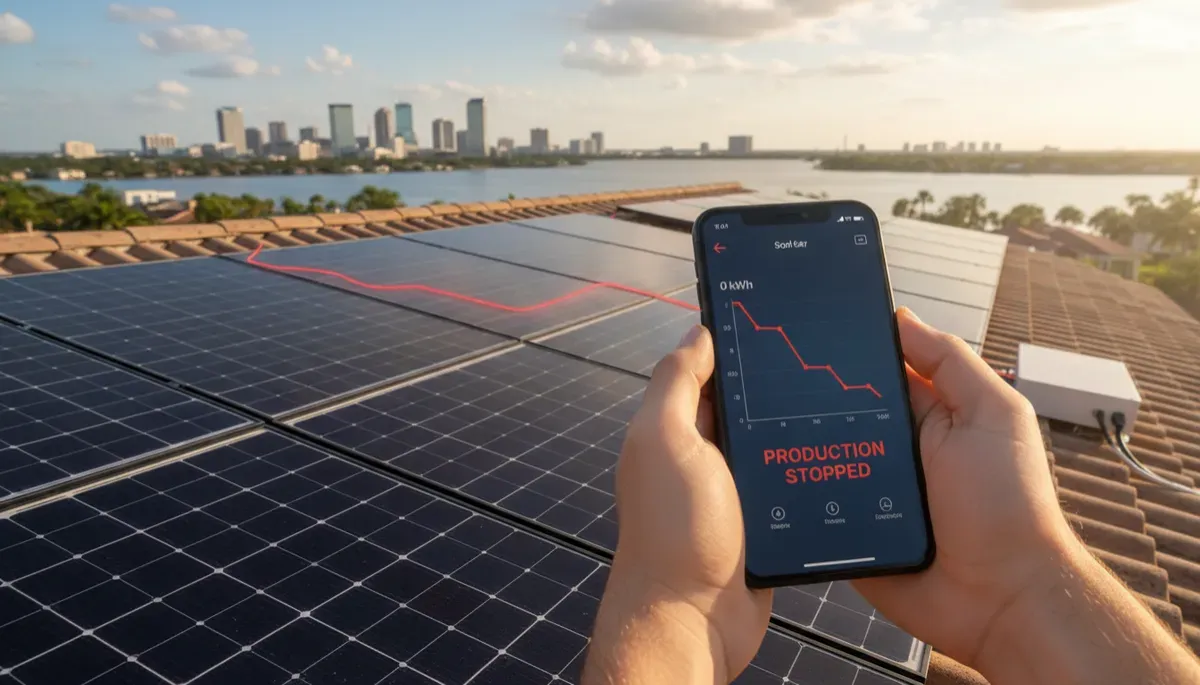
A sudden change in your monitoring app almost always means one of two things: either your system is producing less than expected, or the monitoring itself has lost communication. In Tampa Bay, short dips during afternoon thunderstorms or cloudy stretches are normal, but a clear multi‑day drop, or a flat line at zero on sunny days, points to a system or electrical issue that needs attention rather than simple weather variation or normal panel aging over time.
A partial drop—such as production falling to roughly half or two‑thirds of normal—often indicates one string of panels, one section of the array, or one inverter channel is affected. A full drop to zero on bright, clear days usually means the inverter is offline, a key disconnect is open, or the system is no longer delivering power to your main electrical panel. Monitoring systems can also go offline while the system is still producing, so comparing the app to your electric bill over a full billing cycle can help confirm whether energy is actually down or only the data feed is interrupted.
2. The three things you can safely check yourself
When you notice a problem, there are only three checks that are both useful and safe for a homeowner to perform without tools or training. Everything else belongs to a licensed professional because solar arrays and inverters involve high DC and AC voltages whenever the sun is up, even if the system looks “off” from the outside. Staying on the safe side means keeping your inspection to the app, the ground, and the main panel cover only.
Check the monitoring app carefully. Confirm the date and time the drop started, whether all panels or only part of the array are affected, and whether the app shows any error codes or “offline” messages. Many systems in Tampa Bay are tied into home Wi‑Fi, so a router change or password update can interrupt data without affecting production. Capturing these details before you call helps a service technician understand whether the problem is likely electrical, monitoring, or both.
Look at the array from the ground. From a safe position on the ground, look for obvious new shading or debris—such as tree branches that have grown into the array, storm‑blown leaves piled along the bottom row, or concentrated bird droppings on a few panels. Normal soiling in Tampa’s climate usually costs only a few percent of annual production, but localized bird droppings, tree sap, or heavy pollen on specific panels can reduce output on those affected modules more noticeably until cleaned by rain or a professional service.
Check for a tripped household breaker. At your main electrical panel, you can visually check whether the breaker labeled for “solar,” “PV,” or “inverter” is in the tripped middle position. Do not remove panel covers or touch any wiring; simply note what you see. If you are not sure which breaker serves the solar, or if anything looks unusual, leave it as is and share photos with your service contractor so they can review it as part of the diagnostic process.
⚠️ Warning: Do not open an inverter, a combiner box, or a disconnect yourself. Solar arrays produce dangerous DC voltage whenever the sun is up, even with the system switched off.
3. Why most solar problems are electrical problems
Behind every residential solar array is an electrical system: wiring from panel to panel, terminations in junction boxes, conduit runs, disconnect switches, an inverter that converts DC to AC, and the connection into your home’s main service panel. When production drops or stops in Tampa Bay, the root cause is often in one of these electrical components rather than the glass panel itself. Diagnosing the issue means testing live circuits, verifying terminations, checking disconnects, and confirming that the inverter is operating correctly and delivering power to the service equipment under load.
Florida regulates this work as licensed electrical contracting under the Department of Business and Professional Regulation, and that is why the person doing the diagnosis matters. A proper diagnostic visit may involve opening disconnects, accessing the interior of inverters, testing wiring continuity, and working inside or adjacent to the main electrical panel. Those tasks fall under the scope of an electrical contractor’s license. A solar company without an electrical license cannot legally perform most of this work in Florida, even if they originally sold or installed the system. Fused Solar and Roofing is a licensed roofing (CCC1331058), electrical (EC13014750), and building contractor (CBC1252064) — all three in-house, which means the same firm that evaluates your production problem is also licensed to work on the electrical side of the system.
📌 Key Takeaway: A production problem is usually an electrical problem, and in Florida electrical work requires a licensed electrical contractor.
Something not working right? Fused Solar and Roofing's service department diagnoses and repairs solar systems across Hillsborough, Pinellas, Pasco, and Manatee counties. Request service at https://fusedsolarandroofing.com/solar-repair
4. What a licensed diagnostic visit actually involves
When you schedule a diagnostic visit with a licensed electrical contractor in Tampa Bay, the process starts before anyone goes on the roof. The service team reviews your monitoring data, utility bills, and any photos you provide of the main panel and equipment labels. On site, they verify how the system was originally interconnected, note the inverter and optimizer models, and confirm that all required safety labels and disconnects are present and accessible. This upfront review helps them focus quickly on the most likely failure points for your specific system layout and age.
During the hands‑on portion of the visit, the technician may test DC strings, inspect wiring terminations at junction boxes and disconnects, and check the inverter’s status, event history, and grid connection. They will also confirm that the solar breaker in the main panel is correctly sized, properly labeled, and making solid contact. If the monitoring gateway or cellular modem is part of the issue, they will evaluate that as well. At the end of the visit, you receive a clear explanation of what was found, what appears to be causing the production drop, and what steps—if any—are recommended next, whether that is a repair, a warranty claim with the equipment manufacturer, or further testing.
💡 Pro Tip: Before you call anyone, screenshot your monitoring app showing the date the production drop started. That single detail narrows the diagnosis considerably.
5. The most common causes we find in Tampa Bay systems
In Hillsborough, Pinellas, Pasco, and Manatee counties, certain patterns show up again and again when Fused Solar and Roofing responds to production concerns. Weather is often the backdrop: strong summer storms can stress electrical components, and high heat can push older inverters near their limits. Over time, connections can loosen with thermal expansion and contraction, and outdoor equipment is continually exposed to sun, humidity, and salt‑laden air in coastal neighborhoods, all of which can accelerate corrosion if not properly protected.
Common findings include inverters that have reached the end of their service life, failed DC connectors or optimizers, damaged wiring from pests, and water intrusion into junction boxes or roof penetrations that leads to corroded terminations. Monitoring gateways can also lose connectivity after router changes or utility power events, giving the impression of zero production when the system is still generating. Each of these issues presents differently in the monitoring data, which is why a systematic electrical and visual inspection is so important rather than guessing based on the app alone.
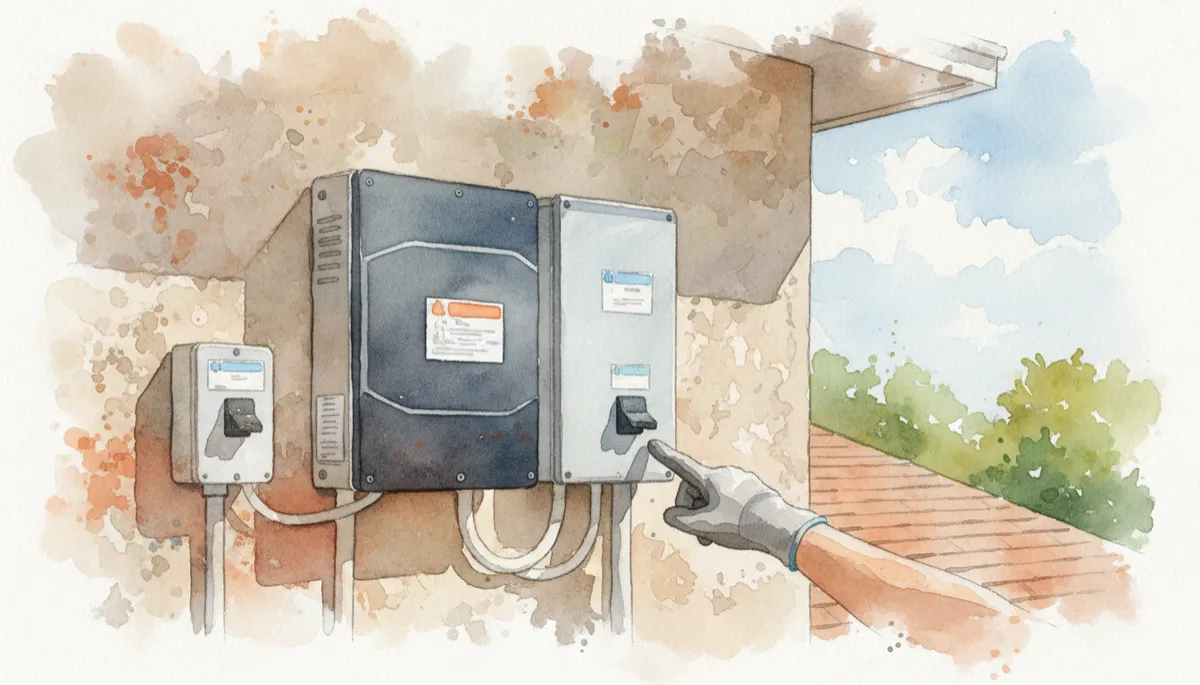
💡 Pro Tip: If one panel or one string is down, production drops by a predictable fraction. If everything is at zero, the problem is almost always at the inverter or the connection to your panel.
6. What it means if your original installer is gone
Many Tampa Bay homeowners discover a production issue at the same time they discover that their original solar installer has left the area, changed business models, or closed. When that happens, you still have two separate pieces to think about: the equipment warranties with the manufacturers and the need for a licensed contractor to diagnose and service the system. Even if the original installer is no longer available, a licensed electrical contractor can evaluate the system, document findings, and help you communicate with equipment manufacturers when a component appears to have failed under warranty.
Fused Solar and Roofing regularly services systems installed by other companies, including arrays that are five, ten, or more years old. The key is verifying that whoever you call holds the correct active licenses with the State of Florida. You can search any contractor by name or license number at MyFloridaLicense.com to confirm their status before you schedule a visit. This step helps ensure that the company working on your system is authorized to perform the electrical and structural work your project may require, regardless of who originally installed the panels.
📌 Key Takeaway: Fused Solar and Roofing holds an electrical license (EC13014750) and services all brands, including systems whose original installer is out of business.
7. When a production problem is really a roof problem
Sometimes the first sign of a roof issue under a solar array is a change in electrical performance. Water intrusion at a roof penetration can reach wiring junctions or racking hardware, leading to corrosion that increases resistance or interrupts a circuit entirely. In other cases, an aging roof beneath an otherwise healthy array forces a detach and reinstall so that the roof can be repaired or replaced, and the production concern turns out to be secondary to a larger roofing decision that needs to be made on its own timeline.
Because Fused Solar and Roofing holds licenses for roofing, electrical, and building work, the company can evaluate both sides of this equation during a diagnostic visit in Tampa Bay. If the issue appears to involve roof leaks, compromised underlayment, or deteriorated flashing at solar attachments, you will receive a clear explanation of the roofing condition along with the electrical findings. That way you can plan for any required roof work and understand how it relates to the solar system’s performance and future maintenance.
8. What happens after the diagnosis
After a licensed technician completes the diagnostic visit, the next steps depend on what was found. If the issue is monitoring‑only, you may simply receive guidance on restoring communication so that your app and your actual production match again. If a specific component—such as an inverter, optimizer, or wiring run—appears to be the source of the problem, you will receive a description of the condition, recommended corrective actions, and whether the issue may involve an equipment warranty or a repair outside of warranty coverage. For roof‑related findings, the report will outline any recommended roofing work that should be considered to protect both the array and the structure.
Fused Solar and Roofing is an EnergySage Elite Installer with a 5.0/5 rating and 21+ verified reviews — independent verification, earned not purchased. That third‑party feedback reflects a consistent process: communicate clearly, document what was found, and help homeowners in Hillsborough, Pinellas, Pasco, and Manatee counties make informed decisions about repairs, upgrades, or future maintenance. While no one can guarantee that every issue will have a simple fix, a structured, licensed diagnosis gives you a solid factual basis for whatever comes next with your solar system and your roof.
Tampa Bay solar production FAQs
1. Why does my solar production sometimes drop in the summer in Tampa Bay?
In Tampa Bay, summer brings strong sun but also high temperatures and frequent afternoon storms. Solar panels are less efficient at very high temperatures, so peak output on the hottest days can be slightly lower than on cooler, clear spring days even with similar sunlight. In addition, heavy cloud cover and fast‑moving thunderstorms can cause short‑term dips that show up as lower daily totals in your monitoring app. If you see a gradual seasonal pattern that repeats every year, that is usually normal; a sudden, sustained drop that does not match the weather forecast is a reason to contact a licensed electrical contractor such as Fused Solar and Roofing for a closer look.
2. Can I reset my solar inverter myself if I see zero production?
It is understandable to want to “reset” something when your solar app shows zero, but in Florida the safer path is to let a licensed electrical contractor handle any interaction with the inverter, disconnects, or main panel. Inverters and associated DC equipment operate at voltages that can cause serious injury if handled incorrectly, and they are part of a regulated electrical system connected to your home and the utility grid. As a homeowner, you can look at the inverter’s exterior display from the ground or a safe standing position and note any error messages, but leave any power cycling, opening of covers, or electrical testing to a licensed professional who is equipped and authorized to work on live electrical equipment.
3. How can I tell if the problem is one panel or the whole system?
The best way to tell whether one panel or the whole system is affected is to compare your monitoring data to how the system normally behaves. If your app shows individual panel or “module‑level” data, look for one or two panels that have dropped sharply while others look normal; that often points toward a localized issue such as a failed optimizer, heavy debris on a panel, or a wiring issue affecting one string. If every panel or every string reads zero during clear daylight hours, the issue is more likely at the inverter, a disconnect, or the connection to your main panel. You do not need to open any equipment to make this distinction—simply reviewing the monitoring app and sharing screenshots with a company like Fused Solar and Roofing gives the technician a useful starting point for the on‑site diagnosis.
4. Does a solar company need an electrical license to do repairs in Florida?
In Florida, most solar repair work that involves wiring, inverters, disconnects, or connections to the main service panel falls under the scope of electrical contracting and requires an electrical contractor’s license issued through the Department of Business and Professional Regulation. A company may advertise solar services without holding that license, but it cannot legally perform the majority of electrical diagnosis and repair tasks that a typical production problem requires. Before you schedule service in Hillsborough, Pinellas, Pasco, or Manatee County, you can visit MyFloridaLicense.com to confirm that the company you are considering holds an active electrical license and is authorized to work on your solar system’s electrical components.
5. What should I do if my original solar installer is out of business?
If your original installer is no longer in business, start by gathering your system documents—plans, permits, equipment serial numbers, and any past service records—so a new contractor can quickly understand what was installed. Next, choose a licensed electrical contractor with solar experience, such as Fused Solar and Roofing, to perform a diagnostic visit and document the current condition of the system. That documentation can be helpful if you need to contact equipment manufacturers about potential warranty coverage. You are not locked into the original installer for ongoing service, and in Tampa Bay it is common for licensed contractors to take over maintenance and repair of systems originally installed by other firms.
6. How long does a solar diagnostic visit usually take in Tampa Bay?
The length of a diagnostic visit in Tampa Bay depends on system size, roof access, and how complex the issue appears to be once the technician arrives. For many residential systems, the on‑site portion of the visit typically fits within a single appointment window, allowing time to review your monitoring data, inspect roof and ground‑level equipment, test electrical circuits as needed, and explain initial findings. More complex situations—such as difficult roof access, multiple inverters, or suspected roof leaks under the array—can take longer and may require follow‑up visits. When you schedule with Fused Solar and Roofing, the service team will give you a realistic appointment window and let you know if your system’s size or configuration suggests additional time may be needed.
Fused Solar and Roofing is a licensed electrical contractor (EC13014750) servicing solar systems of all brands across Hillsborough, Pinellas, Pasco, and Manatee counties, including systems whose original installer is no longer in business. Request a diagnostic visit at https://fusedsolarandroofing.com/solar-repair
Is your solar system producing what it should? Request a diagnostic visit at https://fusedsolarandroofing.com/solar-repair
