Solar Storm Damage in Tampa Bay: What to Check First
When a named storm or severe weather system moves through Tampa Bay, it is natural to wonder whether your rooftop solar and roof came through it in good shape. This guide walks you through what you can safely observe from the ground, how to document what you see, and what a professional post-storm inspection includes. Fused Solar and Roofing is a licensed roofing (CCC1331058), electrical (EC13014750), and building contractor (CBC1252064) — all three in-house.
1. Safety first: what to stay away from
The first step after any storm in Hillsborough, Pinellas, Pasco, or Manatee County is staying clear of hazards. Keep away from any downed wires, damaged conduit, or debris that has landed on or is touching your solar equipment, service mast, or meter area. Do not go onto a wet or debris-covered roof, even if the panels look intact from the ground. A solar array produces voltage whenever there is daylight, regardless of whether the grid is up or the system appears to be switched off, so treat any damaged conduit or exposed wiring as energized and leave it to qualified professionals.
⚠️ Warning: Treat any downed wire, damaged conduit, or debris touching your electrical equipment as live. Stay away from it and call your utility and a licensed electrical contractor.
2. What you can safely observe from the ground
Once you have confirmed that the area around your home is safe to walk, stand back at ground level where you can see the roof and array clearly. From the driveway, sidewalk, or yard, look for obvious issues: missing or shifted panels, large pieces of debris resting on the array, broken tree limbs near the roofline, or sections of the array that appear out of alignment with the rest. You can also note whether any conduit on the exterior walls looks bent or pulled away from the surface, as this can be a sign that something moved on the roof during the storm.
At the same time, it is useful to check your monitoring app or web portal from inside the house. If your system normally reports production and now shows a complete loss of data, repeated fault messages, or a sudden drop compared to typical days for this time of year, make a note of that. You are not operating any equipment by checking monitoring; you are simply gathering information that will be important later for documentation and for any professional inspection.
💡 Pro Tip: Photograph the array from several angles from the ground before anyone touches anything. Dated photos taken before cleanup are worth more than photos taken after.
3. What storm damage looks like on a solar array
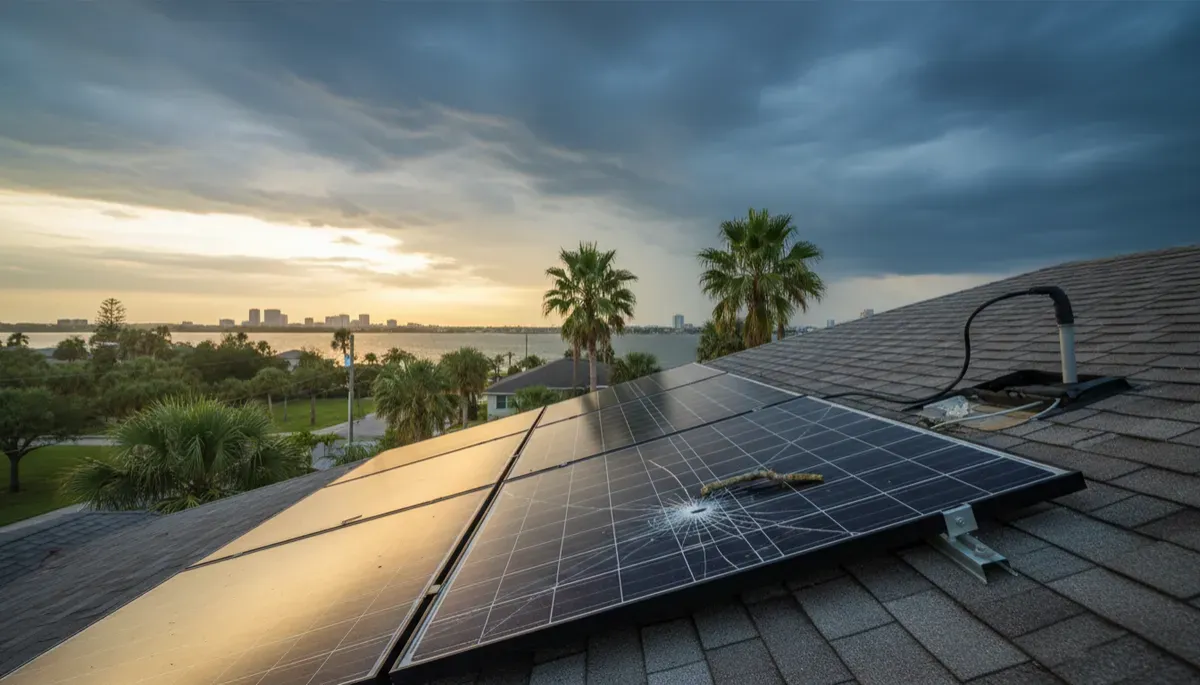
Storm-related damage that is visible from the ground usually falls into a few categories. You might see panels that are cracked, with a spiderweb pattern across the glass, or modules that appear shattered or dark in one section. In some cases, entire rows of panels can look twisted or lifted compared to the roof surface, indicating that the mounting rails have shifted. Heavy debris such as branches or wind-blown objects resting on the array can also chip or crack the glass, even if the damage is subtle from a distance. Bent or deformed racking visible at the edge of the array is another sign that the system absorbed more force than it was designed for during the storm.
Around the edges of the roof, you may notice missing shingles, displaced tiles, or metal flashing that appears curled or lifted near the array. While these are roofing issues, they matter for the solar system because water can travel under the roof covering and into the areas where the solar mounting hardware penetrates the roof. Visible damage does not automatically mean the system has failed, but it is a clear sign that a licensed contractor should inspect both the roof and the electrical components before you assume everything is normal.
Storm damage on your array? Fused Solar and Roofing inspects and documents solar and roof damage across Hillsborough, Pinellas, Pasco, and Manatee counties. Request service at https://fusedsolarandroofing.com/solar-repair
📌 Key Takeaway: A solar array can look untouched from the ground and still have damage at the mounting points, the flashing, or the wiring underneath.
4. The damage you cannot see from the ground
Some of the most important storm-related issues on a solar array are not visible from your driveway. High winds and wind-driven debris can loosen or shear mounting hardware that secures the rails to the roof structure. A bolt that has shifted or a bracket that has begun to bend may still hold the panel in place for now, but it can compromise the long-term integrity of both the array and the roof. This kind of mechanical stress is only visible up close at the attachment points, which is why it is evaluated by a professional on the roof rather than from the ground.
Flashing around roof penetrations can also be lifted or displaced by wind, even if shingles or tiles nearby look fine from below. Proper flashing is what keeps water from following the mounting hardware into the roof deck. Once flashing has been lifted or bent, water intrusion can begin even though there are no immediate stains on ceilings inside the home. A trained inspector will carefully check each penetration, lifting the edges of shingles or inspecting around tiles as allowed by the roof type to confirm that the waterproofing details are still intact.
Wiring is another area where hidden damage matters. Strong winds can pull on conduit runs and wire harnesses under the array, stressing connections or chafing insulation where wires pass across metal edges. These issues are not visible from the ground and may not cause an immediate system shutdown, but they can lead to intermittent faults or future failures. A professional inspection includes opening junction boxes, checking wire management, and looking for signs of strain or abrasion that are only apparent up close. Hairline cracks in the module glass are similar: they may not be visible from street level, but an inspector on the roof can see them when light hits the surface at an angle, and may use specialized tools to identify hotspots or moisture ingress before they become larger problems.
Finally, water intrusion can already be underway even though there are no visible leaks inside. Moisture can enter around disturbed flashing or fasteners and begin affecting the roof deck or underlayment. Only by examining the roof surface around the array, and in some cases lifting select components where appropriate, can a licensed contractor determine whether the roof system is still shedding water properly. This is why the most important storm damage is often the damage you cannot see yourself and why a methodical, on-roof inspection is so valuable after a severe weather event.
💡 Pro Tip: Save your monitoring data from the days before and after the storm. A clean production record up to the storm and a drop afterward is useful documentation.
5. Why documentation comes before repairs
Before anyone begins cleanup or repair work, it is helpful to create a clear record of what the system and roof looked like immediately after the storm. Ground-level photographs taken from multiple angles, close-ups captured by a professional on the roof, screenshots or exports from your monitoring portal, and a written inspection report together form a factual record of condition and timing. This record can show that the system was operating normally before the storm, that specific damage appeared afterward, and that a licensed contractor documented the findings in detail. You, as the homeowner, decide what to do with that record, whether that means simply keeping it for your own files or providing it to others later if you choose.
📌 Key Takeaway: Fused Solar and Roofing inspects both the roof and the electrical side under licenses CCC1331058 and EC13014750, so one contractor documents the whole picture.
6. What a post-storm inspection covers
A structured post-storm inspection by a licensed contractor in Tampa Bay typically includes both roof and electrical checks. On the roof, the inspector examines the modules, racking, and mounting hardware for cracks, shifts, or loose components, and evaluates the condition of shingles, tiles, or metal panels around each penetration. They look closely at flashing details, sealant where appropriate, and any areas where wind-driven debris may have impacted the array or roof covering. On the electrical side, they review conduit runs, junction boxes, and accessible wiring for signs of stress, and they evaluate system status using appropriate test equipment and manufacturer-specific procedures. Fused Solar and Roofing is a licensed roofing (CCC1331058), electrical (EC13014750), and building contractor (CBC1252064) — all three in-house, so the inspection can address both the structural and electrical aspects of the installation in a coordinated way.
7. Roof damage and solar damage are two different claims
Your roof and your solar array are two separate systems, and they may be treated differently by your policy and carrier. The roof is part of the building envelope, while the solar equipment is an electrical generation system mounted on top of it. In some situations, the roof may show damage while the solar appears intact; in others, the array may be affected while the roof covering still performs as intended. A contractor licensed for both roofing and electrical work can document the condition of each system in one visit and provide a report that clearly separates roof findings from solar findings. A roofing-only or solar-only contractor can accurately speak to their own scope but will not be able to provide the same level of detail on the other system. Coverage varies by policy and carrier, so homeowners in Hillsborough, Pinellas, Pasco, and Manatee counties should review their own documents and ask their own agent or carrier how each system is treated, using the inspection report as a factual reference if they choose.
8. Why the order of operations matters after a storm
After a storm, the practical sequence is straightforward: safety, documentation, inspection, then decisions about repair. First, make sure the property is safe to approach and stay clear of any potential electrical hazards. Next, document what you can see from the ground and save your monitoring data so there is a clear timeline of events. Then, schedule a post-storm inspection with a licensed contractor who can evaluate both the roof and the solar system. Only after that inspection is complete, and you have a written report, do you decide what repairs to authorize and how you want to use the documentation you have collected. This calm, step-by-step approach keeps you out of harm’s way and gives you solid information before any major decisions are made.
In cases where the roof underneath the array needs replacement, it is often more efficient to plan the roof work and the solar removal and reinstall as one coordinated project. Handling them together allows the roofer and the solar team to sequence their work so the roof is watertight before the array goes back on, and so the wiring and mounting hardware are reinstalled to current standards. Fused Solar and Roofing is an EnergySage Elite Installer with a 5.0/5 rating and 21+ verified reviews — independent verification, earned not purchased. For homeowners across Tampa Bay, that combination of roofing and electrical experience helps keep the process organized rather than rushed.
Tampa Bay post-storm solar FAQs
1. Do solar panels in Tampa Bay usually survive hurricane-force winds? Most modern solar panels installed in Florida are designed and permitted to meet local wind-load requirements, and many systems in Hillsborough, Pinellas, Pasco, and Manatee counties come through severe weather without damage. However, performance in any given storm depends on factors like roof condition, surrounding trees, wind direction, and debris. The only way to know how your specific system performed is to combine what you can see from the ground with a professional inspection that checks mounting hardware, flashing, and wiring up close.
2. What should I do if I can see a cracked or broken panel after the storm? If a panel is visibly cracked, shattered, or displaced, stay off the roof and away from any damaged wiring or conduit, because the system can still be energized in daylight. From a safe spot on the ground, take clear photos of the damage and note any error messages or changes in your monitoring data. Then contact a licensed solar and electrical contractor in Tampa Bay to schedule an inspection and written report before any repair work is started, so the condition is documented as it was found.
3. Should I shut off my solar system after a storm in Tampa Bay? Many systems are designed to shut down automatically when the grid goes down, but every installation is different, and operating disconnects or breakers is electrical work that should be left to qualified professionals. As a homeowner, your role after a storm is to stay safe, observe from the ground, and record what you see and what your monitoring shows. If you have concerns about whether the system should remain energized, mention that when you contact a licensed electrical contractor so they can address it as part of their inspection using the proper procedures for your specific equipment.
4. Is solar damage after a storm covered by my homeowner’s insurance? Coverage for solar equipment in Florida varies by policy and carrier, and solar may be treated differently from the roof itself or other parts of the home. The most reliable way to understand how your system is handled is to review your own policy and ask your carrier or agent specific questions, using photos and a contractor’s inspection report as factual documentation of what happened and when. A licensed contractor such as Fused Solar and Roofing can inspect the system, document findings with photographs, and provide a written report that you may choose to share with your insurer, but the carrier ultimately determines how your policy applies.
5. How soon after a storm in Tampa Bay should I schedule a solar inspection? Once conditions are safe and you have taken your own ground-level photos and saved your monitoring data, it is reasonable to schedule an inspection at your next convenient opportunity, especially if you see visible damage, roof issues near the array, or changes in system performance. There is no need to panic, but you also do not need to wait for a problem to appear inside the house before asking a licensed contractor to check the roof and solar system. An early inspection can identify hidden issues like disturbed flashing, stressed wiring, or hairline glass cracks before they develop into leaks or equipment failures.
6. Can my solar system keep running if there is visible storm damage? A system with visible damage may still produce power, but that does not mean it is operating safely or as designed. Cracked glass, shifted panels, or stressed wiring can allow moisture into electrical components, create hotspots, or lead to intermittent faults over time. In Tampa Bay’s humid, coastal environment, those issues can develop quickly. If you see any damage from the ground or notice unusual behavior in your monitoring, treat the situation as one that requires a professional evaluation. A licensed electrical and solar contractor can determine the condition of the equipment and recommend whether components should be repaired, replaced, or left in service.
Fused Solar and Roofing is a licensed electrical contractor (EC13014750) servicing solar systems of all brands across Hillsborough, Pinellas, Pasco, and Manatee counties, including systems whose original installer is no longer in business. Request a diagnostic visit at https://fusedsolarandroofing.com/solar-repair
Is your solar system producing what it should? Request a diagnostic visit at https://fusedsolarandroofing.com/solar-repair
