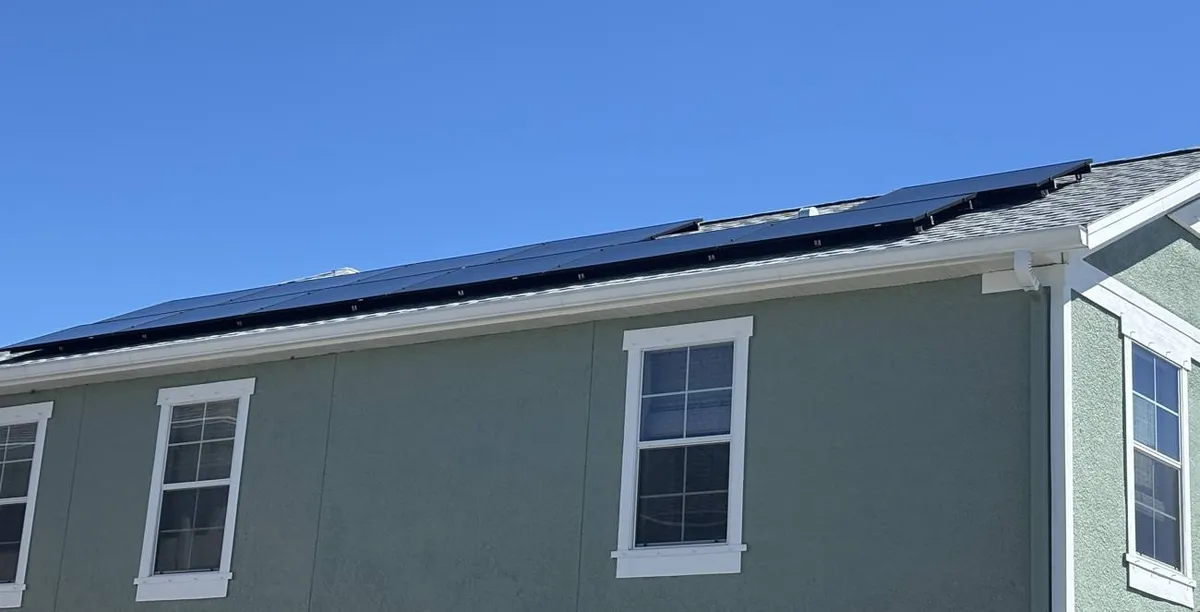
Solar on a Tile Roof in Tampa Bay: What Changes and Why
Tampa Bay's tile roofs, concentrated in the 1980s and 1990s communities of Palm Harbor, Carrollwood, Trinity, Lakewood Ranch, Westchase, and the villages off Tampa Road and State Road 54, take solar well, and Fused Solar and Roofing installs a lot of it. What changes from a shingle roof is the attachment, the labor, the price line for the roof type, and one question that has to be answered before anything else: how old is the underlayment under the tile, because tile outlasts it, and a new array on failed underlayment is an array that comes off again in a few years. Fused Solar and Roofing is a licensed roofing (CCC1331058), electrical (EC13014750), and building contractor (CBC1252064), all three in-house.
1. The underlayment question comes first
Concrete and clay tile last fifty years. The underlayment beneath it, the felt or membrane that actually keeps the water out, lasts twenty-five to thirty in Florida. A tile roof from 1995 is sound on top and may be failed underneath, and the first sign is usually a ceiling stain rather than anything visible from the street. Fused's survey looks for the signs, slipped tile, staining at the eaves, debris lines, and the attic, and if the underlayment is near the end, the honest recommendation is to re-roof the tile first or with the solar, because the mounts go into the underlayment and a failed one has to be rebuilt with the array off.
Fused Solar and Roofing is a licensed roofing (CCC1331058), electrical (EC13014750), and building contractor (CBC1252064), all three in-house. On a tile roof that is due, Fused quotes the tile re-roof and the solar together, with the mounts set into the new underlayment before the tile is reset around them, which is the cleanest tile-and-solar attachment there is.
🔑 Key Takeaway: Tile looks fine long after the underlayment has failed. On a tile roof over twenty years old, the underlayment gets inspected before the array is designed.
2. How the mounts go in
On shingle, a flashed mount lags into the rafter and flashes under the shingle course. On tile, the installer lifts the tile at each mount location, sets a tile-specific base into the underlayment and the rafter with its own flashing, and either replaces the tile with a flashed tile hook or replacement flashing that matches the tile profile or cuts and resets the original tile around the mount. Done well, water sheds over the flashing exactly as it does on shingle and the tile looks undisturbed. Done badly, the tile is cracked, the cut is sealed with caulk, and the roof leaks at the first hard rain.
Fused uses tile-specific mounting hardware matched to the tile profile, flat, S-tile, or barrel, and every penetration carries its written 25-year no-leak guarantee under Fused's roofing license, the same as on shingle.
3. Why it costs more
Tile is slower. Each mount location is lifted, set, flashed, and reset by hand, the crew walks the roof on boards or in the valleys to avoid cracking tile, and a few tiles break regardless and are replaced from the homeowner's attic stock or a matched supplier. Fused prices tile as a roof-type adder on its own line above the $1.85 per watt base, so the homeowner sees what the tile is costing rather than finding it folded into a higher per-watt rate. Two-story and steep-pitch adders apply as on any roof, and most tile communities in the region are two-story.
💡 Pro Tip: If you have spare tiles from the original construction in the garage or attic, tell the surveyor. Matching replacement tile for a 1990s profile can be hard to find, and your own stock is the best match.
4. The crew matters more than usual
A solar crew that does shingle all week will crack tile, seal cuts with caulk, and leave a roof that leaks in year two. Fused does tile every week, under a roofing license, and its technicians walk tile the way roofers do. The tile communities of Palm Harbor, Carrollwood, Trinity, Lakewood Ranch, and Westchase are where Fused does most of its tile work, and the arrays there are the reference for what a tile install should look like: tile undisturbed around the mounts, no caulk lines, no cracked pieces left in place.
⚠️ Warning: A quote for solar on tile that carries no tile adder and does not mention the underlayment has not been looked at by someone who does tile. Ask how the mounts attach and what happens to the tile at each one.
5. Layout on a tile roof
Tile roofs in the region are mostly hip roofs with several planes, so the array is often split across two or three, and panel-level electronics, microinverters or optimizers, are the usual inverter choice so one shaded or oddly oriented panel does not drag the rest down. The design keeps the mounts on rafters and off the hips and valleys where tile is cut and the roof is most vulnerable, and respects the access pathways the Florida Building Code requires.
6. Associations and tile
The tile communities are nearly all deed-restricted, and their architectural standards usually favor all-black panels, concealed conduit, and an inverter out of sight from the street. Fused prepares the architectural application at contract signing so it runs alongside the county permit, and designs to those preferences by default. Homeowners should read their own association documents and ask the association about its process. Several tile communities also require tile to be replaced with tile at a re-roof, which Fused confirms before quoting a tile re-roof with the solar.
7. When the tile roof is replaced later
If the tile roof is sound now and is replaced in ten or fifteen years, the array comes off and goes back on in a detach and reinstall, with new mounts set into the new underlayment and the tile reset around them. Fused does the detach and reinstall under its electrical license and the tile re-roof under its roofing license, so it is one project and one warranty. If your roof ever needs replacing with solar on it, who is allowed to remove and reinstall the panels, and why, is covered in our guide at https://fusedsolarandroofing.com/post/who-can-remove-reinstall-solar-florida
8. Why tile-roof homeowners call Fused
Because tile and solar together are roofing work as much as electrical work, and Fused is licensed and practiced at both. The survey answers the underlayment question, the proposal shows the tile adder honestly, the crew does tile every week, and the no-leak guarantee is written by the company licensed to fix the roof. Fused has installed on tile across Pinellas, Hillsborough, Pasco, and Manatee counties since 2007.
🔑 Key Takeaway: Check the underlayment first, use tile-specific mounts matched to the profile, expect a tile adder on the proposal, and hire a crew that does tile under a roofing license.
Tile roof and thinking about solar? Request a free survey that starts with the underlayment at https://fusedsolarandroofing.com/solar-installation
Frequently Asked Questions
Can solar panels be installed on a tile roof?
Yes. Fused installs on concrete and clay tile using tile-specific mounts matched to the tile profile, with the tile lifted, the mount flashed into the underlayment and rafter, and the tile reset around it. Every penetration carries Fused's 25-year no-leak guarantee.
Does solar cost more on a tile roof?
Yes. Tile is slower and needs its own hardware, so Fused prices it as a roof-type adder on its own line above the $1.85 per watt base. Two-story and steep-pitch adders apply as on any roof.
Should I replace my tile roof before solar?
If the underlayment is near the end of its twenty-five to thirty years, yes, before or with the solar. The tile may look fine while the underlayment has failed. Fused inspects it at the survey and quotes the tile re-roof and solar together when needed.
Will the solar installer crack my tiles?
A few break on any tile job and are replaced; a crew that does not do tile breaks many and seals cuts with caulk. Fused does tile weekly under a roofing license and replaces broken pieces from the homeowner's stock or a matched supplier.
What inverter works best on a tile hip roof?
Usually microinverters or optimizers, because the array is split across planes. Fused chooses the inverter for the roof within the base price.
What happens when my tile roof is replaced later with solar on it?
A detach and reinstall: the array comes off, the tile is re-roofed with new underlayment, new mounts are set into it, and the array goes back on, all by Fused under its electrical and roofing licenses.
Fused Solar and Roofing has installed solar across Hillsborough, Pinellas, Pasco, and Manatee counties since 2007, with the roof and the solar handled by its own licensed in-house crews. Request a free solar quote at https://fusedsolarandroofing.com/solar-installation
Fused Solar and Roofing holds Florida roofing (CCC1331058), electrical (EC13014750), and building (CBC1252064) licenses, all three in-house, and has served Hillsborough, Pinellas, Pasco, and Manatee counties since 2007. Fused Solar and Roofing is an EnergySage Elite Installer with a 5.0/5 rating and 21+ verified reviews, independent verification, earned not purchased. Request a free survey at https://fusedsolarandroofing.com/solar-installation
