Solar Electrical Warning Signs Tampa Bay Owners Must Know
Most solar electrical issues start quietly, as a number in a monitoring app or a small change in production, while a smaller group shows up as smell, sound, heat, or visible damage. Fused Solar and Roofing is a licensed roofing (CCC1331058), electrical (EC13014750), and building contractor (CBC1252064) — all three in-house. This guide is designed as a calm reference for Tampa Bay homeowners: which signs mean you should schedule a service visit, which mean you should stop and call today, what those signs commonly point to, and what you should and should not do until a licensed electrical contractor has inspected the system.
1. Two categories of warning sign
When Fused Solar and Roofing’s service department talks with homeowners in Hillsborough, Pinellas, Pasco, and Manatee counties, we group solar electrical warning signs into two clear categories. The first category is performance and monitoring signs: changes that show up in the monitoring app, a production report, or a fault code that appears and clears. These usually give you time to schedule a visit. The second category is physical warning signs: smell, sound, heat, discoloration, smoke, or a breaker that will not stay on. These are safety-related and should be treated differently from a routine production concern.
Both categories matter, and both should be checked by a licensed solar electrician. The difference is timing and response. Monitoring issues typically indicate something is not working as efficiently as it should, while physical warning signs can indicate overheating, loose connections, or insulation problems that need prompt attention for electrical safety as well as system performance. This article walks through both categories so you can compare what you are seeing at home with clear, practical guidance specific to Tampa Bay conditions.
2. Signs that mean schedule a service visit
Many solar issues begin as quiet changes in the data. One common example is production down on one string or one panel. In a monitoring app, this may show up as one panel or one group of panels consistently producing less than the others under the same sunlight. This often points to a localized issue such as a connector problem, a wiring issue in that string, or shading that was not present when the system was first commissioned. It is rarely an emergency, but it is a good reason to schedule a diagnostic visit so the underlying cause can be identified and corrected before it worsens or spreads to other components.
Another common sign is the monitoring system going offline while the rest of the house power appears normal. This may be as simple as a home Wi‑Fi change or router reset, but it can also indicate a communication issue in the inverter or gateway hardware. Because monitoring is your early-warning tool, it is worth having a licensed contractor confirm whether the problem is just networking or whether the solar equipment itself is losing communication or power intermittently. A brief phone discussion with the service department can usually determine whether this should be booked as a routine visit or something more urgent based on what you are seeing and hearing at the equipment location from a safe distance.
Homeowners also sometimes see an inverter fault code that clears and then returns. This pattern—an error that appears, clears, and then comes back—often points to a condition that is right on the edge of a safety or performance threshold, such as intermittent grid voltage issues, a marginal connection, or a component that is beginning to drift out of specification. Because only testing can confirm the exact cause, the right response is to note the code, the time of day, and what the weather was like, and then schedule a visit so a licensed electrician can pull the diagnostic history and test the circuits safely under controlled conditions.
A fan that is running louder than it used to in an inverter or combiner box is another schedule-a-visit sign. Cooling fans naturally make some noise, and they may run harder on hot Tampa afternoons, but a noticeable change over time—grinding, rattling, or a fan that seems to run at full speed constantly—can indicate wear, dust buildup, or a component running hotter than it should. This is usually not an immediate hazard, but it is a reason to have the equipment inspected before a fan failure leads to overheating or an unexpected shutdown in the middle of peak production season in Tampa Bay’s long summers.
Outdoors, you may notice visible corrosion on conduit fittings, junction boxes, or other metal parts around the solar installation. In a coastal environment like Pinellas or Manatee County, some surface corrosion on exposed hardware is expected over time, but rust or corrosion that appears to be spreading, flaking, or affecting fasteners and electrical enclosures can allow moisture intrusion. Moisture and electricity do not mix well, especially in equipment that carries both DC and AC power. Scheduling a visit allows a licensed contractor to evaluate whether the corrosion is cosmetic or whether it has begun to compromise seals, terminations, or grounding components that are required by code for safety and reliability.
Finally, conduit that has come loose from its supports—for example, a rooftop or wall conduit that is sagging or has pulled away from a strap—is a sign to schedule service. Loose conduit can put strain on the conductors inside, create low spots where water can collect, or move in the wind in a way that stresses fittings over time. In Florida’s storm-prone climate, properly supported conduit is part of keeping the system safe and code-compliant. A licensed electrical contractor can re-secure the raceways, inspect for any damage to the conductors, and confirm that the installation still meets current requirements under the National Electrical Code and Florida Building Code updates.
📌 Key Takeaway: Most solar problems show up as a number in an app. The ones that show up as a smell, a sound, or heat belong in a different category and should not wait.
3. Signs that mean stop and call today
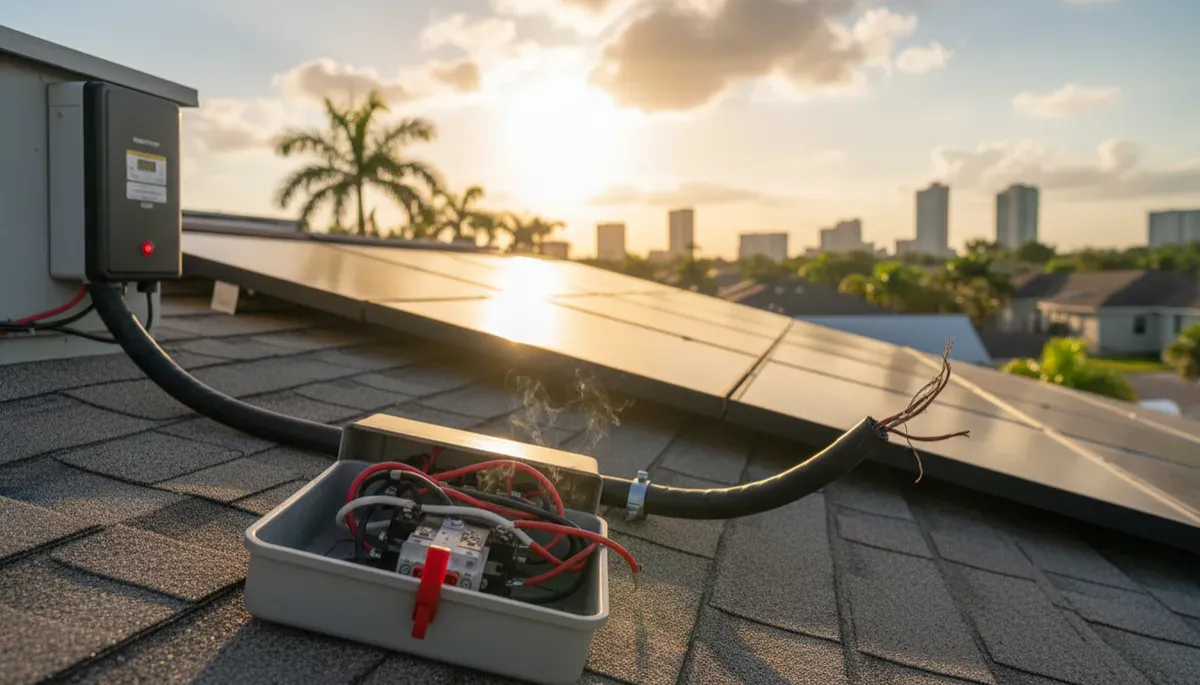
Some warning signs move a solar issue out of the schedule-a-visit category and into the stop-and-call-today category. The clearest of these is visible smoke, visible flame, or a burning smell that is getting stronger near any solar electrical equipment, including the inverter, disconnects, combiner boxes, or roof conduit runs. If you see smoke, see flame, or notice a burning smell that is intensifying, the correct response is simple and firm: leave the immediate area, keep others away, and call emergency services first. Do not attempt to investigate the source, do not try to operate any switches or breakers, and do not attempt to put out a fire yourself. Once emergency responders have confirmed the area is safe, a licensed solar electrical contractor can perform a detailed investigation to determine what happened and what needs repair or replacement.
Even without visible smoke, discoloration or scorch marks on equipment or conductors should be treated as a call-today issue. Browned plastic, darkened insulation, or metal that shows heat tinting around terminations or lugs commonly indicates that a connection has been running hotter than intended. While only testing and inspection can confirm whether the issue is a loose termination, an overloaded component, or something else, the presence of heat damage means the system has already moved beyond a simple performance concern. Photograph what you see from a safe distance, avoid touching the equipment, and contact a licensed electrical contractor to prioritize a safety inspection in the near term rather than waiting for a convenient time weeks away.
A hot enclosure is another reason to call today. All electrical equipment warms up in use, especially in Tampa Bay’s sun and humidity, but if an inverter cabinet, disconnect, or junction box feels unusually hot compared with similar equipment nearby, that can indicate internal heating beyond what the enclosure is designed to handle. Because homeowners should not be touching electrical equipment to test temperature, this is usually noticed as heat radiating from the front of the cabinet or as paint or labels that look warped or dried out compared with the surroundings. If you notice this kind of concentrated heat, keep people and storage away from the area and contact a licensed contractor to evaluate it promptly.
New or unusual buzzing, crackling, or sizzling sounds from solar electrical equipment also belong in the call-today category. A low, steady hum from some inverters and transformers can be normal, but sharp crackling, intermittent snapping, or a buzzing sound that has recently appeared or grown louder can indicate arcing, loose conductors, or components under stress. Because these sounds can be early indicators of insulation breakdown or poor contact, the safest course is to observe from a distance, note when the sound occurs (for example, only in full sun or only when the air conditioning is running), and call a licensed electrical contractor to investigate with proper test instruments and safety procedures rather than waiting to see if the sound goes away on its own.
A breaker that will not stay on when reset, even if it is labeled as a solar breaker, is also a stop-and-call-today sign. Repeated tripping indicates that the breaker is detecting a condition it is designed to protect against. Instead of repeated attempts to turn it back on, which can stress both the breaker and the wiring, the safer response is to leave it in the position it naturally returns to, note the time and any messages in the monitoring app, and contact a licensed electrical contractor so the underlying cause can be diagnosed. The same applies if you see visibly damaged wiring or conduit, such as cracks, breaks, or impact damage. Do not touch or move the damaged area; keep people and pets away and arrange for a prompt inspection to determine whether circuits need to be de-energized and repaired.
Seeing any of these signs? Fused Solar and Roofing is a licensed electrical contractor serving Hillsborough, Pinellas, Pasco, and Manatee counties. Request service at https://fusedsolarandroofing.com/solar-repair
4. Why a solar array is electrically different from the rest of your house
A key reason solar electrical warning signs are handled carefully is that a rooftop solar array does not behave like a typical household circuit. Most circuits in your home start at the breaker panel and are energized only when the breaker is on and the grid is supplying power. A solar array, by contrast, produces direct current (DC) voltage whenever there is daylight on the panels. That DC voltage exists on the roof, within the module wiring, and inside the conduit leading to the inverter even if the grid is down, even if a house main breaker is off, and even if the solar system’s AC output has been switched off at the service panel. This is why solar work is governed by specific sections of the National Electrical Code, such as Article 690, and by Florida Building Code provisions that recognize the unique behavior of photovoltaic systems in Florida’s climate and building conditions.
In practical terms, this means that switching off the AC side of the system does not automatically de-energize the DC side. The conductors between the panels and the inverter can still be at high DC voltage whenever the sun is up, and the connections at the roof, in junction boxes, and in raceways are still part of an energized circuit. Modern systems include rapid shutdown equipment, which is designed to reduce voltage in specific parts of the system under defined conditions, such as when a firefighter operates a clearly labeled control. Even so, those devices are designed to be used by trained personnel who understand how the system is wired and how to confirm that circuits are in a safe state for work. This is why homeowners are not advised to operate disconnects or attempt to isolate a suspected fault themselves, and why solar faults are not approached the same way as a tripping breaker on a standard receptacle circuit.
Because the DC side of a solar array can remain energized independently of the home’s interior wiring, licensed solar electricians in Tampa Bay follow procedures that account for both AC and DC hazards. They use test instruments rated for the expected voltages, follow lockout and tagging practices, and work within the requirements of the current NEC edition adopted into the Florida Building Code. For homeowners, the important takeaway is that a solar array is not simply “another circuit” in the panel. It is a power source on your roof that interacts with the grid but is not controlled by the same switches in the same way. That difference is why warning signs related to smell, heat, or visible damage around solar equipment should be evaluated by professionals who regularly work on energized DC and AC solar circuits, rather than by applying do‑it‑yourself habits from other household electrical projects.
📌 Key Takeaway: A solar array produces DC voltage whenever the sun is up, whether or not the grid is on and whether or not the system is switched off. That is why solar electrical faults are handled differently.
5. What a burning smell or discoloration usually means
A burning smell near solar equipment is one of the most important warning signs to take seriously. In many cases, a hot or acrid odor around an inverter, disconnect, or junction box commonly points to insulation, plastic, or other materials being exposed to temperatures beyond their normal operating range. This can happen for several reasons, including a loose electrical connection that is creating resistance and heat, a component that is failing internally, or a conductor that has been damaged and is no longer making solid contact. Because only an on-site inspection with proper test tools can determine the exact cause, the safe response is always the same: if the smell is strong or getting stronger, leave the area, keep others away, and contact emergency services first. Once the immediate safety concern has been addressed, a licensed electrical contractor can open the equipment under controlled conditions and repair or replace the affected parts in compliance with current codes.
Discoloration or scorch marks on or around solar electrical equipment often tell a related story. Browned or darkened plastic near terminals, faded labels that appear heat-damaged, or metal surfaces that show signs of concentrated heating commonly indicate that a component has experienced temperatures high enough to change its appearance. This does not automatically mean there is an ongoing fire risk, but it does mean the equipment has not been operating within its ideal range. A licensed contractor will typically document the damage, check torque and integrity of terminations, and test for any abnormal temperature rise under load. For homeowners, the key is not to ignore these visible changes. Photograph them from a safe distance, avoid placing items against the equipment, and schedule an inspection so the condition is evaluated before it progresses.
6. Breakers that trip, and why resetting is the wrong instinct
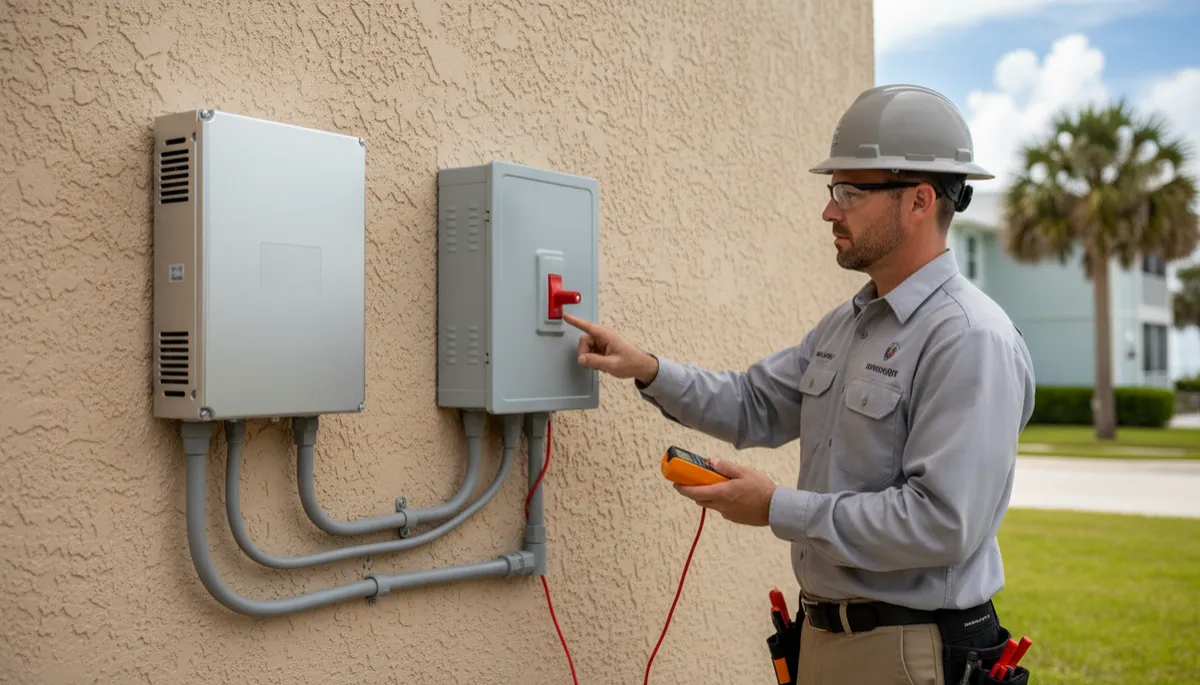
In any electrical system, a breaker is a protective device designed to interrupt current when it detects a condition outside its safe operating range. When a breaker associated with your solar system trips, it is not simply an inconvenience; it is information. The breaker is responding to something it senses on the circuit, such as current higher than its rating, a short circuit, or a pattern consistent with a fault. In a solar installation, that condition could be on the AC side of the system, on the DC side, within the inverter, or in the way the solar system is interacting with the grid. Because of that complexity, repeatedly attempting to reset a tripping breaker without understanding the cause is not recommended and can mask the underlying issue while stressing the components involved.
When a solar breaker trips more than once, the safest homeowner response is to treat the tripping as a sign that diagnosis is needed, not a switch that needs repeated attention. Note which breaker is involved, what the weather and time of day were when it tripped, and whether the monitoring app showed any fault codes or production changes. Then contact a licensed electrical contractor to investigate. A proper diagnostic visit will typically include testing both AC and DC circuits, checking inverter logs, and confirming that the breaker itself is functioning correctly. This approach respects the breaker’s role as a safety device rather than treating it as a resettable button, and it aligns with how Florida’s electrical codes and safety standards expect protective devices to be used in systems that include on-site generation like rooftop solar in Tampa Bay homes.
⚠️ Warning: A breaker that trips repeatedly is doing its job. Repeatedly resetting it overrides a protective device that is telling you something is wrong.
7. What you should and should not do while you wait
Once you have called a licensed electrical contractor about a solar warning sign, there are a few simple, concrete steps that help keep everyone safe while you wait. First, keep people and pets away from the affected equipment, especially if there has been any smell, unusual sound, visible damage, or repeated breaker tripping. Second, do not use the area for storage; avoid leaning items against the inverter, panel, or conduit, and keep combustible materials away from the immediate vicinity. Third, if it is safe to do so from a distance, take clear photographs of what you are seeing—discoloration, corrosion, damaged conduit, or the front of the equipment—and note the time of day, weather conditions, and anything unusual you noticed in the monitoring app. Finally, do not attempt to isolate or operate the system yourself. Do not open covers, do not operate disconnects or breakers, and do not attempt any hands-on troubleshooting. Observation, documentation, and keeping the area clear are the homeowner actions that support a safe and efficient service visit.
8. Why these calls go to an electrical contractor
When a solar system shows electrical warning signs—especially burning smells, visible damage, or breakers that will not stay on—the right place for the call is a licensed electrical contractor with solar experience. Solar combines rooftop DC generation, inverters that manage both DC and AC, and interconnection with the utility grid under Florida’s current adoption of the National Electrical Code. Diagnosing issues in that environment requires training in both general electrical safety and the specific behaviors of photovoltaic systems, including rapid shutdown equipment, code-required labeling, and the way DC and AC faults can interact. In Tampa Bay, that means choosing a contractor who is licensed for electrical work and familiar with local permitting, inspection practices, and the conditions created by heat, humidity, and coastal exposure in Hillsborough, Pinellas, Pasco, and Manatee counties. Fused Solar and Roofing is a licensed roofing (CCC1331058), electrical (EC13014750), and building contractor (CBC1252064) — all three in-house.
For homeowners, the benefit of working with a licensed electrical contractor is that the same team that responds to your call can both diagnose and perform the electrical corrections in compliance with the Florida Building Code and the edition of the National Electrical Code currently adopted in Florida. This includes verifying conductor sizing, checking terminations, confirming that rapid shutdown and labeling requirements are met, and documenting any repairs for your records and, if needed, for your local building department. Fused Solar and Roofing is an EnergySage Elite Installer with a 5.0/5 rating and 21+ verified reviews — independent verification, earned not purchased. That external review process reflects consistent adherence to code, clear communication with homeowners, and careful handling of both performance and safety-related service calls across the Tampa Bay region.
💡 Pro Tip: Write down what you noticed, when it started, and what the monitoring app showed at the time. That detail shortens the diagnosis considerably.
Frequently Asked Questions for Tampa Bay Homeowners
1. What does a burning smell near my solar inverter usually mean?
A burning smell near a solar inverter or related electrical equipment in a Tampa Bay home commonly indicates that something inside the equipment or its connections is overheating, such as insulation, plastic components, or wiring under stress. The cause might be a loose terminal, a failing internal component, or another condition that only testing can confirm, but the smell itself is a clear sign that the equipment is not operating normally. If the smell is strong or getting stronger, leave the immediate area, keep others away, and call emergency services first before contacting a licensed electrical contractor like Fused Solar and Roofing to perform a detailed inspection once the area has been declared safe. Do not attempt to open the inverter, sniff closely, or investigate the source yourself.2. Should I shut off my solar system myself if I notice a problem?
Homeowners in Hillsborough, Pinellas, Pasco, and Manatee counties should not operate breakers or disconnects in an attempt to shut off a solar system when they notice a warning sign such as smell, sound, or visible damage. A solar array produces DC voltage whenever there is daylight, and turning off AC-side equipment does not automatically de-energize the DC conductors between the roof and the inverter. Modern systems include rapid shutdown equipment designed to be used by trained personnel and first responders who understand how to confirm that circuits are in a safe state. The safest homeowner actions are to observe from a distance, check the monitoring app, document what you see and hear, leave the area and call emergency services if there is smoke or a burning smell that is getting stronger, and then contact a licensed electrical contractor to handle the system safely under code-compliant procedures.3. What should I do if the solar breaker keeps tripping in my Tampa Bay home?
If a breaker labeled for your solar system trips more than once, the correct response is to treat it as a protective device doing its job, not as a switch that needs repeated resetting. Repeated tripping commonly indicates that the breaker is sensing a condition such as excess current, a short circuit, or an equipment issue, which could be on the AC side, the DC side, or within the inverter itself. Instead of continuing to reset it, note which breaker is involved, record the time and weather conditions when it trips, and check your monitoring app for any fault codes or production changes. Then contact a licensed electrical contractor, such as Fused Solar and Roofing, to perform a diagnostic visit in accordance with Florida’s electrical codes and Tampa Bay permitting practices. Avoid operating the breaker further until a professional has determined the cause.4. Is a humming or buzzing solar inverter normal in Florida’s heat?
A low, steady hum from some inverters and transformers can be normal, especially when the system is producing power during bright Tampa Bay afternoons, because internal components like coils and fans can generate sound as they operate. What is not considered normal is a new, sharp, or irregular noise such as crackling, sizzling, or a buzzing sound that has recently appeared or grown noticeably louder. Those kinds of sounds can commonly indicate arcing, loose connections, or components under electrical stress. If you notice a change in sound, observe from a safe distance, note when the sound occurs and how long it lasts, and contact a licensed electrical contractor to investigate. Do not place your ear close to the equipment and do not attempt to open covers or panels yourself.5. What do discoloration or scorch marks on my solar equipment indicate?
Discoloration or scorch marks on solar-related equipment—such as browned plastic around terminals, darkened conduit fittings, or metal surfaces showing concentrated heat patterns—commonly indicate that the area has experienced higher than intended temperatures over time. This can be associated with loose terminations, overloaded components, or other issues that have caused localized heating. While the system may still be operating, the visible change means the equipment has moved beyond ideal conditions and should be evaluated. The best approach is to photograph the affected area from a safe distance, avoid touching or storing items near the equipment, and schedule a visit with a licensed electrical contractor who can test the circuits, inspect connections, and determine whether repairs or component replacements are needed to bring the system back into a safe, code-compliant state.6. How quickly should I act on different solar warning signs in Tampa Bay?
The timing depends on what you are seeing. Changes that show up only in the monitoring app—such as reduced production on one panel, a monitoring outage, or a recurring but self-clearing fault code—usually fall into the schedule-a-visit category and should be addressed by booking a service appointment in the near future. Physical warning signs such as burning smells, visible smoke or flame, hot enclosures, new crackling or sizzling sounds, discoloration or scorch marks, a breaker that will not stay on, or visibly damaged wiring or conduit belong in the call-today category. For smoke, flame, or a burning smell that is getting stronger, leave the area and call emergency services first, then contact a licensed electrical contractor in Hillsborough, Pinellas, Pasco, or Manatee County to perform a detailed inspection once it is safe. Acting within these timeframes helps protect both safety and long-term system performance without creating unnecessary alarm.
Fused Solar and Roofing is a licensed electrical contractor (EC13014750) servicing solar systems of all brands across Hillsborough, Pinellas, Pasco, and Manatee counties, including systems whose original installer is no longer in business. Request a diagnostic visit at https://fusedsolarandroofing.com/solar-repair
Is your solar system producing what it should? Request a diagnostic visit at https://fusedsolarandroofing.com/solar-repair
