Solar Efficiency Upgrades During Detach & Reinstall
If your Tampa Bay home is getting a new roof and your solar panels have to come off anyway, you have a unique chance to do more than just put everything back the way it was—this is a natural moment to consider higher-efficiency panels, more capacity, and long-term performance upgrades.
Why detach & reinstall is a natural time to upgrade
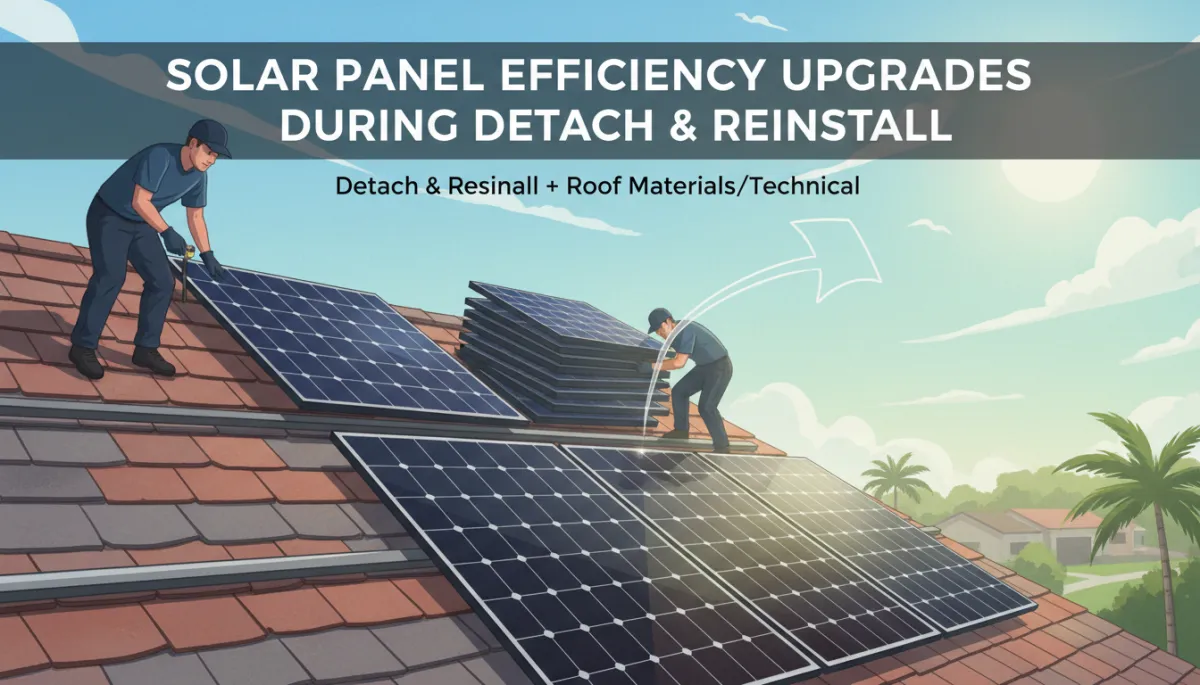
During a re-roof, your existing solar system must be safely detached, stored, then reinstalled. The labor, permitting coordination, and electrical work are already baked into the project. That means the “extra” cost to swap in higher-efficiency modules—or modestly expand your system—can be far lower than doing a separate solar upgrade later from scratch.
In Tampa Bay, where long, sunny seasons and frequent storms put your roof and solar equipment to the test, combining roofing and solar work also reduces disruptions. One coordinated project minimizes time on the roof, streamlines inspections, and helps ensure your new roof and solar array are designed to work together for decades in Florida’s heat, humidity, and wind.
Fused holds both a Florida roofing license (CCC1331058) and a Florida electrical license (EC13014750). That dual licensing helps keep your detach & reinstall, roof replacement, and any solar upgrade aligned with current codes and utility requirements—without you having to manage multiple contractors on your own.
Ready to keep your solar system in peak condition? Schedule a free solar panel cleaning and maintenance audit at https://tampasolarmaintenance.com
How panel technology has changed since your original install
As of 2026, mainstream residential modules that once averaged around 18–20% efficiency now commonly reach 23–25%, with premium back-contact designs pushing even higher, and commercially available silicon modules are surpassing the 25% efficiency mark, while cutting-edge tandem technologies are already beyond 30% in the lab. Panel efficiency has historically continued to improve year over year, so current figures should be confirmed at the time of your project. That translates to more power from the same roof area—or the same power from fewer panels, leaving more roof space clear.
Newer modules also tend to perform better in real-world Florida conditions. Improved temperature coefficients help reduce summer performance losses on hot roofs. Enhanced anti-reflective coatings, light-trapping surface textures, and better cell interconnections can boost energy yield throughout the day, even when clouds roll in from the Gulf. Combined with updated racking and flashing hardware designed for modern roofing systems, an upgrade can mean a cleaner installation that sheds water properly and stands up better to high winds and driving rain.
Cost tradeoffs: reinstall as-is vs. upgrade during D&R
A detach & reinstall has fixed costs: labor to remove and store panels, protect wiring, coordinate with your roofer, then reinstall and re-commission the system. Whether you put the same modules back or new ones, much of that work is identical. The incremental cost to upgrade is primarily the price difference between new equipment and what you already own, plus any design and permitting updates for added capacity or new hardware types.
As of 2026, a new residential solar installation in Tampa Bay typically ranges from roughly $2.00 to $2.50 per watt, depending on equipment and project complexity, and pricing can shift over time as equipment and market conditions change. When you upgrade during a D&R, you are not paying that full install price again—you are leveraging the labor that is already required for the roof work. For many homeowners, this can make a capacity increase, or a shift to higher-efficiency modules, significantly more cost-effective than waiting a few more years and doing a standalone solar project later at full price.
The right decision depends on your current system size, your utility rates, and how your household energy use has changed. If you have added an EV, a pool heat pump, or more air conditioning load, the long-term value of extra solar production during Florida’s long cooling season can be substantial—especially as utilities continue to adjust rate structures and net-metering policies over time.
What stays the same vs. what changes when you upgrade
From a homeowner’s perspective, a well-managed upgrade during D&R should feel similar to a standard reinstall. Your utility meter is still interconnected, your monitoring app still shows production, and your roof ends up watertight and warrantied. Behind the scenes, however, there are important differences that must be handled correctly so you remain compliant with local codes, building departments, and your utility’s interconnection rules.
What typically stays the same: Your general interconnection point at the main service panel, your utility account, and your basic net-metering arrangement (unless your utility has changed programs and requires a new agreement). Your roof layout may remain similar, especially if you are not adding many new panels.
What usually changes with an upgrade: The system’s nameplate capacity, panel model numbers, and sometimes the inverter configuration. These changes often trigger updated engineering documents, revised permits, and an amended interconnection application. The wiring on the roof and the racking layout may also be updated to meet current code and manufacturer requirements for your new roof material.
Because permitting and interconnection details matter, it is important to work with a single contractor licensed on both sides — Fused holds both a Florida roofing license (CCC1331058) and a Florida electrical license (EC13014750) — and who understands how Hillsborough, Pinellas, and surrounding jurisdictions interpret current codes for reroofs with solar. Proper documentation helps protect your roof warranty, your solar equipment warranties, and your long-term ability to interconnect under your utility’s rules.
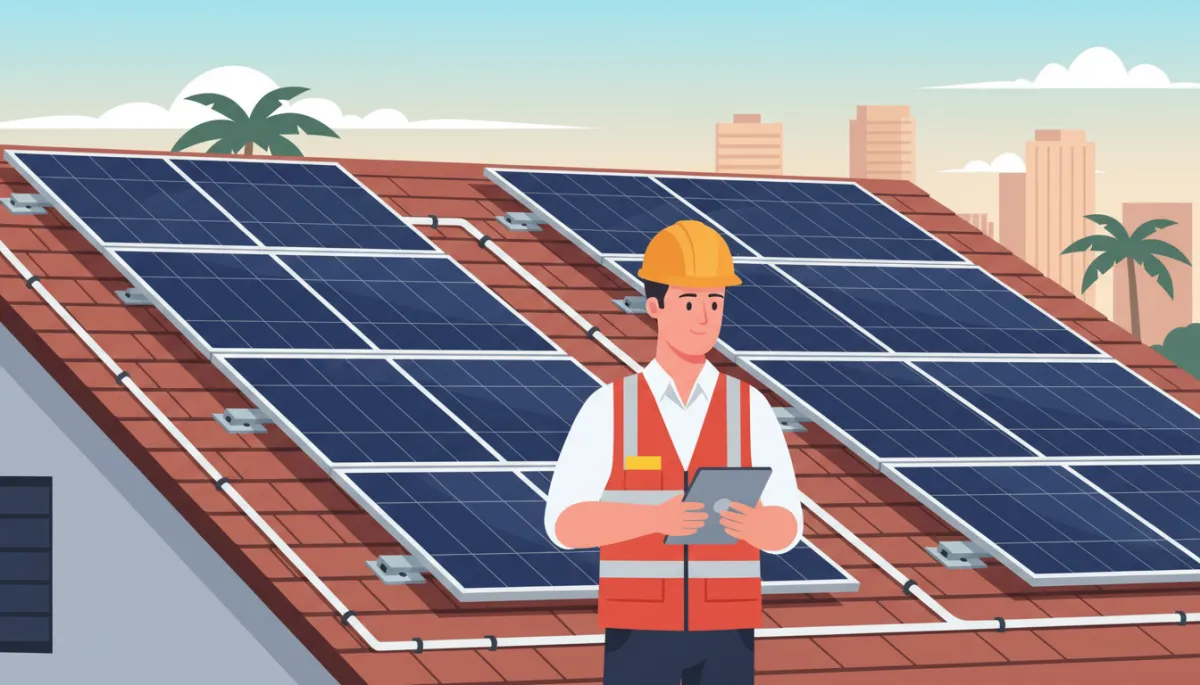
Upgrading during a reroof allows cleaner wiring, better flashing, and higher long-term output.
Who should upgrade vs. who should simply reinstall
An upgrade is not the right move for every Tampa Bay homeowner. The decision should be based on system age, current performance, household energy use, and your long-term plans for the property. Consider the following guidelines as a starting point for discussion with your contractor.
You may benefit from upgrading if: your system is more than 7–10 years old; your production has dropped noticeably; you plan to stay in the home for at least another 7–10 years; you have added or plan to add high-load equipment such as an EV charger, a new heat pump, or a larger pool pump; or you want to increase the share of your bill offset by solar to hedge against future rate increases and storm-related outages when paired with storage.
Reinstalling as-is may be sufficient if: your system is relatively new, still under strong manufacturer warranties, and performing close to its original projections; your energy usage has not changed much; or you expect to move within a few years and prefer to minimize additional capital investment now. In these cases, a high-quality detach & reinstall focused on protecting your roof and existing equipment may be the most practical choice.
No matter which path you choose, a thorough cleaning and inspection during the D&R process is wise. Florida’s pollen, salt air, and frequent storms can leave grime, debris, and minor wear that quietly reduce output. Addressing those issues while the system is already off the roof keeps your array performing efficiently once it goes back online.
Frequently asked questions about upgrading during detach & reinstall
Will upgrading change my utility interconnection agreement?
If you keep the system size the same and only swap to comparable, more efficient modules, your interconnection terms may stay largely unchanged, though your installer still needs to document the new equipment. If you increase capacity, your contractor will typically file an amended application with the utility. A qualified solar and electrical contractor will confirm the allowable size for your service panel and utility program before proposing any increase in system size.
Do I need a new inverter if I upgrade my panels?
Not always. If your existing inverter has enough capacity and is still within its useful life, it may be reused with new modules, especially if you are not dramatically increasing system size. However, older inverters may be out of warranty, less efficient, or incompatible with certain new panel types or rapid-shutdown requirements. Your contractor should evaluate voltage, current, and code requirements before deciding whether to reuse or replace inverters during the upgrade.
Will an upgrade affect my roof warranty?
When roofing and solar work are not coordinated, there is a higher risk of penetrations or mounting methods that conflict with manufacturer or installer roof warranties. Working with a contractor that understands both trades helps ensure the racking, flashing, and wiring are installed to protect your new roof’s warranty. Proper documentation, including photos and as-built plans, is important if you ever need to file a claim related to leaks or storm damage.
Do I need Fused if I already have a roofer for my new roof?
Yes. Fused's electrical license (EC13014750) means we can legally handle the solar disconnect, removal, and reinstall on our own — you do not need us to also do your roofing to get expert D&R service. We coordinate directly with your roofer's timeline, disconnect and stage your system before they start, and reinstall once the new roof is ready. Our 25-year penetration warranty and Elite Installer status apply to the D&R work itself, independent of who installed your roof. We also service the array afterward regardless of who did the roofing or the original solar installation. Choosing a licensed, single-purpose D&R specialist protects you whether you use one contractor for everything or coordinate multiple trades yourself.
CUSTOMER SAFETY ALERT — All detach and reinstall work MUST be fully permitted and inspected by county authorities. Unlicensed installers CANNOT obtain permits. Demand permits, verify licenses at myfloridalicense.com, require inspections, and get certificates in writing. Unpermitted solar voids panel warranties, voids roof warranties, and leaves the homeowner liable for $15,000–$25,000+ in corrective work at resale.
Maximize your investment with expert solar maintenance. Book your solar panel cleaning and inspection service at https://tampasolarmaintenance.com
Conclusion: turn a required project into a long-term upgrade
A reroof with solar detach & reinstall is something most Tampa Bay homeowners would rather not repeat often. By treating this as a one-time opportunity to modernize your equipment, optimize your layout, and address any hidden maintenance issues, you can convert a necessary expense into a strategic upgrade that supports lower bills, greater resilience, and better use of Florida’s abundant sunshine for years to come.
Whether you ultimately choose to reinstall as-is or invest in higher-efficiency modules and added capacity, the key is careful planning, clear coordination between roofing and solar trades, and strict adherence to current codes and utility requirements. Working with a contractor recognized as an EnergySage Elite Installer with a 5.0-star rating across 21+ verified reviews provides additional assurance that your roof, solar system, and long-term performance are being treated with the level of care they deserve in Florida’s demanding climate.
Is your solar system performing at its best? Start your free maintenance consultation at https://tampasolarmaintenance.com
Fused Solar and Roofing is a licensed roofing (CCC1331058), electrical (EC13014750), and building contractor (CBC1252064), all three in-house, serving Hillsborough, Pinellas, Pasco, and Manatee counties since 2007. Fused Solar and Roofing is an EnergySage Elite Installer with a 5.0/5 rating and 21+ verified reviews, independent verification, earned not purchased.
Replacing a roof that has solar on it? Request a detach and reinstall quote at https://fusedsolarandroofing.com/solar-panel-removal
Who is allowed to do each part of a detach and reinstall, and why, is covered in our guide at https://fusedsolarandroofing.com/post/who-can-remove-reinstall-solar-florida