Solar Detach & Reinstall in Zephyrhills, FL | Tampa Bay
Many Zephyrhills homeowners are now discovering a difficult reality: their roof is at the end of its life, but their solar panels still have many productive years left. When an aging roof must be replaced under an active solar array, a professional detach and reinstall (D&R) becomes essential to protect both the new roof and the solar investment.
1. Why Zephyrhills Homeowners Are Facing Solar D&R Now
Zephyrhills has seen a surge of solar installations over the last decade, especially as power costs increased and incentives made rooftop solar more attractive. At the same time, a large portion of the housing stock in eastern Pasco County was built well before the mid‑2000s roofing code improvements. As these older roofs reach the end of their service life, more homeowners are being told by roofers and insurers that replacement can no longer be postponed—even though their solar systems are performing well.
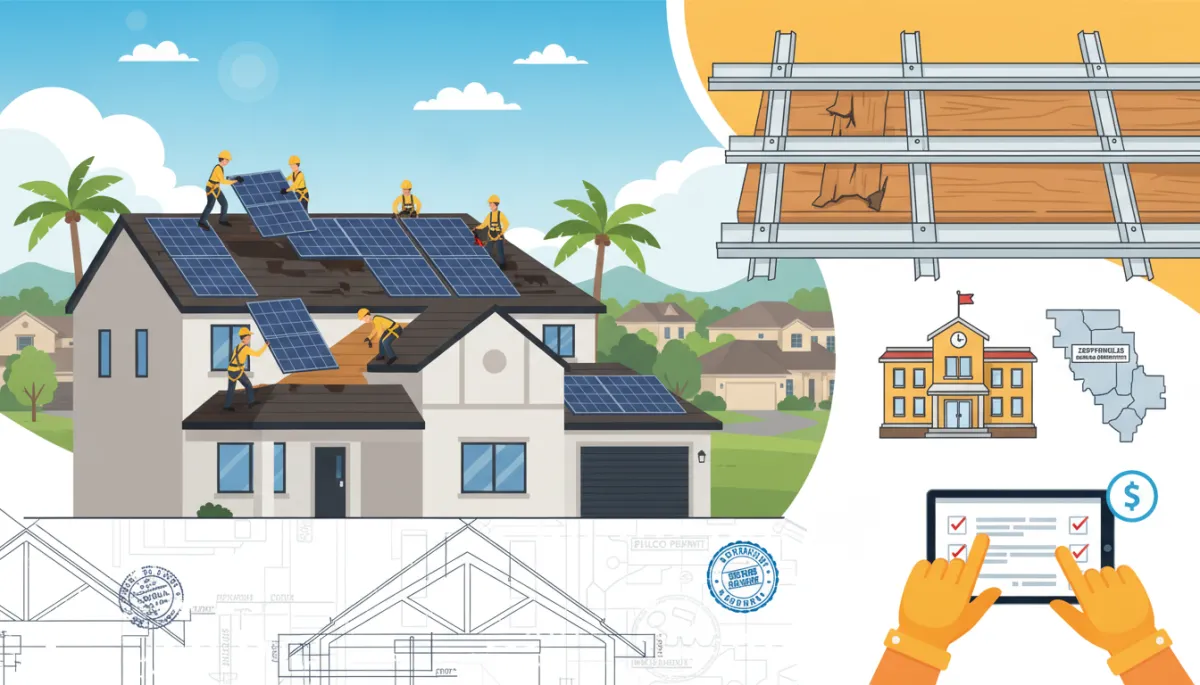
This timing mismatch is what drives the need for detach and reinstall. The roof must be stripped down to the decking, which cannot be done safely or correctly with racking, wiring, and modules in place. A coordinated D&R allows the roofing contractor to install a code‑compliant new roof while a qualified solar contractor removes, protects, and then reinstalls the solar array to current standards once the roof work is complete.
2. How Local Roofs Age in Zephyrhills’ Inland Climate
Zephyrhills is an inland, largely rural and suburban community on the eastern side of Pasco County. Unlike the coastal cities that deal constantly with salt spray, Zephyrhills roofs are more affected by intense inland heat, UV exposure, and thermal cycling. Summer sun bakes shingles and underlayment for long hours, while afternoon thunderstorms and seasonal temperature swings cause repeated expansion and contraction of roofing materials and fasteners.
Over time, this combination leads to:
Granule loss and curling on asphalt shingles, especially on south‑ and west‑facing slopes
Drying, cracking, or slipping of older felt underlayment, reducing water resistance
Loosening of nails and fasteners from repeated thermal movement and wind events
Zephyrhills also has a higher share of older homes and a mix of manufactured and site‑built properties. Many roofs installed before the early 2000s predate modern fastening patterns, secondary water barriers, and sealed deck requirements now embedded in the Florida Building Code (9th Edition, effective 2026 in Pasco County). Some manufactured homes have thinner decking or different framing layouts than newer site‑built homes, which can further complicate solar mounting and roof replacement decisions.
When solar is added to these older roofs, it often accelerates the need to address underlying age‑related weaknesses. By the time the roof is clearly due for replacement, the solar array must be carefully removed and later reinstalled to meet current structural and waterproofing standards—not the looser standards under which the original roof was built.
3. Permitting: City of Zephyrhills vs. Unincorporated Pasco County
Permitting for a solar detach and reinstall in the Zephyrhills area depends on whether the property lies inside the City of Zephyrhills limits or in unincorporated Pasco County just outside the city. This distinction matters because the authority having jurisdiction (AHJ) controls how permits are issued, which inspections are required, and how documentation must be submitted and closed out.
Planning a brand-new system instead of a reinstall? Our guide to solar installation in Zephyrhills is at https://fusedsolarandroofing.com/post/solar-installation-zephyrhills-fl
Who is allowed to do each part of a detach and reinstall, and why, is covered in our guide at https://fusedsolarandroofing.com/post/who-can-remove-reinstall-solar-florida
City of Zephyrhills Building Department
If your home is within city limits, the City of Zephyrhills Building Department typically oversees both roofing permits and solar‑related electrical or structural permits. For a D&R associated with a re‑roof, separate permits are often required:
A roofing permit for the tear‑off and new roof installation under the Florida Building Code, 9th Edition
An electrical/solar permit for the temporary disconnect, safe storage, and final reconnection of the solar system
The city may require updated plans or documentation of the existing solar system, including array layout, racking attachment details, and electrical single‑line diagrams, especially if equipment is being upgraded or relocated during the reinstall. Inspections generally occur after roof dry‑in, after solar racking is reinstalled, and again after final electrical reconnection and commissioning.
Unincorporated Pasco County
Much of the surrounding Zephyrhills area is unincorporated Pasco County, where Pasco County Building Construction Services is the AHJ. The county also enforces the Florida Building Code, 9th Edition, along with local amendments related primarily to flood damage prevention and administrative procedures. For most D&R projects, the county will expect:
A roofing permit that accounts for the sealed roof deck requirement and wind‑rated fastening schedule
A separate solar/electrical permit for the removal and reinstallation of the photovoltaic system
In flood‑prone areas, the county’s flood‑related code updates can trigger additional documentation or inspection requirements, particularly if structural work goes beyond roofing. It is critical that your contractor confirm whether your property lies in city or county jurisdiction at the start of the project so the correct permits are pulled and inspections are scheduled in the proper sequence.
Fused Solar and Roofing holds both the roofing license (CCC1331058) and the electrical license (EC13014750) in‑house, allowing the full scope of roof and solar work to be managed under one compliant team.
Ready to keep your solar system in peak condition? Schedule a free solar panel cleaning and maintenance audit at https://tampasolarmaintenance.com
⚠️ Safety and Compliance Alert: Solar detach and reinstall work in Zephyrhills must be performed under valid permits by properly licensed contractors. Roofing work requires a licensed roofing contractor, and solar electrical work requires an electrical or solar contractor license. Hiring unlicensed labor or skipping permits can result in failed inspections, insurance denials, fines, and serious safety hazards. Fused Solar and Roofing holds both roofing and electrical licenses in‑house, allowing the full scope of roof and solar work to be managed under one compliant team.
4. Step‑by‑Step: What the Solar D&R Process Looks Like (Updated)
While every property is unique, a professional detach and reinstall in Zephyrhills generally follows a structured sequence to protect your equipment, your roof, and code compliance obligations.
Site assessment and documentation. The contractor documents the existing solar system: panel count and layout, racking type, attachment locations, inverter and disconnect locations, wiring paths, and monitoring equipment. Photos and measurements ensure the system can be reinstalled accurately—or improved—after the new roof is in place.
Permitting and coordination with the roofer. Roof and solar permits are applied for with the City of Zephyrhills or Pasco County. The solar contractor and roofer coordinate schedules so the removal, tear‑off, new roof installation, and reinstall happen efficiently, minimizing downtime for the solar system and exposure of the decking to weather.
System shutdown and safe disconnect. The solar array is powered down following manufacturer and National Electrical Code (NEC) procedures. Breakers are opened, disconnects are locked out, and labeling is verified. DC conductors and equipment are safely de‑energized before any physical work begins on the roof.
Panel removal and storage. Modules are removed from the racking one by one, inspected for visible damage, and stored in a secure, padded, dry location—either on site or transported to a storage facility. Proper handling prevents cracked glass, bent frames, or connector damage that could compromise production later.
Racking and attachment removal. Existing rails, standoffs, and roof attachments are removed so the roofing contractor can perform a full tear‑off. Old penetrations are patched or removed as part of the re‑roof. This is also the stage where outdated or non‑compliant hardware is evaluated for replacement rather than reuse.
Roof replacement and inspections. The roofer replaces damaged decking, installs the sealed roof deck underlayment required by the 2026 Florida Building Code, and then installs the new roof covering with the appropriate wind‑rated fastening schedule. City or county inspectors typically verify dry‑in and final roof completion before solar is reinstalled over the new surface.
New racking layout and attachment. The solar contractor lays out new or upgraded racking hardware, locating attachments in line with trusses or rafters and with the new roof’s flashing details. Attachments are installed to meet current wind design speeds for Pasco County and to integrate properly with the new roofing material and underlayment system.
Panel reinstall and wiring. Panels are reinstalled on the new racking, wiring is reconnected, and any necessary upgrades to conductors, connectors, or junction boxes are completed. Cable management is improved where needed to keep conductors off the roof surface and protected from UV and abrasion.
Testing, inspection, and re‑commissioning. The system is tested for correct voltage, current, grounding, and rapid shutdown operation. The AHJ inspects the solar work, and once passed, the system is re‑energized. Monitoring is verified so you can confirm production has returned to expected levels—or better, if wiring and layout were optimized.
5. Common Issues Found Under Panels on Older Zephyrhills Roofs
Older roofs in Zephyrhills often hide problems that only become visible once solar panels and racking are removed. Addressing these issues during the D&R and re‑roof is critical to preventing leaks and ensuring long‑term system stability.
Outdated or inadequate flashing. Many pre‑2000s roofs used basic metal flashings or relied heavily on roofing cement around penetrations. Under a solar array, this can be insufficient once fasteners and attachments are added. Modern systems use engineered flashings designed for specific roof types and wind loads; older flashings are often replaced entirely during reinstall to meet current standards and reduce leak risk.
Deteriorated or undersized decking. On older site‑built homes and some manufactured homes, decking may be thinner or degraded from years of minor leaks or condensation. When panels and racking come off, soft spots, rot, or delamination often become apparent. These sections should be replaced before new attachments are installed so that lag bolts and screws can achieve proper embedment and pull‑out strength under wind loads.
Legacy racking not rated for current wind code. Early solar installations sometimes used hardware that met older codes or was adapted from non‑solar applications. In Pasco County, current wind design speeds and the Florida Building Code now require racking systems tested and listed for those loads. During D&R, it is common to replace outdated racking with modern, code‑listed hardware that can withstand local wind events and satisfy insurers and inspectors.
Poor cable management and UV damage. On older systems, wiring may be lying directly on the roof surface, secured with zip ties that have become brittle from years of sun exposure. Once panels are removed, cracked insulation, exposed conductors, or unsafe splices sometimes appear. A professional reinstall corrects these issues with proper clips, conduit, and routing that comply with NEC requirements and extend system life.
6. Wind Code and Insurance Considerations in Pasco County
Pasco County, including Zephyrhills, is subject to Florida’s stringent wind and roofing codes. The 9th Edition of the Florida Building Code requires sealed roof decks, enhanced structural connections, and wind‑rated fastening patterns. Any roofing permit pulled on or after January 1, 2026 must comply with these requirements, and a solar D&R associated with that roof replacement must align with the same design assumptions for wind loads and uplift resistance.
For solar arrays, this means:
Racking and attachments must be installed per manufacturer engineering for the local wind design speed, including spacing, embedment depth, and hardware type.
Attachments should be aligned with structural members (rafters or trusses), not just roof decking, wherever required by the engineered design.
The sealed deck underlayment and roof covering must be integrated with solar flashings so that wind‑driven rain cannot penetrate around standoffs and mounts.
Insurance carriers are increasingly attentive to both roof age and compliance with current codes. Many Zephyrhills homeowners are required by insurers to replace older roofs to maintain coverage or avoid surcharges. When solar is present, insurers may also request proof that the array and its attachments meet current wind standards. A properly permitted D&R with updated racking, sealed deck underlayment, and documented inspections can strengthen your position with your carrier and help avoid disputes after a storm‑related claim.
7. Timeline and Cost Range for Solar D&R in Zephyrhills
Detach and reinstall projects vary based on system size, roof complexity, and permitting timelines, but most Zephyrhills homeowners can expect the active work to occur over several days, coordinated with the re‑roof schedule.
Typical Timeline
Permitting and scheduling: 1–3 weeks, depending on City of Zephyrhills or Pasco County processing times and contractor workload.
Panel removal and racking removal: Typically 1 day for an average‑sized residential system, sometimes 2 days for larger arrays or complex roofs.
Roof replacement: Commonly 1–3 days depending on roof size, decking repairs, and weather, followed by required inspections.
Solar reinstall and testing: 1–2 days for reinstall, wiring, and commissioning, plus final inspection and utility coordination if needed.
From first site visit to final inspection, a realistic overall window is often 2–5 weeks, driven mostly by permitting and scheduling rather than the physical labor itself.
General Cost Range
For a typical Zephyrhills home with a standard‑sized rooftop system, a professionally managed detach and reinstall commonly falls in the $2,500–$6,500 range. Factors that influence where your project lands within that range include:
Number of panels and inverters (string vs. microinverters or optimizers)
Roof pitch, height, and accessibility (single‑story vs. two‑story, multiple roof faces)
Extent of racking and hardware upgrades needed to meet current wind and code requirements
Any electrical upgrades or corrections identified during inspection (such as conduit changes, disconnect upgrades, or labeling)
This range typically covers removal, safe storage, reinstall, basic hardware replacement, testing, and permitting. Roof replacement itself is a separate cost, handled under the roofing contract. A detailed written proposal should spell out what is included and what would be considered additional work if unexpected issues are uncovered once panels are off the roof.
8. Zephyrhills Solar D&R FAQ: 7 Common Local Questions
1. Do I really have to remove my solar panels to replace my roof in Zephyrhills?
In almost every case, yes. A full roof replacement requires tearing off shingles down to the decking, repairing any damaged wood, installing a sealed deck underlayment, and then installing new roofing. Leaving solar panels in place prevents proper access, risks damage to the equipment, and will not pass inspection under current Florida Building Code requirements. A professional D&R is the accepted and code‑compliant approach.
2. My Zephyrhills home is from the 1980s. Will I be forced to upgrade to current code during D&R?
When you pull a new roofing permit in 2026 or later, the roof work must meet the Florida Building Code, 9th Edition, regardless of when the home was built. That means sealed roof deck underlayment, modern fastening schedules, and compliant flashing details. During solar reinstall, racking hardware and attachments must also meet current wind and structural requirements. While you are not typically required to bring every aspect of the entire house up to current code, the roof and solar system being worked on must comply with today’s standards, and some older homes will need decking repairs, improved connections, or upgraded hardware as part of that process.
3. How does being in the City of Zephyrhills versus unincorporated Pasco County change my D&R project?
The main differences are administrative. Both jurisdictions enforce the Florida Building Code and similar standards for roofing and solar, but the forms, fees, and inspection procedures differ slightly. Inside city limits, you work with the City of Zephyrhills Building Department; outside those limits, you work with Pasco County Building Construction Services. A qualified contractor familiar with both AHJs will confirm your jurisdiction by address, pull the correct permits, and schedule the proper inspections to avoid delays and re‑inspection fees.
4. Will my insurance company cover any part of the detach and reinstall cost?
Policies differ, and coverage often depends on why the roof is being replaced. If the roof replacement and solar D&R are tied to a covered loss—such as verified storm damage—your carrier may cover a portion of the D&R cost as part of the claim. If the roof is simply at the end of its life and being replaced for age or underwriting reasons, the D&R is usually considered a homeowner expense. In either case, insurers typically expect the work to be permitted and performed by licensed contractors, and they may request documentation showing that the new roof and solar reinstall meet current wind and code requirements.
5. I live in a manufactured home community near Zephyrhills. Can my roof and solar still be detached and reinstalled?
In many cases, yes, but manufactured homes require extra care. Decking thickness, framing spacing, and attachment points can differ from site‑built homes, and some communities have their own rules or engineering requirements. A contractor experienced with manufactured housing will evaluate the structure, confirm whether the existing or planned racking is engineered for that type of construction, and coordinate with the appropriate AHJ and park management. In some situations, a structural engineer’s letter may be needed to document that the new attachments comply with wind and structural requirements for your specific home type.
6. How long will my solar system be offline during a Zephyrhills D&R?
Most homeowners see their system offline for several days to a couple of weeks, depending on scheduling and weather. The actual removal and reinstall work might take only 2–4 days combined, but roof replacement, inspections, and any unexpected repairs can extend the total offline period. Coordinating your roofer and solar contractor early and locking in a clear schedule is the best way to minimize downtime and get your system producing again as quickly as possible.
7. Can I upgrade or expand my solar system during the reinstall?
A D&R is often an ideal time to make strategic upgrades. Because permits are already being pulled and the system is being disassembled, you can discuss options such as replacing aging inverters, improving monitoring, upgrading to more efficient panels, or slightly adjusting the layout for better production and maintenance access. Any expansion or equipment change must be included in the permit scope and designed to meet current electrical and structural codes, so it is important to raise these goals with your contractor early in the planning process. Fused Solar and Roofing holds both the roofing license (CCC1331058) and the electrical license (EC13014750) in‑house, so upgrades to either scope can be planned and permitted together rather than coordinated between two separate companies.
8. Do I need Fused if I already have a roofer for my new roof?
Yes. Fused’s electrical license (EC13014750) means we can legally handle the solar disconnect, removal, and reinstall on our own — you do not need us to also do your roofing to get expert D&R service. We coordinate directly with your roofer’s timeline, disconnect and stage your system before they start, and reinstall once the new roof is ready. Our 25‑year penetration warranty and Elite Installer status apply to the D&R work itself, independent of who installed your roof. We also service the array afterward regardless of who did the roofing or the original solar installation. Choosing a licensed, single‑purpose D&R specialist protects you whether you use one contractor for everything or coordinate multiple trades yourself.
CUSTOMER SAFETY ALERT — All detach and reinstall work MUST be fully permitted and inspected by county authorities. Unlicensed installers CANNOT obtain permits. Demand permits, verify licenses at myfloridalicense.com, require inspections, and get certificates in writing. Unpermitted solar voids panel warranties, voids roof warranties, and leaves the homeowner liable for $15,000–$25,000+ in corrective work at resale.
Maximize your investment with expert solar maintenance. Book your solar panel cleaning and inspection service at https://tampasolarmaintenance.com
Conclusion: Protecting Your Roof and Your Solar Investment in Zephyrhills
For Zephyrhills homeowners, an aging roof under a productive solar array does not have to be a crisis—but it does require a well‑planned, code‑compliant detach and reinstall. The inland Pasco climate, older housing stock, and evolving roofing and wind codes all make it essential to handle D&R with precision. Proper permitting, licensed roofing and electrical professionals, updated racking and flashing, and thorough inspections are the foundation of a safe, long‑lasting result that satisfies your insurer and preserves your solar production for years to come.
If your Zephyrhills roof is nearing replacement and you already have solar—or you are planning a new array on a roof that may soon need attention—now is the time to schedule a professional evaluation. Fused Solar and Roofing is recognized as an EnergySage Elite Installer with a 5.0‑star rating across 21+ verified reviews, independent proof of a reliable, established local track record.
Is your solar system performing at its best? Start your free maintenance consultation at https://tampasolarmaintenance.com
Fused Solar and Roofing is a licensed roofing (CCC1331058), electrical (EC13014750), and building contractor (CBC1252064), all three in-house, serving Hillsborough, Pinellas, Pasco, and Manatee counties since 2007. Fused Solar and Roofing is an EnergySage Elite Installer with a 5.0/5 rating and 21+ verified reviews, independent verification, earned not purchased.
Replacing the roof and adding solar at the same time in Zephyrhills is covered at https://fusedsolarandroofing.com/post/new-roof-and-solar-zephyrhills-fl, and solar repair and service in Zephyrhills at https://fusedsolarandroofing.com/post/solar-repair-service-zephyrhills-fl.
Need the roof itself replaced, with or without solar on it? Our guide to roof replacement in Zephyrhills, the GAF system Fused installs, the warranty, and the local permit, is at https://fusedsolarandroofing.com/post/roof-replacement-zephyrhills-fl.
All of Fused's Zephyrhills services on one page, with prices, permits, and the utility: Solar and Roofing in Zephyrhills. The county-wide version of this guide is the Pasco County overview.
Replacing a roof that has solar on it? Request a detach and reinstall quote at https://fusedsolarandroofing.com/solar-panel-removal