
Solar Detach and Reinstall in Tarpon Springs, FL: Guide
Tarpon Springs sits where the Anclote River meets the Gulf, a city known as much for its Greek sponge-diving heritage and historic downtown as for its evolving housing stock. Closer to the sponge docks and riverfront, you see older homes with layered repair histories and framing that predates modern solar loading assumptions. Farther from downtown, newer subdivisions bring more uniform truss systems and contemporary roofing materials. Across both, constant salt air, humidity, and storm exposure work on shingles, fasteners, and solar hardware every day. Many roofs now carry solar arrays installed between 2010 and 2015—systems that are 8–12+ years old, mounted on roofs never designed for a 25-year solar load. When it is time for a reroof, homeowners must decide whether to coordinate the entire project through a single licensed contractor or try to manage separate roofing and solar trades with no single point of accountability. We have been in business for 19 years serving Tampa Bay with roofing (CCC1331058) and electrical (EC13014750) licenses in-house. That matters when your new roof protects your solar for the next 25 years, and when you want one team responsible for the entire detach and reinstall process from start to finish.
Maximize your investment with expert solar maintenance. Schedule a free solar panel cleaning and maintenance audit at https://tampasolarmaintenance.com
Why Local Roofs Age Faster in Tarpon Springs
Tarpon Springs roofs work in harsher conditions than many inland neighborhoods in Pinellas County. Proximity to the Anclote River and the open Gulf means near-constant salt and humidity exposure. Salt-laden moisture reaches roof surfaces, fasteners, and solar mounting hardware, accelerating corrosion and weakening protective coatings. Add intense UV, afternoon thunderstorms, and seasonal wind events, and you have a cycle of wetting, drying, and thermal expansion that shortens the practical life of roofing systems and solar attachment points if they are not maintained correctly. Older homes near the historic district and sponge docks were never engineered with solar in mind. Their framing often reflects decades of incremental repairs, additions, and patchwork reroofs. Decking thickness can vary from sheet to sheet, and underlayment layers may be mismatched from one repair era to another. Newer subdivision homes tend to have more consistent truss layouts and sheathing, but they still carry array-weight, racking loads, and inverter-vibration stress over time. Fused has 19 years of experience with Tarpon Springs' mix of historic riverside homes and newer construction, from older framing near downtown to current-code truss systems in newer developments. That depth of local experience is essential when deciding how to detach and reinstall a solar array without overloading older rafters or under-supporting newer spans that already carry a full system.
Permitting in Tarpon Springs and Pinellas County
Tarpon Springs is an incorporated city within Pinellas County, so every solar detach and reinstall must respect both city and county roles. Pinellas County issues the core trade permits—electrical permits for the solar system and building or roofing permits for reroof work. These permits ensure your project complies with the current Florida Building Code and county wind design requirements. At the same time, the City of Tarpon Springs manages zoning, appearance standards, and historic district review, particularly for homes near the historic downtown and sponge docks area. If your street-facing roof plane changes in material, color, or profile, or if racking visibility shifts, the city may require review before the county signs off. A licensed electrical contractor is required to pull solar permits; unlicensed installers cannot obtain permits, which means no inspection, no approval, and no formal protection for your home or system. Fused holds both roofing (CCC1331058) and electrical (EC13014750) licenses and handles permitting in-house on a unified scope. As a licensed contractor, we handle both electrical and roofing permits in-house. No delays between trades, no missed inspections, one County approval for the whole scope. Historic district considerations are built into the planning stage, so design, layout, and panel visibility are coordinated before work begins, not after a failed inspection.
Planning a brand-new system instead of a reinstall? Our guide to solar installation in Tarpon Springs is at https://fusedsolarandroofing.com/post/solar-installation-tarpon-springs-fl
Who is allowed to do each part of a detach and reinstall, and why, is covered in our guide at https://fusedsolarandroofing.com/post/who-can-remove-reinstall-solar-florida
Solar Detach & Reinstall: Step-by-Step Process in Tarpon Springs
Step 1: Site Audit and System Assessment
Every detach and reinstall (D&R) in Tarpon Springs begins with a structured audit. The crew evaluates roof condition, deck integrity, and existing roofing materials, paying close attention to areas where salt and humidity have worked under flashings and around penetrations. The solar array is documented—module count, racking type, attachment pattern, and inverter configuration. Wiring runs, conduit penetrations, and junction boxes are inspected for heat damage, UV degradation, and corrosion. Electrical connections at the service panel and disconnects are checked for rust, pitting, or loose terminations driven by years of vibration and thermal cycling. This audit is especially important for systems in the 8–12+ year range, where both roof and hardware can be nearing inflection points in their service life.
Step 2: Written Proposal and Scope Definition
After the audit, you receive a written proposal that outlines the detach and reinstall scope, any recommended roof repairs or full replacement, and any required electrical upgrades. The proposal details labor for removal, staging, and reinstallation, along with materials such as new flashings, underlayment, and hardware where needed. Instead of generic ranges, the document explains that pricing varies by roof size, pitch, material, array size and hardware condition. This approach keeps the conversation focused on your actual home and system, not hypothetical averages that may not match Tarpon Springs conditions or your specific roof geometry.
Step 3: Permitting and Historic Review Coordination
With the scope defined, the next step is to pull the required Pinellas County permits for both electrical and roofing work. Typical review windows run several business days, depending on volume and complexity. For homes near the historic downtown or sponge docks area, any changes to the street-facing roof plane, including new materials or modified panel layout, are coordinated with the City of Tarpon Springs in parallel. This avoids surprises at inspection and ensures that both county structural requirements and city appearance standards are met before the crew steps on the roof.
Step 4: Safe Electrical Disconnect by Licensed Electrician
Once permits are active and work is scheduled, a licensed electrician de-energizes the solar system. This includes shutting down inverters, opening disconnects, and confirming zero energy state at the array and service panel. Labeling is verified, and circuits are tested before any hardware is removed. Because the same company holds the EC13014750 electrical license and manages the roofing scope, there is no handoff lag between trades or uncertainty about who is responsible for safe shutdown and later reactivation.
Step 5: Panel, Racking, and Hardware Removal
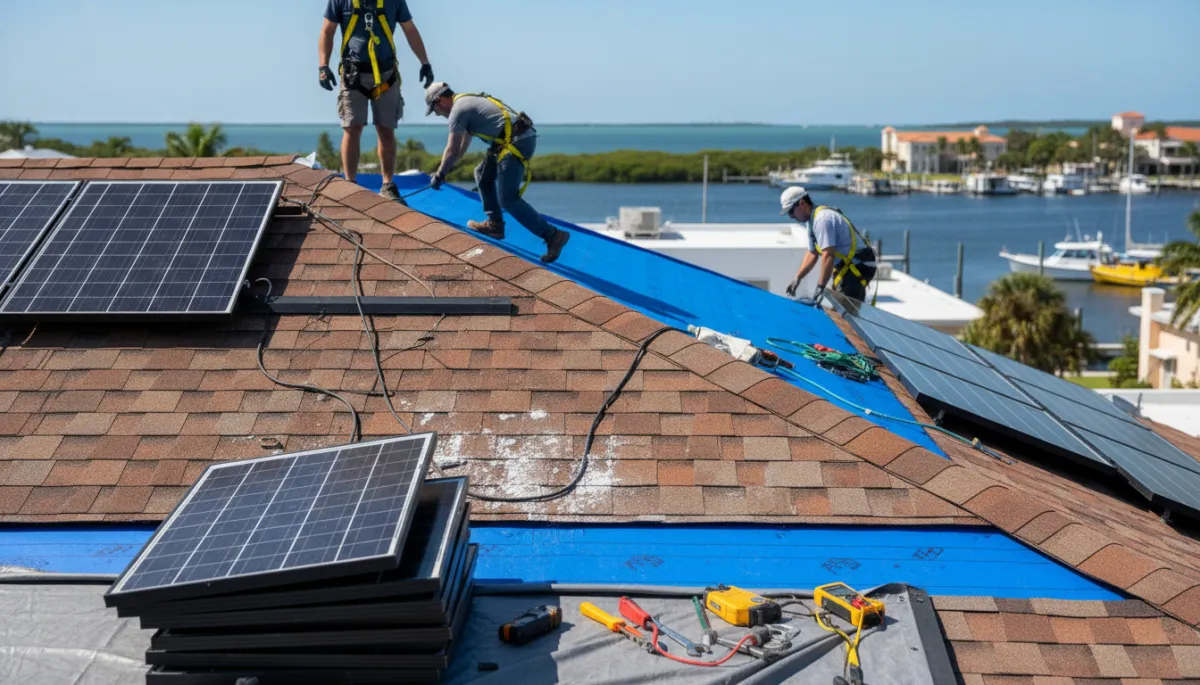
With the system safely de-energized, the crew removes modules, racking, flashing, and fasteners in a controlled sequence. Panels are staged on-site in a secure, padded area to prevent glass damage and frame bending. In Tarpon Springs, special attention is paid to corrosion—aluminum flashing, galvanized fasteners, and clamps often show salt-driven wear that increases labor time for safe removal. Each penetration is documented so that the reinstall can match or improve on the original layout while meeting current code and manufacturer guidelines. Damaged or obsolete hardware is noted for replacement in the reinstall phase.
Step 6: Roof Repair or Replacement by Licensed Roofer
After the array is fully removed, the roofing team addresses decking, underlayment, and surface materials. On older homes near the river, this may involve replacing soft or uneven decking, correcting past patchwork, and installing modern underlayment systems designed for current wind and moisture standards. On newer subdivision homes, the focus may be more on restoring a continuous water barrier and preparing attachment points for updated mounting hardware. Throughout this phase, the CCC1331058 roofing license and EC13014750 electrical license remain under one company, so penetrations, blocking, and layout are coordinated in real time rather than through separate subcontractors. This reduces rework and ensures that roof and solar design decisions are aligned from the start.
Step 7: Solar Reinstallation and System Rebuild
Once the new roof or repair scope is complete, the solar array is reinstalled. New flashings and fasteners are set to current Florida Building Code and manufacturer specifications. Attachment spacing is checked against structural requirements, and racking is leveled to support proper panel drainage and alignment. Wiring is re-run as needed, with attention to secure mounting, drip loops, and UV-resistant routing. The goal is to reset the system to factory-spec performance or better, using updated materials where appropriate while preserving your existing modules and inverters if they remain within service life expectations.
Step 8: Inspection, Activation, and Handover
After reinstall, Pinellas County conducts the required inspections for both roofing and electrical scopes. The inspector verifies attachment patterns, wiring, disconnects, labeling, and compliance with the approved plans. Once passed, the electrician reactivates the system, confirms proper inverter startup, and verifies production under available sunlight. Homeowners receive documentation of permits, inspection results, and warranty terms for both the reroof and the solar reinstallation. Because we hold both roofing and electrical licenses and work as one crew, the entire D&R process stays on one timeline with one point of responsibility, reducing downtime and eliminating the gaps that appear when separate contractors work independently of each other.
What We Commonly Find Under Tarpon Springs Solar Arrays
Detaching arrays in Tarpon Springs reveals consistent patterns shaped by river and Gulf exposure. Under older systems near downtown, aluminum flashings and galvanized fasteners often show visible corrosion—chalky surfaces, rust staining, and in some cases, reduced cross-section where salt and moisture have been working for years. Decking beneath older patch roofs can be uneven, with multiple layers of underlayment and shingle types reflecting decades of piecemeal repairs. This patchwork complicates both reroof planning and safe reattachment of solar hardware. On newer construction farther from the river, structural surprises are less common, but we still see array-weight wear and inverter-vibration effects. Fasteners at racking feet may have loosened slightly, and conduit supports can drift from their original positions over time. Electrical panels frequently exhibit early corrosion on breakers and terminals, particularly in garages or exterior locations exposed to humid air. Inverters on 8–10 year-old systems may be approaching the latter half of their service life, prompting a discussion about whether to reinstall existing equipment or plan for future replacement. We have seen this pattern across Tarpon Springs' mix of historic riverside homes and newer construction. That range of experience matters when every roof tells a different story, and when each D&R must respect both the building’s age and the solar system’s condition.
Wind Code, Florida Building Code, and Insurance Considerations
In Pinellas County, every rooftop solar system must be engineered to meet the wind design load for its specific zone under the Florida Building Code. Older systems installed without proper county permits or engineering may not align with current requirements, especially if they predate code updates. When you detach and reinstall for a reroof, you have an opportunity to bring mounting hardware, attachment spacing, and structural connections up to current standards. Fused builds Florida Building Code compliance into every proposal so that the new mounting layout reflects both manufacturer specifications and county wind criteria. From an insurance standpoint, homeowners should confirm with their agent that the upgraded roof and solar mounting meet current code expectations. County-approved designs and inspection records provide the documentation insurers and lenders look for during renewals, refinances, or property sales. Addressing code alignment during D&R reduces the risk of later remediation demands and positions your system for long-term insurability in a coastal market where wind exposure is a central concern.
Typical Timeline and Proposal Structure for D&R Projects
A well-planned detach and reinstall in Tarpon Springs follows a predictable timeline, with some variation for historic homes or complex roofs. Pre-work typically spans 1–2 weeks and includes the initial audit, proposal review, and permit approvals from Pinellas County and, where applicable, City historic review. Once permits are active and materials are staged, on-roof D&R work for straightforward roofs usually runs 2–3 days. Larger homes, complex rooflines, or structures with layered repairs and decking issues may extend the active work window to 4–6 days, particularly when extensive structural corrections are necessary before reinstalling the array. County inspections are generally scheduled within several business days after work completion, and final activation follows promptly after sign-off. Your proposal will break out line items such as array removal and staging, flashing and fastener removal, roof inspection, repair or replacement scope, underlayment and roofing materials, solar reconnection labor, permit and inspection coordination, and final activation. No dollar figures are listed here because pricing varies by roof size, pitch, material, array size and hardware condition, with no tax credits applied. The practical advantage of a single-contractor model is clear—Fused operates with one crew, under one roofing license and one electrical license, with no subcontractor scheduling delays and one accountable party for the entire sequence.
Frequently Asked Questions: Tarpon Springs Solar Detach & Reinstall
How do I know if my Tarpon Springs roof needs replacement during D&R? Our audit evaluates your roof’s condition before any panels come off, which is especially important on older homes near the historic district and sponge docks. We look for shingle granule loss, cracked or curling materials, soft or flexing decking underfoot, previous patchwork, and signs of corrosion around penetrations. If we find evidence that the roof is near the end of its useful life, we provide written recommendations and explain options for repair versus full replacement so you can make an informed decision before investing in a reinstall.
Will D&R damage my roof further? When performed correctly under proper permits, detach and reinstall should not damage your roof. Fused uses removal and reinstall techniques matched to each roof type—older plank or mixed decking near downtown, as well as current-code truss systems in newer subdivisions. Fasteners are backed out rather than forced, penetrations are sealed or replaced with new flashing, and staging is planned to avoid concentrated loads on vulnerable areas. County inspections after reinstall provide an additional layer of verification that the roof and solar attachments meet code and manufacturer requirements.
How long can I be without solar power during D&R? For most straightforward detach and reinstall projects where the roof is in good condition or receiving limited repair, homeowners are typically without solar production for about 1–3 days. If a full roof replacement is needed, or if structural corrections and decking replacement are extensive, the outage window can extend to roughly 3–6 days. We schedule work to minimize downtime, coordinate roofing and electrical scopes under one company, and prioritize efficient inspections so your system returns to service as quickly as practical.
What if my original installer is no longer available? Many Tarpon Springs homeowners now face this situation as early 2010s installers have left the market or changed focus. We service and reinstall all major brands regardless of who installed them originally. This is a core competency for our team. During the audit, we verify system specifications, inverter models, and current warranty status, then design the D&R plan around those findings. Our in-house roofing and electrical licenses allow us to assume full responsibility for both scopes even when the original installer is no longer in the picture.
Will my array warranty transfer to a new roof? In most cases, the panel manufacturer’s product warranty stays with the modules themselves, provided they are reinstalled according to manufacturer instructions and applicable codes. Our role is to ensure the physical reinstall meets those standards. Fused provides a written installation warranty on all reinstallation work, covering penetrations and mounting details. We also document the process so you have clear records to support any future manufacturer warranty claims if needed.
Does D&R void my solar system warranty? Detach and reinstall should not void your system warranty when it is completed by a licensed contractor under proper permits and in compliance with manufacturer guidelines. Our team operates under both CCC1331058 roofing and EC13014750 electrical licenses, and our 25-year penetration warranty covers our work on roof attachments alongside the manufacturer’s panel warranty. This single-contractor structure removes the ambiguity that can arise when separate companies handle roofing and solar, each pointing to the other if an issue appears years later.
What should I ask other contractors to verify they are qualified to do D&R in Tarpon Springs? Before hiring any contractor, ask for their roofing license (CCC#) and electrical license (EC#), confirm at least 10+ years in business, and request proof of EnergySage verification or similar third-party validation. Ask whether service and maintenance are handled in-house, whether they provide written warranties on both roofing and solar scopes, and whether they can share local references from Tarpon Springs or nearby Pinellas County neighborhoods. We hold all of these—roofing and electrical licenses in-house, 19 years in business, in-house service capability, and EnergySage Elite Installer status—so you have a single, accountable partner for the entire project.
Do I need Fused if I already have a roofer for my new roof? Yes. Fused's electrical license (EC13014750) means we can legally handle the solar disconnect, removal, and reinstall on our own—you do not need us to also do your roofing to get expert D&R service. We coordinate directly with your roofer's timeline, disconnect and stage your system before they start, and reinstall once the new roof is ready. Our 25-year penetration warranty and Elite Installer status apply to the D&R work itself, independent of who installed your roof. We also service the array afterward regardless of who did the roofing or the original solar installation.
CUSTOMER SAFETY ALERT — All detach and reinstall work MUST be fully permitted and inspected by county authorities. Unlicensed installers CANNOT obtain permits. Demand permits, verify licenses at myfloridalicense.com, require inspections, and get certificates in writing. Unpermitted solar voids panel warranties, voids roof warranties, and leaves the homeowner liable for corrective work at resale.
Maximize your investment with expert solar maintenance. Book your solar panel cleaning and inspection service at https://tampasolarmaintenance.com
Conclusion: A Single-Contractor Approach for Tarpon Springs D&R
Tarpon Springs’ mix of historic riverside homes and newer construction, combined with constant river and Gulf humidity exposure, makes each solar detach and reinstall project unique. Roof framing, decking history, and solar system age all vary block by block. That is why an experienced, licensed, single-contractor firm matters. Fused’s 19-year track record in Tampa Bay, combined with in-house roofing (CCC1331058) and electrical (EC13014750) licenses, delivers a single point of responsibility for both your roof and your solar system. We are an EnergySage Elite Installer (5.0/5, 21+ verified reviews) — independent verification of reliability and expertise. By integrating Florida Building Code compliance, Pinellas County permitting, and Tarpon Springs historic considerations into one coordinated process, we help ensure that your new roof and existing solar array are aligned for the next 25 years of service, rather than treated as separate projects with competing priorities.
Is your solar system performing at its best? Start your free maintenance consultation at https://tampasolarmaintenance.com
Fused Solar and Roofing is a licensed roofing (CCC1331058), electrical (EC13014750), and building contractor (CBC1252064), all three in-house, serving Hillsborough, Pinellas, Pasco, and Manatee counties since 2007. Fused Solar and Roofing is an EnergySage Elite Installer with a 5.0/5 rating and 21+ verified reviews, independent verification, earned not purchased.
Replacing the roof and adding solar at the same time in Tarpon Springs is covered at https://fusedsolarandroofing.com/post/new-roof-and-solar-tarpon-springs-fl, and solar repair and service in Tarpon Springs at https://fusedsolarandroofing.com/post/solar-repair-service-tarpon-springs-fl.
Need the roof itself replaced, with or without solar on it? Our guide to roof replacement in Tarpon Springs, the GAF system Fused installs, the warranty, and the local permit, is at https://fusedsolarandroofing.com/post/roof-replacement-tarpon-springs-fl.
All of Fused's Tarpon Springs services on one page, with prices, permits, and the utility: Solar and Roofing in Tarpon Springs. The county-wide version of this guide is the Pinellas County overview.
Replacing a roof that has solar on it? Request a detach and reinstall quote at https://fusedsolarandroofing.com/solar-panel-removal