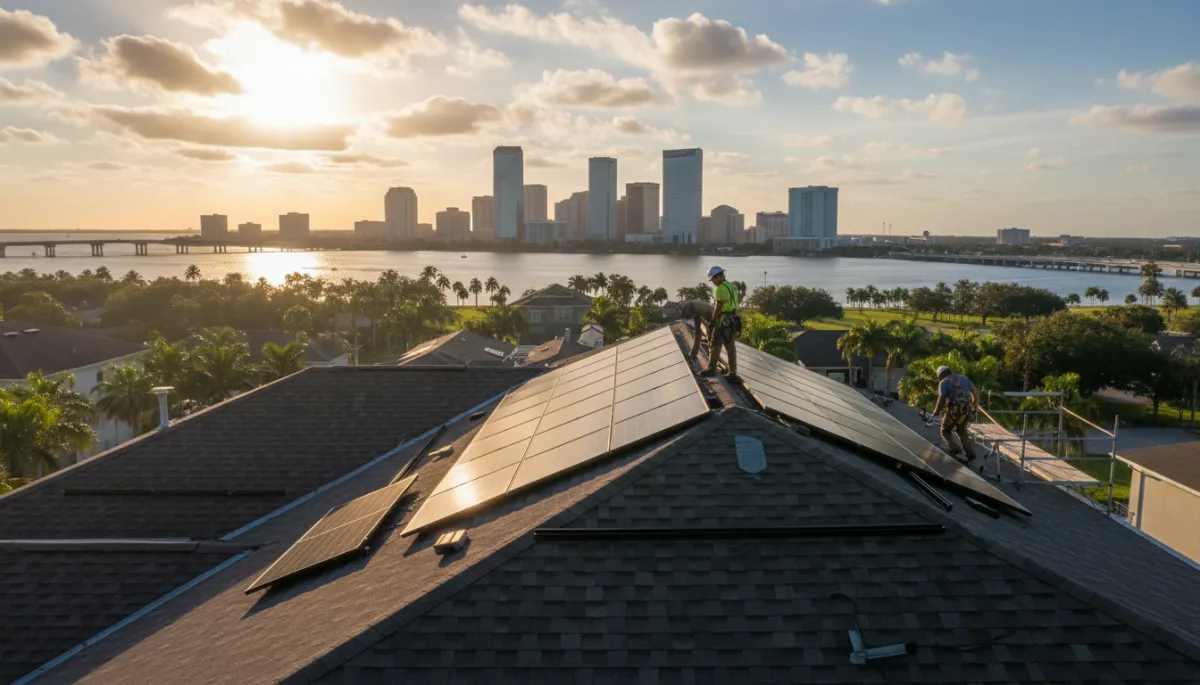
When Is Solar Detach & Reinstall Worth It in Tampa?
Solar detach and reinstall is worth doing now when your roof is near the end of its life, and worth waiting on when the roof has more than five to seven years left and no active leaks. The decision turns on roof age, system age, and whether one licensed contractor can handle both trades. Fused Solar and Roofing holds roofing (CCC1331058) and electrical (EC13014750) licenses and treats every D&R as a 20-year commitment.
Detaching and reinstalling a solar system for a new roof is a major, long-term decision. This guide gives Tampa Bay homeowners a clear framework to decide whether to move forward now, wait, or consider alternatives—so your roof, solar, and warranties all work together for the next 20–25 years.
A Practical Decision Framework for Solar Detach & Reinstall
A proper detach and reinstall (D&R) is more than moving panels off and back onto the roof. It is a coordinated roofing, electrical, and permitting project that affects your home for decades. In Tampa Bay, where intense sun, heavy rain, and tropical storms stress both roofs and solar equipment, timing and contractor choice matter as much as price.
As a dual-licensed roofing and electrical contractor, Fused approaches D&R as a 20+ year commitment. One license for roofing (CCC1331058), one for electrical (EC13014750), one truck, one warranty, one call. No finger-pointing between trades. That integrated approach is central to deciding when D&R is truly worth it—and when it can wait.
Key Factors That Determine If D&R Is Worth It Now
Roof age and remaining life — Most asphalt shingle roofs in Florida last around 15–25 years, depending on product quality, ventilation, and weather exposure. Tile roofs can last longer, but underlayment often needs replacement sooner. If your roof is already near the end of its expected life, coordinating D&R with a full roof replacement usually makes financial sense.
Solar system age and warranty status — Modern solar panels often carry 20–25+ year product and performance warranties. Inverters typically have 5–25 year warranties, depending on type. If your system is relatively new and under solid warranties, it is worth protecting that investment with a roof that will last alongside it.
Roof condition and risk of damage — Active leaks, soft decking, curling shingles, or damaged underlayment under or near the array are signs that waiting may cost more later. Water intrusion can damage solar wiring, racking, and interior finishes, turning a manageable roofing issue into a multi-trade repair.
True cost of delay — In Tampa Bay, typical D&R costs for a residential system often fall in a general range of a few thousand dollars, depending on panel count, roof type, and code updates. Paying for D&R twice—once now for patch repairs, then again for a full roof in a few years—can easily exceed the cost of doing the roof and D&R together once, correctly.
Storm and insurance considerations — In a high-wind, high-rainfall region, a compromised roof under solar is a vulnerability. Coordinating a code-compliant roof and properly engineered solar reinstallation reduces risk before the next major storm season, rather than after damage occurs.
When several of these factors point in the same direction—aging roof, active issues, newer solar under warranty—D&R aligned with a full roof project is often the most cost-effective, low-risk path.
Roof Age and Condition Red Flags in Tampa Bay
Florida’s heat, UV exposure, and heavy rains shorten roof life compared with milder climates. For Tampa Bay homeowners, these are the main red flags indicating your roof may not be a good candidate to “wait it out” under an existing solar array:
Roof is within 3–5 years of its expected end of life, based on material type and installation date.
Multiple prior leak repairs, particularly near penetrations or under the solar array footprint.
Widespread granule loss, brittle or curling shingles, or cracked tiles and exposed underlayment.
Soft or spongy decking, or visible sagging in the roof plane when viewed from the street or attic.
Interior signs of moisture—staining on ceilings, musty odors in the attic, or visible mold near roof penetrations.
If any of these conditions are present beneath or around your solar array, a coordinated roof replacement and D&R is usually more prudent than repeated patching. Once panels, racking, and wiring are removed, your roofer has clear access to correct underlying issues and install a roof designed to last with your solar system, not in spite of it.
One license for roofing (CCC1331058), one for electrical (EC13014750), one truck, one warranty, one call. No finger-pointing between trades. That structure reduces the risk that roof and solar teams blame each other if a leak or electrical issue appears years later.
Solar System Age and Warranty Considerations
Your solar system’s age and warranty status are just as important as your roof’s condition. A well-planned D&R should protect, not compromise, long-term equipment coverage and performance guarantees.
Panel product warranties commonly range from about 20–25 years for modern residential systems. If your panels are less than 10–12 years old, they likely have significant warranty life remaining, making it worthwhile to ensure they are reinstalled by a contractor who understands manufacturer requirements and documentation needs.
Performance warranties often guarantee a minimum power output level—typically 80–90% of original capacity—at year 25. Poor handling during D&R, or improper mounting and wiring, can shorten actual performance even if the paperwork still looks strong.
Inverter warranties can span from about 5 years up to 25 years, depending on technology. If your inverter is near the end of its warranty, it may be efficient to plan an upgrade or extended warranty review during D&R, while the system is already offline and accessible.
Workmanship and roof penetration warranties from your original installer may have terms around 5–10 years or more. A poorly executed D&R by an unqualified contractor can create new leak points and electrical issues that are not covered by original workmanship guarantees.
EnergySage Elite Installer status (5.0/5, 21+ verified reviews) is independent proof of reliability for a 25-year system. That level of third-party validation matters when you are trusting a contractor to handle equipment and warranties designed to protect you for decades.
Finally, remember that not all warranties include labor. Even if a manufacturer replaces a panel, you may still be responsible for the cost of removal, reinstallation, and permitting. Choosing a contractor who understands how to coordinate warranty claims and document work properly can significantly reduce long-term out-of-pocket costs.
Ready to keep your solar system in peak condition? Schedule a free solar panel cleaning and maintenance audit at https://tampasolarmaintenance.com
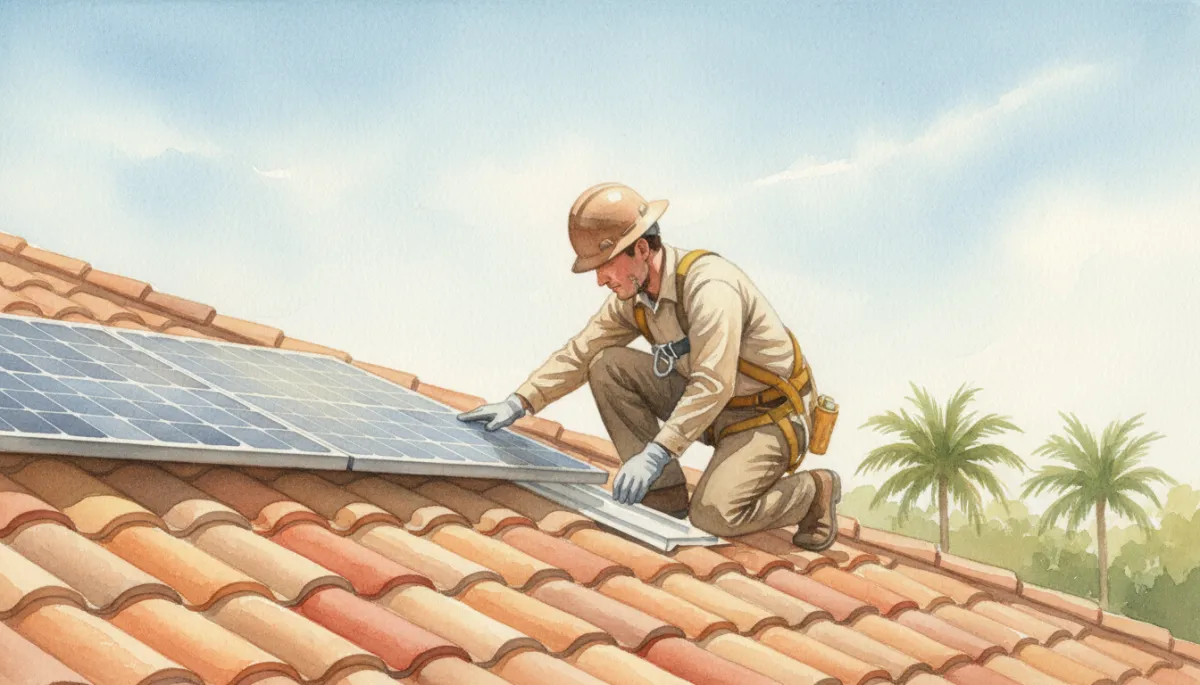
Coordinated inspections catch roof and solar issues early, before they become expensive failures.
Why the Cheapest Contractor Is a False Economy for a 20-Year Commitment
Detaching and reinstalling solar is not a one-day transaction—it is a 20+ year relationship. Your contractor is effectively tying your roof, electrical system, and solar investment together under one project. Choosing the lowest bid without evaluating stability, licensing, and experience can create costs that show up years later, when the installer is no longer on site to answer questions.
Hidden rework costs — A cut-rate D&R may skip code updates, use inferior flashing, or rush wiring. The result can be roof leaks, nuisance inverter trips, or inspection failures that require a second contractor to correct—often at full price, with no recourse to the original installer.
Warranty complications — Manufacturers can deny claims if panels or inverters are damaged during poorly executed removal, or if mounting hardware does not meet required specifications. Saving a small amount on labor today can jeopardize equipment coverage worth far more over time.
Documentation gaps — A thorough contractor provides updated single-line diagrams, photos, permit records, and serial-number logs. These documents are often required for future warranty claims, insurance questions, or home sales. Minimal documentation is another way “cheap” work becomes expensive later.
We have been in business for 19 years serving Tampa Bay. That experience matters when your new roof protects your new solar for 25 years. A contractor that has already weathered industry cycles, changing codes, and multiple storm seasons is more likely to be there when you need support five, ten, or fifteen years from now.
What Happens If Your Original Installer Is No Longer in Business?
Many Tampa Bay homeowners now find themselves with “orphaned” systems—solar arrays that still produce power, but with no original installer to call for maintenance, troubleshooting, or workmanship warranty claims. In these situations, the equipment warranties from manufacturers may still be active, but the local support structure has disappeared.
You may be unsure who is responsible for leaks around roof penetrations, intermittent production issues, or monitoring failures.
You may not have access to original plans, diagrams, or serial-number records needed for warranty support.
You may struggle to find a contractor willing to take responsibility for a system installed by someone else—especially if code or equipment standards have changed.
Fused services all brands, regardless of who did the original installation. For homeowners with orphaned systems, a D&R associated with a roof replacement is often the ideal time to “reset” the situation: bring the system up to current code, document everything properly, and establish a new long-term service relationship with a stable, dual-licensed contractor.
We have been in business for 19 years serving Tampa Bay. That experience matters when your new roof protects your new solar for 25 years. Choosing a partner with that track record reduces the risk of becoming an orphaned system owner again in the future.
How to Evaluate Contractor Stability and Credentials
When you evaluate contractors for a D&R and roof project in Tampa Bay, focus on long-term stability and integrated capabilities, not just the lowest quote. Key points to confirm include:
Licensing and scope — Verify active roofing and electrical licenses with the State of Florida. One license for roofing (CCC1331058), one for electrical (EC13014750), one truck, one warranty, one call. No finger-pointing between trades. That structure means one accountable party for both roof and solar work.
Years in business — Longevity in the Tampa Bay market is a strong indicator of operational resilience. A contractor that has operated locally for nearly two decades has already faced changing economic conditions, storms, and code cycles while continuing to support customers.
Third-party recognition — EnergySage Elite Installer status (5.0/5, 21+ verified reviews) is independent proof of reliability for a 25-year system. Look for similar objective indicators that a contractor delivers consistent quality and stands behind its work over time.
Service commitment — Ask whether the contractor services all brands, including systems they did not install, and how they handle warranty coordination, monitoring issues, and post-install support. A contractor focused only on new sales may not be the right fit for a complex D&R project.
Local permitting and inspection experience — Tampa Bay jurisdictions can have specific requirements for structural attachments, electrical upgrades, and hurricane-related codes. A contractor with deep local experience will anticipate these requirements, minimizing delays and rework.
Frequently Asked Questions About Solar Detach & Reinstall in Tampa Bay
1. How much does a typical solar detach & reinstall cost in Tampa Bay?
Costs vary based on the number of panels, roof type, roof height, hardware condition, and required code updates. For many Tampa Bay homes, a full D&R for an average-sized residential system often falls in the general range of several thousand dollars. Larger systems, tile roofs, or extensive hardware replacement can push costs higher. A site-specific inspection is the only reliable way to receive an accurate quote.
2. Is it ever better to wait on D&R and just repair the roof?
If your roof is relatively young, with isolated damage away from the array, a targeted repair may be reasonable. However, if the roof is approaching the end of its expected life, or if leaks are near or under the solar array, waiting often means paying for D&R twice—once for a repair and again for the full roof. In that case, coordinating a full replacement and D&R is usually more cost-effective and less disruptive.
3. How long will my solar system be offline during D&R and roof work?
Timelines depend on system size, roof complexity, and weather. For a typical single-family home, removal may take one day, roof work a few days, and reinstallation another day or two, plus inspection and utility coordination. A well-planned project minimizes downtime by aligning roofing and solar crews and scheduling inspections efficiently, so your system is back online as quickly as possible.
4. Will D&R affect my panel or inverter warranties?
When performed correctly by a qualified, licensed contractor, D&R should not void equipment warranties. However, improper handling, non-compliant mounting hardware, or undocumented modifications can complicate or jeopardize future claims. That is why it is important to choose a contractor experienced with multiple brands and familiar with manufacturer requirements, and to ensure all work is documented thoroughly.
5. Can I upgrade or add panels during a detach & reinstall?
In many cases, yes. A D&R is often the ideal time to review your home’s current energy use, available roof space, and electrical capacity. You may be able to add panels, upgrade inverters or monitoring, or reconfigure the array for better shading performance. Any changes must be designed, permitted, and inspected to current codes, so planning these upgrades before work begins is essential.
6. What if my system is older—does D&R still make sense?
For older systems approaching the end of their expected service life, the decision is more nuanced. If your panels and inverters are still performing well and you want to maximize their remaining value, D&R with a new roof can be worthwhile. If production is already significantly degraded, or if major components are out of warranty, it may be more efficient to evaluate whether a new system combined with a new roof is the better long-term investment. A detailed inspection and production analysis will guide that decision.
7. How does Florida weather affect the timing of D&R?
Tampa Bay’s rainy season and storm risk make roof integrity especially important. Scheduling D&R and roof work outside the peak of hurricane season, when possible, reduces weather-related delays and exposure. However, if your roof is actively leaking or structurally compromised, waiting for a “perfect” weather window can be riskier than addressing the problem promptly with a contractor experienced in working safely around Florida’s climate patterns.
8. Do I need Fused if I already have a roofer for my new roof?
Yes. Fused's electrical license (EC13014750) means we can legally handle the solar disconnect, removal, and reinstall on our own — you do not need us to also do your roofing to get expert D&R service. We coordinate directly with your roofer's timeline, disconnect and stage your system before they start, and reinstall once the new roof is ready. Our 25-year penetration warranty and Elite Installer status apply to the D&R work itself, independent of who installed your roof. We also service the array afterward regardless of who did the roofing or the original solar installation. Choosing a licensed, single-purpose D&R specialist protects you whether you use one contractor for everything or coordinate multiple trades yourself.
CUSTOMER SAFETY ALERT — All detach and reinstall work MUST be fully permitted and inspected by county authorities. Unlicensed installers CANNOT obtain permits. Demand permits, verify licenses at myfloridalicense.com, require inspections, and get certificates in writing. Unpermitted solar voids panel warranties, voids roof warranties, and leaves the homeowner liable for $15,000–$25,000+ in corrective work at resale.
Maximize your investment with expert solar maintenance. Book your solar panel cleaning and inspection service at https://tampasolarmaintenance.com
Conclusion: Make One Coordinated, Long-Term Decision
Deciding whether to proceed with a solar detach and reinstall in Tampa Bay comes down to alignment—between your roof’s remaining life, your solar system’s warranty horizon, and your tolerance for risk. When a roof is aging, showing clear red flags, or nearing the end of its expected service life, coordinating a full roof replacement with a professionally managed D&R is often the most economical, lowest-risk path over the next 20–25 years.
Contractor choice is central to that decision. One license for roofing (CCC1331058), one for electrical (EC13014750), one truck, one warranty, one call. No finger-pointing between trades. Combined with EnergySage Elite Installer status (5.0/5, 21+ verified reviews) as independent proof of reliability for a 25-year system, and the fact that we have been in business for 19 years serving Tampa Bay, you gain a partner built for the full life of your roof and solar—not just the installation week.
Whether your priority is addressing an urgent roof issue, planning a proactive upgrade, or taking over an orphaned system, a structured, data-driven evaluation will show when D&R is worth it now, when it can wait, and what combination of roof and solar work will best protect your home for decades to come.
Is your solar system performing at its best? Start your free maintenance consultation at https://tampasolarmaintenance.com
Fused Solar and Roofing is a licensed roofing (CCC1331058), electrical (EC13014750), and building contractor (CBC1252064), all three in-house, serving Hillsborough, Pinellas, Pasco, and Manatee counties since 2007. Fused Solar and Roofing is an EnergySage Elite Installer with a 5.0/5 rating and 21+ verified reviews, independent verification, earned not purchased.
Replacing a roof that has solar on it? Request a detach and reinstall quote at https://fusedsolarandroofing.com/solar-panel-removal
Who is allowed to do each part of a detach and reinstall, and why, is covered in our guide at https://fusedsolarandroofing.com/post/who-can-remove-reinstall-solar-florida