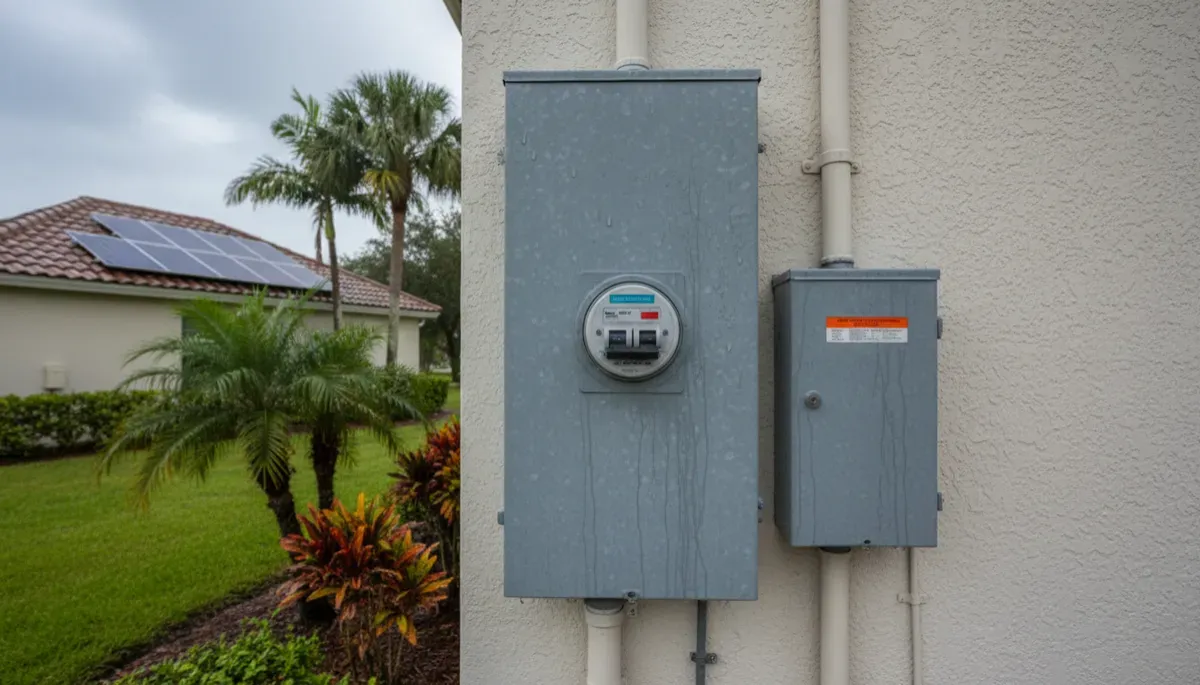
Solar Breaker Keeps Tripping in Tampa? What It Means
The breaker for your solar system keeps tripping, and you are wondering if it is dangerous, if something is broken, and what you are supposed to do next. A breaker trips because it has detected something it is designed to stop, and the real goal is to find what it is reacting to, not to keep turning it back on. Fused Solar and Roofing is a licensed roofing (CCC1331058), electrical (EC13014750), and building contractor (CBC1252064) — all three in-house.
1. A tripping breaker is doing its job
When a breaker trips, it feels like something has failed. In reality, the breaker is the part that is working exactly as intended. It is a safety switch that shuts a circuit off when it sees conditions it is not comfortable allowing to continue. That quick shutoff is what helps protect your home, your solar equipment, and the wiring that connects everything together.
It is built to stop a small problem before it has the chance to become a bigger one. The breaker does not explain the underlying cause; it only says, “Something on this circuit is outside the range I am willing to allow, so I am shutting it off.” That is why a tripping breaker is not something to ignore, but it is also not something to panic over. It is a controlled response, not a random glitch.
One trip might be a one-time event, but when you see the solar breaker trip more than once, especially in a short period, it is the circuit telling you that there is a real condition worth finding. The breaker is the messenger. The message is that something in that solar circuit is not behaving the way it should, and the system needs a proper checkup instead of repeated resets.
📌 Key Takeaway: A breaker that trips is a safety device doing its job. The question is not how to keep it on, but what it is reacting to.
2. What the solar breaker protects
Your solar system is tied into your home’s electrical system through a dedicated connection. That connection is usually a breaker in your electrical panel, a separate disconnect switch near the equipment, or both. When everything is working normally, power flows from the panels, through the inverter, through that breaker or disconnect, and into the rest of the house. You do not have to think about it; it simply runs in the background.
The solar breaker is there to protect two things at once. First, it helps protect the home’s wiring and electrical panel from conditions coming from the solar side that are not normal. Second, it helps protect the solar equipment if something on the house side is not right. In either case, the breaker stands at the boundary between your solar system and the rest of your electrical system and shuts things down when it sees something outside the range it is designed for.
You do not need to know the exact ratings, wiring layouts, or internal design of the breaker for it to do its job. What matters is understanding its role: it is the gatekeeper. When it trips, it is not asking you to force it back on; it is asking for the underlying condition to be found and corrected so that it can stay on without fighting what it is sensing. That is where a proper solar and electrical diagnosis comes in.
Solar breaker tripping? Fused Solar and Roofing diagnoses solar electrical faults across Hillsborough, Pinellas, Pasco, and Manatee counties. Request a diagnostic visit at https://fusedsolarandroofing.com/solar-repair
3. Common reasons a solar circuit trips
When a solar breaker keeps tripping, there are several categories of issues that a proper diagnosis will consider. These are possibilities for a technician to sort out, not a checklist for you to work through yourself. The job of a licensed technician is to work through them safely and methodically until the real cause is known and documented.
One possibility is a damaged or deteriorating wire somewhere in the solar circuit. Over time, heat, movement, or physical stress can affect wiring, especially in outdoor runs. Another possibility is water getting into a connection that is supposed to stay dry. Tampa Bay’s weather brings sun, rain, and humidity, and if a seal or fitting is not performing the way it should, moisture can find its way into a box or connection and create conditions the breaker does not like.
Connections can also loosen or corrode over time. Even a small amount of looseness at a terminal or lug can create heat and unstable behavior under load. Corrosion can do the same thing, especially in outdoor or coastal environments. Damage from animals is another path: squirrels, birds, or other animals can disturb or damage wiring and connections, particularly near the roof or in exposed areas around the array or conduit runs. None of this is obvious from the ground, which is why a visual and electrical inspection by a qualified technician is so important.
The inverter itself can also be part of the picture. A failing or malfunctioning inverter can behave in ways that cause the breaker to trip, even if the wiring around it looks fine. Finally, sometimes the issue does not start in the solar equipment at all but in the home’s electrical panel or related components. In that case, the solar breaker is still the messenger, but the root cause is inside the panel or associated wiring rather than on the roof or at the inverter. Sorting out which of these paths applies is exactly what a diagnostic visit is designed to do: observe, test, and narrow down until the real fault is identified and documented.
💡 Pro Tip: Write down the date and time the breaker tripped, what the weather was, and whether anything else in the house lost power. That pattern helps narrow down the cause.
4. Why resetting it again and again is a mistake
It is natural to flip a tripped breaker back on and hope it behaves. If you have already reset your solar breaker once, you are not alone. The problem comes when the breaker trips again after you reset it. At that point, you are no longer dealing with a one-time blip. You are operating a circuit that has already signaled it has a problem, and each reset is pushing it back into that same condition without understanding what is behind it.
From a troubleshooting perspective, the pattern of trips is valuable information. Does it trip only in the middle of the day? Only when the sun comes out after clouds? Only in certain weather? Does it trip immediately when turned back on, or only after the system has been running for a while? These details help the technician narrow down whether the likely issue is in the wiring, the connections, the inverter, or the panel. Repeatedly resetting the breaker without documenting that pattern can blur those clues and keep you in a loop instead of moving toward a fix.
The safest and most productive approach is straightforward. If you reset the breaker once and it trips again, leave it off. Do not keep trying to turn it back on. Note the date, time, and weather when it tripped, and whether anything else in the house seemed affected. Then schedule a diagnostic visit with a licensed electrical contractor who works on solar systems. That way, the breaker is no longer being forced into a condition it already rejected, and the technician has real-world data to work from when they arrive.
⚠️ Warning: Do not keep resetting a solar breaker that trips again, and do not open the electrical panel, the solar disconnect, or the inverter. Leave the breaker off and have the system diagnosed.
5. Why a tripping solar breaker is licensed electrical work
A solar system is an electrical system with parts on the roof and parts at the house. The panels, wiring, and connections on the roof work together with the inverter, disconnect, and electrical panel on the side of your home or in your garage. When a breaker trips on that system, the fault can be in either place: out on the roof, near the inverter, in the disconnect, or inside the panel itself. There is no way to know which it is by looking at the breaker handle alone. That is why this is not a do-it-yourself situation. It is licensed electrical work from the start.
Finding the fault means working inside electrical equipment that a homeowner should never open. That includes the electrical panel where the breaker lives, the solar disconnect, and the inverter. Each of those enclosures contains live electrical parts when the system is operating, and even when it is shut down, there are correct and incorrect ways to handle them. Opening electrical equipment in your home is work for someone with the right license, training, and experience.
This is where choosing a contractor that is both solar-focused and fully licensed in electrical work matters. Fused Solar and Roofing is a licensed roofing (CCC1331058), electrical (EC13014750), and building contractor (CBC1252064) — all three in-house. That means the same company that understands how your solar system is laid out also has the electrical licensing and in-house team to safely open panels, disconnects, and inverters, trace the fault, and document exactly what is going on. You are not being asked to guess or to coordinate between multiple companies just to figure out why a breaker is tripping.
Just as important, Fused Solar and Roofing services systems of all brands, including systems whose original installer is no longer in business. If you inherited a solar system with the house, or if the company that put it in has disappeared, you are not stuck. A licensed electrical contractor that works on solar every day can step in, diagnose the tripping breaker, and give you a clear path to getting the system back into reliable service.
6. What a diagnostic visit on a tripping solar circuit involves
When you schedule a diagnostic visit for a tripping solar breaker, the goal is simple: find out exactly what is causing the breaker to react and document what it will take to correct it. A licensed technician arrives with your description of the problem, including any notes you have about when the breaker tripped and under what conditions. From there, they follow a structured process from one piece of equipment to the next.
The technician inspects the breaker itself, looking for signs of wear, heat, or other issues at the connection points. They examine the solar disconnect, checking its condition and the wiring that leads in and out of it. They inspect the inverter, its connections, and the wiring and conduit that can be reached without removing panels. Throughout this process, they are looking for visible signs of damage, deterioration, water intrusion, loose or corroded connections, or anything else that could explain the breaker’s behavior. They also consider the information you provided about the timing and pattern of the trips as part of that evaluation.
Some wiring and connections sit under the solar panels themselves and cannot be reached without removing panels. The technician will note this in the report if the likely fault area appears to be under the array. They will not remove panels during a basic diagnostic unless that scope has been clearly discussed and approved. Instead, they document what they can see and reach, explain where the remaining suspected issue lies, and outline what a detach and reinstall would involve if that is the next step required to reach and repair the fault.
After the visit, you receive photographs and a detailed written report of the findings. That report explains what was inspected, what was observed, and what the technician recommends. Any repair is then scoped and quoted from those findings so you can see exactly what work is proposed and why. You are not left guessing about what might be wrong; you have a concrete description and a clear plan. Fused Solar and Roofing is an EnergySage Elite Installer with a 5.0/5 rating and 21+ verified reviews — independent verification, earned not purchased.
📌 Key Takeaway: Fused Solar and Roofing diagnoses and repairs solar electrical faults on systems of all brands under electrical license EC13014750, including systems whose original installer is no longer in business.
7. When the fault is on the roof
Sometimes the diagnostic points to wiring or connections that live under the solar array itself. These are the runs and connectors that sit beneath the panels, out of sight from the ground. When the fault traces to that area, the only way to reach it is to remove the panels in that section. That process is called a detach and reinstall. It is a structured, planned job, not a guess-and-hope effort, and it is handled by crews who work on both solar and roofing every day in the Tampa Bay climate.
In a detach and reinstall, the system is first disconnected so that the panels and wiring are not live during the work. The panels in the affected area are then carefully removed and set aside. With the panels off, the wiring and connections underneath can be reached, inspected up close, and repaired or replaced as needed. Once the electrical repair is complete, the panels are reinstalled, reconnected, and tested as part of bringing the system back into service. You end up with both the fault corrected and the array properly put back together and verified by the same company that diagnosed it.
When the panels are off, another practical question naturally comes up: what about the roof underneath? If the roof in that area is older or showing signs of wear, having the panels removed is the ideal time to ask whether the roof should be looked at more closely or even replaced before the panels go back on. This is not about pushing a roof sale; it is about timing. Doing roof work with the panels already off can avoid having to detach and reinstall them again later for roof work alone. It is a question worth asking so you can make an informed decision about both your electrical system and your roof at the same time.
Fused Solar and Roofing’s own in-house electrical and roofing crews handle both sides of this work, so it becomes one coordinated job under one company instead of two separate projects you have to manage. The same team that understands the solar wiring and inverter layout also understands how the roof is built and how to protect it. That coordination matters when you are dealing with a tripping breaker that leads to work on the roof: you get a unified plan, one point of contact, and a system that is restored with both the electrical and roofing details accounted for.
8. Getting the system back into service
Once the repair is completed—whether it was at the breaker, in the disconnect, at the inverter, in accessible wiring, or under the array—the next step is to bring the system back online in a controlled way. The technician turns the system back on in the correct order, following the proper sequence for the equipment involved. The goal here is to confirm that the breaker stays on, the inverter starts and runs as expected, and the system settles into normal operation without any further trips or warnings related to the fault that was just corrected.
Part of closing out the job is confirming production. The technician verifies that the system is generating power as expected for the conditions at the time of the visit. You are not asked to assume that everything is fine just because the breaker stayed on once; you get confirmation that the system is actually working and contributing to your home again. If your system has a monitoring portal or display, the technician can use that as part of the confirmation, but the focus is always on the behavior of the electrical equipment and the breaker that was tripping before the repair.
Before they leave, the technician shows you how the system should look when it is running normally. That includes what the breaker position should be, what you should expect to see on the inverter or monitoring, and what would count as a change worth calling about in the future. You do not need to become an expert in solar or electrical systems. You just need to know what “normal” looks like for your setup so that if you see something different—like that solar breaker tripping again—you know it is time to reach out rather than keep flipping the switch back and forth and hoping for the best.
Frequently Asked Questions
1. Is it safe to reset my solar breaker?
If your solar breaker has tripped once and you reset it and it stays on, that may have been a one-time event. If you reset it and it trips again, that is the circuit telling you it has a real problem. In that case, it is not wise to keep resetting it. Leave the breaker off, note when it tripped and what the weather was like, and schedule a diagnostic visit with a licensed electrical contractor experienced with solar systems. Repeated resets do not fix the underlying issue the breaker is reacting to.
2. Why does my solar breaker trip on sunny days but not at night?
Your solar system is active during the day when the sun is out and inactive at night. If the breaker only trips on sunny days, it suggests that the condition the breaker is reacting to shows up when the system is producing power. That could relate to wiring, connections, the inverter, or something in the panel that only becomes stressed when the solar system is running. The exact cause still needs to be diagnosed by a licensed technician, but the day-versus-night pattern is useful information for them to work with.
3. Does a tripping solar breaker mean my inverter is bad?
Not necessarily. A tripping breaker can be reacting to many different things: wiring issues, loose or corroded connections, water intrusion, animal damage, a problem inside the inverter, or an issue in the electrical panel itself. The inverter is one possible source, but it is not the only one. The purpose of a diagnostic visit is to inspect the breaker, disconnect, inverter, and accessible wiring so that the technician can say with confidence whether the inverter is at fault or whether the cause lies somewhere else in the circuit.
4. Will my solar system keep working if the breaker stays off?
No. If the solar breaker is off, the solar system is effectively disconnected from your home’s electrical system. The panels and inverter are not delivering power into the house while that breaker is open. Leaving the breaker off after it has tripped again is the right safety choice, but it also means your solar system is not contributing until the underlying issue is found and repaired. Once the fault is corrected and the system is turned back on properly, your solar production can resume.
5. My original solar installer is out of business. Who fixes a tripping solar breaker?
A licensed electrical contractor that works on solar systems can diagnose and repair a tripping solar breaker, even if the original installer is no longer around. You are not locked into the company that put the system in. Fused Solar and Roofing services systems of all brands, including those whose original installer is out of business, and has in-house electrical and roofing teams familiar with both the roof and electrical sides of the system. The important thing is that the company you call is properly licensed for electrical work and experienced with solar circuits.
6. Can rain cause my solar breaker to trip?
Rain by itself should not cause a properly installed and sealed solar system to trip a breaker. However, if water finds its way into a connection, junction box, or other part of the system that is supposed to stay dry, it can create conditions that the breaker reacts to. If you notice that the breaker tends to trip during or after rain, that pattern is important to share with the technician. It can point them toward checking for water intrusion in specific locations during the diagnostic visit.
Fused Solar and Roofing is a licensed electrical contractor (EC13014750) servicing solar systems of all brands across Hillsborough, Pinellas, Pasco, and Manatee counties, including systems whose original installer is no longer in business. Request a diagnostic visit at https://fusedsolarandroofing.com/solar-repair
Is your solar system producing what it should? Request a diagnostic visit at https://fusedsolarandroofing.com/solar-repair
