Adding a Battery to Existing Solar in Tampa Bay
Adding a Battery to Solar You Already Have
Many Tampa Bay homeowners already have solar and now want backup power, but adding a battery to an existing system is not the same as installing solar and storage together from day one. Fused Solar and Roofing is a licensed roofing (CCC1331058), electrical (EC13014750), and building contractor (CBC1252064) — all three in-house. This article explains what a battery actually does during an outage, why your current inverter is the deciding factor, how AC‑coupled and DC‑coupled retrofits differ, what happens at your electrical panel, and what to expect from permitting, interconnection, and a professional retrofit assessment.
1. What a battery actually does when the power goes out
The first thing most homeowners are surprised to learn is that a standard grid‑tied solar system shuts down when the grid goes down. This shutdown is a safety requirement so that your solar system does not push power back onto utility lines while crews are working to restore service. Without additional equipment, your existing solar array will not keep your lights on during an outage, even if the sun is shining and your roof is covered in panels.
A battery changes that by creating a controlled “island” for your home. During normal operation, the battery charges from solar and, in some configurations, from the grid. When the grid fails, a properly designed battery system and compatible inverter disconnect your house from the utility and form a local power source. The battery and inverter together create the voltage and frequency your home needs, then allow the solar array to keep running inside that island while the grid is down. In practice, this means the battery covers your loads and the solar array helps recharge it during daylight, extending how long you can run selected circuits during an outage.
📌 Key Takeaway: Solar alone does not power your house during an outage. Grid-tied systems shut down when the grid goes down, and a battery is what changes that.
2. Why your existing inverter decides most of this
When you already have solar, the equipment that matters most for a battery retrofit is the inverter on the wall. The inverter is the device that converts the direct current (DC) from your panels into alternating current (AC) your home can use. Some inverters are designed from the start to accept a battery connection, some manufacturers offer a defined “battery‑ready” pathway using additional components, and others do not support direct battery integration at all and instead require separate equipment to be added alongside the existing inverter. Because of this, two Tampa Bay homeowners with the same size solar array can receive very different answers about a retrofit simply because their inverters are different models with different supported configurations from the manufacturer.
In a straightforward case, the existing inverter can operate in backup mode and communicate directly with a compatible battery, so the retrofit focuses on adding the battery, making panel changes, and updating wiring. In other situations, the inverter may continue to handle solar while a separate battery inverter manages the battery and backup circuits. In still other cases, the cleanest long‑term solution is to replace the existing inverter with a new unit designed for solar‑plus‑storage. Because compatibility depends on the specific inverter model and the manufacturer’s published options, the first step in any assessment is to identify the inverter make and model from the exterior label, then design around what that inverter can safely and reliably support.
💡 Pro Tip: Find the make and model on your inverter before you call anyone. That single detail determines most of what a battery retrofit will involve.
3. AC coupling and DC coupling, in plain terms
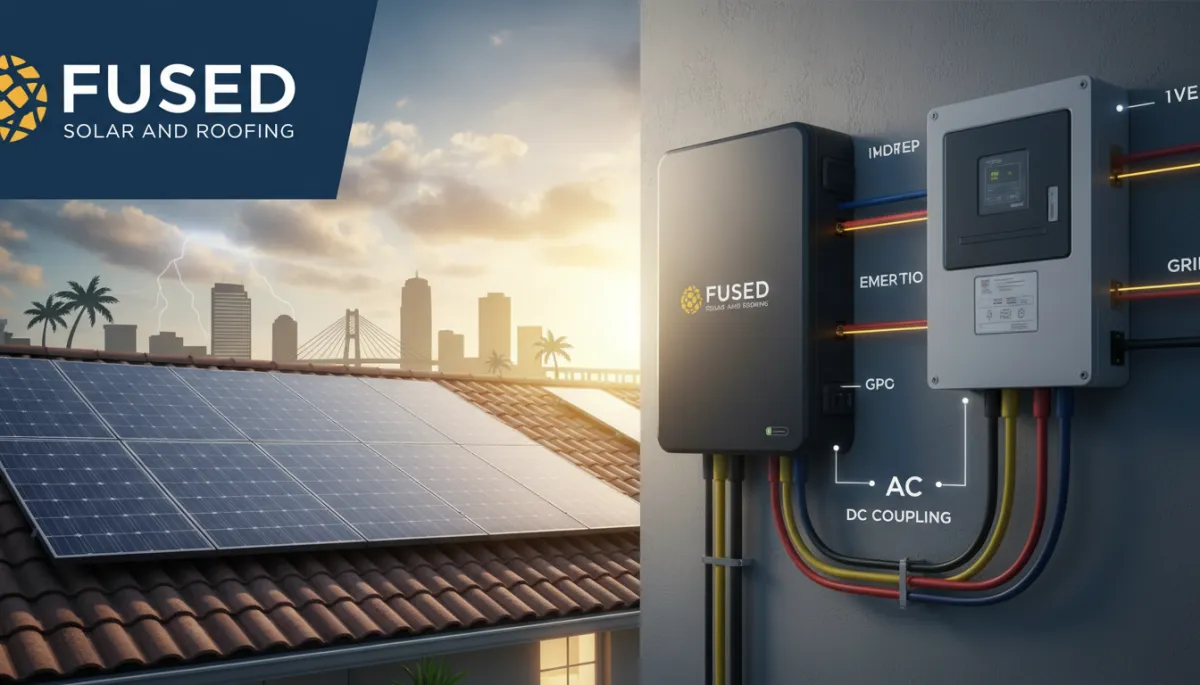
When you hear installers talk about AC‑coupled and DC‑coupled battery systems, they are describing where the battery connects in relation to the inverter. In a DC‑coupled setup, the solar panels and battery both live on the DC side, and the inverter manages everything before converting to AC for your home. This approach is typically simpler when the inverter is designed with built‑in battery support, because the wiring and control are integrated and the inverter orchestrates how solar power flows to the house, to the battery, or to the grid as conditions change.
In an AC‑coupled retrofit, the existing solar inverter usually stays in place, and a separate battery inverter is added. Both inverters connect on the AC side, usually at your main service panel or a dedicated backup panel. The battery inverter forms the backup power “island” during an outage and coordinates with the solar inverter so that your panels can still operate while the grid is down. For many existing systems in Hillsborough, Pinellas, Pasco, and Manatee counties, AC coupling is the practical path because it allows a battery to be added without rebuilding the entire solar side. The tradeoff is mainly about system architecture and control: DC coupling can be cleaner when planned from the start, while AC coupling offers flexibility for retrofits where the current inverter is not battery‑ready.
Thinking about adding backup power? Fused Solar and Roofing assesses battery retrofits on existing systems across Hillsborough, Pinellas, Pasco, and Manatee counties. Request an assessment at https://fusedsolarandroofing.com/fused-solar-roofing-service-department
4. Whole-home backup versus essential loads
One of the most important design decisions in a battery retrofit is whether you are aiming for whole‑home backup or only essential loads. Whole‑home backup attempts to keep nearly every circuit available, subject to the limits of the battery system and your electrical service. Essential‑loads backup focuses on the circuits that matter most in an outage, such as refrigeration, selected lighting, internet equipment, and possibly a well pump or small air‑conditioning zone, depending on the home. Because a battery has a finite amount of stored energy and a maximum output, deciding what you want to run directly affects how the system is designed and how it performs during an extended outage.
Traditionally, essential loads are handled with a dedicated critical‑loads subpanel. During a retrofit, selected circuits are moved from the main panel into this subpanel, and the battery system is wired to feed that subpanel when the grid is down. This approach keeps non‑essential equipment, such as large pool pumps or electric resistance heaters, from draining the battery too quickly. Increasingly, smart electrical panels offer another way to manage backup: instead of rewiring circuits into a new subpanel, smart breakers and controls decide in real time which circuits stay on, based on priorities and available power. Whether you use a critical‑loads subpanel, a smart panel, or a combination, the choice shapes the electrical work involved and how flexible your backup system will be.
⚠️ Warning: Backup capacity is finite. A battery sized for essential loads will not run central air conditioning, a pool pump, and an electric range at the same time.
5. What has to happen at your electrical panel
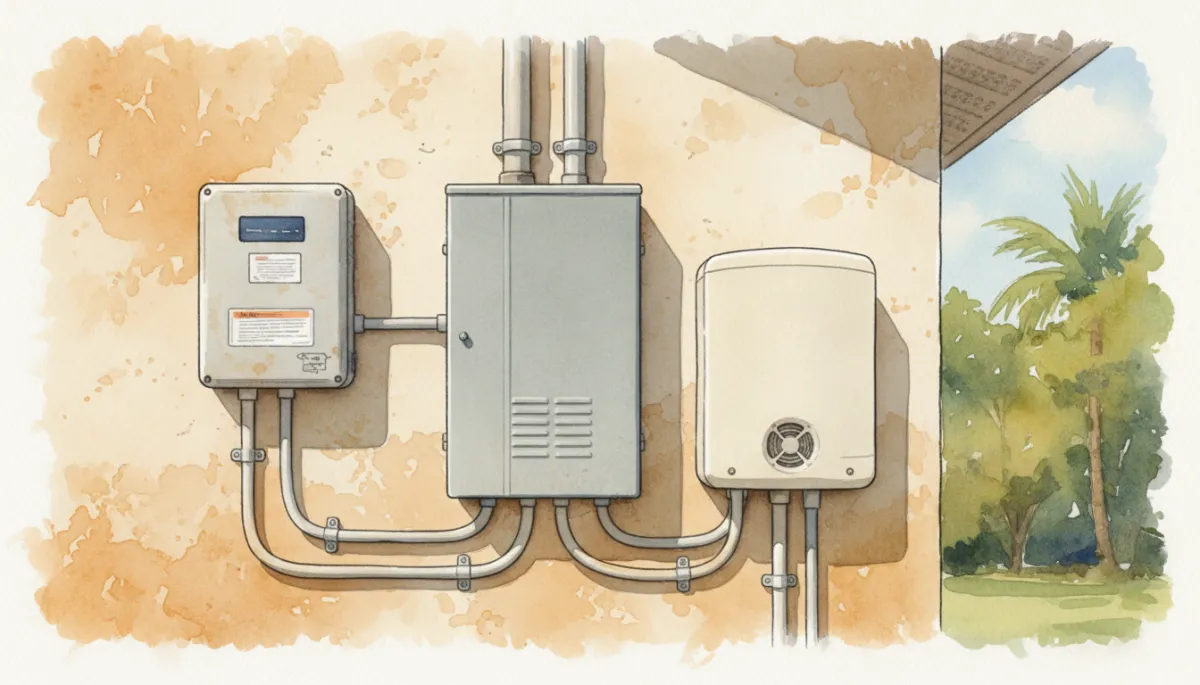
Any battery retrofit that provides backup power interacts directly with your main service panel. The panel is where the utility service, existing solar inverter, household circuits, and new battery equipment all come together. Two factors are especially important: the panel’s overall capacity (its main breaker rating and bus rating) and the amount of available breaker space. A panel that is already fully populated with breakers or close to its design limits may not be able to accept additional equipment without changes, particularly when adding a battery inverter that can deliver substantial power into the system during an outage.
In practice, this means a licensed electrical contractor evaluates the existing panel, calculates the home’s electrical loads, and determines whether the panel can safely support the added battery system under current codes. In some Tampa Bay homes, the result is that the existing panel is adequate and only needs a few breakers rearranged to make space. In others, the assessment may identify the need for a panel upgrade or even a service upgrade from the utility to provide the capacity required for the desired level of backup. These decisions are based on load calculations and code requirements, not assumptions, and they are an important part of planning a reliable and compliant retrofit.
6. Permitting, interconnection, and inspection
In Florida, adding a battery to an existing solar system is a permitted electrical project, not a simple add‑on. Local building departments in Hillsborough, Pinellas, Pasco, and Manatee counties require plans, an electrical permit, and inspections to verify that wiring, overcurrent protection, equipment placement, and labeling meet the Florida Building Code, electrical code, and applicable fire‑safety standards for energy storage systems. Because the configuration of your system is changing, the utility interconnection agreement generally must be updated as well so that the utility has accurate information about how your system operates and how it disconnects from the grid during an outage. Fused Solar and Roofing is a licensed roofing (CCC1331058), electrical (EC13014750), and building contractor (CBC1252064) — all three in-house, and handles permitting, interconnection documentation, and scheduling of required inspections as part of a professionally managed retrofit project.
A typical process for a Tampa Bay homeowner includes a site visit and design, permit application to the appropriate jurisdiction, utility interconnection updates, installation once permits are issued, and then inspections by the local authority having jurisdiction. Only after passing final inspection and receiving utility approval is the battery system placed into normal operation. This structured approach protects both the homeowner and the broader grid by ensuring the system operates safely in all modes, including during outages.
7. What a retrofit assessment looks at
A thorough battery retrofit assessment in Tampa Bay starts with documentation of your existing solar system: inverter make and model, array size, wiring method, and how the system ties into your main service panel. The assessment also reviews your home’s electrical service size, panel condition, available breaker space, and any existing subpanels or special loads such as electric vehicle chargers, well pumps, or large air‑conditioning equipment. From there, the discussion turns to your backup priorities: which circuits matter most, whether you are aiming for essential‑loads backup or something closer to whole‑home coverage, and how often you expect to rely on backup power at your location.
The assessor then considers which battery system architectures your existing inverter can support, whether an AC‑coupled or DC‑coupled design is more practical, and whether replacing the inverter would provide a clearer path. Roof, wall, and ground space for equipment mounting are checked, as are clearances and ventilation requirements for energy storage. Fused Solar and Roofing is an EnergySage Elite Installer with a 5.0/5 rating and 21+ verified reviews — independent verification, earned not purchased. That external vetting reflects a methodical approach: the goal of the assessment is to present you with options that are technically sound, code‑compliant, and aligned with your expectations for backup performance, not to fit every home into the same template.
📌 Key Takeaway: Fused Solar and Roofing assesses and installs battery retrofits on systems of all brands under electrical license EC13014750, including systems whose original installer is no longer in business.
8. When a retrofit is straightforward and when it is not
From an installation standpoint, retrofits tend to be more straightforward when the existing inverter supports a battery directly, the manufacturer provides a clear integration path, and the main electrical panel has adequate capacity and space. In these situations, the project often involves adding the battery, installing any required control hardware, making defined changes at the panel or critical‑loads subpanel, and updating permits and interconnection documents. The solar array remains largely as‑is, and the primary changes are at ground level where equipment and wiring are accessible.
Retrofits become more involved when the inverter is older or not supported for battery integration, when the main panel is full or undersized, or when the homeowner’s backup goals exceed what the existing electrical service can reasonably carry. In those cases, the most practical design may include replacing the inverter, upgrading the service panel, or both. There are also situations where the existing system’s configuration, mounting, or wiring makes it more efficient to rework portions of the original installation as part of the project. An honest assessment will spell out which category your home falls into, what changes are necessary, and where there may be tradeoffs between desired backup capability and the constraints of your current equipment and electrical infrastructure.
Tampa Bay battery retrofit FAQ
1. Can a battery be added to any existing solar system in Tampa Bay?
A battery cannot be added in the same way to every existing solar system in Tampa Bay, because the practical options depend on the specific inverter model, how the solar is wired into your electrical panel, and what the manufacturer supports for battery integration. Some systems can accept a battery directly, some work well with an AC‑coupled battery inverter added alongside the existing equipment, and others are better served by replacing the inverter as part of the project. A site assessment by a licensed electrical contractor evaluates your inverter, panel capacity, and backup goals to determine whether a retrofit is feasible and what configuration makes sense for your home.2. Will my solar keep working during an outage if I do not add a battery?
A standard grid‑tied solar system in Florida is designed to shut down automatically when the utility grid goes down, which means it does not provide power to your home during an outage on its own. This safety feature prevents your system from back‑feeding power onto utility lines while crews are working to restore service. Without a battery and compatible equipment that can safely isolate your home from the grid and create a local power source, your solar array will remain off until the utility restores power, even on a sunny day.3. How long will a battery run my house during a Florida outage?
The length of time a battery can run your house in Hillsborough, Pinellas, Pasco, or Manatee counties depends on two main factors: how much energy is stored in the battery and how much power your home is using while on backup. A battery that is supporting only essential loads such as a refrigerator, a few lights, and internet equipment will last longer than the same battery running multiple air‑conditioning units, pool equipment, and cooking appliances. Solar production during the day can help recharge the battery and extend runtime, but actual performance during an outage is determined by system design, your usage patterns, and weather conditions rather than a fixed number of hours.4. Can a battery back up my whole house in Tampa Bay?
Whether a battery can back up your whole house in Tampa Bay depends on the size of your electrical service, the capacity and output of the battery system, and the types of loads you want to run. Some homes with modest electrical demand and efficient equipment may be good candidates for near whole‑home backup, while others with large air‑conditioning systems, electric water heating, and multiple high‑draw appliances may be better suited to an essential‑loads approach using a critical‑loads subpanel or smart panel. A professional design looks at your specific loads and service rating to determine what level of backup is realistic and to set appropriate expectations for how the system will behave during an outage.5. Will adding a battery require an electrical panel upgrade at my Florida home?
Adding a battery may or may not require an electrical panel upgrade at your Florida home; the answer is based on a load calculation and an evaluation of your existing panel, not a blanket rule. If your panel has sufficient capacity and available breaker space, and your service size is appropriate for the combined solar and battery system, an upgrade might not be necessary. However, if the panel is already full, undersized for your home’s loads, or does not meet current code requirements for the additional equipment, an upgrade can be part of a compliant and reliable retrofit. A licensed electrical contractor reviews these details and explains whether your goals can be met with the current panel or if changes are recommended.6. Does a battery retrofit need a permit in Florida?
Yes, a battery retrofit that connects to your home’s electrical system in Florida requires permitting and inspection through the local authority having jurisdiction, whether you are in Hillsborough, Pinellas, Pasco, or Manatee County. The permit process confirms that the design, wiring, overcurrent protection, equipment placement, and system labeling comply with the Florida Building Code, electrical code, and applicable fire‑safety standards for energy storage systems. Because your system configuration and interconnection are changing, the utility must also update its records and, in many cases, its interconnection agreement. A licensed electrical contractor manages these steps so that your battery retrofit is documented, inspected, and approved before it is placed into regular operation.
Fused Solar and Roofing is a licensed electrical contractor (EC13014750) servicing solar systems of all brands across Hillsborough, Pinellas, Pasco, and Manatee counties, including systems whose original installer is no longer in business. Request a diagnostic visit at https://fusedsolarandroofing.com/fused-solar-roofing-service-department
Is your solar system producing what it should? Request a diagnostic visit at https://fusedsolarandroofing.com/fused-solar-roofing-service-department