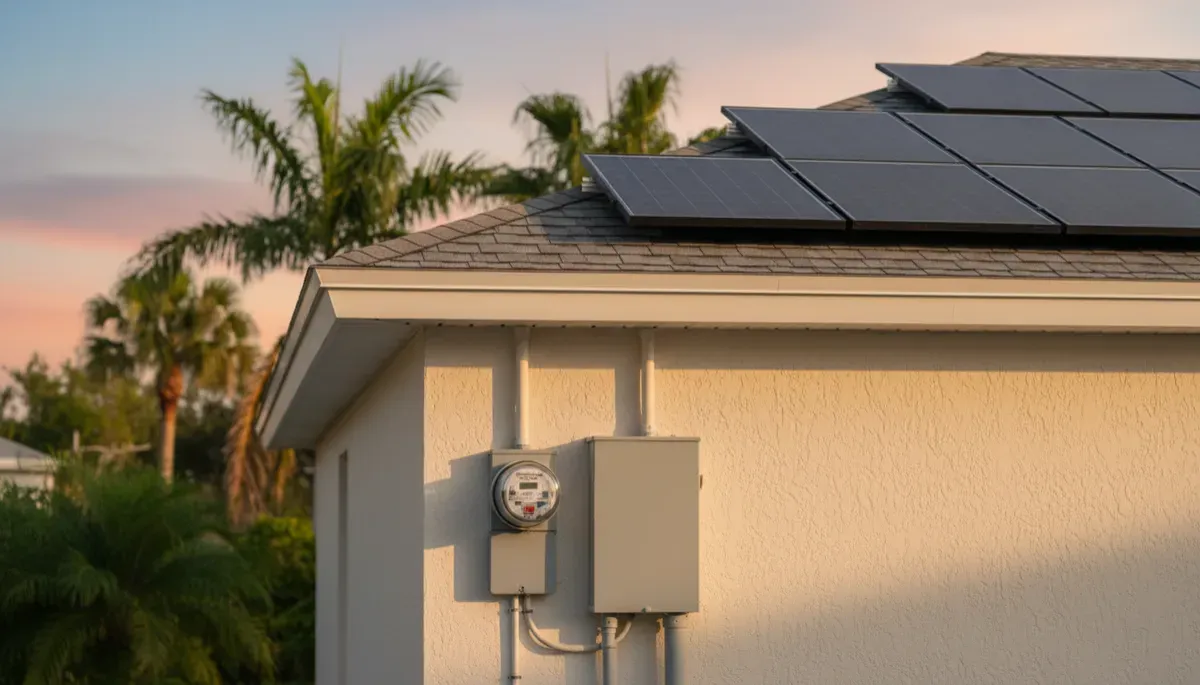
Solar Not Working After a Meter Change? Tampa Guide
If your solar stopped producing, or seems to have stopped, right after your electric meter was changed or worked on, you are not alone. The timing is an important clue, there are a few common reasons it happens, and the goal is to sort out whether the issue is on the solar side or something to take up with the utility. Fused Solar and Roofing is a licensed roofing (CCC1331058), electrical (EC13014750), and building contractor (CBC1252064) — all three in-house. By the end of this guide, you will know why meter work can leave solar off, what belongs to the utility and what belongs to you, what not to touch, and what the next step is.
1. The timing is a clue
When a solar system appears to stop right after work at the meter, the first useful piece of information is the calendar. You had solar that had been running. Then the meter was changed, inspected, or serviced. Soon after, you noticed that your monitoring app showed low or no production, your bill looked different, or someone in the house commented that the solar did not seem to be doing anything. That sequence matters, because it narrows the possibilities and helps avoid random guessing or trial-and-error restarts.
Solar systems do not usually shut off for no reason. They respond to changes in power, equipment, or wiring. Work at the meter is one of those times when the power feeding your home can be interrupted and restored. A grid-tied solar system is designed to notice that change. If the system does not come back to normal afterward, it does not mean something was done wrong on purpose. It means the system needs to be checked so you know where the issue sits and how to put things back into proper operation.
The key point is this: when a change in behavior lines up closely with work at the meter, that timing is not something to ignore. It is the starting point for a calm, step-by-step diagnosis. Instead of assuming the solar is ruined or assuming the utility will automatically take care of it, you can treat the meter work date as a marker in the story of your system. From there, a licensed technician can look at what changed on the solar side and help you decide what questions, if any, belong with the utility about the meter or your bill.
📌 Key Takeaway: If your solar stopped right after meter work, the timing is an important clue. The fix is often straightforward, but it needs to be done by a licensed technician.
2. What happens when the meter is changed or serviced
The electric meter on the side of your home belongs to the utility. It is part of the equipment they use to measure how much power flows between your home and the grid. When they replace or work on that meter, they are working on their own equipment and the service that feeds your house. The solar system you own connects into that service, but it is a separate set of equipment with its own controls, safety devices, and electronics.
During meter work, the power to your home can be interrupted for a period of time. Lights may go off, appliances may reset, and your solar inverter will see that the utility power it relies on has dropped away. A grid-tied solar system is built to shut down when utility power is interrupted. That is a safety feature, not a flaw. It keeps the solar from pushing power onto wiring that is not energized by the grid. When utility power returns, the solar system should sense that stable power is back and go through its normal start-up routine before producing again.
After meter work, the solar system may need to be checked and restored correctly. That can mean confirming that all solar disconnects and breakers on the homeowner side are in the proper position, confirming that the inverter has completed its start-up process, and confirming that monitoring is reporting accurate information. None of that requires touching the meter itself. It does require someone who understands how grid-tied solar behaves when power is interrupted and restored, and who can safely work on the solar equipment that belongs to you.
In simple terms, meter work is like pressing pause on the power to your home. Your solar system pauses with it. The difference is that some parts of your home come back on automatically when power returns, while solar equipment sometimes needs a proper review to make sure every part of the system has come back to normal. That is where a clear line between utility-owned equipment and homeowner-owned solar equipment becomes important, and where a licensed solar technician can help.
Solar down after meter work? Fused Solar and Roofing diagnoses and restores solar systems across Hillsborough, Pinellas, Pasco, and Manatee counties. Request a diagnostic visit at https://fusedsolarandroofing.com/solar-repair
3. Common reasons solar stays off afterward
When a licensed technician is called to look at a solar system that stayed off after meter work, there are a handful of general possibilities that get sorted out. These are not instructions for you to try at home. They are the areas a professional will examine to understand what is going on and how to restore proper operation on the solar side, or to confirm that the issue lies elsewhere.
One possibility is that a solar breaker or disconnect on the homeowner side was left in the off position after the work. Solar systems typically have dedicated breakers or switches that allow the solar to be shut off separately from the rest of the house. If one of those devices is off, the solar cannot feed power into the home or the grid, even if the sun is shining and the panels are ready. A technician will check those points, confirm their positions, and restore them as needed under proper safety procedures.
A second possibility is that the inverter did not restart cleanly or is showing a fault. The inverter is the piece of equipment that turns the DC power from your panels into AC power that your home can use. When the power from the grid drops and then comes back, the inverter is supposed to go through a start-up sequence. If it senses something outside its normal operating conditions, it may stay off and display an error or warning instead of producing. That does not always mean the inverter is ruined. It does mean a trained person needs to read what it is telling them, check the surrounding wiring, and decide whether a reset, a repair, or a replacement is appropriate.
A third possibility is that the monitoring lost its connection, so the system looks off even if it is actually producing. Many homeowners keep an eye on their solar through a monitoring app or web portal. If that connection is interrupted during meter work, or if a communication device loses power or internet connection, the data you see may stop updating. In that case, the solar may still be feeding power to the home, but the app makes it look like nothing is happening. Part of a proper diagnosis is comparing what the inverter itself shows with what the monitoring is reporting, so you are not relying on one view alone.
Another area a technician will consider is whether wiring or equipment near the meter was disturbed. Solar wiring often passes close to the meter location. If conduits, junctions, or disconnects around that area were bumped, strained, or exposed to the elements during work, connections can loosen or components can be stressed. A careful visual inspection and testing of those paths helps reveal whether the solar side wiring is intact and safely carrying power, or whether something needs repair or replacement before the system can be brought back online with confidence.
Finally, homeowners sometimes have a question about how the new meter records the power the system sends out. That question is separate from whether the solar is physically producing. It has to do with how the meter measures flows in and out of the home and how that shows up on the bill. That is a question for the utility. A solar technician can document how the solar system is behaving on your side of the meter, but any question about how the meter itself records or displays that power is something you would raise directly with the utility using the report and photos from the solar visit as background, if needed.
💡 Pro Tip: Write down the date the meter was changed or serviced, and photograph any tag or notice left at the home. That timeline helps both a technician and the utility.
4. What to note, and who to call for what
As a homeowner, there are a few simple things you can do that make the situation clearer without putting yourself at risk or changing anything on the electrical side. Start by writing down the date the meter was changed or serviced, and the date you first noticed something seemed wrong with the solar. If there was any tag, sticker, or notice left at your home related to the meter work, take clear photos of it and keep them with your notes. That gives everyone involved a shared timeline to work from instead of relying on memory alone.
Next, take photos of your inverter display and your monitoring app. If the inverter shows any messages, numbers, or symbols, capture them in your photos. If the monitoring app shows a flat line, a sudden drop, or a gap that starts around the meter work date, capture that as well. These images help a licensed technician understand what the system is doing before they even arrive. They also help you compare what you see today with what you see after the system is restored, so you know what “normal” looks like for your home going forward.
As you look at the inverter, you can note, without touching anything, whether it appears to show that it is producing or whether it is off or in an error state. You do not need to interpret every code or term. A simple note such as “screen shows producing,” “screen blank,” or “screen shows fault” is enough to be useful. If your bill looks wrong after the meter change, that is a question for the utility, because they control the meter and the billing. A solar technician can help you understand what your solar is actually doing so you can have an informed conversation with them if needed.
What you should not do is just as important. Do not touch the meter, open the disconnect or electrical panel, flip breakers, or try to restart the solar system yourself. Even if online videos or friends suggest simple steps, the risks are real. The meter belongs to the utility, and solar equipment can carry dangerous voltage even when parts of the system appear off. The safest and most direct path is to gather notes and photos, then call a licensed solar and electrical contractor to diagnose the solar side. That way, any action taken is done under proper training and licensing, and you are not left wondering whether something you tried made the situation worse or harder to diagnose.
⚠️ Warning: Do not touch the meter, open the disconnect or electrical panel, or try to restart the solar system yourself. The meter belongs to the utility, and solar equipment can carry dangerous voltage.
5. Sorting out the solar side from the utility side
A clear line between what belongs to the utility and what belongs to you is the key to getting this kind of problem solved without being passed back and forth. The meter and the electrical service up to it belong to the utility. That includes the meter itself and the service that brings power from the grid to your home. The solar system, from the panels on your roof to the inverter, disconnects, and solar wiring on your property, belongs to you as the homeowner. Your agreement with the utility about how the power your system sends out is handled is a separate agreement between you and the utility. It sits on top of the physical equipment but is not the same thing as the equipment itself.
When your solar stops producing after meter work, you need to know whether the issue is within your solar system or outside it. A licensed technician who works on solar can diagnose the solar side, restore it if the problem is there, and document the findings. That means they look at everything from the panels down to the inverter and solar disconnects, determine whether the system is healthy, and either bring it back into operation or identify what needs repair. They do not work on the meter. Instead, they give you a clear written picture of the condition of your solar equipment, so you know where things stand on your side of the line.
That clarity is valuable because it saves you from being passed back and forth without answers. If the technician’s report shows that the solar side is operating correctly and producing as it should, then any remaining questions about how the meter is recording power or how your bill reflects that power are clearly something to discuss with the utility. If the report shows that the solar side has a fault, then you know the next step is a solar repair, not a billing call. Either way, you are not stuck in the middle guessing. You have documentation that separates the solar side from the utility side in a practical way you can act on.
Fused Solar and Roofing works on the solar side on systems of all brands, including systems whose original installer is no longer in business. That matters in Tampa Bay, where many homeowners have systems installed by companies that have since closed or moved on. You are not limited to the company that put your system in. A current, licensed contractor can step in, evaluate the solar equipment you own, and get you back to a clear understanding of what is happening. Fused Solar and Roofing is a licensed roofing (CCC1331058), electrical (EC13014750), and building contractor (CBC1252064) — all three in-house. That combination allows the same company to address electrical solar issues and, when needed, related roofing questions without bringing in a chain of separate contractors.
6. What a diagnostic visit involves
When you schedule a diagnostic visit for a solar system that stopped producing after meter work, the process is straightforward and focused on facts. A licensed technician starts by reviewing your notes and photos. The date of the meter work, any tag or notice, your photos of the inverter display, and your screenshots of the monitoring app give them a head start. They arrive already knowing the basic story: when the meter was worked on, when you noticed the problem, and what the system has been showing since then. That preparation makes the visit more efficient and more focused on your actual situation instead of guessing from scratch.
On site, the technician inspects the inverter, the solar breaker, the solar disconnect, and the wiring and connections that can be reached without removing panels. They look for signs of anything that may have changed or been stressed around the time of the meter work. They check whether the system is producing at the time of the visit, using the inverter’s own readings and other observations, and they compare that with what the monitoring connection is reporting. If the monitoring is not communicating correctly, they identify that as part of the picture, because it affects what you see day to day when you check your system from home or on your phone.
The technician does not work on the meter. Their role is to evaluate and, when possible within the scope of the visit, restore the solar side. Once the inspection is complete, you receive photographs and a detailed written report stating what was found on the solar side. That report explains whether the system was off and why, whether it was producing normally, or whether faults or damaged components were identified. If a repair is needed, it is scoped and quoted from the findings in that report. You can then decide how to proceed, knowing exactly what is being recommended and why, with documentation you can refer back to later if questions come up again after any future utility work.
Fused Solar and Roofing is an EnergySage Elite Installer with a 5.0/5 rating and 21+ verified reviews — independent verification, earned not purchased. That outside verification reflects a track record of showing up, diagnosing systems accurately, and explaining findings in plain language that homeowners can use. In a situation where you are already frustrated that your solar seems to have gone quiet, having a clear, written answer from a licensed professional is often the difference between ongoing confusion and a plan you can act on with confidence.
📌 Key Takeaway: Fused Solar and Roofing diagnoses and restores solar systems of all brands after meter work under electrical license EC13014750, including systems whose original installer is no longer in business.
7. When the problem turns out to be on the roof
Sometimes, the timing with meter work is just that: timing. The solar stops producing around the same time the meter was changed, but the underlying cause is actually on the roof under the panels. Wiring, connections, or devices under the array can develop faults over time. A loose connection, a failed component, or damage from weather or wear can show up right when everyone’s attention is already on the electrical system because of the meter work. In those cases, the meter visit did not cause the problem, but it helped reveal it because you were watching the system more closely or noticed changes in your monitoring or bill at the same time.
When a diagnostic visit points to a fault under the panels, the next step is often a detach and reinstall. Reaching a fault under the array means removing the panels above that area to expose the wiring, connections, or devices that need attention. The system is shut down in a controlled way, the affected panels are removed, the fault is repaired, and then the panels are reinstalled, reconnected, and tested. This is careful work that combines electrical knowledge with safe handling of the roof and the mounting system, so that the repair solves the problem without creating new ones in the process.
When panels are off the roof for a detach and reinstall, it is a natural time to ask whether the roof under the array should be looked at or possibly replaced before the panels go back on. This is not about pushing a new roof on every homeowner. It is about recognizing that the easiest time to address roofing issues under solar panels is while the panels are already off for electrical work. If the roof under the array is in good shape, the panels can go back on with confidence. If there are concerns, you can weigh your options while everything is accessible, instead of facing another full detach later just to reach the roof surface beneath the system.
Fused Solar and Roofing’s own in-house electrical and roofing crews handle both sides of this kind of project, so it is one job under one company. That means the same team that understands your inverter and wiring also understands your shingles, underlayment, and flashing. For a Tampa Bay homeowner, that simplifies planning. If the diagnostic visit shows that the problem is on the roof rather than at the meter or in the easily reached electrical components, you are not starting over with a new contractor. You already have a team that can talk you through the electrical repair, the detach and reinstall, and any roofing questions in one conversation, with one coordinated schedule.
8. Back to producing
Once the solar side has been restored or repaired, the final step is to confirm that your system is truly back to producing and that you know how to recognize normal operation. A licensed technician will confirm, at the inverter, that the system is generating power under sunlight. They will also confirm that the monitoring is reporting correctly, so the data you see on your phone or computer matches what the equipment is actually doing. This double check matters, because it closes the gap between what the hardware is doing and what you see day to day as a homeowner keeping an eye on your investment.
During this final step, the technician should walk you through what “normal” looks like on both the inverter display and the monitoring app. That might include pointing out the typical status message, the way daily production graphs should look when the weather is clear, and how to tell the difference between a cloudy day and a system that has truly gone offline. With that understanding, you are not left guessing. If you see something different in the future, especially after any new work at the meter or on your electrical service, you will recognize it quickly and know it is time to call for another diagnostic visit rather than waiting months for a bill to reveal a problem.
The goal is simple: your solar system should quietly do its job in the background, and you should feel confident that it is working as it should. When meter work or other events interrupt that, a clear process brings you back to that steady state. You document the timing, a licensed technician separates the solar side from the utility side, any needed repairs are handled, and you end with a system that is producing and a homeowner who knows what to look for. In Tampa Bay’s sun, that peace of mind is worth as much as the kilowatt-hours on your monitoring screen.
Frequently Asked Questions
1. Why did my solar stop working after my meter was changed?
When the meter is changed or serviced, power to your home can be interrupted. Your grid-tied solar system is designed to shut down when that happens. In many cases, the system should restart once power is stable again, but sometimes a breaker is left off, the inverter does not restart cleanly, monitoring loses connection, or a separate issue in the solar equipment shows up at the same time. A licensed solar technician can inspect your system, determine whether the cause is on the solar side, and document the findings so you know what is happening and what to do next.
2. Should I assume the utility turned my solar back on after meter work?
You should not assume anything about the status of your solar after meter work without checking. The utility owns the meter and the service up to it, while you own the solar equipment. Even if your home’s main power is back on, your solar may or may not be producing, depending on the condition of the inverter, breakers, disconnects, and wiring on your side. The safest approach is to leave the equipment alone, document what you see on the inverter and monitoring app, and schedule a diagnostic visit with a licensed solar and electrical contractor to confirm the system’s status.
3. My bill looks wrong after a meter change. Who do I call?
If your bill looks wrong after a meter change, that is a question for the utility, because they control the meter and the billing. Before you call, it helps to know whether your solar is actually producing. A diagnostic visit from a licensed solar technician can confirm the condition of your solar system and provide a written report. With that in hand, you can speak with the utility knowing whether the solar side is working correctly and focus your questions on how the meter is recording and how your bill is being calculated, rather than wondering if the problem is in your equipment.
4. Can I turn my solar back on myself after meter work?
It is not recommended that you try to turn your solar back on yourself after meter work. The meter belongs to the utility, and solar equipment can carry dangerous voltage even when parts of the system look off. Flipping breakers, opening panels, or attempting restarts without training can create safety risks and make diagnosis harder. The better approach is to take photos of what you see, note the timing, and call a licensed solar and electrical contractor to handle any resets, testing, or repairs on the solar side under proper safety procedures and licensing.
5. Did the meter change damage my solar system?
A meter change and a solar problem can happen around the same time, but that does not automatically mean the meter work damaged your solar system. Sometimes the cause is as simple as a solar breaker left off or an inverter that did not restart. Other times, a separate issue in the solar wiring, connections, or equipment shows up coincidentally. The only way to know is to have a licensed solar technician inspect your system, document what they find on the solar side, and explain whether the equipment is healthy, needs repair, or is being affected by something outside the solar system itself.
6. My original solar installer is out of business. Who can check my solar after a meter change?
If your original solar installer is out of business, you can still have your system checked by a current, licensed contractor. Fused Solar and Roofing works on the solar side on systems of all brands, including systems whose original installer is no longer in business. A diagnostic visit will review your inverter, breakers, disconnects, accessible wiring, and monitoring, then provide a written report of findings. That way, you have a clear understanding of your system’s condition and a path to restore production, even if the company that installed it is no longer around.
Fused Solar and Roofing is a licensed electrical contractor (EC13014750) servicing solar systems of all brands across Hillsborough, Pinellas, Pasco, and Manatee counties, including systems whose original installer is no longer in business. Request a diagnostic visit at https://fusedsolarandroofing.com/solar-repair
Is your solar system producing what it should? Request a diagnostic visit at https://fusedsolarandroofing.com/solar-repair
