Solar Detach and Reinstall in New Port Richey, FL: Guide
Pasco County has grown steadily since the early 2010s, and New Port Richey was right in the middle of that boom. Many of the subdivisions in New Port Richey, Trinity, and nearby Pasco communities saw new roofs and rooftop solar installed within just a few years of each other. Now, a decade or more later, those same roofs are reaching the end of their service life at the same time, while the solar systems on top of them still have plenty of production left. That is where a professional solar detach and reinstall in New Port Richey becomes essential. This guide walks you through why local roofs age the way they do, how Pasco County permitting really works, what to expect during the detach and reinstall sequence, what we typically find under aging arrays, and how wind code, hail, insurance, timelines, and costs all fit together for a Pasco County roof replacement with solar already in place.
Why Pasco Roofs Age the Way They Do
When we evaluate roofs in New Port Richey, Trinity, Port Richey, Hudson, Holiday, Odessa, and Land O' Lakes, we see a consistent pattern: the climate is tough on roofing materials, especially under and around solar arrays. Being inland from the Gulf, New Port Richey does not see the same level of salt spray as coastal Pinellas communities, but the inland heat load and daily temperature swings are often greater on the roof deck. That combination accelerates aging in ways that matter when you need to remove solar panels for a new roof and then put them back into service safely.
First is sustained UV exposure. Pasco roofs sit under strong Florida sun nearly year-round. Asphalt shingles, sealants, and plastic components around solar mounting hardware all break down under ultraviolet light. On south- and west-facing slopes in New Port Richey, we routinely see granule loss, surface cracking, and curling earlier than the "paper" lifespan would suggest, especially on roofs installed during the early 2010s housing expansion. That UV exposure also bakes the rubber boots and flashings that protect penetrations used for solar racking, leading to cracking and shrinkage over time.
Second is the afternoon thunderstorm cycle. During much of the year, Pasco County experiences hot, humid mornings followed by fast-moving storms in the afternoon. Roof systems heat up, then see sudden cooling from rain and wind. That daily thermal cycling makes shingles and underlayment expand and contract repeatedly, stressing fasteners and roof deck connections. Compared with coastal Pinellas, where sea breezes can moderate temperatures, inland areas like New Port Richey often experience higher rooftop temperatures before storms roll through, which magnifies this effect on the deck and connections beneath your solar array.
Third is wind-driven rain and occasional hail. While New Port Richey is inland, it is still firmly within a high-wind region governed by the Florida Building Code. Summer thunderstorms and tropical systems can drive water sideways under lifted shingles, around aging flashings, and into any weak spots around solar penetrations. Hail events, while not constant, do occur in Pasco County and can bruise shingles, chip granules, and impact exposed conduit or junction boxes on the roof. Over 10–15 years, these forces combine so that entire neighborhoods built during the same period, with similar shingle systems and similar solar installations, tend to hit roof replacement age together.
Permitting in Pasco County for Roof and Solar Work
One of the most common points of confusion for homeowners planning a solar detach and reinstall in New Port Richey is who actually issues the permits. Most New Port Richey mailing addresses permit through Pasco County Development Services. However, homes that are physically inside the City of New Port Richey limits may permit through the city's Building Division instead. Because postal addresses and jurisdictional boundaries do not always line up, it is very common for homeowners to be unsure which authority applies to their property.
A New Port Richey solar contractor who works in Pasco every week should verify jurisdiction before ever finalizing a quote. Fused Solar and Roofing holds both the roofing license (CCC1331058) and the electrical license (EC13014750), so we manage both the roof and solar permits in-house rather than relying on a separate subcontractor for either scope. That usually means checking the Pasco County Property Appraiser records and confirming whether the parcel falls under county or city building authority. In either case, both the roof replacement and the solar detach and reinstall require permits and inspections. There is no "shortcut" where you can simply take panels off, reroof, and put them back on without paperwork. The structural attachments, electrical reconnection, and overall system safety are all subject to code requirements and inspection sign-offs, whether you are in New Port Richey, Trinity, or Land O' Lakes.
Under Pasco County, residential photovoltaic permits typically require a site plan, electrical diagrams, manufacturer specifications, and mounting details that demonstrate compliance with wind loads and structural support. A Notice of Commencement may be required based on project value, and the county provides specific forms and checklists through its building construction services department. Inside the City of New Port Richey, permit applications follow state and local rules that render a permit invalid if work is not commenced or inspected within a set period, with written extensions available when requested in advance. Your contractor should be familiar with both processes and should clearly explain which agency will inspect the roof and which will inspect the solar work on your home.
Before you sign anything, ask your contractor exactly which permits will be pulled, who will schedule inspections, and how final approvals will be documented. For a Pasco County roof replacement with solar on it, you should expect separate permit entries or clearly defined scopes covering the roofing work and the solar electrical and structural work. That clarity protects you at resale, during insurance reviews, and whenever you need documentation that your system was installed and reinstalled according to current Florida Building Code requirements.
Planning a brand-new system instead of a reinstall? Our guide to solar installation in New Port Richey is at https://fusedsolarandroofing.com/post/solar-installation-new-port-richey-fl
Who is allowed to do each part of a detach and reinstall, and why, is covered in our guide at https://fusedsolarandroofing.com/post/who-can-remove-reinstall-solar-florida
What the Detach & Reinstall Process Looks Like in Practice
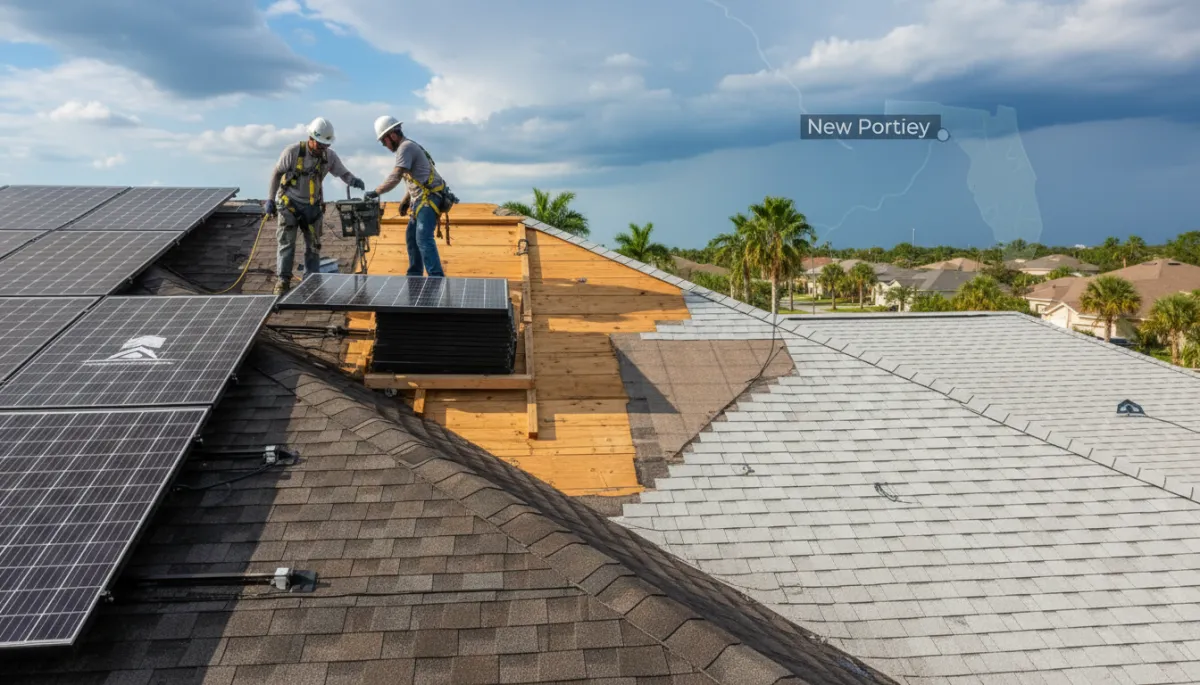
For New Port Richey homeowners, the solar detach and reinstall process should follow a predictable, well-documented sequence. The first step is an audit and production baseline. Your contractor should document your current system layout, inverter readings, monitoring configuration, and recent production history. This gives everyone a "before" snapshot so performance can be verified after the reinstall. It also allows the New Port Richey solar contractor to identify any existing issues—such as offline modules, failed optimizers, or shading changes—that can be addressed while the roof work is underway.
Next comes permitting and scheduling. Once jurisdiction is confirmed, the contractor submits plans and coordinates the calendar so that the solar removal crew and roofing crew are properly sequenced. On the day work begins, the system is safely powered down using the required disconnects, and any coordination with your utility for net-metered systems is handled in accordance with their procedures. Only after the system is verified as de-energized should technicians begin to remove solar panels for a new roof, starting with careful labeling of wiring and racking components so everything can be reassembled correctly later.
Panels are removed and staged in a protected area—often on site, sometimes in a secure storage location if the project will span multiple days or if weather is a concern. Good practice in Pasco solar roofing work includes using padded racks, keeping modules out of standing water, and protecting connectors from dirt and moisture. Once the array is off, the roofing crew removes existing shingles, underlayment, and damaged decking as needed, then installs the new roof system according to the approved plans and manufacturer requirements. This is the best time to address any deck issues or framing reinforcement recommended for your solar mounting system, especially in older New Port Richey and Port Richey homes where original construction details vary.
After the new roof is installed and dried-in, the racking and attachments are reinstalled or upgraded. Modern flashing systems and attachment hardware are often more robust than what was used a decade ago, so this is an opportunity to improve long-term water resistance and wind performance. Panels are then re-mounted, wiring is reconnected, and the system is re-commissioned. A good contractor will verify string voltages, inverter status, monitoring connections, and production under load before calling for inspections. Once the city or county inspector signs off, any utility documentation needed for re-activation is completed, and your system returns to normal operation with a new roof underneath it.
Ready to keep your solar system in peak condition? Schedule a free solar panel cleaning and maintenance audit at https://tampasolarmaintenance.com
What We Commonly Find Under Pasco Solar Arrays
Once panels come off in New Port Richey and surrounding Pasco communities, the condition of the roof underneath often surprises homeowners. One of the most frequent findings is thermal degradation of flashing and sealants. The areas around standoffs, rails, and conduit penetrations see concentrated heat and UV exposure. Over time, sealants can dry out, crack, or pull away from metal and shingle surfaces, creating pathways for water intrusion even when the rest of the roof still looks acceptable from the ground. In Trinity and Land O' Lakes subdivisions with similar construction dates, we see nearly identical patterns across multiple homes on the same street.
Sun-baked and cracked rubber boots at plumbing and electrical penetrations are another recurring issue. These components are meant to stay flexible and watertight, but years of Pasco sun can leave them brittle. When we lift arrays in New Port Richey, it is common to find boots that have split at the top or pulled away from pipes, allowing wind-driven rain to work its way into the underlayment. Similarly, we often encounter brittle wire insulation on older conductors exposed to heat and UV, especially where conduit transitions to rooftop junction boxes. These conditions are not always visible until the solar array is removed, which is why a thorough inspection during a detach and reinstall is so important.
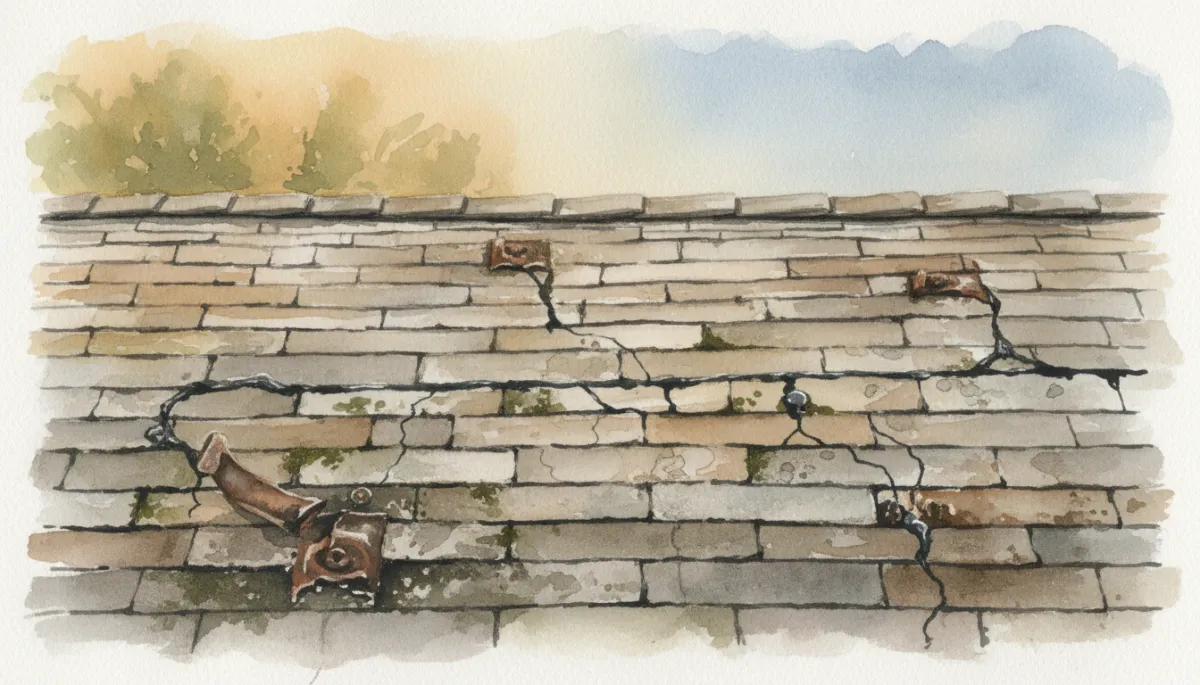
Hidden wear under solar arrays often appears only once panels are safely removed.
Granule loss concentrated on south and west exposures is particularly noticeable once panels are off. Even though modules shade the roof surface directly beneath them, the surrounding shingle fields often show accelerated wear from years of intense sun. In some New Port Richey neighborhoods, we see a clear contrast between slopes with and without solar, but both may still be at or near replacement age due to broader roof system fatigue. Around older penetrations, we sometimes find soft or damaged roof decking where small, long-term leaks have been active but hidden. Correcting these issues while the roof is open is far more cost-effective than waiting for visible interior damage to appear later.
Because so much of this damage only becomes visible after the array is removed, any realistic quote for a solar detach and reinstall in New Port Richey should include contingency language. Your proposal should explain how additional decking repairs, replacement of compromised flashings, or wiring corrections will be handled if discovered once panels come off. That does not mean you are automatically committing to extra costs; it means you and your contractor have a clear process for addressing real conditions on the roof, rather than guessing from the driveway or satellite imagery alone. This transparency is especially important in Pasco solar roofing projects where older installations may not have followed today's best practices for waterproofing and wire management.
Wind Code, Hail, and Insurance Considerations in Pasco County
Even though New Port Richey is inland, Florida Building Code wind requirements still apply fully. Design pressures differ from coastal high-velocity zones, but attachments, spacing, and fastener patterns for both roofing and solar mounting are engineered with wind uplift in mind. When you complete a permitted Pasco County roof replacement with solar, your documentation—approved plans, inspection records, and final approvals—forms a critical part of your wind mitigation package. Insurance carriers often review this paperwork when evaluating discounts for wind-resistant construction features and when processing storm damage claims after major weather events in the Tampa Bay region.
Hail and severe thunderstorms are also part of the risk picture for New Port Richey, Trinity, and Hudson homeowners. When a storm damages shingles, underlayment, or solar equipment, insurers look closely at whether the original installation and any subsequent detach and reinstall work were performed under proper permits and inspections. Unpermitted solar work creates serious problems at claim time. Carriers may question whether damage resulted from storm events or from improper installation, and they may require costly corrective work before approving coverage for future issues. At resale, unpermitted arrays can delay or derail transactions when home inspectors and appraisers flag them as non-compliant, forcing sellers to invest in corrective work on short timelines.
When your New Port Richey solar contractor handles detach and reinstall work under valid permits, you gain a clear paper trail that supports both wind mitigation credits and storm claims. That trail shows that the roof system and solar attachments meet current code, that inspectors verified compliance, and that any deficiencies were corrected before final sign-off. In a region where tropical weather is a recurring reality, that documentation is an important part of protecting both your roof investment and your long-term solar production.
Timeline and Cost for a New Port Richey Detach & Reinstall Project
For most New Port Richey homes, the active on-site portion of a detach and reinstall tied to roof replacement is measured in days, not weeks. A typical sequence for a standard asphalt shingle roof might involve one day for solar removal and staging, one to two days for tear-off and new roof installation depending on size and complexity, and another day for racking reinstall, panel mounting, and system commissioning. Inspections are scheduled around this work based on county or city availability. The overall calendar from signed contract to final inspection depends on permitting review times, material lead times, and weather, but the time your home spends without solar production is usually limited to the specific construction window plus any utility processing time for re-activation where required.
Cost-wise, it helps to think of the project in two parts: roof replacement and solar detach/reinstall services. In Pasco County, industry data shows that a standard full roof replacement often falls in the general range of several thousand to tens of thousands of dollars, depending on roof size, pitch, material, and complexity. The additional cost to remove and reinstall an existing solar array is typically a separate line item that reflects the number of panels, roof faces, mounting type, and any upgrades or repairs needed to bring the system up to current code. A combined project that includes a new asphalt shingle roof plus professional detach and reinstall of a typical residential array varies widely based on roof size, material, array size, and condition of existing hardware. Your contractor should provide a written figure for your specific home, stated as a total cost with no tax credits applied.
Your written proposal should itemize the scope clearly. At a minimum, you should see separate entries for roof tear-off and disposal, new underlayment and shingle installation, any required deck repairs, solar panel removal, racking and attachment hardware (including any upgrades), panel reinstall, electrical reconnection, and system commissioning. Permit fees, engineering if required, and inspection coordination should also be spelled out. In New Port Richey, Trinity, and Odessa, where many homes have similar layouts and array sizes, reputable contractors will still walk your specific roof, verify equipment counts, and review your existing solar design rather than relying on "average" numbers alone. That attention to detail is the best way to avoid surprises once work begins.
Frequently Asked Questions for New Port Richey Homeowners
1. Can one contractor handle both my roof and my solar in New Port Richey, or do I need two companies?
Yes, one contractor can handle both. Fused Solar and Roofing is licensed for both roofing (CCC1331058) and electrical (EC13014750) and performs both scopes in-house. That means one schedule, one point of responsibility, and no finger-pointing between a roofer and a separate solar company if a question comes up about a leak near a mount or a wiring detail on your New Port Richey home.
2. Will my solar production stop for the entire project?
Your system will be offline only while panels are removed, the roof is being replaced, and inspections or utility re-activation steps are completed. For most New Port Richey projects, that means several days of downtime rather than weeks, assuming permits and materials are already in place before work begins.
3. Do I need a new solar permit if I am not changing the system size?
Yes. Even if the array layout and size remain the same, Pasco authorities want to see that the structural attachments and electrical reconnection meet current code. That is why detach and reinstall scopes are permitted and inspected, rather than treated as simple maintenance.
4. What if my original solar installer is no longer in business?
This is common in New Port Richey and across Tampa Bay. A qualified Pasco solar roofing contractor can still document your existing system, handle the detach and reinstall, and bring equipment labeling and documentation up to current standards. Be sure they are comfortable working on your inverter and racking brands and that they will support the system after the project is complete.
5. Will my roof warranty and panel warranty both stay valid?
When the work is permitted, performed by licensed contractors, and documented correctly, you preserve the path to warranty support on both the roof and solar equipment. Unpermitted or unlicensed work, by contrast, often leads manufacturers to deny coverage. Fused provides written warranty documentation on both the roofing and electrical work we perform in-house, so there is one company standing behind the entire project.
6. Are there differences between New Port Richey and nearby areas like Hudson or Holiday?
The core code requirements for detach and reinstall work are the same across Pasco County, but subdivision layouts, roof designs, and jurisdictional details can differ. For example, some Trinity and Odessa communities have more complex multi-level roofs, while certain New Port Richey neighborhoods feature simpler gable designs. Your contractor should tailor the plan to your specific address rather than assuming one layout fits all of Pasco.
7. How early should I plan a detach and reinstall if my roof is aging?
If your roof is approaching 15–20 years of age and you already have solar, it is wise to start conversations at least one roofing season ahead. That gives time to evaluate shingle condition, review monitoring data, line up permits, and coordinate schedules so you are not rushing during storm season. Planning ahead also allows you to compare proposals from more than one qualified Pasco solar roofing provider.
8. Do I need Fused if I already have a roofer for my new roof?
Yes. Fused's electrical license (EC13014750) means we can legally handle the solar disconnect, removal, and reinstall on our own—you do not need us to also do your roofing to get expert D&R service. We coordinate directly with your roofer's timeline, disconnect and stage your system before they start, and reinstall once the new roof is ready. Our 25-year penetration warranty applies to the D&R work itself, independent of who installed your roof. We also service the array afterward regardless of who did the roofing or the original solar installation.
CUSTOMER SAFETY ALERT
CUSTOMER SAFETY ALERT — All detach and reinstall work MUST be fully permitted and inspected by county authorities. Unlicensed installers CANNOT obtain permits. Demand permits, verify licenses at myfloridalicense.com, require inspections, and get certificates in writing. Unpermitted solar voids panel warranties, voids roof warranties, and leaves the homeowner liable for $15,000–$25,000+ in corrective work at resale.
Maximize your investment with expert solar maintenance. Book your solar panel cleaning and inspection service at https://tampasolarmaintenance.com
Bringing It All Together for New Port Richey Homeowners
For many New Port Richey homeowners, rooftop solar remains one of the best long-term investments they have made in their property. When the time comes for roof replacement, the goal is to protect that investment rather than start over. A carefully planned solar detach and reinstall in New Port Richey allows you to pair a new, code-compliant roof with an existing solar system that is safely re-commissioned and ready for many more years of production. Achieving that outcome depends on understanding how Pasco's inland climate ages roofs, navigating city versus county permitting correctly, following a disciplined detach and reinstall sequence, and addressing the hidden issues we routinely uncover under aging arrays in Pasco neighborhoods.
Whether you live near downtown New Port Richey, in a Trinity subdivision, or along the corridors toward Hudson, Holiday, Odessa, or Land O' Lakes, the fundamentals remain the same: work with licensed professionals who understand Pasco's housing stock and permitting landscape, insist on full documentation and inspections, and make sure your written proposal clearly separates roofing and solar scopes with room to handle real-world findings once panels come off. With the right planning and the right team, a Pasco County roof replacement with solar can be a smooth, well-coordinated project that leaves your home better protected and your solar system performing as it should for years to come.
Is your solar system performing at its best? Start your free maintenance consultation at https://tampasolarmaintenance.com
Fused Solar and Roofing is a licensed roofing (CCC1331058), electrical (EC13014750), and building contractor (CBC1252064), all three in-house, serving Hillsborough, Pinellas, Pasco, and Manatee counties since 2007. Fused Solar and Roofing is an EnergySage Elite Installer with a 5.0/5 rating and 21+ verified reviews, independent verification, earned not purchased.
Replacing the roof and adding solar at the same time in New Port Richey is covered at https://fusedsolarandroofing.com/post/new-roof-and-solar-new-port-richey-fl, and solar repair and service in New Port Richey at https://fusedsolarandroofing.com/post/solar-repair-service-new-port-richey-fl.
Need the roof itself replaced, with or without solar on it? Our guide to roof replacement in New Port Richey, the GAF system Fused installs, the warranty, and the local permit, is at https://fusedsolarandroofing.com/post/roof-replacement-new-port-richey-fl.
All of Fused's New Port Richey services on one page, with prices, permits, and the utility: Solar and Roofing in New Port Richey. The county-wide version of this guide is the Pasco County overview.
Replacing a roof that has solar on it? Request a detach and reinstall quote at https://fusedsolarandroofing.com/solar-panel-removal