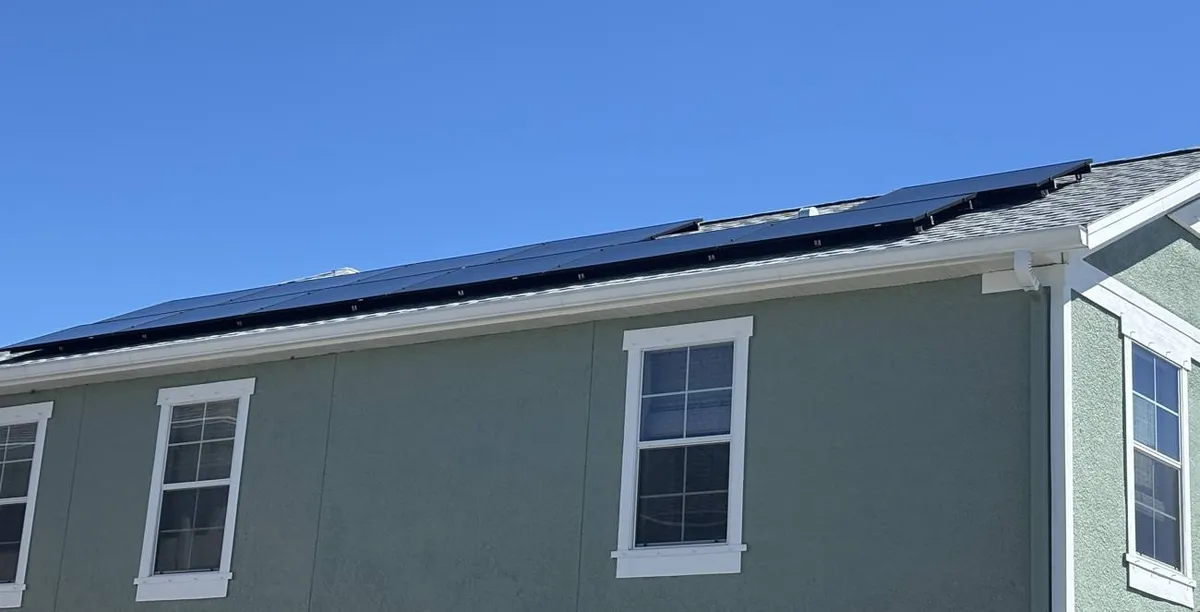
Is My Roof Good for Solar? The Tampa Bay Checklist
Not every Tampa Bay roof is a good solar roof, and a homeowner is better off hearing that at the survey than after a deposit. Fused Solar and Roofing checks six things before it designs anything: which way the roof faces, how steep it is, what shades it, how old it is, how many planes it has, and whether the electrical panel can take the connection. Most roofs in the region pass. Some pass with a smaller system than the homeowner imagined. A few should not have solar yet, or at all, and Fused says which. Fused Solar and Roofing is a licensed roofing (CCC1331058), electrical (EC13014750), and building contractor (CBC1252064), all three in-house.
1. Orientation
In Tampa Bay a south-facing roof plane produces the most over a year, west and east planes produce somewhat less, and a north-facing plane produces enough less that it rarely justifies the panels on it. A simple gable roof with one long south or west plane is the ideal case. A hip roof with four smaller planes usually has one or two that work. A roof whose only large plane faces north is the one that most often gets the honest no, or a small system on the east or west hips.
Fused shows production by plane on the proposal, so a homeowner can see what a west plane contributes against a south one and what a north plane would add if it were used, which is usually not enough.
🔑 Key Takeaway: South is best, west and east are fine, north is usually left off. The proposal should show the numbers by plane, not an average.
2. Pitch
Most Tampa Bay roofs are between 4/12 and 8/12, and all of that works. Panels on a shallow roof sit closer to flat and produce well across the day; panels on a steep roof catch more low winter sun. What pitch changes is the install: above about 6/12 the crew needs full fall protection and the job takes longer, which Fused prices as a steep-pitch adder shown on its own line. Flat and low-slope sections, common on 1960s and 1970s block homes and on additions, can take panels on tilted racking, though the membrane roofing on those sections is a separate conversation.
3. Shade
Shade is the variable the survey measures rather than guesses. Mature oaks in Temple Terrace, Seminole Heights, Safety Harbor, Valrico, and the older parts of Largo and Dunedin can take a third of a roof's daylight, and a tree that is clear of the array today has fifteen years to grow into it. A chimney, a dormer, or a neighbor's second story casts a predictable shadow that moves across the day. The survey takes a shade reading at the panel locations, and the design either avoids the shaded area, uses microinverters or optimizers so one shaded panel does not pull the rest down, or, if the shade is heavy, says the roof is not a good candidate.
💡 Pro Tip: Stand in your yard at 10 AM, 1 PM, and 4 PM on a clear day and look at where the shadows fall on the roof. If a tree covers most of the south or west plane at any of those times, ask the surveyor about it specifically.
4. Age
A roof with fewer than ten years left should be replaced before or with the solar, because a new array on an old roof means a detach and reinstall when the roof is replaced a few years later. Fused Solar and Roofing is a licensed roofing (CCC1331058), electrical (EC13014750), and building contractor (CBC1252064), all three in-house. So Fused inspects the roof at the survey and, when it is due, quotes the roof and the solar together as two lines on one proposal. A roof under ten years old goes solar as is. Ten to fifteen is a judgment the inspection settles, and salt air, oak canopy, and the number of storm seasons it has seen all move the answer.
If your roof ever needs replacing with solar on it, who is allowed to remove and reinstall the panels, and why, is covered in our guide at https://fusedsolarandroofing.com/post/who-can-remove-reinstall-solar-florida
5. Planes and penetrations
A roof with many small planes, dormers, valleys, skylights, and vents has less usable area than its square footage suggests, because the Florida Building Code requires access pathways and setbacks at ridges and edges, and panels cannot straddle a valley or sit over a vent. A simple ranch gable fits more panels than a complex two-story hip of the same footprint. The survey measures each plane and maps the obstructions, and the design works around them; when the roof is also being replaced, vents can sometimes be relocated to open a plane.
Multiple planes also drive the inverter choice toward panel-level electronics, which is a normal Tampa Bay design on hip roofs.
6. The electrical panel
A roof can be perfect and the house still not ready. The solar connects at the main service panel through a backfeed breaker, and a 100-amp panel, a Federal Pacific or Zinsco panel, or a panel already full may need replacing first. Fused does that under its own electrical license and prices it as its own line. It is the most common finding on 1960s and 1970s block homes in Pinellas and west Hillsborough, and a quote that has not looked at the panel on a home that age is incomplete.
⚠️ Warning: Any solar quote on a home over forty years old that does not name the electrical panel has not looked at it, and the panel change will appear after the deposit.
7. Roof types
Shingle is the simplest: K2 Systems hurricane-rated flashed mounts lag into the rafters and flash under the shingle course. Tile takes tile-specific mounts and a crew that knows how to lift and reset tile, and Fused does a lot of it in Palm Harbor, Carrollwood, Trinity, and Lakewood Ranch. Standing-seam metal takes clamp-on mounts with no penetrations at all. Exposed-fastener metal and flat membrane sections take their own hardware. Manufactured homes are evaluated case by case because the structure and the electrical service are different, and some are better served by a ground mount if the lot allows.
8. The honest answer
Most Tampa Bay roofs are good solar roofs, and the survey confirms it and sizes the system from the home's bills. Some are good for a smaller system than the homeowner hoped, usually because of orientation or shade, and the proposal shows exactly why. A few should not have solar yet: a roof that is due, a panel that needs replacing first, a tree that would have to come down. Fused says which case the roof is in at the survey, in writing, because the company that will be servicing the system and eventually replacing the roof under it has no interest in installing an array that should not be there.
🔑 Key Takeaway: Orientation, pitch, shade, age, planes, panel. Six checks, done at the survey, with the answer by roof plane on the proposal.
Want the six checks done on your roof? Request a free site survey and solar quote at https://fusedsolarandroofing.com/solar-installation
Frequently Asked Questions
Which direction should a roof face for solar in Florida?
South produces the most over a year; west and east produce somewhat less and are fine; north is usually left off. Fused shows production by roof plane on the proposal.
Can solar panels go on a north-facing roof?
They can, but a north plane in Tampa Bay rarely produces enough to justify the panels. Fused usually designs around it and shows what it would add so the homeowner can see why.
How much shade is too much for solar?
A roof that loses more than about a third of its daylight to trees or structures is usually not a good candidate. Lighter shade is handled by avoiding the area or using microinverters or optimizers. The survey measures it.
Is my roof too old for solar?
If it has fewer than ten years left, replace it before or with the solar. Under ten years old, it goes solar as is. Fused inspects the roof at the survey and quotes the roof and solar together when the roof is due.
Can solar go on a tile or metal roof?
Yes. Tile takes tile-specific mounts and a crew that resets tile; standing-seam metal takes clamp-on mounts with no penetrations. Fused installs on shingle, tile, and metal.
Will I need a new electrical panel for solar?
Homes with 100-amp, Federal Pacific, Zinsco, or full panels often do. Fused replaces panels under its electrical license and shows it as its own line on the proposal.
Fused Solar and Roofing has installed solar across Hillsborough, Pinellas, Pasco, and Manatee counties since 2007, with the roof and the solar handled by its own licensed in-house crews. Request a free solar quote at https://fusedsolarandroofing.com/solar-installation
Fused Solar and Roofing holds Florida roofing (CCC1331058), electrical (EC13014750), and building (CBC1252064) licenses, all three in-house, and has served Hillsborough, Pinellas, Pasco, and Manatee counties since 2007. Fused Solar and Roofing is an EnergySage Elite Installer with a 5.0/5 rating and 21+ verified reviews, independent verification, earned not purchased. Request a free site survey and solar quote at https://fusedsolarandroofing.com/solar-installation
