Hurricane-Ready Solar and Roof in Tampa — Battery Backup for Outages | Fused Solar & Roofing
Solar Installation, Roofing, Hurricane proof solar Tampa, Solar battery backup Tampa, Hurricane ready roof Tampa, Solar outage protection, Hurricane season preparation
Hurricane-Ready Solar and Roof in Tampa Bay: Q&A With Fused Solar and Roofing
Tampa Bay, Florida sits in the heart of “Hurricane Alley.” If you own a home here, your roof and solar system must be designed for hurricanes first, energy savings second. This Q&A from Fused Solar and Roofing—local contractors serving Tampa Bay since 2007—explains how to hurricane‑proof your roof, prepare your solar for storm season, and use battery backup to ride out long outages safely and comfortably.
Q1: Why does hurricane readiness matter so much for solar and roofing in Tampa Bay?
Tampa Bay is one of the most hurricane‑exposed regions in the United States. In just the last few years, we have seen the impacts of Hurricane Ian (2022) and the 2024 storms Helene and Milton. Warmer Gulf waters mean stronger, wetter storms, and more of them. For Tampa homeowners, that reality makes your roof and any solar system on it part of your hurricane safety plan, not just your energy plan.
A poorly installed solar array or an aging, under‑built roof can turn into a liability during 130–150+ mph winds. Panels can tear off, shingles can peel back, and water can enter through every weak point. At Fused Solar and Roofing, we design every project around Florida Building Code hurricane requirements and local wind maps so your home is ready before the next Ian, Helene, or Milton hits Tampa Bay.
Q2: What makes a roof truly “hurricane‑ready” in Tampa?
A hurricane‑ready roof in Tampa Bay is more than just “new.” It must be designed and built to meet or exceed the Florida Building Code (FBC), which is continually updated based on storm damage data. Here are the key elements we focus on at Fused Solar and Roofing when we design a hurricane‑ready roof in Tampa, Brandon, Riverview, St. Petersburg, and Clearwater.
1. Roofing material: metal or concrete tile, not basic asphalt shingles
In Tampa’s heat and UV exposure, standard asphalt shingles dry out, curl, and lose granules long before their “paper” lifespan. When 120–150+ mph winds arrive, those weakened shingles can rip off in sheets. That is why for hurricane‑ready roofs we recommend:
Standing seam metal roofing – Properly installed, it can withstand 150+ mph winds, sheds rain quickly, and pairs extremely well with solar racking.
Concrete or clay tile – Also capable of handling 150+ mph when installed to code, with the right underlayment and fastening patterns.
These options cost more up front than basic shingles, but in hurricane‑prone Tampa Bay they are far more cost‑effective over 40–100 years of service life and multiple storm seasons.
2. Proper fastening: more nails, better connections, hurricane straps
The Florida Building Code requires 6–8 fasteners per shingle in many wind zones, not the old 4‑nail pattern. For metal and tile, fastening schedules are engineered to specific wind speeds. We also install:
Hurricane straps and clips tying roof trusses to the wall structure to resist uplift.
Engineered roof‑to‑deck and deck‑to‑truss connections sized for 130–150+ mph winds depending on your exact Tampa Bay location and elevation.
These details are what keep the roof attached when the worst gusts hit, and they are verified during permitting and inspection under the Florida Building Code.
3. Structural reinforcement: sound decking and trusses rated for hurricane winds
A hurricane‑ready roof starts with a solid structure. Fused Solar and Roofing inspects and, when needed, reinforces:
Roof deck – We look for sound plywood or OSB, not rotted or delaminated boards. Any compromised decking is replaced before new roofing or solar is installed.
Roof trusses or rafters – They must meet at least a 130+ mph wind rating, and in some coastal or exposed zones we design and build for 150+ mph or more, in line with evolving FBC and ASCE 7 standards.
As Florida moves toward even higher wind‑speed design requirements—up to 160 mph for certain coastal structures under the upcoming 9th Edition of the Florida Building Code—these structural upgrades protect your investment for decades.
4. Roof penetration sealing: every opening is a potential leak path
Most hurricane water damage does not come from a missing roof—it comes from small, hidden leaks. That is why we treat every penetration as critical:
Vents, chimneys, skylights, and solar wire entries are sealed with marine‑grade sealants and properly sized flashing.
We follow manufacturer specifications and Florida Building Code details to ensure those seals perform under wind‑driven rain, not just afternoon showers.
5. Inspection before and after storms: catching micro‑damage early
At Fused Solar and Roofing, we recommend a pre‑season roof inspection and a post‑hurricane inspection for Tampa Bay homes. We look for:
Lifted shingle edges or loosened metal panels
Hairline cracks in tiles or flashing
Small stains or moisture in the attic that signal early leaks
After a hurricane, even “minor” damage can worsen and fail during the next storm. Proactive inspections turn small repairs into big savings and better safety.
Fused Solar and Roofing is proud to offer professional solar panel cleaning and maintenance audits. Schedule your free assessment at tampasolarmaintenance.com.
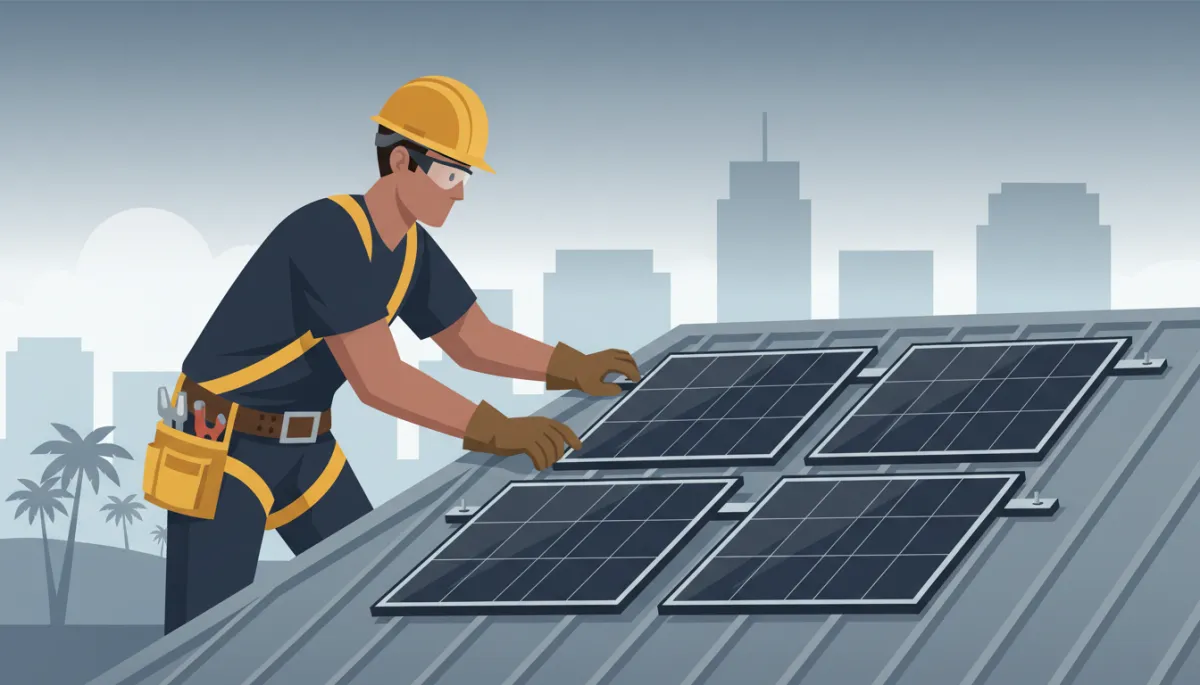
Detailed pre- and post-storm inspections catch small roof issues before they become major hurricane failures.
Q3: How should my solar system be designed for hurricane season in Tampa?
Solar panels themselves are typically rated for high winds and hail, but the way they are mounted, wired, and connected determines whether they stay put in a hurricane. Here is how Fused Solar and Roofing prepares solar systems in Tampa Bay for hurricane season.
1. Roof mounting: hurricane‑rated mechanical attachment, not adhesives
In Tampa’s wind zone, adhesive‑only solar mounts are not acceptable. Arrays must be mechanically attached with hurricane‑rated fasteners that can resist 130–150 mph wind uplift or more, depending on your exposure category. We use:
Stainless or coated lag bolts anchored into structural members, not just decking.
Roof attachments with integrated flashing to keep water out while holding panels down.
2. Racking system: engineered for Florida wind speeds and uplift loads
Our standard solar racking in Tampa Bay is engineered specifically for Florida wind maps. We size rails and spacing to handle uplift loads, not just gravity. That means:
More attachments in edge and corner zones of the roof, where wind pressures are highest.
Layouts that avoid creating “sails” or large overhangs that catch wind.
3. Electrical disconnects, conduit, and inverter placement
Hurricane‑ready solar is also about safe, resilient electrical design:
Accessible, weatherproof disconnects so Tampa Electric (TECO) or emergency crews can quickly de‑energize the system if there is roof or line damage.
Hurricane‑rated conduit and wiring with tight routing and sealed penetrations to prevent water intrusion and physical damage from debris.
Inverter placement under eaves, in garages, or on protected exterior walls, away from direct sun and flying debris. Modern Tesla inverters and Generac inverters are rated for harsh outdoor conditions when installed to manufacturer specs, which we follow as certified installers.
💡 Pro Tip: If your solar was installed by an out‑of‑state company or before recent FBC updates, schedule a hurricane‑readiness inspection with a local Tampa Bay contractor like Fused Solar and Roofing to verify wind ratings, attachment methods, and wiring protection.
Q4: Why is battery backup so important for hurricane outages in Tampa?
One of the biggest misconceptions we hear from Tampa homeowners is: “If I have solar, I’ll have power during an outage.” For almost all grid‑tied systems, that is not true without a battery. When the grid goes down, inverters are required by safety standards to shut off so they don’t back‑feed lines being repaired by utility crews. That means:
Solar‑only systems provide zero power during a grid outage.
In Tampa’s heat, that can quickly become dangerous—especially for families with medical needs, young children, or older adults. After major hurricanes, outages in parts of Tampa Bay can last 3–7 days or more. Battery backup turns your solar into a true hurricane resilience system.
Tesla Powerwall + solar: 24–48 hours of critical load protection
A single Tesla Powerwall provides about 13.5 kWh of usable storage. In a typical Tampa home, that can cover:
Refrigerator and freezer (to protect food and medications)
A few hours of air conditioning in the early morning or evening when heat is lower
Well pump or essential water equipment, if you are on a well
Lights, Wi‑Fi, phone and device charging, and critical medical devices
Managed carefully, that translates to 24–48 hours of backup for essential loads. Once the storm passes and the sun returns, your solar array can recharge the Powerwall daily, extending protection for as long as the outage lasts.
V2H (Vehicle‑to‑Home) + Powerwall: multi‑day whole‑home resilience
If you own a Tesla vehicle capable of Vehicle‑to‑Home (V2H), you can add your car’s battery to your home backup system. A typical Tesla battery holds 100+ kWh. Combined with a 13.5 kWh Powerwall, you have over 113.5 kWh of storage. That is enough to:
Run air conditioning much longer each day, not just a few hours.
Power more outlets, lighting, and appliances without constant load‑shedding.
With solar recharging both the Powerwall and the vehicle battery after the storm, many Tampa Bay homeowners can ride through 3–5+ days of outage comfortably—and often indefinitely unless the outage stretches into weeks of heavy cloud cover and system damage.
Generac PWRCell and other battery options
As a Generac certified installer, Fused Solar and Roofing also offers Generac PWRCell systems, typically sized from 10 kWh to 15 kWh. These provide similar backup capabilities to a Powerwall for critical loads and integrate well with solar for hurricane resilience. Other modern batteries are also available, but the key is proper sizing, integration, and hurricane‑ready installation—not just the brand name.
Q5: What does a real hurricane scenario look like with and without solar batteries?
Scenario 1: Solar only, no battery
A hurricane approaches Tampa Bay. Winds rise, rain intensifies, and TECO shuts down parts of the grid. Your power goes out. Even though you have solar on the roof, your inverter immediately shuts off for safety. You have:
No air conditioning as indoor temperatures climb toward 95°F+.
No power for your refrigerator or freezer—food and medication start warming quickly.
No well pump (if you are on a well) and limited device charging.
Your solar array is helping the grid in normal times, but it is not protecting your family during the most dangerous days of the year.
Scenario 2: Tesla Powerwall + solar
Day 1 (storm day, cloudy): The grid fails, but your Tesla Powerwall automatically disconnects your home from the grid and begins powering essential loads. You:
Run your AC for about 4 hours in the early morning before heat peaks.
Keep your refrigerator and freezer running continuously.
Charge phones, keep Wi‑Fi and lights on in key rooms.
Day 2–3 (post‑storm, sun returns): Your solar array now has clear sky access again. During the daytime, it powers your home and recharges the Powerwall. With careful load management, your backup can last indefinitely until the grid is restored.
Scenario 3: V2H + Powerwall + solar
With a Tesla vehicle providing V2H, your total starting energy is around 113.5 kWh (13.5 kWh Powerwall + 100+ kWh vehicle battery). In a Tampa Bay hurricane outage, that means:
You can run AC much of the day, not just a few hours, keeping indoor temperatures manageable for days.
You can keep more circuits energized—kitchen, office, some bedroom outlets, and critical equipment.
As the sun returns, solar recharges both the Powerwall and your vehicle battery. For many Tampa Bay homes, this setup makes even multi‑day outages survivable and far more comfortable.
Fused Solar and Roofing is proud to offer expert solar system maintenance and repair services. Book your solar panel inspection and cleaning at tampasolarmaintenance.com.
Q6: How much does hurricane‑ready solar with battery backup cost in Tampa?
Exact pricing depends on your roof size, electrical panel, and energy usage, but typical ranges for Tampa Bay homeowners are:
Solar only: Approximately $12,000–$18,000 for a typical residential system. This reduces your TECO bill but provides no outage protection.
Tesla Powerwall + solar: Approximately $25,000–$32,000 for solar, inverter, Powerwall, and gateway. This gives you 24–48 hours of critical load backup, extendable with sun and optional V2H.
Generac PWRCell + solar: Approximately $22,000–$28,000 for solar plus a 10–15 kWh Generac battery, with similar outage protection for essentials.
That means the net additional cost for hurricane‑grade outage protection over solar‑only is roughly $10,000–$15,000. Considering that Tampa Bay hurricanes are inevitable and outages often last 3–7 days, many homeowners view a battery system as the most cost‑effective “insurance policy” they can buy—especially with the 30% federal solar tax credit still available for qualifying solar + storage systems.
Q7: What is the advantage of installing roof, solar, and battery together as a hurricane bundle?
One of the most common and costly mistakes we see in Tampa Bay is homeowners installing solar on an aging roof. Five or ten years later, when the roof has to be replaced, the solar array must be removed and reinstalled—doubling labor and exposing your home to extra penetrations and risk. A roof + solar + battery hurricane bundle solves that problem and adds strength:
Single structural assessment: Fused Solar and Roofing evaluates your roof structure once to ensure it can support both a hurricane‑rated roof and solar array, including wind uplift and dead loads.
Coordinated design: Conduit paths, junction boxes, and penetrations are planned with the new roof system, so flashing and waterproofing are integrated from day one.
Single hurricane‑rated installation: Roofing, solar, and electrical are all installed to meet or exceed Florida Building Code requirements at the same time, with one accountable contractor.
A hurricane‑hardened metal or tile roof can last 40–100 years. Solar panels typically last 25+ years. Modern batteries last 10–15 years, with replacement often covered under manufacturer warranties. Installing them together creates a long‑term resilience package that will protect your Tampa Bay home through many hurricane seasons with minimal disruption.
Q8: Why choose Fused Solar and Roofing for hurricane‑ready systems in Tampa Bay?
Fused Solar and Roofing is a local Tampa Bay contractor, in business since 2007, focused specifically on hurricane‑ready solar and roofing solutions. Our credentials include:
Florida Roofing License CCC1331058
Florida Electrical License EC13014750
Florida Building Contractor License CBC1252064
GAF Master certified roofer – a mark of roofing quality and training.
Tesla certified installer – for Powerwall, inverters, and compatible V2H designs.
Generac certified installer – for PWRCell and generator integrations.
We inspect every roof and solar installation against the current Florida Building Code, and we offer post‑hurricane inspections throughout Tampa, Brandon, Riverview, St. Petersburg, Clearwater, and across Hillsborough and Pinellas Counties. Our goal is simple: keep your roof on, your home dry, and your essential power running when Tampa Bay faces its next major storm.
Fused Solar and Roofing is proud to offer certified solar maintenance and support. Start your free maintenance consultation at tampasolarmaintenance.com.
Key Takeaways: Hurricane‑Ready Solar and Roofing in Tampa Bay
Tampa Bay sits in “Hurricane Alley.” Recent storms like Ian (2022), Helene (2024), and Milton (2024) prove stronger hurricanes are our new normal.
A hurricane‑ready roof in Tampa means metal or concrete tile, upgraded fastening, solid decking and trusses, sealed penetrations, and regular inspections before and after storms.
Solar systems must be engineered for 130–150+ mph winds with mechanical attachments, Florida‑rated racking, protected wiring, and properly placed inverters and disconnects.
Solar‑only systems shut off during grid outages. To keep power during hurricanes, you need battery backup such as Tesla Powerwall or Generac PWRCell, and ideally V2H if you own a Tesla vehicle.
Typical costs in Tampa Bay: $12k–$18k for solar only, $22k–$32k for solar with battery—about $10k–$15k net to gain 24–48+ hours of critical load support and long‑term resilience.
Bundling a new hurricane‑rated roof, solar, and battery avoids re‑roofing under solar later, simplifies permitting, and delivers a system designed from the start to survive multiple hurricane seasons.
Fused Solar and Roofing is a local Tampa Bay expert with roofing, electrical, and building contractor licenses, plus GAF Master, Tesla, and Generac certifications—focused on hurricane‑ready solar and roofing since 2007.
Is your home hurricane‑ready? Call or text Fused Solar and Roofing at (813) 686‑9896 for a free hurricane‑readiness assessment. We will evaluate your roof for hurricane code compliance, assess your outage vulnerability, and show you how solar + battery backup protects your family and home when the grid fails. We serve Tampa, Brandon, Riverview, St. Petersburg, Clearwater, and all of Hillsborough and Pinellas Counties. Florida Roofing License CCC1331058 — Electrical License EC13014750 — Building Contractor License CBC1252064. Established 2007.