Solar Detach and Reinstall in Bradenton: Manatee Guide
Over the last several storm seasons, Manatee County has taken direct hits and glancing blows from hurricanes and tropical systems, leaving many local homes in need of roof repair or replacement. Many Bradenton homeowners installed rooftop solar during the 2010s, and now those same homes are due for new roofs. That combination raises a specific question: how do you replace a roof without sacrificing the performance or warranty of your solar system?
This guide walks Bradenton and Manatee County homeowners through the solar detach and reinstall process step by step. We will cover why local roofs and arrays wear out faster, how permitting works between the county and nearby cities, what a proper detach and reinstall looks like on a Bradenton roof replacement with solar, what we typically find once panels come off, and how wind code and insurance factor into your decisions. You will also see what a proposal should itemize, realistic timelines, and answers to common Bradenton-specific questions so you can plan your project with confidence and keep your solar investment working for the long term.
Why Bradenton Roofs and Solar Arrays Take a Beating
Bradenton sits in a tough environment for both roofing and solar hardware. From west Bradenton out to Anna Maria Island and Holmes Beach, homes live in constant contact with Gulf moisture and salt-laden air. That salt exposure accelerates corrosion on metal roof components, solar racking, fasteners, and even some types of flashing. When you add frequent onshore winds and driving rain, the west side of Manatee County becomes one of the harsher settings for rooftop equipment in Florida outside of direct beachfront high-rise zones.
Inland communities like Lakewood Ranch, Parrish, and Ellenton face a slightly different challenge. They still see tropical storm and hurricane conditions, but the day-to-day wear is more about intense sun and heat. Summer temperatures on a dark shingle roof can exceed the air temperature by a wide margin, and solar modules add another layer that traps heat near the roof surface. Over time, that thermal cycling dries out sealants, stresses pipe boots, and can make wiring insulation brittle if it was not protected correctly. Homeowners in these neighborhoods often notice cracking sealant lines and premature aging at penetrations even when the main roof surface still looks acceptable from the ground.
Across all of Bradenton and greater Manatee County, roofs and solar arrays absorb sustained UV exposure nearly year-round. Afternoon storm cycles bring sudden wind shifts, uplift forces, and sheets of rain that test every fastener and flashing detail. Recent storm seasons have accelerated the timeline for many roof replacements across the county, especially where older roofs were already carrying a full solar array. As a result, more homeowners now need a solar detach and reinstall Bradenton plan that respects both the Florida Building Code and the realities of Gulf weather.
Permitting in Manatee County for Roof and Solar Work
One of the first points of confusion we see with Bradenton roof replacement with solar is permitting. Most Bradenton addresses, especially in unincorporated areas and many Lakewood Ranch and Parrish neighborhoods, permit through Manatee County’s Building and Development Services. However, homes inside the City of Bradenton limits, as well as those in Palmetto, Holmes Beach, or Anna Maria, may permit through their respective municipal building departments instead. The line between city and county jurisdiction is not always obvious to the homeowner, especially in older neighborhoods where mailing addresses and jurisdictional boundaries do not match cleanly.
A qualified Manatee County solar contractor should verify jurisdiction before providing a firm quote. That verification typically includes checking the property’s parcel information, confirming whether the site falls under county or city review, and determining whether any homeowner association rules apply. This step matters because each jurisdiction can have its own application forms, inspection procedures, and documentation requirements for both roofing and solar work. It also ensures that the contractor understands which wind design criteria and local amendments to the Florida Building Code apply to your specific address, especially important along the coast and barrier islands where design pressures are higher.
For a Bradenton solar roofing project that involves a full roof replacement and an existing array, you are typically looking at two distinct permits: one for the roof and one for the solar detach and reinstall. The roofing permit covers removal of the existing covering, any deck repairs, underlayment, flashing, and new roof installation. The solar permit covers electrical disconnects, removal of modules and racking, any structural or attachment changes, and the reinstallation and re-commissioning of the system. Each permit will have its own required inspections, and both must pass final inspection before everything is considered complete. A contractor working in Manatee County regularly will coordinate these permits so the work flows smoothly and your home is not left without solar or weather protection any longer than necessary.
Planning a brand-new system instead of a reinstall? Our guide to solar installation in Bradenton is at https://fusedsolarandroofing.com/post/solar-installation-bradenton-fl
Who is allowed to do each part of a detach and reinstall, and why, is covered in our guide at https://fusedsolarandroofing.com/post/who-can-remove-reinstall-solar-florida
What the Detach & Reinstall Process Looks Like on a Bradenton Home
When you remove solar panels for a new roof in Bradenton, the process should follow a clear, structured sequence. It starts with an audit and production baseline. Your contractor should document the current system size, layout, inverter configuration, and recent production history. Photos of each roof plane, junction box, and conduit run are taken so the crew can reinstall equipment to equal or better standards. This is also the time to note any shading or performance issues that might be improved while the array is off the roof, such as adjusting tilt or wire management where allowed by design and permitting.
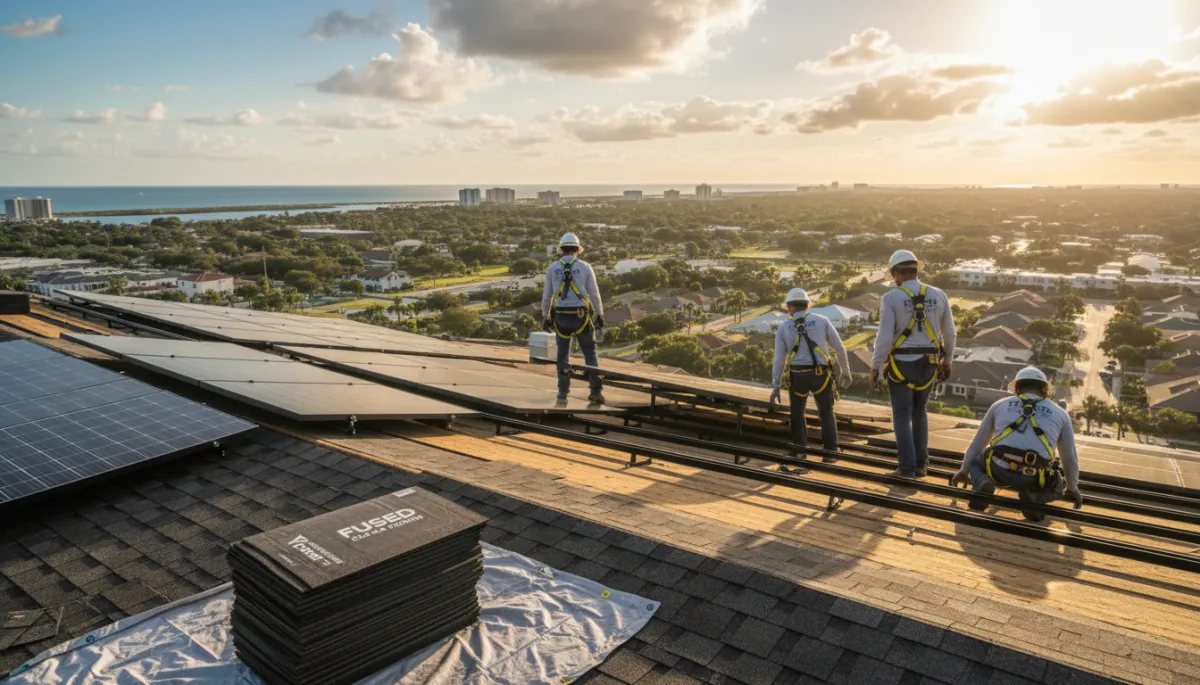
Once the design is confirmed, permits are applied for and approved. On the scheduled start date, the solar crew performs a safe electrical shutdown following manufacturer and code requirements. This includes powering down inverters, opening disconnects, and locking out circuits so no power flows from the array while work is underway. Modules are then removed systematically, usually starting from the top row down, and staged in a protected area on site. In Bradenton and nearby communities like Palmetto and Ellenton, that often means using padded racks in a garage or covered carport to keep panels out of direct sun, rain, and accidental damage while the roof is exposed.
With the array off, the roofing crew removes the old covering, evaluates the deck, and completes any necessary repairs before installing new underlayment, flashing, and the chosen roof material. After the roof passes its in-progress inspections, the solar team returns to reinstall racking using approved attachment methods that meet current wind design requirements for Bradenton. Modules are remounted, wiring is reconnected with fresh terminations where needed, and labeling is updated to current code. The system is then re-commissioned, including testing string or module output, confirming inverter settings, and verifying that rapid shutdown and safety features operate correctly. Finally, inspections for both the roof and the solar work are completed, and the system is reactivated in coordination with FPL so your home goes back to producing power safely and efficiently.
Ready to keep your solar system in peak condition? Schedule a free solar panel cleaning and maintenance audit at https://tampasolarmaintenance.com
What We Typically Find Under Bradenton Solar Arrays
Once panels come off, the real condition of a Bradenton roof becomes visible. On west Bradenton homes and the barrier islands of Anna Maria Island and Holmes Beach, salt exposure is the dominant factor. We frequently see corroded fasteners and rails, especially on older systems that used standard galvanized hardware instead of higher-grade stainless steel. Flashing around mounts can show salt-degraded surfaces, with pitting and discoloration that signal long-term exposure. In some cases, the metal has thinned enough that replacement is the only safe option. Junction boxes and conduit straps on these homes may also show rust and deterioration that was not obvious from ground level.
In inland areas like Lakewood Ranch and Parrish, the pattern shifts toward thermal wear. Here, we often find sealants that have pulled away from penetrations or cracked along their edges after years of expansion and contraction. Pipe boots can be dried out or split, even when they looked intact before the array came off. Wiring that was routed too tightly across hot surfaces may have brittle insulation, particularly near connectors and combiner boxes. For a Manatee County solar contractor who works these neighborhoods regularly, these findings are no surprise; they are a direct result of the intense heat load and long sunny seasons that make solar so productive in Bradenton in the first place.
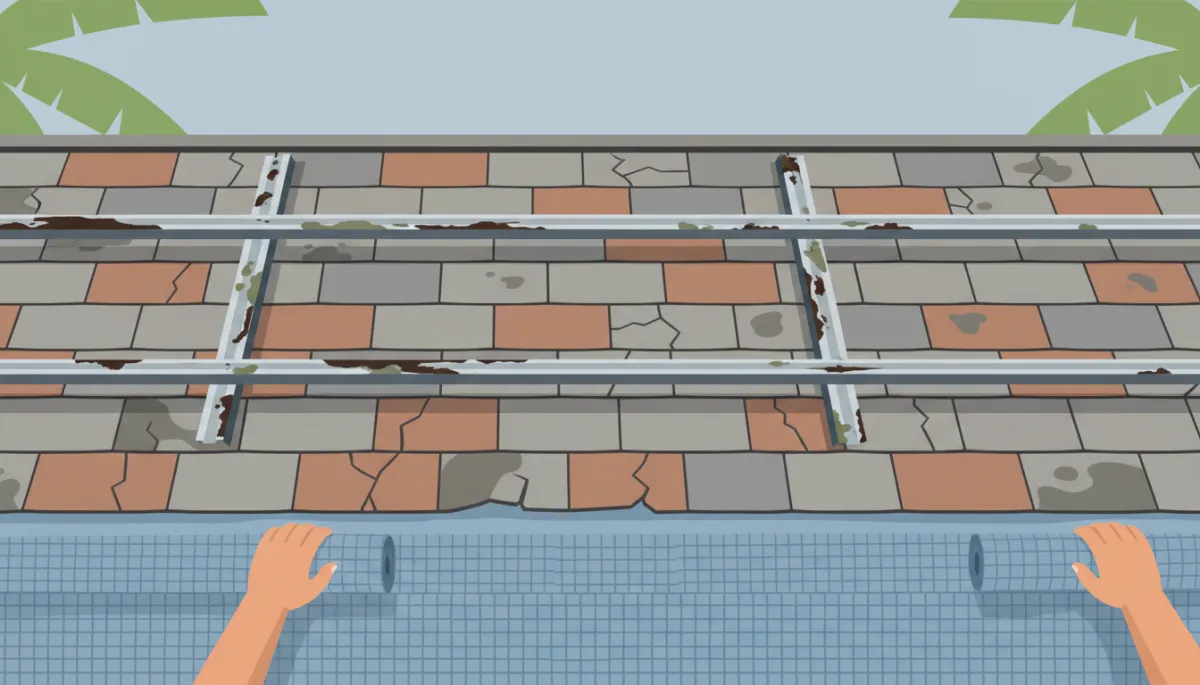
Hidden corrosion and weathering often appear only after solar arrays are removed.
Across both coastal and inland parts of Bradenton, storm-related uplift damage is another recurring theme. At roof edges and ridges, we sometimes see fasteners that have backed out slightly, small sections of underlayment that lifted and then settled back, or subtle deck moisture where wind-driven rain found its way under the covering. These conditions may not have caused active leaks yet, but they shorten the life of the roof if left unaddressed. Because so much of this is hidden beneath the array, any serious Bradenton solar roofing proposal should include contingency language. That language explains that if significant corrosion, damaged wiring, or compromised decking is discovered once panels are removed, there may be additional work required. Having that expectation set in writing protects both the homeowner and the contractor and ensures that necessary repairs are not skipped just to stay within an unrealistically rigid scope.
Storm Damage, Wind Code, and Insurance in Manatee County
Manatee County follows the Florida Building Code, which sets wind design requirements based on location and exposure. Coastal and barrier island zones, including Anna Maria Island and Holmes Beach, are assigned higher design wind speeds than many inland Bradenton neighborhoods. That translates into stricter attachment requirements for both roofing and solar hardware. When you undertake a solar detach and reinstall in Bradenton, the reinstalled system must meet the current code, not the standard that was in place when the original array went up. This often means upgraded fasteners, revised rail spacing, or updated attachment details designed to resist modern wind loads common along the Gulf coast.
Properly permitted and inspected work plays a direct role in insurance and wind mitigation. Documentation from your roof replacement and solar reinstallation can support wind mitigation credits on your policy and provide clear evidence of code-compliant construction if you ever need to file a storm claim. On the other hand, unpermitted solar work can cause serious problems. If an array was installed or modified without permits, insurers may question whether damage was due to improper installation rather than the storm itself. At resale, unpermitted solar is a common reason for delayed closings or required corrective work, especially in a county that has seen significant recent storm claim activity. For Bradenton homeowners, making sure your Bradenton solar roofing project is fully documented is not just a code issue; it is a key part of protecting your home’s value and insurability.
Timeline and What a Proposal Should Itemize
For most Bradenton projects where you remove solar panels for a new roof, homeowners should think in terms of days and weeks rather than hours. There is the upfront period for design, permitting, and scheduling. Once permits are in hand, the physical work can often be staged so that solar removal, roof replacement, and solar reinstallation happen in a tight sequence, minimizing the time your roof is exposed and your system is offline. In normal conditions, the on-site work for a typical single-family home is commonly completed within a short, defined window. After major storm events, however, permitting and inspection calendars can become congested, and material availability or inspection slots may extend the overall timeline. A contractor who works in Manatee County regularly will factor local inspection practices into the schedule and communicate realistic expectations up front.
A professional proposal for a Bradenton solar roofing project should clearly break out the major components as separate line items rather than bundling everything into a single figure. For example, you should see distinct entries for roof tear-off and disposal, any deck repair allowance, underlayment and flashing, the new roof system, solar detachment, racking and hardware evaluation or upgrades, reinstallation of modules, electrical reconnection and testing, and permit and inspection handling. Pricing will vary based on roof size, pitch, material, array size, age of the system, and the condition of existing hardware. The proposal should provide a written figure tailored to your specific home and system, with no tax credits or incentives applied, so you have a clear view of the actual contract amount. That level of detail makes it easier to compare contractors and ensures you know exactly what is included when planning a solar detach and reinstall Bradenton project.
Bradenton and Manatee County Detach & Reinstall FAQ
1. Do I need separate permits for my roof and solar in Bradenton?
In most cases, yes. The roof replacement is one permitted scope, and the solar detach and reinstall is another. Your contractor should confirm whether your address falls under Manatee County, the City of Bradenton, or another nearby municipality like Palmetto, Holmes Beach, or Anna Maria, then obtain the appropriate permits and schedule the required inspections for each.
2. Will my solar production change after a detach and reinstall?
When the array is reinstalled correctly in the same configuration, production should be similar to your pre-project baseline, adjusted for normal year-to-year weather differences. Some Bradenton homes see modest improvements if wiring is cleaned up, shade issues are addressed, or older components are upgraded during the process. A production baseline taken before work begins provides a solid comparison point afterward.
3. How long will my solar system be offline during a Bradenton roof replacement with solar?
The offline period depends on scheduling, weather, and inspections, but the goal is to keep it as short as practical. A well-coordinated project in Bradenton typically has solar shut down only during the active removal, roofing, and reinstallation window, rather than for the entire permitting process. Your contractor should give you a realistic range based on your roof size, array complexity, and the current workload of local inspectors.
4. Can my existing solar hardware be reused, or will everything be replaced?
Many Bradenton projects reuse modules and inverters if they are in good condition and still within their expected service life. However, racking, fasteners, and some electrical components may need replacement, especially on west Bradenton and island homes where salt corrosion is common. Your proposal should explain which components are planned for reuse and which are recommended for upgrade based on age, condition, and current code requirements.
5. What special considerations apply to homes in Lakewood Ranch and Parrish?
Inland communities like Lakewood Ranch and Parrish experience strong sun and heat, so thermal wear on sealants, boots, and wiring is a primary concern. When you remove solar panels for a new roof in these areas, your contractor should pay close attention to dried or cracked sealants and any signs of brittle insulation. Ensuring that all penetrations are properly flashed and sealed to current standards is critical for long-term performance in these high-heat neighborhoods.
6. How does a detach and reinstall affect my warranties?
Roof and solar warranties generally require that work be performed by qualified, licensed professionals and completed under proper permits. A code-compliant Bradenton solar roofing project that documents the detach and reinstall, passes inspections, and follows manufacturer guidelines helps keep both roof and equipment warranties intact. Unpermitted or unlicensed work, by contrast, can jeopardize coverage and create issues during insurance claims or future resale.
7. Is there a difference in approach for homes closer to the Gulf versus inland Bradenton?
Yes. Coastal and island homes in west Bradenton, Anna Maria Island, and Holmes Beach face higher wind design requirements and more aggressive salt exposure, so attachment methods, hardware selection, and corrosion resistance are emphasized. Inland Bradenton, Palmetto, Ellenton, and Parrish homes focus more on thermal durability and managing intense sun and heat. A Manatee County solar contractor familiar with both conditions will tailor the detach and reinstall plan to your specific location and exposure.
Do I need Fused if I already have a roofer for my new roof?
Yes. Fused's electrical license (EC13014750) means we can legally handle the solar disconnect, removal, and reinstall on our own—you do not need us to also do your roofing to get expert D&R service. We coordinate directly with your roofer's timeline, disconnect and stage your system before they start, and reinstall once the new roof is ready. Our 25-year penetration warranty applies to the D&R work itself, independent of who installed your roof. We also service the array afterward regardless of who did the roofing or the original solar installation.
CUSTOMER SAFETY ALERT — All detach and reinstall work MUST be fully permitted and inspected by county authorities. Unlicensed installers CANNOT obtain permits. Demand permits, verify licenses at myfloridalicense.com, require inspections, and get certificates in writing. Unpermitted solar voids panel warranties, voids roof warranties, and leaves the homeowner liable for $15,000–$25,000+ in corrective work at resale.
Maximize your investment with expert solar maintenance. Book your solar panel cleaning and inspection service at https://tampasolarmaintenance.com
Conclusion: Protecting Your Roof and Solar Investment in Bradenton
Bradenton homeowners who invested in solar early are now facing the natural next step in the life cycle of their homes: replacing aging roofs while preserving and protecting their solar systems. Between Gulf moisture on the west side, intense inland heat, and recent hurricane seasons that have stressed local housing, Manatee County roofs and arrays work harder than most. A well-planned solar detach and reinstall in Bradenton respects those realities, follows local permitting rules, and brings your roof and solar attachments up to current wind and safety standards. By working with a contractor who understands Bradenton’s housing stock, coastal and inland wear patterns, and local inspection practices, you can navigate roof replacement with confidence, keep your solar production strong, and maintain the value and resilience of your home for the long term.
Is your solar system performing at its best? Start your free maintenance consultation at https://tampasolarmaintenance.com
Fused Solar and Roofing is a licensed roofing (CCC1331058), electrical (EC13014750), and building contractor (CBC1252064), all three in-house, serving Hillsborough, Pinellas, Pasco, and Manatee counties since 2007. Fused Solar and Roofing is an EnergySage Elite Installer with a 5.0/5 rating and 21+ verified reviews, independent verification, earned not purchased.
Replacing the roof and adding solar at the same time in Bradenton is covered at https://fusedsolarandroofing.com/post/new-roof-and-solar-bradenton-fl, and solar repair and service in Bradenton at https://fusedsolarandroofing.com/post/solar-repair-service-bradenton-fl.
Need the roof itself replaced, with or without solar on it? Our guide to roof replacement in Bradenton, the GAF system Fused installs, the warranty, and the local permit, is at https://fusedsolarandroofing.com/post/roof-replacement-bradenton-fl.
All of Fused's Bradenton services on one page, with prices, permits, and the utility: Solar and Roofing in Bradenton. The county-wide version of this guide is the Manatee County overview.
Replacing a roof that has solar on it? Request a detach and reinstall quote at https://fusedsolarandroofing.com/solar-panel-removal