Birds Under Your Solar Panels in Tampa? What It Costs You
In Tampa Bay, calls about birds and other wildlife nesting under solar panels are common, and they are stressful for homeowners who did not expect their array to become a shelter. Fused Solar and Roofing is a licensed roofing (CCC1331058), electrical (EC13014750), and building contractor (CBC1252064) — all three in-house. This combination lets the team treat wildlife under an array as the roof and electrical issue it really is, while coordinating with licensed wildlife professionals when live animals are present.
1. Why the space under an array is attractive to wildlife
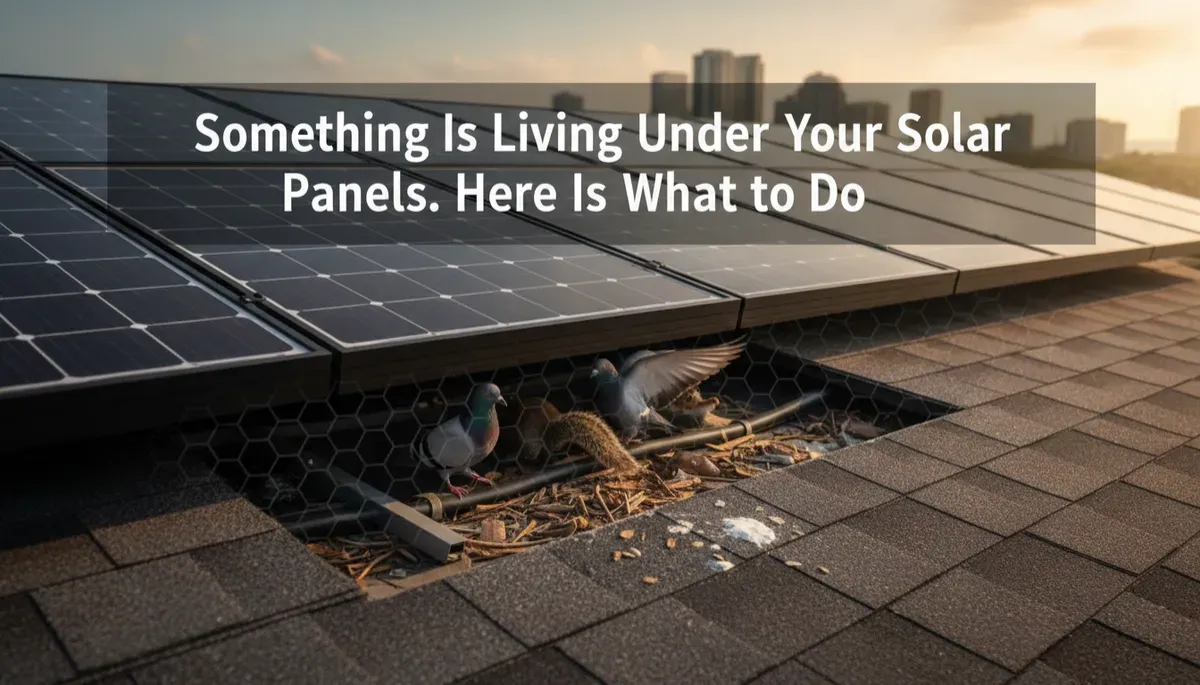
The gap between your solar panels and your roof looks small from the ground, but for pigeons, small birds, and other wildlife it can feel like a ready-made shelter. The racking holds panels a few inches above the roof surface, creating a shaded, protected channel that stays cooler than the exposed shingles in the afternoon and offers cover from wind and predators. In neighborhoods across Hillsborough, Pinellas, Pasco, and Manatee counties, that quiet, elevated space is more appealing than a tree branch or an open ledge because it feels enclosed and stable. Once one animal discovers it, nesting material and droppings accumulate quickly, and the space under the array can become a long-term home if it is not properly closed off.
2. How homeowners usually find out
Most Tampa Bay homeowners do not realize anything is happening under their panels until the animals have been there for a while. The first sign is often sound, not a change in solar production. Early in the morning or at dusk, you might hear cooing, scratching, or scurrying above ceilings that line up with the roof planes where the array sits. From the ground, you may notice birds regularly landing near the panel edges, nesting material in gutters, or droppings on the patio or driveway below the array. Only later, sometimes months after the animals move in, do production alerts or a monitoring app show that one part of the system is underperforming, which can be a sign of wiring damage or heavily soiled modules in that area.
💡 Pro Tip: Most homeowners hear the problem before they see it. Scratching or cooing overhead in the early morning is usually the first sign something has moved in.
3. What the damage actually is
When wildlife settles in under an array, the real concern is not just noise or mess; it is the damage they can do to the system and roof. First, animals can chew or disturb wiring and conduit. The small conductors that connect panels together and the flexible conduit that routes cables are accessible in that gap, and damage there is an electrical hazard that can cause faults, intermittent production issues, or in extreme cases arcing. Second, nesting material can block airflow beneath the panels and pile up against the roof surface. Solar arrays are designed with space for ventilation, and when that space is filled with straw, leaves, and debris, it traps heat and moisture against shingles or tile. Over time, that constant contact can accelerate wear on the roof surface. Third, animals can disturb roof penetrations, flashing, and mounting hardware as they move around and build nests. If those critical seals are shifted or stressed, water can find its way in, leading to leaks that may not show up inside the home until the next heavy storm season.
This combination of electrical risk, trapped moisture, and potential roof leaks is why wildlife under solar panels is more than a nuisance. It is a practical problem that calls for careful inspection and repair by professionals who understand both the solar equipment and the roof structure beneath it.
Hearing something under your panels? Fused Solar and Roofing handles wildlife exclusion and critter guard installation across Hillsborough, Pinellas, Pasco, and Manatee counties. Request service at https://fusedsolarandroofing.com/solar-repair
4. Why droppings matter more than people expect
It is easy to assume droppings are just a cosmetic issue, but under and around a solar array they have real consequences. On the roof surface, droppings combined with nesting material hold moisture and organic material against shingles or tile, which can stain and gradually wear the roofing. On the panels themselves, concentrated droppings on the glass block sunlight and create shaded spots. Normal soiling from dust and pollen typically costs a few percent of annual production across the system, but concentrated droppings on specific panels can cost more on those affected modules, especially if they cover a large portion of a cell string. In addition, heavy buildup under the array makes cleaning and inspection more difficult, because technicians must work carefully around contaminated material. For homeowners, that means the longer wildlife is allowed to nest under the system, the more extensive the cleanup and evaluation will need to be when the problem is finally addressed.
📌 Key Takeaway: Wildlife under an array is a roofing and electrical problem, not just a pest problem. Wiring, roof penetrations, and mounting hardware are all within reach of what is nesting up there.
5. Why this is not a pest control job
When you realize something is living under your panels, it is natural to think of calling a pest control company first. In Tampa Bay, licensed wildlife and pest professionals play an important role: they are the ones authorized and trained to handle live animals, determine what species are present, and decide what methods are appropriate. Some Florida wildlife is protected, and a wildlife professional should be the one to determine what applies in each situation. However, once the animals are gone or safely excluded, the work that remains under the array is not typical pest control. Removing droppings and nesting material from beneath panels, inspecting and repairing chewed wiring and conduit, checking roof penetrations and flashing, and installing critter guard around the array are all roofing and electrical tasks that require the right trade licenses and training. A pest control company generally cannot repair solar wiring or reseal a roof penetration, and a solar company without roofing and electrical licensing generally cannot address the roof side of the problem. Fused Solar and Roofing is a licensed roofing (CCC1331058), electrical (EC13014750), and building contractor (CBC1252064) — all three in-house, and the team coordinates with licensed wildlife professionals when live removal or species-specific decisions are needed, so each part of the job is handled by the appropriate expert.
⚠️ Warning: Never spray, trap, or attempt to flush wildlife out from under a solar array yourself. Working at height around live electrical equipment and disturbed nesting material is not a homeowner task.
6. What critter guard is and how it goes on
Critter guard is a mesh or barrier installed around the perimeter of a solar array to close the gap between the panel edges and the roof, making it much harder for animals to get underneath. In practical terms, it looks like a low, continuous fence that follows the outline of the array. During installation, technicians attach the guard to the panel frames using clips or similar fasteners that are chosen specifically so they do not create new roof penetrations or interfere with the racking hardware. That detail matters because adding unnecessary holes in the roof would defeat the purpose of protecting it. Properly installed critter guard also preserves airflow beneath the array and keeps panels removable for future service. The mesh is sized so air can still move freely under the modules, which helps with cooling, while being tight enough that birds and other wildlife cannot easily squeeze through. When Fused Solar and Roofing installs critter guard, the crew also considers access points for future maintenance so that if a panel needs to be removed later, the guard can be opened and re-secured without damaging the roof or equipment.
📌 Key Takeaway: Fused Solar and Roofing installs critter guard and performs exclusion work under electrical license EC13014750 and roofing license CCC1331058, on systems of all brands.
7. What happens during a wildlife removal and exclusion visit
For Tampa Bay homeowners, a typical wildlife-related service visit has several coordinated steps. First, if live animals are present or suspected, Fused Solar and Roofing works with a licensed wildlife professional, who handles assessing what is living under the array and what needs to happen to remove or exclude it in a way that complies with state regulations. Once the wildlife side is addressed, the Fused Solar and Roofing crew focuses on the solar and roofing work: safely powering down the system as needed, removing accessible nesting material and droppings from under and around the panels, and inspecting all visible wiring, junction boxes, and conduit for chewing or damage. They also check mounting points, roof penetrations, and flashing for signs of movement or wear, looking for any locations where water might enter in a heavy Florida storm. Damaged components are repaired or replaced as appropriate, and only after the array and roof are in good condition does the crew install critter guard around the perimeter. Before leaving, technicians test the system, confirm production is back to expected levels for the conditions, and review what was found so the homeowner understands both the cause and the corrective steps taken. Fused Solar and Roofing is an EnergySage Elite Installer with a 5.0/5 rating and 21+ verified reviews — independent verification, earned not purchased.
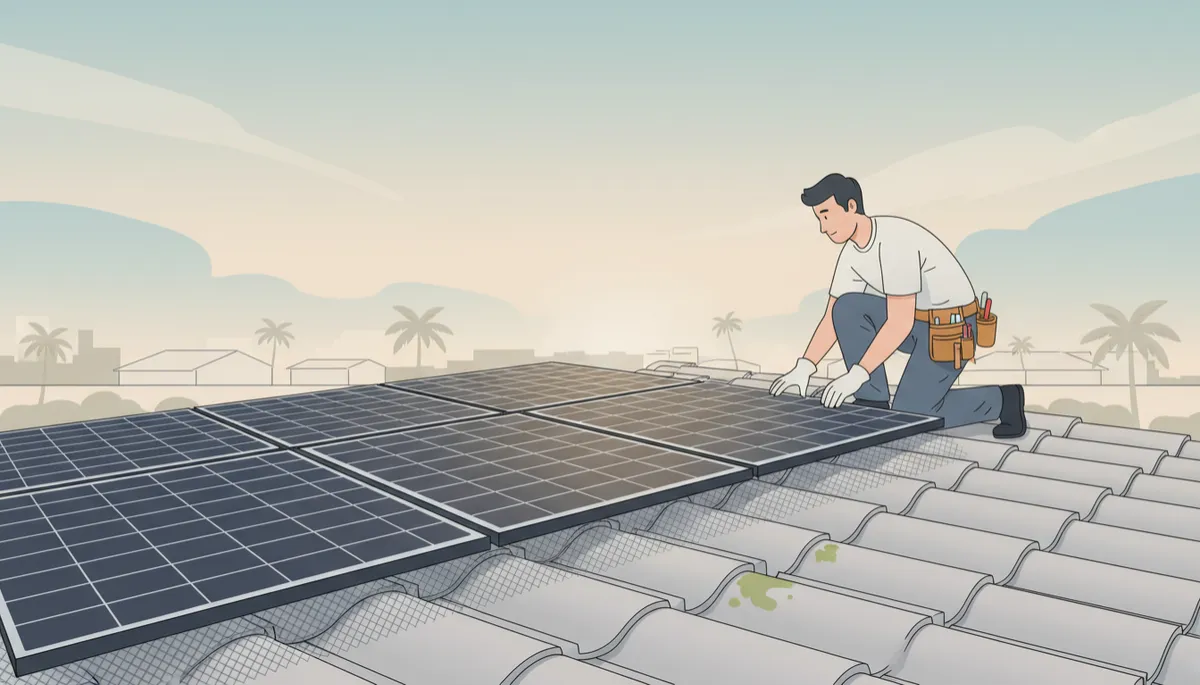
💡 Pro Tip: Critter guard installed before something moves in is a single job. Installed afterward, it comes after cleanup, wiring inspection, and any repairs the nesting caused.
8. Keeping it from happening again
Once your array has been cleaned, repaired, and guarded, the goal is to keep it that way with simple, low-effort habits. From the ground, you can occasionally look along the roofline for any new nesting material near the array edges and keep an ear out for unusual sounds at dawn or dusk. Checking your monitoring app regularly helps you notice if one section of the system starts underperforming compared with the rest, which can be an early sign of a new issue. For homeowners in Hillsborough, Pinellas, Pasco, and Manatee counties, scheduling periodic professional inspections is also practical, especially before and after major storm seasons when roofs and arrays see the most stress. An existing array can have critter guard added at any time, even years after installation, and the most natural moment to do it is during another visit that already has a crew on the roof, such as a maintenance appointment, a repair, or a detach and reinstall for a new roof. Taking care of exclusion while other roof or solar work is underway minimizes disruption and helps ensure your system stays clear, quiet, and productive over the long term.
Tampa Bay wildlife and solar panels: Frequently asked questions
1. What animals commonly nest under solar panels in Florida? In the Tampa Bay area, homeowners most often see birds such as pigeons using the space under solar panels, but other small wildlife can also take advantage of the shade and shelter the array provides. The specific species vary by neighborhood and nearby habitat, and some Florida wildlife is protected, which is why Fused Solar and Roofing coordinates with licensed wildlife professionals when live animals are present. Those specialists identify what is nesting under the array and determine how it should be handled, while Fused Solar and Roofing focuses on cleaning, repair, and exclusion work on the solar and roofing side after the wildlife portion is addressed.
2. Can wildlife under my panels damage the solar system? Yes. Wildlife under your panels in Hillsborough, Pinellas, Pasco, or Manatee County can chew or disturb wiring and conduit, which creates electrical faults and intermittent production issues. They can also pack nesting material tightly under the modules, blocking airflow and trapping moisture against the roof surface, and they may disturb roof penetrations and flashing as they move around. All three types of damage—electrical, ventilation, and roofing—can shorten the life of your system or roof if they are not found and corrected by a qualified solar and roofing contractor familiar with this kind of repair.
3. Can a pest control company handle everything under the array? A pest control or wildlife company in Tampa Bay is the right party to handle live animals and decide how to remove or exclude them in line with Florida regulations, but they generally do not repair solar equipment or roofing components. After the animals are dealt with, tasks like cleaning droppings and nesting material from under the panels, inspecting and repairing chewed wiring, checking roof penetrations and flashing, and installing critter guard around the array are roofing and electrical work. A pest control company typically cannot fix those issues, and a solar company without roofing and electrical licensing may not be able to fully address roof-related damage. Fused Solar and Roofing works alongside wildlife professionals to make sure each part of the problem is handled by the right trade.
4. What is critter guard, and will it void my solar or roof warranties? Critter guard is a mesh or barrier installed around the edges of your solar array to close the gap between the panels and the roof so wildlife has a much harder time getting underneath. It is attached to the panel frames using purpose-designed clips or fasteners that do not create new roof penetrations or interfere with the racking, and it is installed in a way that maintains airflow and allows panels to be removed for future service. When critter guard is installed by a qualified contractor like Fused Solar and Roofing, it is designed to work with the existing system rather than against it. Because every solar and roof warranty has its own terms, the safest approach is to have a licensed contractor review your specific documentation and explain how the planned critter guard installation fits with those conditions before any work begins.
5. Do bird droppings actually reduce solar production? They can. Across a typical Tampa Bay solar system, normal soiling from dust, pollen, and general outdoor exposure usually costs only a few percent of annual production, which is why periodic cleaning is recommended but not urgent every week. However, concentrated bird droppings on specific panels can block more light in those areas, especially if they cover a significant portion of the cell surface. That localized shading can reduce output on the affected modules and, depending on how the string is wired, influence performance for nearby panels as well. If droppings are heavy or recurring under your array, it is a sign that wildlife may be nesting there, and having a professional inspection and cleaning performed is the most reliable way to restore performance and check for underlying damage.
6. How can I tell if something is nesting under my solar panels? Without going on the roof, there are several clues Tampa Bay homeowners can safely watch for. From inside the house, listen for scratching, cooing, or scurrying sounds that seem to come from the roof area where your array is located, especially at dawn or dusk. From the ground, look along the roofline for birds regularly entering near panel edges, and check for nesting material in gutters or droppings on patios, driveways, or walkways beneath the array. Finally, review your monitoring app or inverter display for unusual underperformance in one section of the system compared with the rest. If you notice any combination of these signs, it is time to contact a professional like Fused Solar and Roofing to coordinate with a wildlife specialist, inspect the array and roof, and discuss exclusion options such as critter guard—without you needing to climb on the roof or approach the panels yourself.
Fused Solar and Roofing is a licensed electrical contractor (EC13014750) servicing solar systems of all brands across Hillsborough, Pinellas, Pasco, and Manatee counties, including systems whose original installer is no longer in business. Request a diagnostic visit at https://fusedsolarandroofing.com/solar-repair
Is your solar system producing what it should? Request a diagnostic visit at https://fusedsolarandroofing.com/solar-repair
