
Electrical Panel Upgrades in Tampa Bay
Licensed electrical contractor handling 200-amp service upgrades, panel replacements, and smart panels — with the permit, the utility coordination, and the inspection included.
Florida Licensed Electrical Contractor EC13014750 · SPAN Certified Installer · Serving Tampa Bay since 2007
The panel is where most home electrical projects actually get decided
Homeowners rarely set out to upgrade a panel. They set out to add solar, or a battery, or an EV charger, or a new AC system — and then find out the panel can't carry it.
That's a common outcome in Tampa Bay. A lot of housing stock here dates to the 1970s and 1980s, running 100- or 150-amp service that was sized for a house with fewer, smaller loads. Add a modern AC unit, a pool pump, a car, and a solar interconnection, and the panel becomes the bottleneck for everything else.
We handle that work directly. Licensed electrical contractor, EC13014750, with building and roofing licenses alongside it — so when the panel work touches structure, permitting, or a solar interconnection, it's still one contractor and one permit.
Signs your panel needs attention
Breakers that trip regularly Occasional nuisance tripping is one thing. A breaker that trips whenever two specific things run at once is telling you the circuit or the panel is undersized.
A full panel with no open slots If every space is occupied — or someone has already doubled up with tandem breakers — there is nowhere to land a new circuit for a charger, a heat pump, or a solar interconnection.
100-amp or 150-amp service Common in older Tampa Bay homes and increasingly inadequate. Most homes adding solar, storage, or EV charging need 200-amp service.
Federal Pacific, Zinsco, or Challenger panels These brands have known failure histories. Some insurers in Florida now decline or non-renew policies on homes that still have them. If you have one, replacement is worth doing on its own merits, before it becomes a coverage problem.
Warm panel cover, buzzing, scorch marks, or a burning smell Stop and call an electrician. These are not maintenance items.
What we do
200-amp service upgrades Upgrading the service capacity of the house — new panel, new meter can, new service entrance conductors, and coordination with your utility for the disconnect and reconnect. This is the standard path when the existing service simply cannot carry what you're adding.
Panel replacement Same service capacity, new equipment. The right fix when the service amperage is adequate but the panel itself is obsolete, unsafe, full, or one of the problem brands.
Subpanels Adding capacity for a garage, workshop, addition, or an equipment location without replacing the main service. Often the cheaper and less disruptive route.
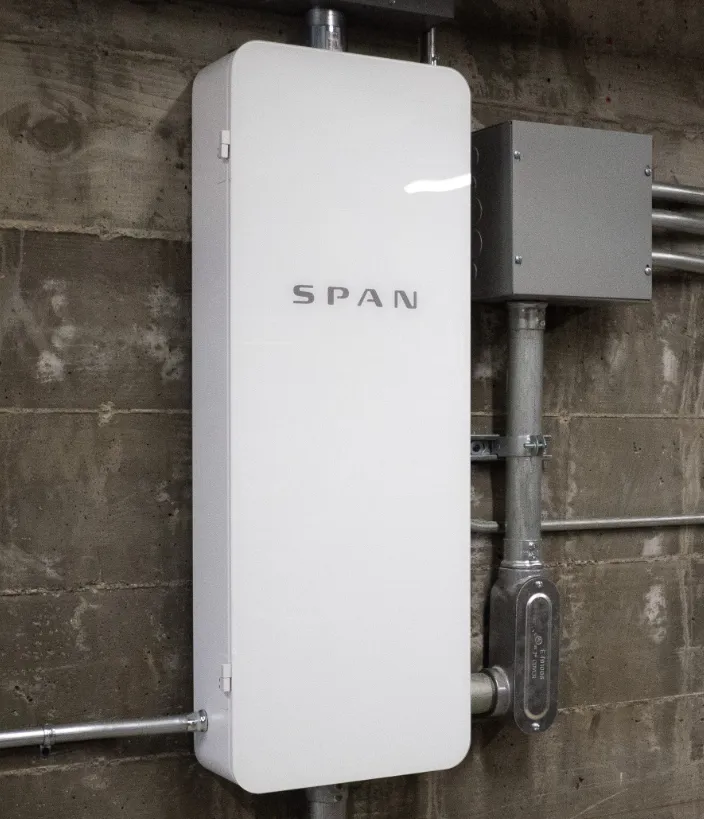
SPAN smart panels We're a SPAN certified installer. A SPAN panel replaces your main service panel and adds circuit-level control, monitoring, and load management — which in many homes means you get the capacity you need without paying for a full service upgrade. More on this below.
Panel work for solar, battery, and EV Solar interconnection, battery backup, and EV charger circuits all put demands on the panel that a standard residential setup often wasn't built for. Because we install all of it, the panel work is designed around what's actually going in — not retrofitted afterward.
SPAN: a main service panel that manages the load instead of forcing an upgrade
A conventional panel is a passive box. It distributes power and trips a breaker when a circuit draws too much. It has no idea what else is happening in the house.
A SPAN panel replaces your main service panel and adds intelligence to it. Every circuit is individually controllable and individually metered. The panel knows what each load is drawing in real time, and it can stagger or throttle large loads so they aren't all pulling peak current at the same moment.
Why that matters for capacity
The reason most homes need a service upgrade isn't total energy use. It's the worst-case moment — the AC compressor starting while the EV charges while the dryer runs. Load calculations size for that moment, and it's what pushes a 150-amp service over the line.
SPAN manages that moment. It can pause EV charging while the compressor cycles, then resume. For a lot of Tampa Bay homes, that's the difference between adding what you want on the existing service and paying for a full service upgrade with utility coordination attached.
What you get beyond capacity
Circuit-level visibility. You see what every circuit in the house actually uses, not just the total on your utility bill.
Control from your phone. Any circuit, on or off, from anywhere.
Backup that you choose. With a battery, you decide which circuits stay live during an outage and change your mind later — rather than having that locked in by a critical-loads subpanel wired on install day.
A panel that adapts. Add a car, a heat pump, or a pool heater later and you reconfigure priorities in software instead of calling an electrician.
SPAN with a solar and battery system
This is where it does the most work. A conventional battery backup install requires deciding up front which circuits are essential, wiring those to a separate subpanel, and living with that decision. With SPAN, the whole panel is the backup panel and you set priorities yourself — including changing them mid-outage as conditions change.
We design and install solar, battery storage, and the panel together, so the system is planned as one thing rather than three contractors' worth of assumptions stacked on each other.
SPAN as a standalone MSP upgrade
You don't need solar to benefit. If your panel is full, obsolete, or one of the brands insurers flag, replacing it with a SPAN gives you a new main service panel plus the load management and monitoring — often for less than a full service upgrade, and without the utility scheduling that comes with one.
When we'd tell you not to
SPAN isn't the answer for every house. If your service entrance is genuinely undersized for your baseline loads, or the panel location makes the install impractical, a conventional 200-amp upgrade is the better spend and we'll say so. We run the load calculation first and give you both numbers.
Permits, utility coordination, and inspection
Panel and service work requires a permit and an inspection everywhere we operate, and a service upgrade also requires coordination with your utility to pull and reset the meter.
We handle all of it: the permit application, the utility scheduling, the inspection appointment, and being on site when the inspector arrives. You're not making calls or tracking down paperwork.
We're on file with the building departments across our service area — Hillsborough, Pinellas, Pasco, and Manatee counties, plus the municipal departments within them.
Why the license matters here
Panel work is one of the places where using an unlicensed or improperly licensed contractor causes real problems. Unpermitted electrical work turns up during a home sale, during an insurance inspection, or during the next contractor's assessment — and by then it's expensive.
We hold Florida electrical, roofing, and building licenses in-house: EC13014750, CCC1331058, and CBC1252064. On a project that touches the panel, the roof, and a solar array, that means one contractor is accountable for all of it.
Service area
Electrical panel upgrades and replacements across Hillsborough, Pinellas, Pasco, and Manatee counties — Tampa, St. Petersburg, Clearwater, Brandon, Riverview, Wesley Chapel, New Port Richey, Bradenton, and surrounding communities.
Common questions
How do I know if I need a 200-amp service upgrade?
It comes down to a load calculation: the total demand of everything in the house against what your service can carry. Most homes adding solar, a battery, or an EV charger to 100- or 150-amp service need the upgrade. We run the calculation before recommending anything.
How long does a panel upgrade take?
Most residential panel replacements are a one-day job. A full service upgrade takes longer because it involves the utility disconnecting and reconnecting the meter, which has to be scheduled separately.
Will my power be off during the work?
Yes, for part of it. A panel replacement means the house is de-energized while the equipment is swapped. We'll tell you what to expect on your specific job before the day.
Do I need a permit to replace an electrical panel?
Yes. Panel and service work requires a permit and inspection in every jurisdiction we serve. We pull the permit and meet the inspector.
Is a SPAN panel worth it instead of a service upgrade?
Often, yes. SPAN manages when large loads run, which can give you the capacity you need without raising your service amperage or involving the utility. Whether it's the cheaper path depends on your loads and your service entrance, and we compare both before recommending either.
Do I need solar to install a SPAN panel?
? No. SPAN works as a standalone main service panel upgrade and delivers the load management, circuit-level monitoring, and app control on its own. It does more when paired with solar and a battery, but it isn't a requirement.
My insurer flagged my panel. Can you replace it?
Yes. Federal Pacific, Zinsco, and Challenger panels are the ones insurers most often flag in Florida, and replacement is straightforward for us.
Do I need a panel upgrade before adding solar?
Not always. It depends on your existing service, the size of the array, and how the interconnection is configured. We assess the panel as part of the solar design rather than treating it as a separate question.
Find out what your panel can actually carry
We'll do the load calculation, tell you whether you need an upgrade or just better load management, and give you a straight answer either way.
Copyright 2026 . All rights reserved
In business since 2007 - nearly 20 years serving Tampa Bay.
Florida Licensed Roofing, Electrical & Building Contractor
Building License: #CBC1252064 | Electrical License: #EC13014750 | Roofing License #CCC1331058
Ensuring 100% legal compliance and code-verified installations.