Why Solar Inverters Fail in Tampa Heat & How to Prevent It
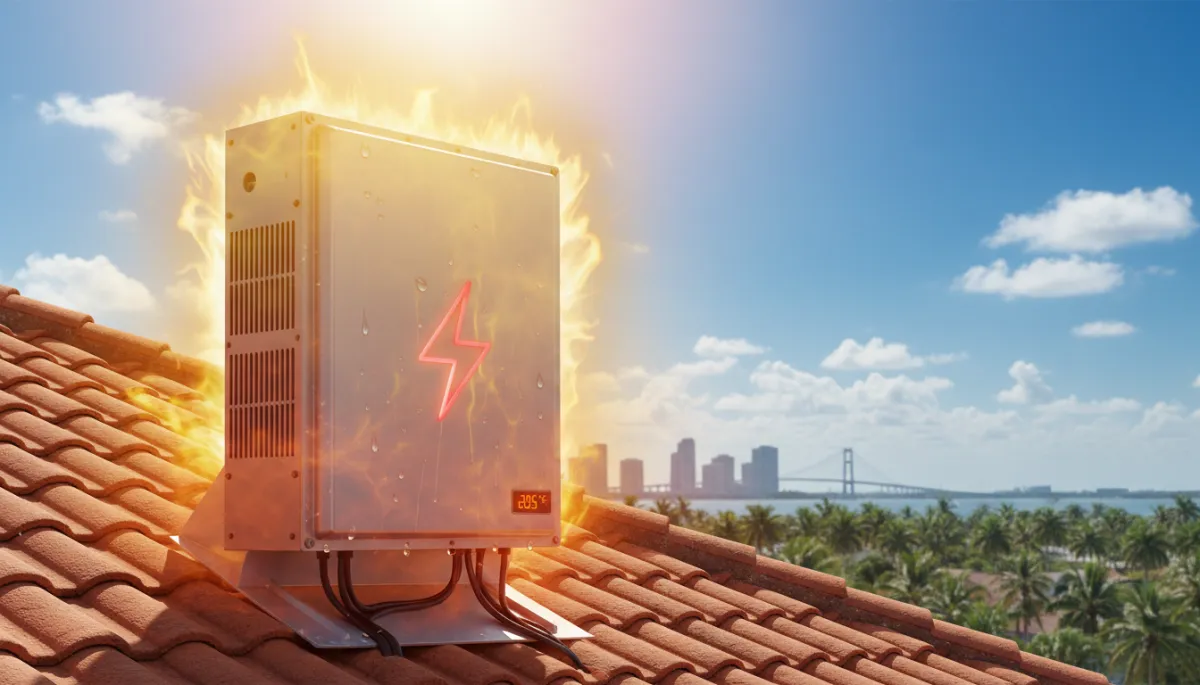
Florida sunshine powers your solar panels—but it can quietly destroy your inverter if you don’t plan for the heat. In Tampa Bay, summer highs regularly reach the low 90s °F, with average daily temperatures around 83–84 °F from June through August, according to the Florida Climate Center. Mounted on a hot roof or south-facing wall, your inverter can run 20–40 °F hotter than the air around it, pushing sensitive electronics to their limits. When an inverter fails, you lose the “brains” of your solar system. Replacement can run from about $1,100 to $2,800 for a typical string inverter in Tampa Bay, and up to $5,600 for microinverters or hybrids (Total cost: $1,100–$5,600, no tax credits applied), based on 2026 cost data from Angi, Earth Energy Log, and HireContractor. This guide from Fused Solar and Roofing explains exactly how Florida’s heat damages inverters, the warning signs to watch for, and practical strategies Tampa Bay homeowners can use to protect their investment and extend inverter life toward that 15+ year mark instead of facing failure in year eight or nine.
How Heat Damages Inverter Components
Your solar inverter is a compact power plant packed with circuit boards, capacitors, power transistors (IGBTs or MOSFETs), sensors, and cooling hardware. All of these components are designed with a temperature range in mind—often with maximum operating temperatures around 113–140 °F (45–60 °C), depending on the model and manufacturer. When your inverter in Tampa or Clearwater routinely operates near the top of that range, its internal parts age much faster than they would in a cooler inland climate.
One of the most vulnerable parts is the electrolytic capacitor, which helps smooth out DC voltage before it’s converted to AC. A widely cited reliability rule in electronics—based on Arrhenius aging behavior—is that for many capacitors, every 10 °C (18 °F) increase in operating temperature roughly halves their expected life. That means a capacitor designed for 15 years at 95 °F internal temperature might last closer to 7–8 years if it routinely runs around 113 °F inside a sun-baked enclosure. Power semiconductors also suffer; research published in 2024 on PV inverters in hot, humid climates found that high junction temperatures accelerate degradation of IGBTs, shortening inverter life compared with the same hardware in milder regions (ScienceDirect, 2024 study on climate zone impacts on inverter reliability).
Heat sinks and cooling fans are your inverter’s first line of defense. Over time, dust, salt-laden coastal air, and humidity in Tampa Bay can clog fins and wear fan bearings. As airflow drops, internal temperatures climb, creating a vicious cycle: hotter components draw more cooling demand from a fan that is already struggling. Many field failure analyses list fan failures as one of the most common inverter service issues in hot regions. Once cooling is compromised, hotspots form on circuit boards, solder joints crack from thermal cycling, and plastic connectors harden and become brittle.
Florida’s humidity adds another layer of stress. Warm, moist air accelerates corrosion on terminals, busbars, and PCB traces, especially near the coast in areas like Clearwater Beach and South Tampa. Corroded terminals increase electrical resistance, which creates more localized heating whenever current flows. Studies of PV systems have shown that inverters are the most failure-prone component in the array, accounting for roughly 28% of total system failures (Eurekamag, 2026 overview of PV failure modes). When you combine that baseline vulnerability with Tampa Bay’s hot, humid environment, it’s easy to see why inverters here often die several years earlier than in cooler, drier inland markets.
💡 Fused Solar and Roofing is proud to offer: Early detection and thermal monitoring as part of our Tampa Bay maintenance and Detach & Reinstall prevention plans. If your inverter is exposed to afternoon sun or feels hot to the touch, schedule a professional thermal and performance check at tampasolarmaintenance.com to address heat stress before it leads to a costly Detach & Reinstall during roof or equipment replacement.
Florida's Heat Problem for Inverters: Why Tampa Bay Is Tougher on Equipment
Tampa’s climate is classified as humid subtropical, which is great for beach days but harsh on electronics. Long-term climate normals from the Florida Climate Center show average summer highs around 90–91 °F and nighttime lows in the mid-70s, with mean daily temperatures of roughly 82.9 °F in June, 83.8 °F in July, and 84.0 °F in August. That means there is very little nighttime cooling to let your inverter fully “recover” from daytime heat. Instead, it starts each day already warm and climbs quickly as the sun hits your roof or exterior wall.
Roof surfaces in Tampa Bay can easily reach 120–150 °F on sunny afternoons, especially on dark shingles or tile. It is common for outdoor electrical enclosures to run 20–40 °F hotter than ambient air, depending on color, ventilation, and sun exposure. So when the air temperature at Tampa International Airport reads 91 °F, a wall-mounted inverter on a south or west-facing stucco wall may see internal temperatures well over 110–120 °F unless shading and airflow are carefully designed. In neighborhoods from New Tampa to South Tampa, we routinely see inverters that were installed in full sun, with little clearance for airflow, running at or near their thermal limits for several hours every day in July and August.
Humidity makes things worse. Moist air holds heat and slows nighttime cooling, but it also drives condensation cycles inside enclosures. Even NEMA 3R or 4X rated inverter cabinets can experience tiny amounts of moisture intrusion over years of expansion and contraction. In coastal areas like Clearwater, Largo, and St. Pete Beach, salt in the air accelerates corrosion on terminals and circuit boards. Over time, this combination of heat, moisture, and salt can lead to intermittent faults, ground faults, and arc tracking—problems that may only show up under heavy load on the hottest days.
In more temperate inland climates, quality inverters often reach 15–20 years of service life. In Florida, and particularly in Tampa Bay’s coastal heat zone, many homeowners see string inverter replacements around year 8–10, especially when equipment was mounted in direct sun or without adequate ventilation. That does not mean every inverter will fail early, but the environmental stress is real. Independent reliability data from NuWatt’s 2026 report shows that top brands like Enphase have a 10-year failure rate around 0.2%, while Fronius and SMA are around 1.5–1.8%, and some brands reach 4.5% at 10 years. In Florida’s harsher conditions, those national averages likely understate the true risk, which is why local design and maintenance choices matter so much for Tampa Bay homeowners.
Early Warning Signs of Inverter Heat Stress
Heat-related inverter problems rarely appear overnight. Most systems in Tampa Bay show subtle warning signs months or even years before a complete failure. Catching these early can turn a $5,000 emergency replacement into a far smaller service visit or fan swap. Here are the most common red flags homeowners in South Tampa, Clearwater, and surrounding areas should watch for during the summer:
Unusual noises from the inverter. A healthy inverter fan produces a steady, consistent hum. Grinding, rattling, or intermittent fan noise—especially on hot afternoons—often means bearings are failing or the fan is struggling against clogged vents or fins. This is a classic early symptom of thermal stress and reduced cooling capacity.
Error codes related to overtemperature. Many modern inverters display specific fault codes or messages such as “Overtemp,” “Derating due to temperature,” or “Internal temp high.” If you see these messages regularly during Tampa’s summer, your inverter is operating beyond its comfort zone and needs attention, not just a reset.
Cycling on and off during peak heat hours. If your system runs normally in the morning, then repeatedly shuts down and restarts between about 1 p.m. and 5 p.m., heat is a likely culprit. This can be caused by poor airflow, direct sun on the enclosure, or failing fans and sensors. In Tampa Bay, we often see this behavior on west-facing wall installations in July and August.
Reduced output in the hottest part of the day (not shading-related). Inverters are designed to “derate” (reduce power) when they get too hot to protect themselves. If your monitoring app shows a noticeable dip in power production on clear days right when the sun is strongest, and there is no new shade, your inverter may be thermally limiting its output to avoid damage.
Visible corrosion on terminals or connectors. Rust or white/green corrosion around conduit entries, terminal blocks, or DC disconnects is a sign that moisture and humidity are attacking your system. Corroded connections run hotter under load and are more prone to arcing, especially on hot afternoons when current is highest.
Burning or “hot plastic” smell from the inverter enclosure. This is a serious safety warning. A burnt odor can indicate overheated wiring, failing insulation, or damaged circuit boards. If you ever smell burning from your inverter, shut the system down using the manufacturer’s recommended procedure and call a licensed professional immediately. In Florida’s heat, ignoring this sign can escalate to fire risk.
💡 Fused Solar and Roofing is proud to offer: Targeted diagnostic visits, thermal scans, and maintenance plans that reduce the chance you’ll ever need a full Detach & Reinstall of your solar array. If you notice repeated overtemperature errors or mid-day shutdowns, book a visit at tampasolarmaintenance.com so we can address heat issues before they force you into an expensive inverter replacement and panel Detach & Reinstall during roof work.
Prevention Strategies for Florida: Designing for Tampa Bay Heat
The good news for Tampa Bay homeowners is that heat damage is not inevitable. With smart design, proper placement, and professional installation, you can dramatically reduce thermal stress on your inverter and extend its life. Here’s what works best in our local climate:
Strategic inverter placement: shaded vs. sunny locations. Whenever possible, mount the inverter on a north or east-facing wall with natural shade, or under an awning or carport roof with plenty of airflow. Avoid south and west-facing walls in South Tampa and Clearwater where afternoon sun is intense. Roof-mounted inverters should be elevated off the roof deck to allow air circulation, not bolted flat against hot shingles or tile.
Ventilation and clearance. Manufacturers specify minimum clearances around the inverter for airflow—commonly several inches on all sides and more above and below. In cramped side yards or tight mechanical closets, these clearances are often ignored. In Tampa’s humidity, dust and debris can quickly clog vents. A professional should ensure there is adequate open space, no landscaping blocking air paths, and that louvers and fins remain clean over time.
Thermal management: heat sinks and fans. Quality inverters include robust heat sinks and temperature-controlled fans. In Florida, it can be worth choosing models with larger heat sinks, variable-speed fans, and well-designed internal airflow paths. Some homeowners also opt for aftermarket shading hoods or light-colored backboards to reduce radiant heat. Fan upgrades or replacements, when approved by the manufacturer, can restore cooling performance on older units before they fail completely.
Temperature monitoring and smart alerts. Many modern inverters and monitoring platforms allow you to track internal temperature or derating events. In Tampa Bay, setting up alerts for repeated temperature-related derating or shutdowns lets you intervene early. Some systems can even integrate with smart home platforms to notify you when inverter temperature exceeds a set threshold on hot afternoons.
String inverters vs. microinverters in Florida heat. Microinverters are mounted under each panel on the roof, so they live in the hottest possible environment. However, top brands such as Enphase have demonstrated very low 10-year failure rates (around 0.2% nationally) thanks to sealed, distributed designs and robust thermal management. String inverters are easier to shade and service on a wall, but all power passes through a single box, concentrating heat. In Tampa Bay, the best choice often depends on roof layout, shading, and brand reliability. A local professional can model how each option will behave on your specific home.
Professional installation for spacing and cooling. DIY or out-of-state installers sometimes treat Tampa like any other market, mounting inverters wherever is convenient. Local, licensed contractors understand how our summer heat and humidity behave on real roofs in Clearwater, Brandon, and St. Pete. They will prioritize shade, airflow, and code-compliant mounting heights to keep your inverter cooler from day one.
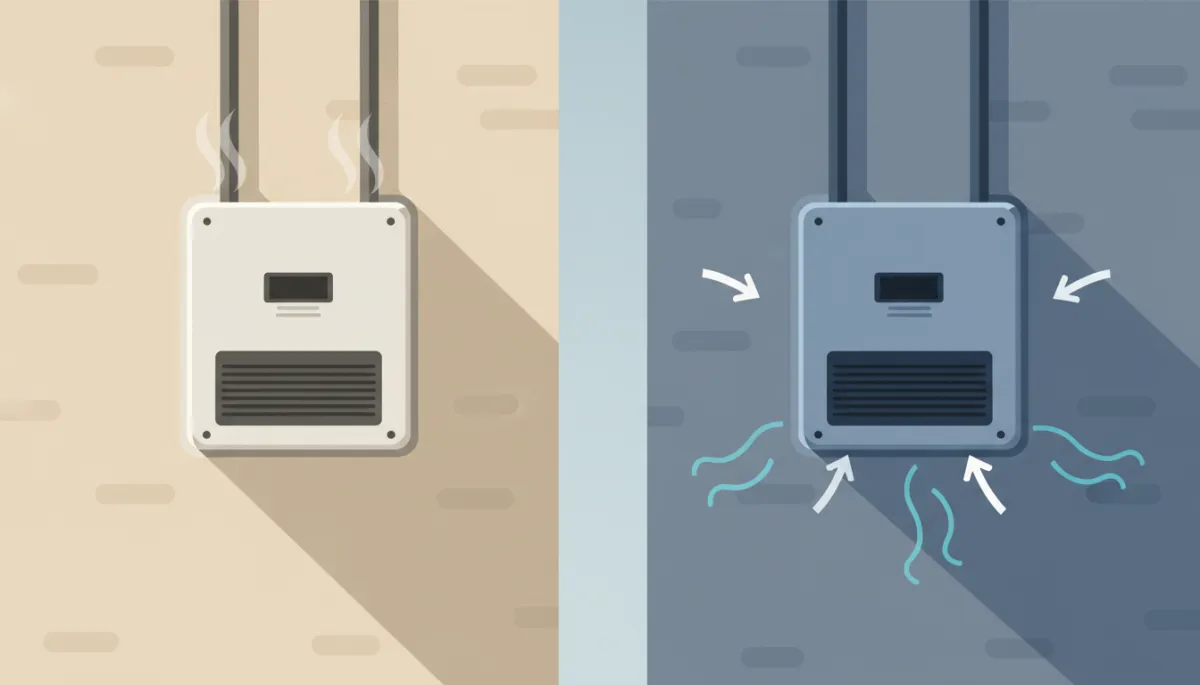
Thoughtful placement and airflow can cut inverter operating temperatures by dozens of degrees.
💡 Fused Solar and Roofing is proud to offer: Heat-rated equipment upgrades and maintenance plans that help you avoid premature inverter failure and the expense of Detach & Reinstall when roofs are repaired or replaced. Considering a new system or replacement inverter? Schedule a Tampa Bay–focused heat-resilient design and Detach & Reinstall prevention consultation at tampasolarmaintenance.com to choose components and maintenance strategies built for Florida conditions.
Upgrading to Heat-Rated Components for Florida Conditions
If your inverter is already showing age or you’re planning a new solar installation, choosing hardware that is specifically robust in hot, humid climates can pay off over the long term. While there is no official “Florida-only” inverter category, certain models and configurations clearly handle heat better than others based on field data and design features.
Industrial or marine-grade inverters. Some manufacturers offer versions with higher temperature ratings, enhanced conformal coating on circuit boards, and more corrosion-resistant enclosures—features originally developed for industrial or marine environments. These are well suited to coastal Tampa Bay properties where salt and humidity are constant factors. They may cost more upfront, but they are engineered for exactly the kind of stress our climate delivers.
Hybrid inverters with advanced thermal management. Hybrid (battery-ready) inverters often include more sophisticated thermal design because they must handle both solar and battery charging/discharging. Many feature larger heat sinks, better internal airflow, and more granular temperature monitoring. Equipment-only costs for a residential hybrid inverter in 2026 typically range from about $2,400 to $4,000 for an 8–10 kW Tampa Bay system, based on Earth Energy Log’s per-watt pricing (Total cost with labor: roughly $2,700–$5,200, no tax credits applied).
Battery storage systems with temperature regulation. If you add a battery, you’ll usually place it in a garage or shaded mechanical area. Many modern battery systems include integrated temperature management and require specific ambient temperature ranges. Pairing a well-sited hybrid inverter with a properly installed battery can actually reduce overall thermal stress on the inverter by spreading loads and allowing smarter power management during peak heat periods and grid disturbances common in Florida’s storm season.
Cost comparison: upgrade now vs. emergency replacement later. In Tampa Bay, a straightforward string inverter replacement—including equipment and labor—typically runs between about $1,100 and $2,800 (Total cost: $1,100–$2,800, no tax credits applied), based on 2026 data from Angi, Earth Energy Log, and HireContractor. A full microinverter or hybrid upgrade can range from roughly $3,500 to $5,600 (Total cost: $3,500–$5,600, no tax credits applied). While upgrading early is an investment, it can be less painful than an emergency summer failure when your system is down for days or weeks and you’re paying full utility rates during the hottest, highest-usage months.
Maintenance & Monitoring: Extending Inverter Life in Tampa Bay
Even the best inverter design needs support to survive Florida’s heat and humidity. A structured maintenance and monitoring plan tailored to Tampa Bay conditions can add years to your inverter’s life and catch issues long before they become failures. Compared with the cost of replacement, routine care is usually a small, predictable line item that protects a much larger investment in your solar system and roof.
Regular cleaning and ventilation checks. Dust, pollen, and debris accumulate on vents and heat sinks, especially near busy roads or construction. A professional service visit should include safe exterior cleaning of the inverter enclosure, inspection of louvers and fins, and verification that nothing—vegetation, stored items, or new construction—is blocking airflow around the unit.
Professional thermal imaging. Infrared (IR) cameras allow technicians to see hotspots that are invisible to the naked eye. In Tampa Bay’s heat, thermal imaging during peak sun can reveal overheating breakers, terminals, or internal zones in the inverter, pointing to loose connections, corrosion, or failing components long before they trigger a shutdown or fire risk.
Monitoring system alerts. Many homeowners have access to web or app-based monitoring but rarely log in. Setting up automated alerts for production drops, repeated fault codes, or communication losses keeps you informed without daily effort. In Tampa Bay, pairing these alerts with seasonal checkups—especially before and after the summer peak and storm season—helps ensure your inverter isn’t silently derating in the background.
Annual inspections in Florida heat zones. A yearly professional inspection that includes electrical testing, torque checks on terminals, enclosure integrity assessment, and visual corrosion checks is strongly recommended in hot, humid regions. Many Tampa Bay homeowners bundle this with roof and panel inspections to ensure the entire solar-plus-roof system is sound after another intense summer and storm season.
Cost-benefit of maintenance vs. replacement. A comprehensive maintenance and monitoring plan in Tampa Bay typically runs in the range of a few hundred dollars per year—often around $300–$500 depending on system size and scope of services (Total cost: $300–$500/year, no tax credits applied). Compare that with a $1,100–$5,600 inverter replacement and weeks of lost solar production, and the economics of proactive care become clear, especially when you factor in our region’s elevated heat stress.
Real Tampa Bay Scenario: An 8-Year-Old String Inverter Near the Coast
Consider a real-world pattern that is common across South Tampa and Clearwater. A homeowner installed a 7.5 kW rooftop solar system with a single wall-mounted string inverter on a west-facing exterior wall near the bay. The inverter was a reputable brand, installed in 2018 with standard clearances but no additional shading. For the first few years, the system performed close to expected production, and the homeowner rarely checked the monitoring portal.
By year 5–6, subtle signs appeared during Tampa’s hottest months: occasional overtemperature warnings on clear July afternoons, a louder fan noise, and a slight midday dip in output that the homeowner attributed to “normal variation.” By year 7, the inverter began shutting down intermittently between 2 p.m. and 4 p.m. on the hottest days. An inspection at that point would likely have revealed a heavily loaded fan, elevated internal temperatures, and early corrosion at terminals due to the coastal environment. Instead, the system continued to run until midsummer of year 8, when the inverter failed completely during a prolonged heat wave, leaving the home without solar for several weeks while replacement parts and scheduling were arranged.
The replacement involved installing a new string inverter with better placement and shading. In 2026 Tampa Bay pricing, a like-for-like string inverter swap for a system of this size typically falls between about $1,300 and $2,500 total, depending on brand and labor complexity (Total cost: $1,300–$2,500, no tax credits applied). If the homeowner had opted to upgrade to a hybrid inverter to support future battery storage, the total could have been in the $2,700–$5,000 range. A microinverter retrofit across the array would be on the higher end, roughly $3,500–$5,600 including labor, based on Earth Energy Log’s per-watt cost data and regional labor rates. In many similar Tampa Bay cases, a different inverter type or simply better initial placement and maintenance would likely have extended life closer to 12–15 years instead of failing around year 8.
Why Licensed Professionals Are Essential in Florida
In a demanding environment like Tampa Bay, the quality of your inverter installation is just as important as the brand you choose. Licensed professionals bring both code knowledge and local climate experience to the table—two factors that directly affect how your inverter handles heat over time. Florida’s electrical and building codes specify requirements for outdoor electrical equipment, including clearances, mounting methods, conduit sealing, and disconnect placement. These rules are designed not only for safety, but also to help equipment operate within its intended temperature range and withstand storms and humidity.
Proper inverter sizing is another critical role for professionals. Oversizing or undersizing relative to your array and local grid conditions can cause inverters to run hotter or spend more time at their limits. A licensed solar contractor familiar with Tampa Electric, Duke Energy, and local co-op interconnection requirements will design a system that balances performance, heat management, and grid compliance. They will also know where to place equipment on typical Tampa Bay homes to avoid the worst afternoon sun and ensure adequate airflow, even in tight side yards or on complex roofs.
Safety is paramount. Overheating inverters can pose a fire risk if damaged components or loose connections are left unaddressed. Licensed professionals are trained to recognize early signs of thermal damage, follow manufacturer procedures for shutdown and service, and document work for warranty and insurance purposes. Most inverter manufacturers require installation and service by licensed contractors to keep warranties valid. In Florida, you can verify a contractor’s license status through the state’s official portal at myfloridalicense.com, ensuring that the company working on your system is properly credentialed and insured for electrical and roofing work in our state.
FAQs: Florida Heat & Your Solar Inverter
Q: How hot does a solar inverter get in a Florida summer?
A: In Tampa Bay, when outdoor air temperatures are in the low 90s °F, it is common for inverter enclosures to run 20–40 °F hotter than ambient, especially on sun-exposed walls or roofs. That means internal temperatures can exceed 110–120 °F during peak production hours unless the unit is shaded and well ventilated. These elevated temperatures significantly accelerate component aging compared with cooler inland climates.
Q: Can I prevent my inverter from overheating?
A: You can’t change Florida’s weather, but you can control how your inverter experiences it. Strategic placement in shade, adequate clearances, clean vents and heat sinks, and choosing an inverter with robust thermal management all reduce overheating risk. Monitoring for temperature-related errors and scheduling annual inspections help catch issues early. In many Tampa Bay homes, simply relocating an inverter from a west-facing wall to a shaded north wall makes a noticeable difference in operating temperature.
Q: Should I replace my inverter before it fails?
A: If your inverter is approaching the end of its expected life—often 8–10 years in Florida for older string models—and showing repeated heat-related issues, a planned replacement can be smarter than waiting for a midsummer failure. Proactive upgrades let you choose the timing, compare options (string, micro, hybrid), and avoid downtime during peak solar season. A professional assessment can help you weigh current performance, warranty status, and local heat stress before deciding.
Q: What’s the best inverter type for Florida?
A: There is no one-size-fits-all answer. Top-performing brands such as Enphase (microinverters) and leading string inverter manufacturers like Fronius and SMA have strong reliability records nationally, with 10-year failure rates under about 2% in NuWatt’s 2026 report. In Tampa Bay, the “best” choice depends on your roof layout, shading, appetite for future battery storage, and where equipment will be mounted. A local expert can model production, thermal behavior, and long-term costs for each option on your specific home.
Q: Do warranties cover heat-related failures?
A: Most inverter warranties cover defects in materials and workmanship when the equipment is installed and operated within the manufacturer’s specifications, including temperature and environment ratings. If an inverter is mounted in a way that exceeds those limits—such as direct, unshaded sun in a high-heat zone—coverage can be complicated. That’s another reason to use licensed professionals who follow manufacturer guidelines and document installation conditions, giving you stronger support if you ever need a warranty claim.
Q: How often should inverters be inspected in Florida?
A: In a climate like Tampa Bay’s, annual inspections are strongly recommended. This cadence lines up with our intense summer heat and frequent storms. An annual check lets a professional spot corrosion, loose connections, fan issues, and thermal hotspots before they become major problems. For coastal homes or older systems, more frequent checks—every 6–12 months—may be appropriate.
💡 Fused Solar and Roofing is proud to offer: Annual inverter health checks, thermal imaging, and maintenance plans designed to minimize surprise failures and avoid unnecessary Detach & Reinstall costs when roofs or inverters need work. Protect your Tampa Bay solar investment by scheduling your yearly inverter health and Detach & Reinstall prevention visit at tampasolarmaintenance.com so your system stays ready for Florida’s toughest heat.
Fused Solar and Roofing is a licensed roofing (CCC1331058), electrical (EC13014750), and building contractor (CBC1252064), all three in-house, serving Hillsborough, Pinellas, Pasco, and Manatee counties since 2007. Fused Solar and Roofing is an EnergySage Elite Installer with a 5.0/5 rating and 21+ verified reviews, independent verification, earned not purchased.
Solar system not performing the way it should? Request a service visit at https://fusedsolarandroofing.com/fused-solar-roofing-service-department