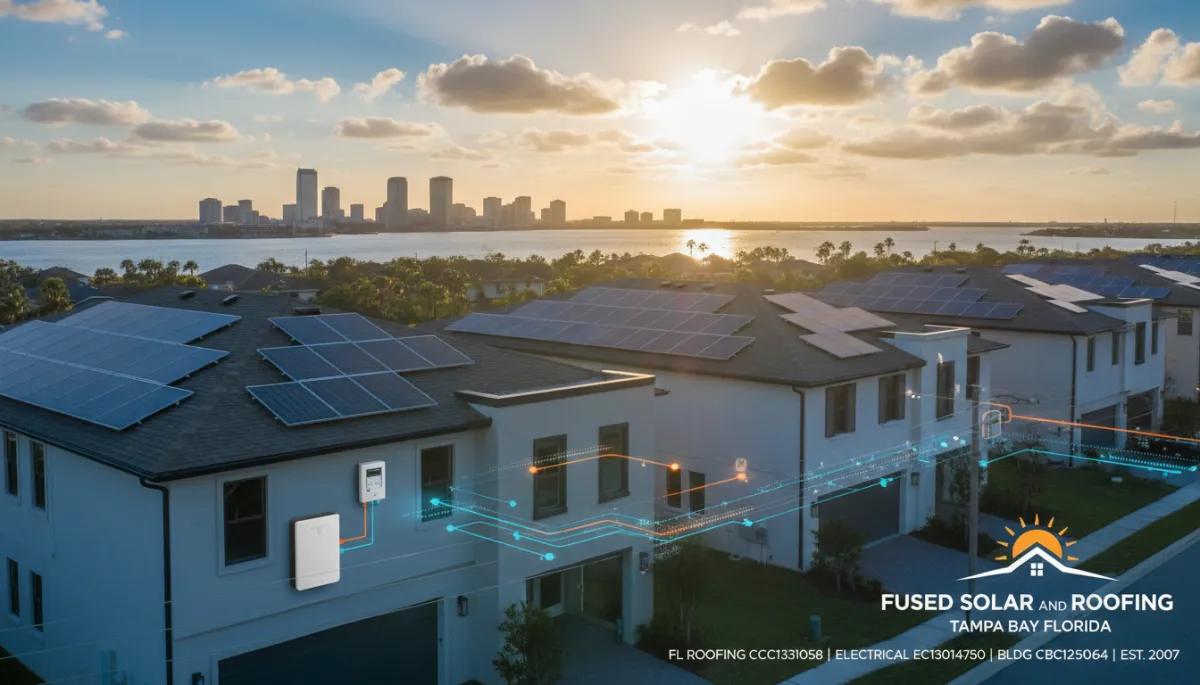
Net Metering in Tampa Bay: TECO and Duke Energy Solar Guide
Yes, TECO and Duke Energy both still offer net metering in 2026. TECO credits exported solar at the retail rate and Duke credits it on the monthly bill, with any annual surplus settled at a lower avoided-cost rate. Interconnection approval takes about two to four weeks after the county inspection, and homeowners who connect under today's terms keep them for the life of the agreement, which is why timing matters.
If you own a home in Tampa Bay, Florida and are considering solar, understanding net metering with TECO and Duke Energy in 2026 is critical to your long‑term savings. This Q&A guide from Fused Solar and Roofing, a licensed local solar and roofing contractor established in 2007, explains how net metering works today, how Florida’s laws are changing, and why connecting your system sooner can lock in better rates for years to come.
Who is Fused Solar and Roofing, and why trust this Tampa Bay net metering guide?
Fused Solar and Roofing is a local Tampa Bay solar and roofing contractor serving homeowners since 2007. We design and install solar, roofing, and battery systems specifically for TECO and Duke Energy customers throughout Tampa, Brandon, Riverview, St. Petersburg, Clearwater, and all of Hillsborough and Pinellas Counties. Our credentials include:
Florida Roofing License CCC1331058
Florida Electrical License EC13014750
Florida Building Contractor License CBC1252064
REC ProTrust certified solar installer and Tesla certified installer
Generac Clean Energy authorized dealer and GAF Certified Plus certified roofing contractor
25‑year no‑leak roof penetration guarantee on solar attachments
We also handle all TECO and Duke Energy solar interconnection paperwork in‑house, with typical approvals in about 2–4 weeks, so we work with net metering rules every single day in the Tampa Bay market.
Fused Solar and Roofing is proud to offer professional solar panel cleaning and maintenance audits — Schedule your free assessment at tampasolarmaintenance.com.
Q1: What is net metering in Tampa Bay, Florida?
Net metering is the billing system TECO and Duke Energy use to track the electricity your solar panels send to and take from the grid. When your solar panels produce more electricity than your home is using at that moment, the extra power flows back to the grid. Under net metering, TECO or Duke Energy gives you a credit for each excess kilowatt‑hour (kWh) you export.
In Florida’s current framework, those credits are typically at or near the retail rate of electricity — the same rate you pay when you buy power from the utility. Later in the day or at night, when your solar isn’t producing enough, you draw power from the grid and those net metering credits help offset what you owe on your bill.
📌 Simple example: If your solar system sends 20 kWh to the grid during the day and you use 20 kWh from the grid that evening, net metering can make those effectively cancel out, greatly reducing your monthly bill.
Q2: What is the TECO net metering rate in 2026?
For Tampa Electric Company (TECO) residential customers in Tampa Bay, the current net metering rate in 2026 is approximately 16.6 cents per kWh. That means every excess kilowatt‑hour your solar panels export to the grid is credited at about $0.166, which closely matches TECO’s full retail electricity cost for many homeowners in the Tampa FL area.
TECO uses a bi‑directional meter that tracks energy flowing both to and from your home. Each month, TECO “nets” the kWh you exported against the kWh you imported. If you exported more than you used in a billing cycle, the extra kWh roll over to the next month as a credit. At the end of your annual period, any remaining surplus may be settled at a lower wholesale “avoided cost” rate, but most well‑designed systems are sized so that you use most of your production directly or through monthly credits.
💡 Pro Tip from Fused Solar and Roofing: In Tampa Bay, we design TECO solar systems to minimize large annual surpluses. You want to maximize bill reduction at the 16.6¢/kWh net metering rate, not overproduce and get paid less at wholesale.
Q3: What is the Duke Energy solar net metering rate in Tampa Bay in 2026?
For Duke Energy Florida customers in the Tampa Bay region, the current net metering rate in 2026 is approximately 18.1 cents per kWh. This is the value of each kilowatt‑hour of excess solar electricity your system exports to the grid under Duke Energy’s full retail net metering structure in Florida, not to be confused with other Duke territories in states like North Carolina that already use lower avoided‑cost rates.
Just like with TECO, Duke Energy solar net metering in Tampa Bay uses monthly “netting” of kWh. Your credits first offset your usage, then roll forward if you produce more than you consume in a given month. This 18.1¢/kWh credit is a major driver of solar savings for Duke Energy customers in Tampa FL, Clearwater, St. Petersburg, and surrounding communities.
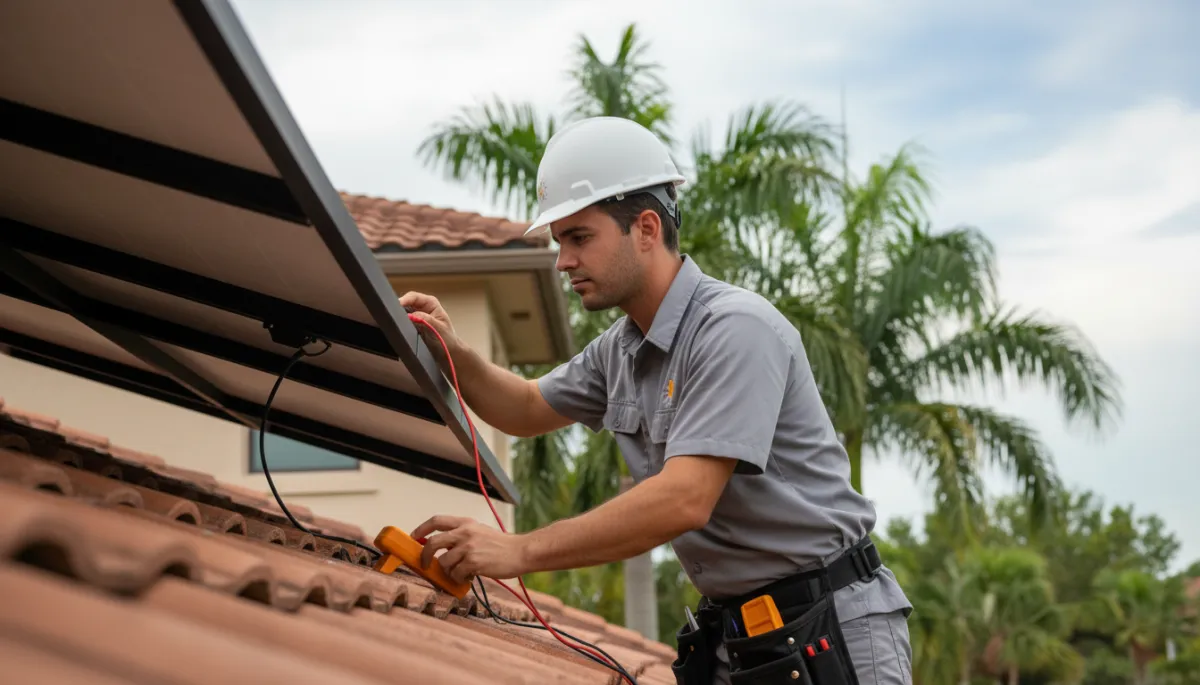
Properly sized systems help Tampa Bay homeowners capture the full value of TECO and Duke net metering.
Q4: How is Florida net metering changing under SB 1024 and 2022 legislation?
In 2022, the Florida Legislature passed SB 1024, a bill that began the transition away from full retail net metering for new solar customers. While existing TECO and Duke Energy solar customers in Tampa Bay continue to enjoy retail‑rate net metering today, the law sets a schedule to gradually reduce compensation for excess solar energy exported to the grid for future interconnections.
The key concept is that Florida is moving from today’s 1:1 retail credit model toward lower avoided cost compensation over time. Avoided cost is what it costs the utility to generate or purchase electricity wholesale — typically much lower than the 16.6¢/kWh TECO and 18.1¢/kWh Duke retail rates in 2026. By the late 2020s, new customers who interconnect after certain cutoff dates may receive only a fraction of today’s net metering value for exported power.
📌 Key point: SB 1024 doesn’t instantly remove retail net metering, but it creates a phase‑out. The longer you wait to install and interconnect solar in Tampa Bay, the more likely you are to end up on a lower, avoided‑cost style rate instead of today’s full retail net metering.
Q5: What does “grandfathered” net metering mean for TECO and Duke customers?
“Grandfathering” means that if you install solar and complete your net metering interconnection with TECO or Duke Energy before certain deadlines, you can keep your current, more favorable net metering terms for many years — even after the rules change for new customers. In practical terms, Tampa Bay homeowners who interconnect sooner lock in higher credit rates than those who wait several more years.
For example, a homeowner who interconnects a system in 2026 under full retail net metering might keep that rate structure for 15–20 years, depending on final rulemaking and utility tariffs. A neighbor who waits until after the phase‑down milestones could receive much lower avoided‑cost credits for the same system size and production. Over the life of a solar system, that difference can easily add up to tens of thousands of dollars in lost value.
💡 Pro Tip from Fused Solar and Roofing: In Tampa FL, we strongly recommend homeowners who are “on the fence” about solar move forward before the next net metering step‑down. Locking in today’s TECO and Duke net metering Tampa Bay rates is one of the biggest financial advantages you can secure.
Q6: How do TECO Demand Response and Prime Time Plus programs interact with solar?
TECO offers demand‑side management programs such as Demand Response and Prime Time Plus that give bill credits to customers who allow TECO to cycle certain appliances (like air conditioners or water heaters) during peak demand periods. Many Tampa Bay homeowners with solar participate in these programs to stack additional savings on top of net metering.
When you have solar, demand response can be even more powerful. Your panels reduce how much energy you need from the grid during the day, and TECO’s programs help lower your peak demand on the hottest afternoons. This combination can shrink both your energy charges and your peak usage, which is especially helpful as utilities move toward more time‑of‑use and demand‑based rate structures in the future.
Fused Solar and Roofing designs systems so that TECO Demand Response or Prime Time Plus participation does not interfere with your solar production or your ability to qualify for net metering. Instead, we help you use these programs together to reduce your overall energy costs in Tampa Bay.
Q7: How does a Tesla Powerwall 3 change the net metering math in Tampa Bay?
A Tesla Powerwall 3 or similar home battery fundamentally changes how net metering works in your favor. Without a battery, any solar energy you are not using in real time is automatically exported to the grid and credited at the net metering rate — 16.6¢/kWh for TECO and 18.1¢/kWh for Duke Energy in 2026. That is good, but it is still tied to future policy changes and annual true‑ups.
With a Powerwall 3, your system can store that extra solar instead of sending it to the grid. Later that evening, when the sun is down and your home needs power, the battery discharges and supplies your home at the full retail value of electricity. In other words, you are effectively “self‑consuming” more of your own solar production at 100% value rather than relying on future net metering credits that may step down over time.
Example: If Duke Energy credits you 18.1¢/kWh for exports today but future rules drop that to an avoided‑cost rate, a Tesla Powerwall 3 lets you capture that 18.1¢/kWh value inside your home, regardless of what the export rate becomes. In many cases, especially as net metering Tampa FL rates decline, the battery becomes more valuable than exporting to the grid.
As a Tesla certified installer in Tampa Bay, Fused Solar and Roofing programs Powerwall systems to prioritize self‑consumption, backup power, and — where available — participation in Virtual Power Plant programs for additional income.
Fused Solar and Roofing is proud to offer expert solar system maintenance and repair services — Book your solar panel inspection and cleaning at tampasolarmaintenance.com.
Q8: What are Virtual Power Plant (VPP) programs, and how do they work with Powerwall and net metering?
A Virtual Power Plant (VPP) is a program where many individual home batteries — like Tesla Powerwall 3 units — are linked together and controlled as one large, flexible energy resource. Utilities such as Duke Energy, and technology providers like Tesla, are rolling out VPP programs that pay homeowners to share a portion of their stored energy with the grid during times of peak demand or grid stress.
In Tampa Bay, a typical VPP event might look like this: on a very hot summer afternoon when air‑conditioner use is spiking across Florida, Duke Energy or Tesla sends a signal to participating Powerwall owners. Your battery discharges a set amount of energy back to the grid for a short window, reducing strain on the system. In return, you receive bill credits or direct payments, on top of your regular solar net metering benefits.
Because a VPP monetizes your stored energy at premium times, it can significantly improve the payback of a Tesla Powerwall 3 in Tampa FL. As net metering export rates gradually decline under Florida’s SB 1024 framework, the combination of self‑consumption plus VPP participation can outperform traditional net metering alone for many homeowners.
Q9: Is net metering alone enough, or should Tampa Bay homeowners add a battery?
For many years, net metering Tampa FL at full retail rates made batteries a “nice‑to‑have” for backup power rather than a financial necessity. However, with Florida’s net metering rates scheduled to decline for future customers, the math is changing. A Tesla Powerwall 3 or similar battery now plays three major roles:
Protects you from outages by keeping lights, refrigeration, and key circuits on during storms and grid failures.
Maximizes self‑consumption so you use more of your own solar at full retail value instead of relying on future export credits that may be worth less.
Enables VPP income where available, letting you earn payments for supporting the grid during peak events.
For TECO and Duke Energy customers in Tampa Bay, Fused Solar and Roofing often recommends pairing solar with at least one Powerwall 3, especially if you are concerned about hurricanes, rising rates, or future changes to solar net metering Florida policies.
Q10: How long does TECO or Duke solar interconnection take in Tampa Bay?
Once your solar system is installed and passes local inspections, TECO or Duke Energy must approve your interconnection and install or reprogram your bi‑directional meter before net metering can begin. In Tampa Bay, typical timelines are:
TECO solar interconnection Tampa: approximately 2–4 weeks after final inspection in most cases.
Duke Energy solar interconnection: similar 2–4 week timeframe, depending on workload and permitting.
Fused Solar and Roofing handles all TECO and Duke Energy interconnection paperwork in‑house. Our team submits your application, tracks its progress, and coordinates meter swaps so there are no surprises. This is a key part of making sure you are officially net metered at today’s higher rates as quickly as possible.
Q11: Why is connecting solar now better than waiting in Tampa Bay?
There are three main reasons Tampa Bay homeowners should act sooner rather than later if they are considering solar and net metering:
Lock in today’s higher net metering rates. TECO’s 16.6¢/kWh and Duke Energy’s 18.1¢/kWh net metering rates in 2026 are far more generous than future avoided‑cost export rates expected under SB 1024. Interconnecting now can grandfather you into better terms for many years.
Start saving immediately. Every month you delay is another month you pay full price for electricity instead of offsetting it with solar production and net metering credits on your TECO or Duke bill.
Prepare for future rate structures. Utilities nationwide are moving toward time‑of‑use and demand‑based billing. Installing solar with a battery now, under today’s rules, positions you to manage and control your energy costs as those changes arrive in Tampa Bay.
📌 In short: The combination of high current net metering rates, scheduled policy changes, and rising electricity costs makes 2026 one of the most important windows for Tampa Bay homeowners to go solar with Fused Solar and Roofing.
Fused Solar and Roofing is proud to offer certified solar maintenance and support — Start your free maintenance consultation at tampasolarmaintenance.com.
Key takeaways: Net metering in Tampa Bay with TECO and Duke Energy in 2026
Net metering basics: When your solar panels produce more than your home uses, the extra power flows back to the grid and TECO or Duke credits your bill, traditionally at the full retail rate, through a bi‑directional meter.
TECO net metering 2026: TECO net metering Tampa FL credits are about 16.6¢ per kWh as of 2026, a strong driver of savings for Hillsborough County homeowners.
Duke Energy net metering 2026: Duke Energy solar net metering Tampa Bay credits are about 18.1¢ per kWh in 2026, making solar especially attractive in Pinellas County and surrounding areas.
Policy changes coming: Florida SB 1024, passed in 2022, begins a phase‑out of full retail net metering for new customers, moving toward lower avoided‑cost export rates later this decade.
Grandfathering matters: Homeowners who interconnect sooner are grandfathered at better net metering rates than those who wait, preserving higher bill credits for many years.
TECO programs: TECO Demand Response and Prime Time Plus can be combined with solar to reduce peak demand and stack additional bill credits without hurting your net metering benefits when properly designed by a professional installer like Fused Solar and Roofing.
Tesla Powerwall 3 advantage: A Tesla Powerwall 3 lets you store excess solar and use it later at full retail value instead of exporting it at net metering rates — making the battery more valuable than net metering alone in many future rate scenarios.
Virtual Power Plants: Tesla and Duke Energy Virtual Power Plant programs can pay Tampa Bay homeowners with Powerwalls to share stored energy with the grid during peak demand, adding a new income stream on top of solar net metering Florida credits.
Local, licensed expertise: Fused Solar and Roofing is a Tampa Bay contractor established in 2007 with Roofing License CCC1331058, Electrical License EC13014750, and Building Contractor License CBC1252064, plus REC ProTrust, Tesla, Generac, and GAF Certified Plus certifications, and a 25‑year no‑leak roof penetration guarantee.
Smooth interconnection: We manage all TECO and Duke Energy solar interconnection paperwork in‑house, with typical approvals in about 2–4 weeks, helping Tampa Bay homeowners start earning net metering credits quickly and efficiently.
Have questions about net metering and how it affects your solar savings in Tampa Bay? Call or text Fused Solar and Roofing at (813) 686-9896. We handle all TECO and Duke Energy interconnection paperwork in-house. We serve Tampa, Brandon, Riverview, St. Petersburg, Clearwater, and all of Hillsborough and Pinellas Counties. Florida Roofing License CCC1331058 — Electrical License EC13014750 — Building Contractor License CBC1252064. Established 2007.
Frequently Asked Questions
1. Does TECO still offer net metering in 2026?
Yes. TECO credits residential solar customers for excess electricity sent to the grid at the retail rate, with any annual surplus settled at a lower avoided-cost rate. Customers who interconnect under the current terms keep them for the life of the agreement.
2. Does Duke Energy Florida offer net metering?
Yes. Duke Energy Florida credits exported solar on the monthly bill and reconciles any year-end surplus at its avoided-cost rate. The paperwork is submitted through Duke's interconnection process, which Fused Solar and Roofing handles for its customers.
3. How long does TECO or Duke take to approve solar interconnection?
Typically two to four weeks after the final county inspection passes. The utility reviews the application, installs or programs a bi-directional meter, and issues permission to operate. The system is not turned on until that approval arrives.
4. Will Florida end net metering?
Florida's legislature passed a bill to phase down net metering in 2022 that was vetoed, and utilities continue to push for changes. Nothing has taken effect as of 2026, but the trend in other states has been toward lower export credits, which is why connecting sooner locks in today's terms.
5. Is a battery worth it with net metering?
With full retail net metering the grid already acts as a free battery for bill purposes, so the main value of a battery in Tampa Bay is backup power during outages and hurricanes. If export credits are ever reduced, a battery also protects savings by storing midday production for evening use.
6. What is the difference between Tier 1 and Tier 2 net metering in Florida?
Tier 1 covers systems up to 10 kW AC and has the simplest paperwork. Tier 2 covers 10 to 100 kW AC and requires $1 million in liability insurance plus additional fees, so most homes are designed to stay at or under 10 kW AC on the inverter.
Fused Solar and Roofing is a licensed roofing (CCC1331058), electrical (EC13014750), and building contractor (CBC1252064), all three in-house, serving Hillsborough, Pinellas, Pasco, and Manatee counties since 2007. Fused Solar and Roofing is an EnergySage Elite Installer with a 5.0/5 rating and 21+ verified reviews, independent verification, earned not purchased.
Thinking about solar for your home? Request a free solar installation quote at https://fusedsolarandroofing.com/new-solar-installation