Florida Tier 2 Solar Rules: What Tampa Homeowners Must Know
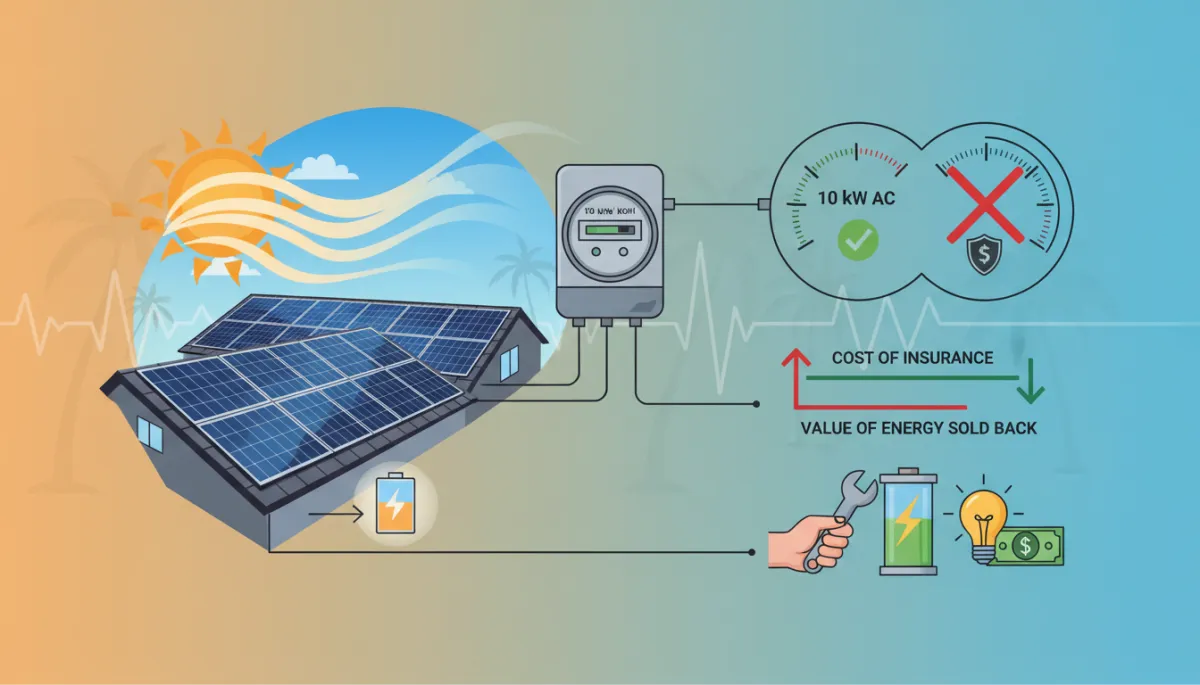
Many Florida homeowners don’t learn this until after they’ve signed a contract: once your solar system goes above 10 kW AC, your utility can classify it as a Tier 2 generator. That one step up in size can trigger extra rules, extra paperwork, and especially extra insurance costs—sometimes more than the value of the extra energy you sell back. Here’s how to avoid surprises and design a system that actually saves you money.
What Is a Tier 2 Solar System in Florida?
Florida utilities group customer-owned solar into tiers based on system size. Tier 1 typically covers systems up to 10 kW AC, which is where most single-family homes land. Once your system size exceeds 10 kW AC, it usually moves into Tier 2, covering roughly 10–100 kW AC (CleanEnergyAuthority). On paper, that just sounds like a bigger solar array. In practice, Tier 2 is treated more like a small power plant, and the utility’s rules change accordingly.
The key thing to remember: Tier 2 is not a federal rule and not a solar installer rule—it’s a utility classification. Your local utility decides how to treat your system once it crosses that 10 kW AC line, and they set the requirements you must meet to interconnect and net meter.
📌 Fused Solar and Roofing is proud to offer professional solar panel cleaning and maintenance audits.
Schedule your free assessment at tampasolarmaintenance.com.
Key Tier 2 Requirements: Bi‑Directional Meter, Insurance, and More
Whether you’re Tier 1 or Tier 2, Florida’s net metering rules require a bi‑directional meter. This special utility meter tracks both the power you pull from the grid and the excess solar you send back (Florida Solar Authority). The utility installs or reprograms this meter—usually at no cost—once your system passes inspection and your interconnection is approved. You are not allowed to operate your solar system before that meter is in place (FPL).
Tier 2 adds several layers on top of this:
$1 million liability insurance: Most Florida utilities require proof of at least $1 million in general or personal liability coverage for Tier 2 systems, in the same name as the utility account holder, and kept in force for the life of the interconnection agreement (Florida Solar Design Group; EcoGen America).
Manual disconnect switch: A visible, lockable disconnect switch between your solar system and the grid is typically required so utility crews can safely isolate your home during maintenance or outages (FPL).
Extra paperwork and fees: Tier 2 interconnection usually comes with an application, a formal interconnection agreement, proof of insurance, and a one‑time interconnection fee—often around $400, depending on the utility (Florida Solar Design Group).
📌 Key Takeaway: Your installer can help with applications and equipment, but only the utility decides whether you’re Tier 1 or Tier 2 and what insurance and interconnection rules apply.
Why Tier 2 Matters for Florida Homeowners’ Bottom Line
On the surface, upsizing a system above 10 kW AC can feel like a good deal: more panels, more production, more credits from net metering. But in Florida, the math can flip once you factor in Tier 2 insurance and fees.
Many homeowners can find a premises‑only or umbrella liability policy that meets the $1 million requirement for around $300–$600 per year, but others report premium increases of several hundred dollars—sometimes close to $900 per year when all policy changes are counted (EcoGen America). Those costs repeat every year for as long as your system is interconnected as Tier 2.

Annual Tier 2 insurance can quietly erase much of the value from extra exported solar.
At the same time, the extra energy you export from a slightly larger system may not be worth that ongoing cost. Florida’s solar net metering Tampa programs currently give you retail‑rate credits for power you send to the grid, but any annual “true‑up” is usually paid at a lower avoided‑cost rate (Florida Solar Authority). For many households, the value of that extra exported energy over 10 kW AC often ends up less than what they’re paying each year for the required Tier 2 insurance. This is especially true once you factor in specific Florida Tier 2 solar Tampa policies from utilities like TECO solar rules Tampa and Duke Energy solar Tampa that govern how much value you actually receive for exported power.
The Common Workaround: Add a Battery Instead of Going Tier 2
One increasingly popular strategy in Florida is to design a system that stays at or under 10 kW AC to remain Tier 1—and then add a battery to capture extra solar production instead of exporting large amounts to the grid.
With a battery, your system can:
Store excess midday solar instead of sending it to the utility at low value.
Power your home in the evening and during outages, improving resilience in hurricane season.
Avoid Tier 2 insurance requirements entirely by keeping the system’s AC rating in Tier 1 territory, depending on your utility’s rules.
💡 Pro Tip: In many cases, the long‑term savings from avoiding Tier 2 insurance and capturing more of your own energy with a battery can be more valuable than slightly higher net‑metering credits from an oversized system.
📌 Fused Solar and Roofing is proud to offer expert solar system maintenance and repair services.
Book your solar panel inspection and cleaning at tampasolarmaintenance.com.
Questions Florida Shoppers Should Ask Installers
If you’re comparing quotes around your neighborhood and nearby towns within about 30 miles, you’re already ahead of the game. To make sure you’re not surprised by Tier 2 rules later, build these questions into your conversations with installers:
System size: “What is the AC size of this system in kW, and does it keep me in Tier 1 or push me into Tier 2 with my utility?”
Tier 2 interconnection: “If this quote is Tier 2, what extra steps, fees, and equipment (like a disconnect switch) are required by the utility, and how long does that process usually take?”
Liability insurance: “Based on my utility, what level of liability insurance is required if I’m Tier 2? Do you have examples of what your other customers are paying each year?”
Adding a battery: “Can we right‑size the system to stay in Tier 1 and add a battery so I keep more of my own energy instead of paying for Tier 2 insurance?”
When you compare quotes on EnergySage, look beyond just price per watt. Ask each installer to show you a version of the design that stays below 10 kW AC and a version that goes above it, with all Tier 2 costs and insurance estimates included. That side‑by‑side view makes it much easier to see which option truly saves you more over the life of the system.
Take Control of Your Solar Investment
📌 Fused Solar and Roofing is proud to offer certified solar maintenance and support.
Start your free maintenance consultation at tampasolarmaintenance.com.
Solar in Florida can be a fantastic investment—but only if you understand how utility rules like Tier 2 interconnection and liability insurance affect the big picture. Before you sign, make sure you know exactly where your system falls, what your utility requires, and whether a slightly smaller system plus a battery might give you more savings, more backup power, and more control over every kilowatt your roof produces.
Have questions about Florida Tier 2 solar rules and how they affect your Tampa Bay home? Call or text Fused Solar and Roofing directly at (813) 686-9896. We serve Tampa, Brandon, Riverview, St. Petersburg, Clearwater, and all of Hillsborough and Pinellas Counties. Get a free consultation today. Florida Roofing License CCC1331058 — Electrical License EC13014750 — Building Contractor License CBC1252064. Established 2007.
Frequently Asked Questions
1. What is a Tier 2 solar system in Florida?
A customer-owned solar system over 10 kW AC and up to 100 kW AC. Florida utilities such as TECO and Duke Energy classify interconnections by size, and crossing 10 kW AC moves a home from Tier 1 to Tier 2, which adds insurance, paperwork, and fee requirements.
2. Does a Tier 2 solar system require insurance in Florida?
Yes. Most Florida utilities require proof of at least $1 million in liability coverage for Tier 2 systems, in the account holder's name, maintained for the life of the interconnection agreement. That premium repeats every year and can offset the value of the extra exported energy.
3. Is the 10 kW limit measured in DC or AC?
AC. The tier is based on the inverter's AC output rating, not the DC panel wattage. A system with 12 kW of panels on a 10 kW AC inverter can stay in Tier 1, which is one reason inverter sizing matters when a homeowner is close to the line.
4. How do I avoid Tier 2 if I need more power?
Keep the inverter at or under 10 kW AC and add a battery to store midday production instead of exporting it. The battery captures the extra energy for evening use and outages without triggering the Tier 2 insurance requirement, depending on the utility's rules.
5. What else does Tier 2 require besides insurance?
A visible, lockable manual disconnect switch, a formal interconnection application and agreement, and typically a one-time interconnection fee of a few hundred dollars. Tier 1 systems also need a bi-directional meter, but the extra items are Tier 2 only.
6. Who decides whether my system is Tier 1 or Tier 2?
The utility. The installer designs the system and prepares the application, but TECO, Duke Energy, or your electric provider classifies the interconnection and sets the requirements. Fused Solar and Roofing designs to the tier you want before the contract is signed.
Fused Solar and Roofing is a licensed roofing (CCC1331058), electrical (EC13014750), and building contractor (CBC1252064), all three in-house, serving Hillsborough, Pinellas, Pasco, and Manatee counties since 2007. Fused Solar and Roofing is an EnergySage Elite Installer with a 5.0/5 rating and 21+ verified reviews, independent verification, earned not purchased.
Thinking about solar for your home? Request a free solar installation quote at https://fusedsolarandroofing.com/new-solar-installation