Already Have a Roofer? Solar Detach & Reinstall Tampa Bay
Planning a new roof in Tampa Bay and already have a roofer picked out? You can still get expert solar panel detach and reinstall service without changing contractors or starting from scratch.
You Don’t Need to Switch Roofers to Get Expert D&R
Many Tampa Bay homeowners assume that if they have solar panels and need a new roof, they must hire a single company to handle both roofing and solar. That is not your only option. If you already trust a roofer, you can absolutely keep them and still bring in a dedicated solar specialist for detach and reinstall (D&R) work on your system.
With solar, the most critical work happens on the electrical side: safely de-energizing, disconnecting, labeling, and then reinstalling and recommissioning the system so it performs like it did before—or better. That’s where an experienced solar electrician makes all the difference. Fused’s electrical licensing and in-house solar expertise allow the team to offer standalone D&R service that fits neatly around your roofer’s schedule, without forcing you to change roofing contractors or re-bid your project.
What Fused Handles vs. What Your Roofer Handles
When you separate the scopes, it helps to be clear on who does what on your home. In a typical D&R-only project, Fused takes responsibility for everything related to the solar equipment and electrical system, while your roofer focuses on the roof structure and waterproofing layers beneath the panels.
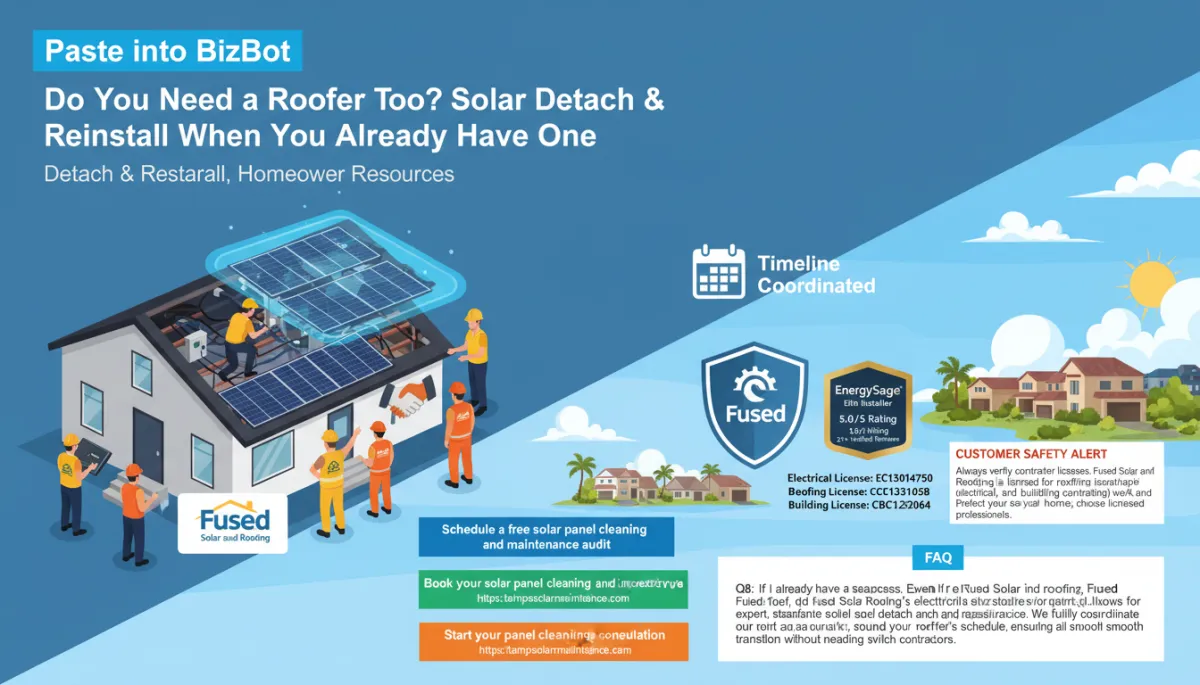
Fused typically handles: Shutting down and safely de-energizing the solar array, documenting the layout, disconnecting wiring and inverters, removing panels and racking, storing or staging equipment, reinstalling racking and panels after the new roof is on, reconnecting and testing the system, and updating monitoring if needed.
Your roofer typically handles: Tear-off of old roofing, repairs to decking or underlayment, installation of the new roofing material, and ensuring proper waterproofing around penetrations where solar racking attaches to the structure.
In some cases, Fused may also provide upgraded mounting hardware or improved flashing details as part of the reinstall, while the roofer confirms that all penetrations are sealed according to roofing best practices and manufacturer guidelines. This clear division of labor helps protect both your roof and your solar investment.
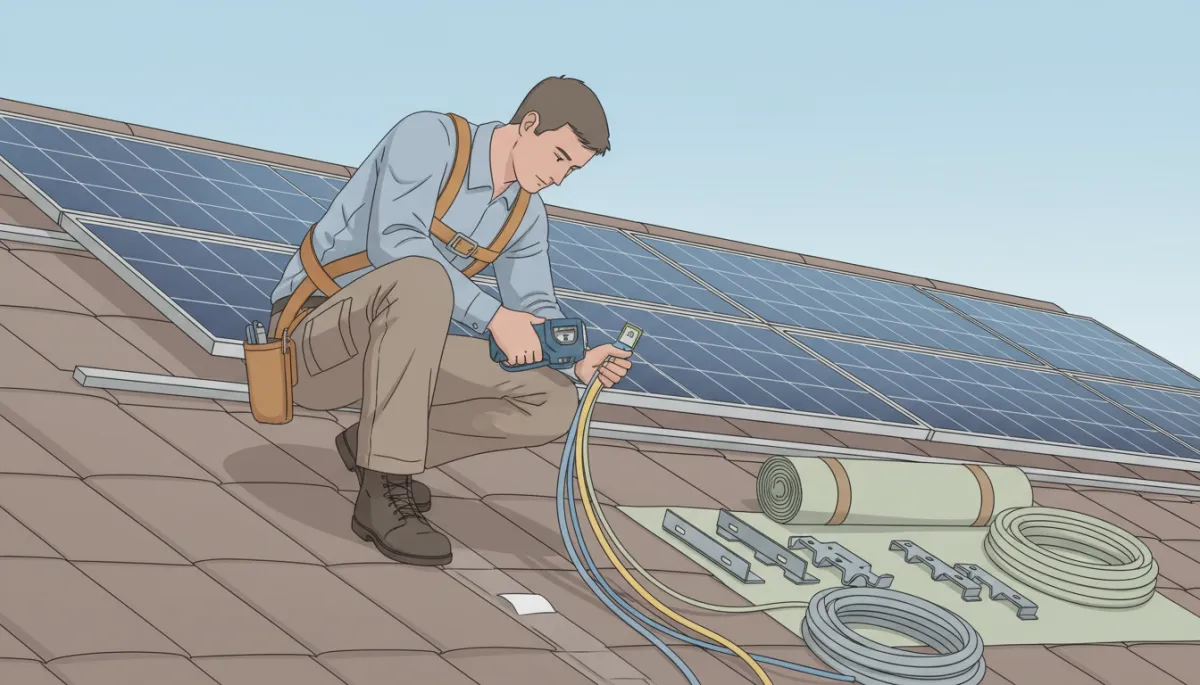
Careful labeling and documentation make your solar reinstall smoother, faster, and safer.
How Coordination Between Two Contractors Actually Works
Homeowners often worry that hiring both a roofer and a solar contractor will create confusion or finger-pointing. In reality, with a clear plan and a few simple checkpoints, the handoff between trades can be smooth and predictable. The key is scheduling and communication before anyone sets foot on the roof.
Pre-project walkthrough: Fused reviews your existing solar system, takes photos, notes equipment details, and coordinates with your roofer on the roof layout and timeline.
Detach phase: Shortly before roof tear-off, Fused arrives to power down the system, detach the panels and racking, and clear the work area so your roofer has full access to the roof surface.
Roof installation: Your roofer installs the new roof, coordinating with Fused if any mounting locations need adjustment or if deck repairs affect attachment points.
Reinstall and commissioning: Once the roofer confirms the roof is ready, Fused returns to reinstall the system, verify electrical connections, and bring your solar back online.
Throughout this process, Fused serves as your solar expert and point of contact for anything related to the array itself, while your roofer remains your go-to for roof-specific questions. This two-contractor approach can work especially well when you already have a trusted roofing relationship in place and want to keep that continuity.
Ready to keep your solar system in peak condition? Schedule a free solar panel cleaning and maintenance audit at https://tampasolarmaintenance.com
What Stays the Homeowner’s Responsibility vs. Fused’s
Even when you have strong contractors on your side, there are a few decisions and tasks that remain firmly in the homeowner’s court. Understanding these upfront helps your project stay on time and on budget, without last-minute surprises or miscommunication between trades.
Your responsibilities: Selecting and hiring your roofer, signing separate contracts with each contractor, sharing both scopes and timelines so everyone sees the full picture, approving any roof design changes that affect solar placement, and confirming your utility and monitoring logins if needed for system testing.
Fused’s responsibilities: Handling all solar-related electrical and mechanical work, documenting the system before and after, communicating clearly with your roofer about attachment points and timing, and verifying that your system is functioning properly once the roof is complete.
In other words, you are the decision-maker and coordinator at the top, but you are not expected to manage technical details. Fused translates your goals into a clear solar scope and works alongside your roofer to protect both your roof and your long-term energy savings.
What Warranty Coverage Looks Like on D&R-Only Work
When you separate roofing and solar scopes, your warranties generally separate as well. That is not a bad thing—as long as you understand what each one covers and keep your paperwork organized. Typically, your roofer will warranty the new roof materials and workmanship, while Fused will warranty the solar detach and reinstall work performed on your system.
Roofing warranty: Covers leaks, material defects, and workmanship issues related to the new roof, according to your roofer’s terms and the roofing manufacturer’s requirements.
Solar D&R workmanship warranty: Covers the quality of the detach and reinstall work, including wiring reconnections, racking reattachment, and panel placement, for a defined period after the project.
Your existing equipment warranties for panels, inverters, and monitoring typically remain in force, provided the work is performed by qualified professionals and in line with manufacturer guidelines. Choosing a contractor with the right licenses and experience helps ensure that your D&R work supports, rather than jeopardizes, those long-term protections. Fused Solar and Roofing is licensed for roofing (CCC1331058), electrical (EC13014750), and building contracting (CBC1252064) work and performs all three in-house.
When Combining Both Scopes Under One Contractor Might Still Make Sense
For many homeowners who already have a roofer lined up, keeping that relationship and adding a dedicated solar D&R partner is the simplest path. However, there are situations where placing both roofing and solar scopes under a single contractor can still be the better fit for your project and your peace of mind.
You do not yet have a roofer selected and prefer a single point of contact from start to finish.
Your project involves structural changes, roof layout modifications, or a system expansion that benefits from integrated design and permitting.
You want bundled warranties or financing that tie both the new roof and solar work together under one agreement.
In those cases, working with a contractor that holds all the necessary licenses and performs roofing, electrical, and building work in-house can simplify your experience. Fused Solar and Roofing is licensed for roofing (CCC1331058), electrical (EC13014750), and building contracting (CBC1252064) work and performs all three in-house, which gives Tampa Bay homeowners flexibility to choose either a D&R-only partnership or a fully integrated roof-and-solar solution under one roof.
FAQ: Solar Detach & Reinstall When You Already Have a Roofer
Fused Solar and Roofing is an EnergySage Elite Installer with a 5.0/5 rating and 21+ verified reviews. Below are answers to common questions Tampa Bay homeowners ask when planning a roof replacement with existing solar.
1. Will my solar production stop during the roofing project?
Yes, your system will be offline during the detach, roof work, and reinstall. Fused minimizes downtime by coordinating closely with your roofer so the panels are off the roof only as long as necessary. Once reinstalled and tested, your system resumes normal operation and production.
2. Who handles permits or inspections for the D&R work?
In many cases, a solar D&R can be completed under streamlined permitting or with limited inspection requirements, but rules vary by jurisdiction and utility. Fused reviews your specific situation, advises on what is required locally, and can handle the necessary paperwork and scheduling so you are not stuck navigating the process on your own.
3. What happens if roof damage is discovered under the panels?
Once the panels and racking are removed, any hidden issues—such as rotten decking or previous leak paths—become visible. Fused documents what is found around solar attachment points and shares that information with your roofer, who then addresses structural or waterproofing repairs as part of the roof scope before the system is reinstalled.
4. Can I upgrade or move my solar panels during the reinstall?
Often, yes. A roof replacement is a natural time to consider relocating panels for better sun exposure, adding more capacity, or updating inverters and monitoring. Any changes that affect system size or layout may require new design work and approvals, so it is best to discuss your goals with Fused early in the planning process.
5. How long does a typical D&R-only project take?
The detach portion is often completed in a single day for an average residential system, with the reinstall taking another day once the new roof is ready. The total calendar time your solar is offline depends on your roofer’s schedule and the complexity of the roof work, but Fused works to keep the solar timeline as tight as possible.
6. Will my utility billing or net metering be affected?
While your solar system is offline, you will draw more power from the grid and may see a temporary increase in your electric bill. Your net metering agreement typically remains in place, and once the system is back online, your production and credits resume. Fused can help you understand what to expect on your bill during the project window.
7. Does D&R-only work affect my panel or inverter warranties?
When performed by a qualified, licensed solar contractor following manufacturer guidelines, D&R work is generally compatible with existing equipment warranties. Fused documents the process, uses appropriate hardware, and reinstalls the system to code so that your long-term protections remain intact. It is always wise to keep copies of your original warranty documents and any D&R invoices together for future reference.
8. Do I need Fused if I already have a roofer for my new roof?
Yes. Fused's electrical license (EC13014750) means we can legally handle the solar disconnect, removal, and reinstall on our own — you do not need us to also do your roofing to get expert D&R service. We coordinate directly with your roofer's timeline, disconnect and stage your system before they start, and reinstall once the new roof is ready. Our 25-year penetration warranty and Elite Installer status apply to the D&R work itself, independent of who installed your roof. We also service the array afterward regardless of who did the roofing or the original solar installation. Choosing a licensed, single-purpose D&R specialist protects you whether you use one contractor for everything or coordinate multiple trades yourself.
⚠️ CUSTOMER SAFETY ALERT — All detach and reinstall work MUST be fully permitted and inspected by county authorities. Unlicensed installers CANNOT obtain permits. Demand permits, verify licenses at myfloridalicense.com, require inspections, and get certificates in writing. Unpermitted solar voids panel warranties, voids roof warranties, and leaves the homeowner liable for $15,000–$25,000+ in corrective work at resale.
Maximize your investment with expert solar maintenance. Book your solar panel cleaning and inspection service at https://tampasolarmaintenance.com
Conclusion: Keep Your Roofer, Protect Your Solar Investment
If you are a Tampa Bay homeowner with a roofer already lined up, you do not have to choose between that trusted relationship and expert solar care. By bringing in a licensed solar contractor for detach and reinstall work, you can keep your preferred roofer while ensuring your solar system is handled with the precision and safety it deserves. Clear roles, coordinated scheduling, and separate but complementary warranties give you confidence on both fronts: a solid new roof and a properly functioning solar array ready for years of service.
Whether you opt for a D&R-only partnership or decide that a combined roofing-and-solar scope under one contractor makes more sense for your situation, the most important step is choosing experienced, properly licensed professionals. With the right team in place, your roof replacement becomes an opportunity to refresh, protect, and even improve your solar investment—not a reason to worry about it.
Is your solar system performing at its best? Start your free maintenance consultation at https://tampasolarmaintenance.com
Fused Solar and Roofing is a licensed roofing (CCC1331058), electrical (EC13014750), and building contractor (CBC1252064), all three in-house, serving Hillsborough, Pinellas, Pasco, and Manatee counties since 2007. Fused Solar and Roofing is an EnergySage Elite Installer with a 5.0/5 rating and 21+ verified reviews, independent verification, earned not purchased.
Replacing a roof that has solar on it? Request a detach and reinstall quote at https://fusedsolarandroofing.com/solar-panel-removal
Who is allowed to do each part of a detach and reinstall, and why, is covered in our guide at https://fusedsolarandroofing.com/post/who-can-remove-reinstall-solar-florida