Best Roofing Materials for Tampa, FL: Hurricane-Rated Picks
For most Tampa homes the best roofing material is an architectural shingle installed as a complete GAF system, which balances hurricane rating, cost ($13,500 to $20,000 for a typical home), and warranty. Standing seam metal is the strongest long-term performer in wind and heat, and tile suits homes built for its weight. Fused Solar and Roofing installs all three as a GAF Certified Plus contractor under Florida roofing license CCC1331058.
As a Tampa Bay roofing and solar contractor since 2007, Fused Solar and Roofing has seen how Florida’s climate and hurricanes punish roofs in Hillsborough and Pinellas counties. This Q&A guide compares asphalt shingles, metal roofing, and tile roofing for hurricane protection, roof installation cost in Tampa, and long-term value—so you can choose the best roofing material for your Tampa home with confidence.
Fused Solar and Roofing is proud to offer professional solar panel cleaning and maintenance audits — Schedule your free assessment at tampasolarmaintenance.com.
Q1: Why is Tampa Bay’s climate so hard on roofing materials?
Tampa Bay’s climate is one of the toughest in the country for roofs. Homeowners in Tampa, Brandon, Riverview, St. Petersburg, Clearwater, and beach communities along Hillsborough and Pinellas counties face a combination of:
Intense sun and UV exposure — Dark, hot roofs can easily exceed 150°F in summer, drying out asphalt and aging sealants faster than in cooler climates.
High humidity and heavy rain — Constant moisture encourages mold, mildew, and corrosion, and exposes weaknesses in flashing and underlayment.
Salt air — In coastal areas from Clearwater Beach to Apollo Beach, salt accelerates metal corrosion and can degrade fasteners and exposed components if the wrong materials are used.
Hurricane-force winds and flying debris — Late summer and fall storms test every roof system with uplift, wind-driven rain, and impacts.
Over nearly two decades, Fused Solar and Roofing has inspected thousands of roofs after storms in neighborhoods like Westchase, FishHawk Ranch, Brandon, and Riverview. The pattern is clear: materials that perform well up north often fail early here. Choosing the best roofing materials for Tampa means prioritizing heat resistance, corrosion resistance, and hurricane-rated performance—not just initial price.
Q2: What wind ratings does the Florida Building Code require for roofs in Tampa Bay?
The Florida Building Code (FBC) is one of the strictest in the United States for wind resistance. In most parts of Tampa Bay, including Hillsborough and Pinellas counties, roofs must be designed and installed to handle 130–150 mph design wind speeds, depending on exact location, exposure, and building height. Coastal and open-exposure areas often fall on the higher end of that range.
These ratings are not just about the shingles or panels themselves—they depend on the complete system: underlayment, fasteners, attachment patterns, and proper installation. As a licensed Florida Roofing Contractor (CCC1331058), Electrical Contractor (EC13014750), and Building Contractor (CBC1252064), Fused Solar and Roofing designs and installs roofing systems to meet or exceed these FBC wind requirements for every home we work on in Tampa, Brandon, Riverview, St. Petersburg, and Clearwater.
📌 Key point: A “hurricane-rated roof” in Florida means the entire system—materials plus installation—meets FBC wind and uplift standards, typically 130–150 mph in Tampa Bay.
Q3: How have recent hurricanes like Ian, Helene, and Milton exposed weaknesses in Tampa roofs?
Hurricane history matters when choosing the best roofing materials in Tampa. While every storm’s track is different, the last few years have been a wake-up call for Florida homeowners:
Hurricane Ian (2022) — Although Southwest Florida took the direct hit, outer bands and high winds reached into the Tampa Bay region, exposing weak roofs and aging shingles. Many older asphalt roofs lost shingles, ridge caps, and underlayment, leading to leaks and insurance claims.
Hurricanes Helene and Milton (2024) — These 2024 storms brought widespread wind and rain across Central and West Florida. Again, we saw asphalt shingles blowing off in clusters, especially on roofs over 15 years old or installed under older codes. In contrast, properly installed metal and tile roofs rarely lost panels or tiles; damage was usually limited to edge trim or older flashing.
After each of these events, Fused Solar and Roofing performed emergency inspections and repairs across Hillsborough and Pinellas counties. The takeaway is consistent: modern, hurricane-rated metal and tile systems tend to outperform aging asphalt in real-world storms, especially once winds push past 100 mph and gusts exceed design speeds on exposed roof edges and corners.
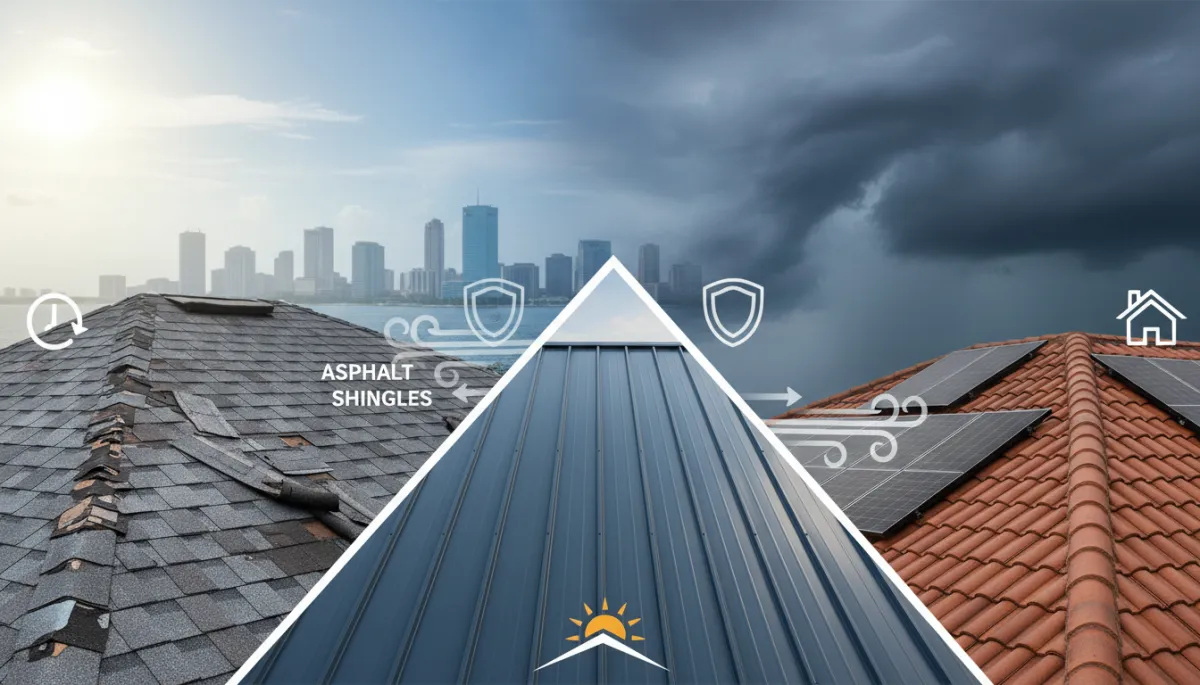
Q4: How do asphalt shingles, metal roofing, and tile roofing compare for Tampa Bay homes?
Below is a side-by-side comparison of the three most common pitched-roof materials we install in Tampa Bay: asphalt shingles, metal roofing, and tile roofing. These ranges reflect typical single-family homes in our market in 2026 and align with current cost data for Tampa roofing replacement.
Material Typical Installed Cost (Tampa) Approximate Lifespan Wind Rating (When Properly Installed) Maintenance Asphalt shingles ~$6,000–$12,000 15–25 years 130–150 mph Low–moderate Metal roofing ~$15,000–$25,000 40–70 years 140–160+ mph (standing seam best) Minimal Tile roofing (concrete or clay) ~$20,000–$35,000 50–100+ years 125–150 mph (engineered systems can be higher) Minimal, but needs periodic inspections
Asphalt shingles in Tampa Bay: pros and cons
Asphalt shingles remain the most common roofing material in Tampa because of their lower upfront cost. For a typical 1,500–2,000 sq ft home, asphalt roof installation cost in Tampa often falls in the $6,000–$12,000 range for basic systems, with premium “impact-rated” or designer shingles costing more. They are available with wind ratings up to 130–150 mph when installed with the correct nail pattern and underlayment.
Advantages: Lowest upfront cost; wide color and style options; easier repairs; compatible with most HOA guidelines in neighborhoods like Westchase and FishHawk Ranch.
Drawbacks: Shorter lifespan in Tampa’s harsh sun and humidity—often 15–20 years in real-world conditions; more vulnerable to shingle blow-off in repeated hurricane seasons, especially as the roof ages.
Metal roofing in Tampa Bay: pros and cons
Metal roofing—especially standing seam systems—has become one of the best roofing materials for Tampa for homeowners prioritizing hurricane resilience and long-term value. Installed costs typically range from $15,000–$25,000 for an average home, depending on roof complexity and panel type, aligning with 2026 Tampa cost data. Lifespan is typically 40–70 years with proper coatings and maintenance.
Advantages: Excellent wind resistance, often 140–160+ mph when properly fastened; highly resistant to driving rain; reflective coatings can reduce cooling costs; lightweight and ideal for pairing with solar panels; minimal maintenance over decades.
Drawbacks: Higher upfront cost; must be installed by experienced contractors to avoid oil-canning, noise issues, or galvanic corrosion—this is where Fused Solar and Roofing’s licensing and experience in Tampa Bay are critical.
Tile roofing in Tampa Bay: pros and cons
Tile roofing—concrete or clay—is a classic choice in Florida, especially in higher-end neighborhoods and coastal communities. Installed costs in Tampa usually fall in the $20,000–$35,000 range, depending on tile type and roof size. Properly installed tiles can last 50–100+ years, with some clay tile roofs outliving the structures beneath them.
Advantages: Exceptional longevity; excellent resistance to heat and UV; strong wind performance (typically 125–150 mph, with engineered systems tested even higher under modern Florida codes); classic Mediterranean and coastal aesthetics that fit many Tampa Bay communities.
Drawbacks: Heavier than asphalt or metal—your home’s structure must be evaluated to confirm it can safely support the load; higher upfront cost; individual tiles can crack from impacts and may need spot replacement over time.
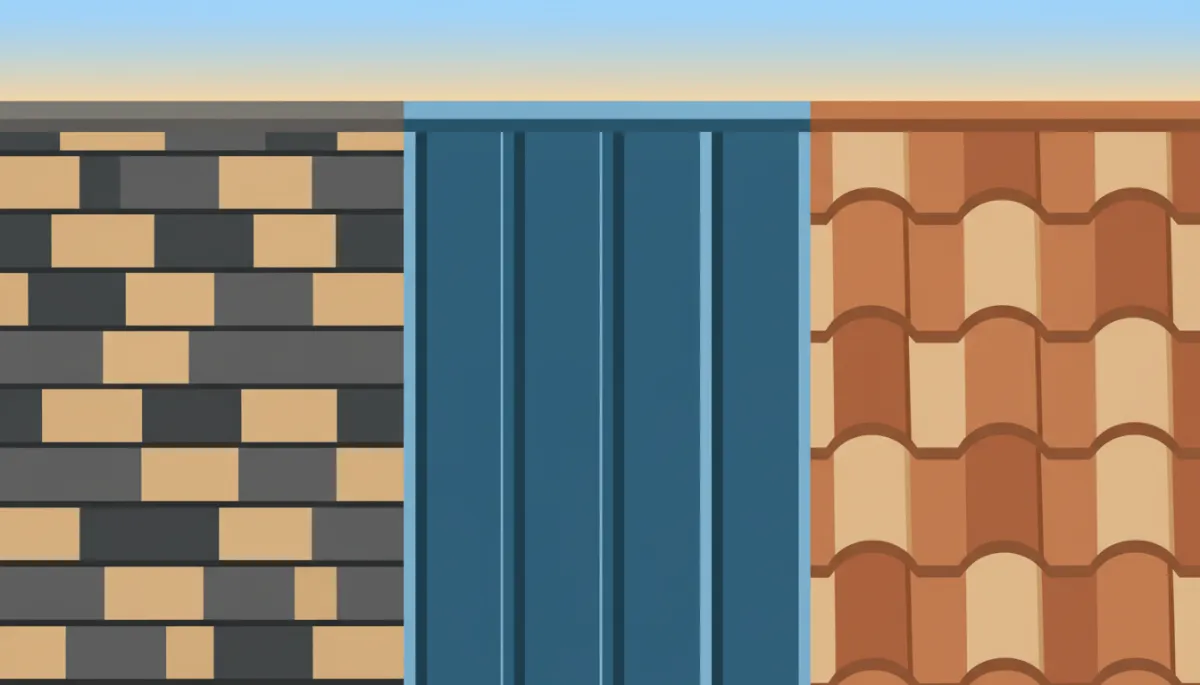
Side-by-side comparisons help Tampa homeowners balance cost, hurricane performance, and curb appeal.
Fused Solar and Roofing is proud to offer expert solar system maintenance and repair services — Book your solar panel inspection and cleaning at tampasolarmaintenance.com.
Q5: Which roofing material holds up best in hurricanes?
In our field experience across Tampa Bay, the biggest difference during hurricanes isn’t usually between code-compliant materials on day one—it’s how they perform after 10–20 years of Florida weather. Here’s what we consistently see after storms like Ian, Helene, and Milton:
Asphalt shingles: Even high-wind shingles can start to lose granules, curl, and weaken after 15–20 years in Tampa’s sun and humidity. Once the sealant strips age, shingles are more likely to blow off in clusters, especially along ridges and eaves, exposing underlayment and decking to water intrusion.
Metal roofing: Properly installed standing seam systems rarely lose panels in hurricanes. Most damage we see involves accessory pieces—ridge caps or trim—not the main panels. Their interlocking design and continuous attachment make metal one of the most hurricane-resistant options available in Tampa.
Tile roofing: Mechanically fastened or foam-set tiles perform well in high winds. Individual tiles may crack from flying debris, but the overall system usually stays intact, preventing catastrophic failure. Underlayment quality and fastening patterns are critical under Florida’s updated tile codes.
💡 Pro Tip from Fused Solar and Roofing: For the best hurricane-rated roof in Tampa, focus on both material choice and installation quality. As GAF Certified Plus roofers, we combine high-wind-rated products with enhanced nailing patterns, sealed roof decks, and code-plus fastening to improve real-world storm performance.
Q6: How do asphalt, metal, and tile compare on cost-per-year of service?
Many Tampa homeowners initially lean toward asphalt shingles because the upfront price is lower. But when you compare roofing comparison in Florida on a cost-per-year basis, metal and tile often deliver better long-term value—especially over 40+ years in the same home.
Asphalt shingles: cost-per-year example
Assume an asphalt shingle roof in Tampa costs $10,000 and realistically lasts 20 years in our climate.
Cost per year = $10,000 ÷ 20 years = $500 per year.
Over 40 years in the same home, you will likely replace that roof twice: $10,000 × 2 = $20,000 total, not including inflation or storm repairs.
Metal roofing: cost-per-year example
Assume a standing seam metal roof in Tampa Bay costs $20,000 and lasts a conservative 50 years.
Cost per year = $20,000 ÷ 50 years = $400 per year.
Even at the same 40-year horizon, you’re still on the original roof, with lower risk of hurricane damage and better energy efficiency. When you factor in potential insurance discounts for hurricane-rated roofs and energy savings from reflective metal, the effective cost per year can drop even further.
Tile roofing: cost-per-year example
Assume a tile roof in Tampa costs $30,000 and lasts 60 years or more with periodic underlayment replacement.
Cost per year = $30,000 ÷ 60 years = $500 per year.
In this scenario, tile’s cost-per-year is similar to asphalt but with far superior longevity and curb appeal. Over multiple decades, a well-maintained tile roof can add resale value and reduce replacement cycles for future owners.
📌 Bottom line on value: When you divide total cost by realistic lifespan in Tampa’s climate, metal and tile are often competitive with or better than asphalt on a cost-per-year basis—while providing stronger hurricane performance and better long-term protection.
Q7: How does pairing a new roof with solar improve value in Tampa Bay?
Tampa Bay homeowners increasingly ask us about installing a hurricane-rated roof and solar panels together. As both a roofing and solar contractor, Fused Solar and Roofing is uniquely positioned to streamline this process and maximize your return on investment. Pairing roof and solar offers several advantages:
Single HOA review: Instead of submitting separate applications, we present your roof and solar design together, addressing color, panel layout, and curb appeal in one package. This is especially helpful in deed-restricted communities around Westchase, FishHawk Ranch, and master-planned communities in Brandon and Riverview.
Unified permitting: Our combined Florida Roofing License (CCC1331058), Electrical License (EC13014750), and Building Contractor License (CBC1252064) allow us to handle roofing, solar, and structural permits under one roof—reducing delays and miscommunication between separate contractors.
Structural readiness assessed once: We evaluate your roof framing, load capacity, and wind uplift requirements for both the roofing material and the solar array at the same time. This is especially important for heavier tile systems or when upgrading from asphalt to metal with solar in high-wind zones.
Better long-term ROI: Replacing your roof a few years after installing solar means paying to remove and reinstall panels. By installing a new, long-life roof—especially metal or tile—at the same time as solar, you align lifespans and avoid future re-roof and re-mount costs.
Fused Solar and Roofing also backs every roof penetration we make for solar with a 25-year no-leak roof penetration guarantee. That level of protection is critical in Tampa’s high-rain, high-humidity environment and is one reason homeowners across Hillsborough and Pinellas counties trust us to integrate roof and solar the right way.
Q8: Why choose Fused Solar and Roofing for your Tampa Bay roof?
Since 2007, Fused Solar and Roofing has specialized in hurricane-rated roofs and solar installations across Tampa, Brandon, Riverview, St. Petersburg, Clearwater, and surrounding communities. For homeowners comparing the best roofing materials in Tampa, our credentials and local experience matter:
GAF Certified Plus roofers — This designation is awarded to a small percentage of roofing contractors and reflects advanced training, proven installation quality, and the ability to offer enhanced manufacturer-backed warranties on asphalt shingle systems.
Florida Roofing License CCC1331058 — Ensures compliance with the Florida Building Code for wind, uplift, and waterproofing on all roofing projects in Hillsborough and Pinellas counties.
Electrical License EC13014750 — Required for safe, code-compliant solar installations and any electrical work related to roof-mounted equipment, surge protection, or service upgrades.
Building Contractor License CBC1252064 — Confirms we can evaluate and modify structural elements when needed, such as reinforcing framing for tile roofs or heavy solar arrays.
25-year no-leak roof penetration guarantee — Every penetration we make, whether for vents, skylights, or solar mounts, is backed by a 25-year no-leak guarantee. In a region known for intense thunderstorms and tropical systems, that peace of mind is invaluable.
Whether you’re comparing metal roofing vs asphalt in Tampa, considering a tile roof for your Tampa Bay home, or planning a combined roof and solar installation, Fused Solar and Roofing provides detailed, local guidance based on nearly two decades of real-world storm experience.
Fused Solar and Roofing is proud to offer certified solar maintenance and support — Start your free maintenance consultation at tampasolarmaintenance.com.
Key Takeaways: Best Roofing Materials for Tampa Florida
Tampa Bay’s climate—intense sun, humidity, salt air, and hurricanes—accelerates roof wear. Materials that last 30 years up north may last only 15–20 years here, especially asphalt shingles.
The Florida Building Code generally requires roofs in Hillsborough and Pinellas counties to handle 130–150 mph winds, making proper installation and fastening just as important as material choice.
Asphalt shingles (15–25 years, ~$6,000–$12,000, 130–150 mph) offer the lowest upfront cost but often the highest total cost over 40 years due to shorter lifespan and higher risk of storm damage as they age.
Metal roofing (40–70 years, ~$15,000–$25,000, 140–160+ mph) provides excellent hurricane performance, minimal maintenance, and strong cost-per-year value—especially when paired with solar for better energy savings and ROI.
Tile roofing (50–100+ years, ~$20,000–$35,000, 125–150 mph) offers outstanding longevity and curb appeal, but requires a structural assessment due to its weight. Over decades, tile’s cost-per-year can rival asphalt while providing superior durability.
Recent storms like Hurricane Ian (2022) and Helene and Milton (2024) showed that while asphalt shingles often blow off, properly installed metal and tile roofs in Tampa Bay rarely experience catastrophic failure, protecting homes better during hurricanes.
Pairing a new roof with solar in Tampa Bay allows for a single HOA review, unified permitting, one-time structural assessment, and aligned lifespans—improving long-term ROI and minimizing future disruptions.
Fused Solar and Roofing is a GAF Certified Plus contractor with nearly 20 years of experience installing roofs in Hillsborough and Pinellas counties, backed by Florida Roofing License CCC1331058, Electrical License EC13014750, Building Contractor License CBC1252064, and a 25-year no-leak roof penetration guarantee.
Want to choose the right roofing material for your Tampa Bay home? Call or text Fused Solar and Roofing at (813) 686-9896 for a free in-house roof inspection and consultation. We are GAF Certified Plus and can assess your home's structural requirements, hurricane rating needs, and long-term value. We also coordinate roof and solar installation together for maximum savings. We serve Tampa, Brandon, Riverview, St. Petersburg, Clearwater, and all of Hillsborough and Pinellas Counties. Florida Roofing License CCC1331058 — Electrical License EC13014750 — Building Contractor License CBC1252064. Established 2007.
Frequently Asked Questions
1. What is the best roofing material for Tampa, Florida?
For most homes, architectural asphalt shingles from a complete GAF roofing system give the best balance of hurricane rating, cost, and warranty. Standing seam metal is the best long-term performer for wind and heat, and concrete or clay tile suits Mediterranean-style homes where weight and budget allow.
2. How long does each roof type last in Tampa Bay?
Architectural shingles typically last 20 to 30 years, standing seam metal 40 to 60 years, and tile 50 years or more, though the underlayment beneath tile usually needs replacement around year 25. Heat, UV, and salt air shorten the low end of each range along the coast.
3. Which roof handles hurricanes best?
Standing seam metal, because the panels are mechanically fastened with concealed clips and have no exposed edges for wind to lift. Properly installed shingle and tile roofs also meet Florida Building Code wind requirements when the fastening, underlayment, and sealed decking are done to spec.
4. How much does a new roof cost in Tampa in 2026?
Shingle roofs on a typical 2,000 to 2,200 square foot home run about $13,500 to $20,000; standing seam metal and tile usually run $25,000 to $40,000 or more depending on size and complexity. Fused Solar and Roofing quotes each roof in writing after a measurement.
5. Which roofing material is best if I plan to add solar?
Shingles and standing seam metal are the easiest to mount solar on. Metal roofs allow clamp-on mounts with no penetrations on standing seam profiles. Tile roofs require tile hooks or replacement flashing tiles at every attachment, which adds cost. Fused handles all three because it holds roofing and electrical licenses.
6. Does Fused Solar and Roofing install metal and tile roofs or only shingles?
All three. Fused is a GAF Certified Plus contractor for shingle systems and installs standing seam metal and tile roofs across Hillsborough, Pinellas, Pasco, and Manatee counties under Florida roofing license CCC1331058, with a 25-year no-leak guarantee on every penetration.
Fused Solar and Roofing is a licensed roofing (CCC1331058), electrical (EC13014750), and building contractor (CBC1252064), all three in-house, serving Hillsborough, Pinellas, Pasco, and Manatee counties since 2007. Fused Solar and Roofing is an EnergySage Elite Installer with a 5.0/5 rating and 21+ verified reviews, independent verification, earned not purchased.
Need a new roof, with or without solar on it? Request a roofing quote at https://fusedsolarandroofing.com/new-roof-installation