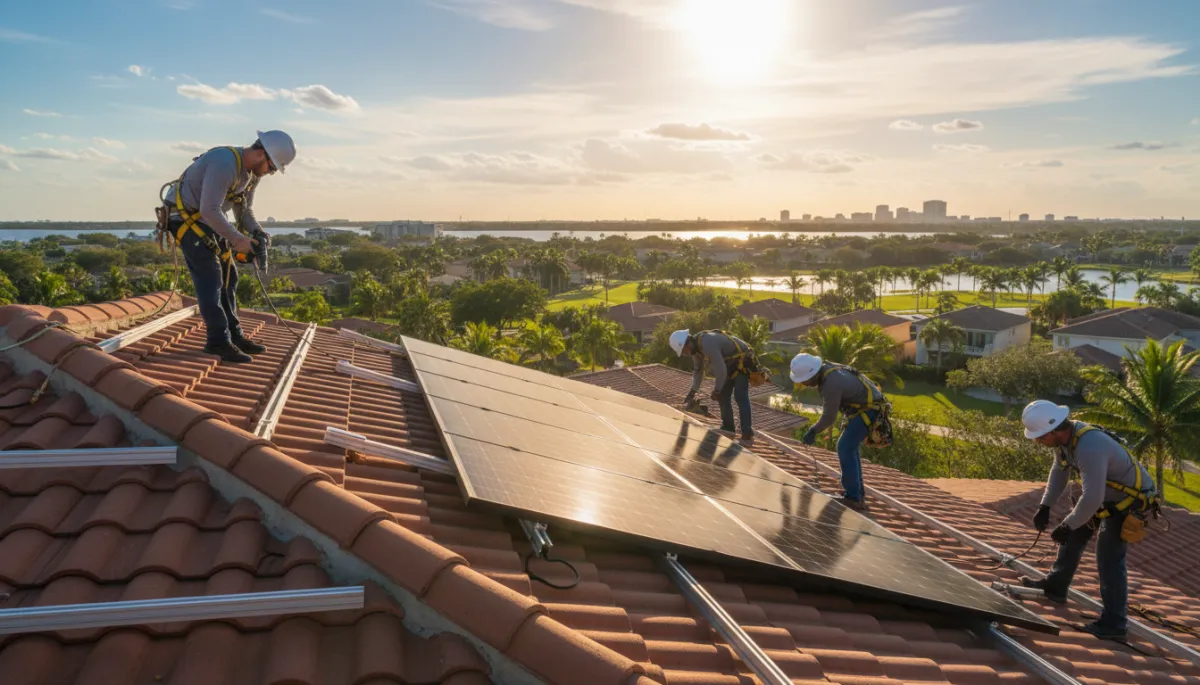
Is Solar Worth It in Tampa Bay Without the Tax Credit?
You are weighing solar now that the federal tax credit you heard about is gone, and you want a clear, honest answer about whether it still adds up for your Tampa Bay home. The federal residential clean energy credit is no longer available for home solar systems installed after December 31, 2025. That change affects the numbers, because an incentive that used to help cover part of the cost is no longer in the picture, and this post will be straight with you about what that really means for your decision. Fused Solar and Roofing is a licensed roofing (CCC1331058), electrical (EC13014750), and building contractor (CBC1252064) — all three in-house.
Below, you will see exactly what changed, what did not, what questions to ask any installer today, and why your roof matters more than ever now that there is no federal credit helping to paper over avoidable mistakes.
1. What actually changed
For homeowner-owned systems, the change is simple, even if it is frustrating. The federal residential clean energy credit is no longer available for home solar systems installed after December 31, 2025. The IRS treats the expense as made when the installation is finished, so a deposit paid earlier does not qualify a system that was completed after that date. If you are a Tampa Bay homeowner planning to buy and own your solar system outright now, there is no federal residential clean energy credit reducing what you pay for that system.
📌 Key Takeaway: The federal credit ended for home solar systems installed after December 31, 2025. Any company still quoting it in your numbers is using something that no longer exists.
2. What the credit was doing for the numbers
When the federal credit was available, it lowered what a homeowner ultimately paid out of pocket for a qualifying solar system. The credit did not change what it cost to build the system, but it did change how much of that cost a homeowner was left carrying.
Without that credit, the same physical system now sits fully on your side of the ledger. The installer’s price is no longer softened later by a federal tax benefit tied specifically to a homeowner-owned solar system. That means the system simply costs you more than it would have with the credit, and it takes longer for the reduced electricity you buy from the utility to catch up to what you paid for the system. The cash flow picture is still based on the same ideas — you invest in a system now, then you buy less power over time — but there is no federal credit stepping in to shorten that path in the background.
This is why you may have heard salespeople urging you to move quickly before the deadline. They were reacting to a real change in the math, even if the way it was presented sometimes felt rushed or unclear. Now that the deadline has passed, the right question is not whether the credit was real — it was — but how to look at solar cleanly without it.
Wondering whether solar still works for your home? Fused Solar and Roofing gives straight answers across Hillsborough, Pinellas, Pasco, and Manatee counties. Request a free solar quote at https://fusedsolarandroofing.com/new-solar-installation
3. What did not change
While the federal credit ending is a big headline, the basic ingredients that made solar work in Tampa Bay did not change. The sun did not get dimmer on January 1. Our area still has the same strong sunshine that has always made rooftop solar productive. Your roof is still the same roof — the same structure, the same pitch, the same shading from trees or neighboring homes. The equipment is still the same class of panels, inverters, and racking that convert sunlight into electricity on your property.
Most importantly, a correctly designed system still offsets power you would otherwise be buying from your utility. That core idea did not depend on a tax credit. When your system is producing, your home is being supplied by power generated on your roof. When it is not producing, you rely on the grid as you always have. The presence or absence of a federal incentive does not change how electrons move through your home — it changes how you pay for the equipment that puts them there.
Because of that, the way to think about solar today is very similar to how a careful homeowner should have thought about it even when the credit was available. Does the system design match your home and your usage. Is the roof ready. Is the installer planning the project in a way that avoids future headaches. Those questions mattered before, and they matter even more now that there is no federal help to offset avoidable mistakes.
💡 Pro Tip: Ask an installer what percentage of your current electricity use the system would offset, based on your actual bills. That number matters more now than any incentive ever did.
4. The questions worth asking now
With the federal credit no longer part of the picture, the conversation with any installer should shift toward the fundamentals of your home and your project. You are not being difficult by asking direct questions — you are doing what a careful homeowner should do. The right installer will welcome that and walk through the answers with you in plain language.
Start with your current electricity use. Ask, “How much of my current bill would this system offset, based on my actual usage.” That keeps the focus on your real life, not on a generic house. You can also ask how they are using your past bills in their design, and whether the proposal assumes any change in how you use power at home. You want to see that the design is tied to your numbers, not to a template.
Next, ask about your roof. “What condition is my roof in, and does it need work before panels go on.” Follow that with, “What happens if my roof needs work later — who removes and reinstalls the panels, and what does that typically involve.” You are not accusing anyone of planning a bad job; you are simply making sure the roof and the solar are being thought about as one system, not as two separate projects that might collide later on your dime.
Warranties are another area where clear questions help. Ask, “What is warrantied, and for how long.” That includes the panels, the inverter, the mounting hardware, the workmanship, and the roof penetrations related to the solar install. Ask who stands behind each piece — the manufacturer, the installer, or both — and how you would actually get service if something goes wrong. That leads to the last key question: “Who services the system afterward, and how do I reach them if there is an issue a few years from now.” You want to know that there is a real plan for support, not just a promise on a brochure.
5. Why the roof matters more without the credit
When a federal credit helped offset part of the cost, an avoidable expense later was easier to absorb. Now that the credit is gone, those avoidable costs stand out in full. The biggest avoidable cost in many home solar projects is paying to remove and reinstall the array later because the roof underneath was not ready when the panels went on.
If your roof is already in strong condition, the goal is to keep it that way by mounting the solar correctly, sealing every penetration properly, and documenting what was done. If your roof is nearing replacement, you have a different kind of opportunity — you can address the roof and the solar as one coordinated project instead of stacking one on top of the other and hoping they line up later. A homeowner whose roof is nearing replacement can replace it as part of the solar project instead, which avoids paying twice to have panels handled and makes the whole system cleaner from day one.
This is where the structure of the company you choose matters. Fused Solar and Roofing installs the roof and the solar with its own in-house crews, so it is one project rather than two. That means the people who understand roofing are in the same conversation as the people who understand solar, and they are looking at your home as a single system that needs to stay dry, secure, and productive for years. You are not left trying to coordinate between a roofer and a separate solar company if something needs attention later.
The way the panels attach to the roof is a big part of that. Fused Solar and Roofing mounts every solar array on K2 Systems hurricane-rated flashed mounting. That approach is about more than just keeping panels in place — it is about protecting the roof structure, managing water, and respecting the way the roof was built in the first place. Every penetration is planned, flashed, and documented so you know what is there and why it will hold up over time. Fused Solar and Roofing provides a written 25-year no-leak guarantee on every roof penetration it makes for solar.
Because the same company is responsible for both the roof and the solar, there is no finger-pointing between trades if there is ever a question. Fused Solar and Roofing is a licensed roofing (CCC1331058), electrical (EC13014750), and building contractor (CBC1252064) — all three in-house. That structure lets the team design around vents, valleys, and structural elements, choose mounting points carefully, and plan future roof work if it will be needed, instead of pretending the roof is someone else’s problem. Without a federal credit in the background, that kind of planning is where a lot of the real savings live — in the costs you never have to pay later.
⚠️ Warning: Putting panels on a roof that is near replacement means paying to take them off and put them back later. Ask about the roof before you sign anything.
6. Where the savings actually come from now
With no federal credit stepping in behind the scenes, the savings from solar now come almost entirely from how well the system fits your home and how cleanly the project is executed. That starts with system sizing. A system that is too small may not offset enough of your usage to justify the investment for you. A system that is far larger than your realistic use can mean paying for capacity that does not line up with your household. The right design is based on how you actually live — your appliances, your cooling habits, your schedule — not on a rule of thumb or a one-size-fits-all layout.
The next layer of savings comes from avoiding future repair costs that were never necessary in the first place. An installation that respects the roof, uses quality mounting hardware, and is carried out by crews who understand roofing and electrical work is less likely to create leaks, callbacks, or structural issues. Every leak that never happens, every emergency panel removal you never have to schedule, is part of the financial picture now that there is no credit offsetting surprises. In that sense, a careful install is not just about craftsmanship — it is about protecting your wallet over the life of the system.
Finally, savings depend on having equipment and a design that can be serviced locally by a company that plans to be around. Panels, inverters, and other components are long-lived products, but they are not magic. Over time, you may have questions, need monitoring checked, or want to add to your system. Working with a contractor that has real roots in the area and technical depth in-house means those needs can be met without starting from scratch. The value is not only in the first day the system turns on — it is in the years of support that follow, especially now that your return is coming purely from the system’s performance and durability.
7. What a solar quote should show you
In today’s environment, a useful solar quote is less about marketing language and more about clear, concrete information. First, it should show you the equipment being proposed — the panels, the inverter type, and the mounting system — so you know what is actually going on your roof. You should be able to see how many panels are planned, where they would go, and how that ties back to your usage. The quote should also describe how the panels will be attached to the roof, not just in general terms, but in a way that gives you confidence that the roof structure and waterproofing are being respected.
A good quote also spells out what is warrantied and for how long. That includes product warranties from manufacturers and workmanship or penetration warranties from the installer. It should be clear who you would call if you had a concern about a leak, about system performance, or about any other part of the installation. Alongside that, the quote should address the condition of your roof. That may mean a written roof inspection, photos, or a clear statement about whether roof work is recommended as part of the project. If the roof is not being discussed at all, that is a sign to slow down and ask more questions before moving forward.
Utility interconnection is another piece that should be explained. Fused Solar and Roofing submits the interconnection application, and the interconnection agreement itself is between the homeowner and the utility. Your quote should say who is handling the paperwork, what steps are involved, and what you can expect once the system is installed and ready to be turned on. This is part of making sure that you are not left navigating unfamiliar processes on your own once the crews have left your driveway. Fused Solar and Roofing is an EnergySage Elite Installer with a 5.0/5 rating and 21+ verified reviews — independent verification, earned not purchased.
Finally, look closely at how the numbers in the quote are presented. Any quote that leans on incentives to make its numbers work deserves a closer look now that the federal credit is gone. You should be able to understand the project based on the contract price, your usage, and the system’s expected production, without needing a tax line to make the story hold together. If a proposal still shows the old federal credit as if it applies to your project, that is a sign that the information is out of date. In that case, ask the installer to revise the quote so you can see the real picture for a system installed now.
📌 Key Takeaway: Fused Solar and Roofing quotes the roof and the solar together under roofing license CCC1331058 and electrical license EC13014750, with a written 25-year no-leak guarantee on every solar roof penetration.
8. So is it worth it or not
With no federal credit for homeowner-owned systems installed after December 31, 2025, there is no single yes-or-no answer that fits every Tampa Bay home. For some homes, solar still makes sense without the credit. For others, it does not. The difference often comes down to three things — the roof, the household’s electricity use, and how long the owner plans to stay in the home. A well-sited, unshaded roof with a solid structure, paired with a household that uses enough electricity for a right-sized system to matter, can still see a strong case for solar even without an incentive. A heavily shaded roof, a home with very low usage, or a plan to move soon may point in the other direction.
Your timeline matters because solar is a long-term decision. The benefits come from years of reduced electricity purchases compared to what you would have bought otherwise. If you expect to be in the home long enough for that to matter, and the roof and design line up, the lack of a federal credit does not automatically rule solar out. It just means you are relying entirely on the system’s performance, the avoided repair costs, and the stability of having a well-built energy asset on your roof. If, on the other hand, you see your home as a short stop, or your roof needs extensive work that you are not ready to address, waiting or choosing not to install solar may be the more practical answer for now.
The role of the installer is to help you see that clearly, not to push you into a project that does not fit. Fused Solar and Roofing will say so if a home is not a good fit. That includes situations where the roof condition, shading, usage, or ownership plans make solar a stretch, even if it might technically be possible to install panels. Fused Solar and Roofing is not a tax advisor, and questions about your own tax situation belong with a tax professional. What the company can do is give you an honest, roof-first view of your options so you can decide with full information and no pressure.
Frequently Asked Questions
1. Is the federal solar tax credit still available?
The federal residential clean energy credit is no longer available for home solar systems installed after December 31, 2025. The IRS treats the expense as made when the installation is finished, so a deposit paid earlier does not qualify a system that was completed after that date.
2. I paid a deposit in 2025 but my system was installed later. Do I still qualify?
The IRS treats the expense as made when the installation is finished, so a deposit paid earlier does not qualify a system that was completed after that date. Because this is about your personal taxes, you should discuss your specific situation with a tax professional.
3. Does solar still make sense in Tampa Bay without the tax credit?
For some Tampa Bay homes, yes — for others, no. It depends on your roof’s condition and layout, how much electricity your household actually uses, and how long you expect to stay in the home. A well-designed system on a good roof can still be a solid long-term choice, but the decision now rests entirely on those fundamentals rather than on a federal incentive. A site visit, a review of your bills, and an honest conversation are the best way to see where your home falls.
4. Should I wait in case the credit comes back?
Nobody can predict what Congress will do, or whether a future credit will look like the one that just ended. Waiting has its own cost, because in the meantime you continue buying all of your electricity from the utility with no help from a system on your roof. The cleaner way to decide is to look at your home as it is now — your roof, your usage, and your plans — and decide whether solar makes sense on those facts alone, without trying to guess what might happen in Washington later.
5. Do I need a new roof before installing solar?
Not every home needs a new roof before going solar, but every home does need an honest look at the roof before panels go on. If your roof is in good condition and expected to remain that way, solar can often be installed on top without roof replacement. If your roof is closer to the end of its useful life, it can be more cost-effective to address the roof and solar together, rather than paying later to remove and reinstall panels for roof work. A thorough roof inspection and a clear explanation of your options should be part of any serious solar proposal.
6. What should a solar quote include now?
A solid solar quote today should show the specific equipment being proposed, how the panels will be attached to your roof, and what is warrantied and for how long. It should address the condition of your roof and explain whether any roof work is recommended as part of the project. It should also spell out who handles the utility interconnection steps and what you can expect once the system is installed. Most importantly, the numbers should make sense on their own, without relying on a federal credit that no longer applies to homeowner-owned systems installed after December 31, 2025.
Fused Solar and Roofing has installed solar across Hillsborough, Pinellas, Pasco, and Manatee counties since 2007, with the roof and the solar handled by its own licensed in-house crews. Request a free solar quote at https://fusedsolarandroofing.com/new-solar-installation
Want an honest answer about solar for your home? Request a free solar quote at https://fusedsolarandroofing.com/new-solar-installation