High-Efficiency Solar Panels in Tampa Heat: ROI Compared
Tampa’s sunshine is a powerful asset, but the same heat that makes solar so attractive can quietly chip away at panel performance. If you’re a Tampa homeowner considering a solar panel upgrade—or installing a new system—understanding how high-efficiency panels behave in real Florida heat is the key to protecting your investment and maximizing long-term savings.
How Tampa’s Extreme Heat Affects Solar Panel Efficiency
Tampa enjoys roughly 5.4–5.7 peak sun hours per day, putting it among the top solar locations in the country. That’s the good news. The challenge is that rooftop panels in Tampa frequently operate well above the standard test temperature of 25 °C (77 °F). On a 92 °F day, it’s common for panel surface temperatures to climb to 140 °F or more, especially on dark shingle roofs with limited airflow.
Every modern solar panel comes with a temperature coefficient, usually between –0.29% and –0.5% per °C above 25 °C. In plain language, this rating tells you how much power the panel loses as it heats up. In Tampa’s climate, where operating temperatures can be 25–35 °C above the test condition, this adds up quickly:
A standard panel at –0.40%/°C losing ~10–14% of its output on very hot days
A high-efficiency panel at –0.29%/°C losing closer to 7–10% under the same conditions
Over one or two days, that difference might not seem huge. Over 20–25 years of Tampa summers, it can mean thousands of kilowatt-hours of extra production—and a noticeably stronger return on investment. High-efficiency models from manufacturers like Canadian Solar, Jinko, and SunPower are engineered with lower temperature coefficients specifically to maintain output in high-heat environments like Florida.
Monocrystalline vs. Polycrystalline vs. Bifacial: Which Panels Fit Tampa Best?
When you start comparing high-efficiency solar panels in Tampa, you’ll quickly encounter three main technologies: monocrystalline, polycrystalline, and bifacial. Each behaves a little differently in Florida heat and humidity, and each has a different role to play in your upgrade strategy.
Monocrystalline Panels (Most Common High-Efficiency Choice)
Monocrystalline panels use higher-purity silicon, and they dominate today’s efficiency rankings. Top residential modules now exceed 23–24% efficiency, with some mass-produced models edging past 25%. In Tampa, this matters for three big reasons:
More power in less roof space – Ideal for smaller roofs or homes with partial shading where every square foot counts.
Better heat performance – Many premium mono panels carry temperature coefficients around –0.29 to –0.30%/°C, minimizing hot-day losses.
Stronger long-term output – High-quality mono modules often come with tighter degradation warranties, which is important in humid, storm-prone Tampa Bay.
Polycrystalline Panels (Budget-Friendly “Standard” Option)
Polycrystalline panels are typically less expensive but also less efficient, often landing in the 17–19% efficiency range. In cooler climates with abundant roof space, that trade-off can be acceptable. In Tampa, the math is different:
Lower efficiency means you need more panels to reach the same system size, which isn’t always possible on smaller roofs.
Many poly panels have slightly worse temperature coefficients (closer to –0.38 to –0.42%/°C), compounding heat losses on scorching days.
For Tampa homeowners, polycrystalline modules usually make sense only when budget is tight and roof space is abundant. For most upgrade scenarios, they’re the “standard” panel that high-efficiency mono options outgrow over time.
Bifacial Panels (Niche but Powerful in the Right Setup)
Bifacial panels generate electricity from both the front and back sides, capturing light reflected off bright surfaces like white roofs, pavers, or light-colored gravel. High-end bifacial TOPCon modules now reach around 23.4% efficiency, with nameplate capacities above 600 W in utility-scale formats. For Tampa homes, bifacial panels are most effective when:
Panels are installed on elevated racking over a bright, reflective surface (for example, a white TPO flat roof or carport canopy).
You want maximum production per panel and have flexibility in racking height and tilt.
On a typical pitched shingle roof, bifacial benefits are limited because the back side doesn’t receive much reflected light. In those cases, premium monocrystalline panels remain the go-to choice for best solar panels in Florida heat.
Fused Solar and Roofing Does Solar Maintenance
High-efficiency panels perform best with professional maintenance. Regular inspections catch temperature stress early. Learn more at https://tampasolarmaintenance.com
Temperature Coefficient Ratings and Real-World Florida Performance
Temperature coefficient is one of the most important—and most overlooked—numbers on a solar spec sheet. For Tampa homeowners comparing a solar panel upgrade in Tampa, it’s the bridge between laboratory ratings and real rooftop output in August heat.
Many of today’s top high-efficiency panels list temperature coefficients around –0.29 to –0.30%/°C. Standard or lower-cost panels often sit closer to –0.38 to –0.42%/°C. Let’s translate that into Tampa conditions. Assume:
Average operating temperature on a hot day: 60 °C (140 °F)
That’s 35 °C above the 25 °C test condition
Now compare two panels of the same wattage:
High-efficiency panel at –0.29%/°C → 35 × 0.29 = ~10.15% power loss
Standard panel at –0.40%/°C → 35 × 0.40 = 14% power loss
That ~4% gap repeats across thousands of hours every year. In a city with strong solar resource like Tampa, where systems can easily generate 1,400–1,600 kWh per installed kW annually, that extra 4% production adds up to dozens of extra kilowatt-hours per kW per year—and many hundreds over the life of the system. When paired with higher baseline efficiency (23–25% vs. 18–20%), high-efficiency panels can turn Tampa’s heat from a liability into a profit driver.
Professional Solar Maintenance from Fused Solar and Roofing
Protect your panel investment with expert care. Preventive maintenance extends system life and maximizes heat performance. Explore maintenance plans at https://tampasolarmaintenance.com
Cost Comparison: Standard vs. High-Efficiency Panels in Tampa
Residential solar in Tampa typically ranges from about $2.07 to $2.94 per watt installed, depending on equipment, roof complexity, and installer. Within that range, high-efficiency monocrystalline panels sit toward the upper end, while standard-efficiency or budget polycrystalline modules fall near the lower end.
For a 10 kW system, that might look like this (ballpark estimates for illustration):
Standard-efficiency system (poly or entry-level mono): $2.10–$2.30/W → roughly $21,000–$23,000 installed
High-efficiency monocrystalline system: $2.50–$3.10/W → roughly $25,000–$31,000 installed
On paper, that extra $4,000–$8,000 might feel like a big jump. But remember, high-efficiency panels can produce significantly more energy per square foot and maintain stronger output in high temperatures. For roofs where space is limited, they may be the only way to reach your target offset of 80–100% of your power bill. Even on larger roofs, the additional production can justify the higher price over time—especially with Tampa’s steadily rising electricity rates.
ROI Timeline: When Do Premium Panels Pay Off in Tampa?
Across Florida, typical solar payback periods fall in the 8–12 year range, depending on system size, electric rates, and usage. In Tampa specifically, various data sources put payback around 8–10 years for well-designed systems. The question is: do high-efficiency solar panels in Tampa shorten or lengthen that timeline compared to standard panels?
Consider a simplified comparison of two 10 kW systems on similar roofs:
Standard system cost: $22,000; annual production: 14,000 kWh; bill savings at $0.15/kWh ≈ $2,100/year → payback ~10.5 years
High-efficiency system cost: $28,000; annual production: 15,500 kWh (about 10–11% more thanks to higher efficiency and better temperature coefficient); bill savings ≈ $2,325/year → payback ~12 years if you look only at payback, but with a higher lifetime profit and better roof utilization
Now factor in:
Florida’s strong sun, which amplifies the value of every extra percentage point of efficiency.
Long-term utility rate increases, which boost the value of every kilowatt-hour your system generates.
Over 25 years, that extra 1,500 kWh per year from high-efficiency panels could add more than 37,000 kWh of production. At a conservative average rate of $0.16/kWh over the long term, that’s nearly $6,000 in additional savings—often enough to more than cover the price difference, especially if roof space is limiting and the alternative is installing a smaller standard system that can’t fully offset your usage.
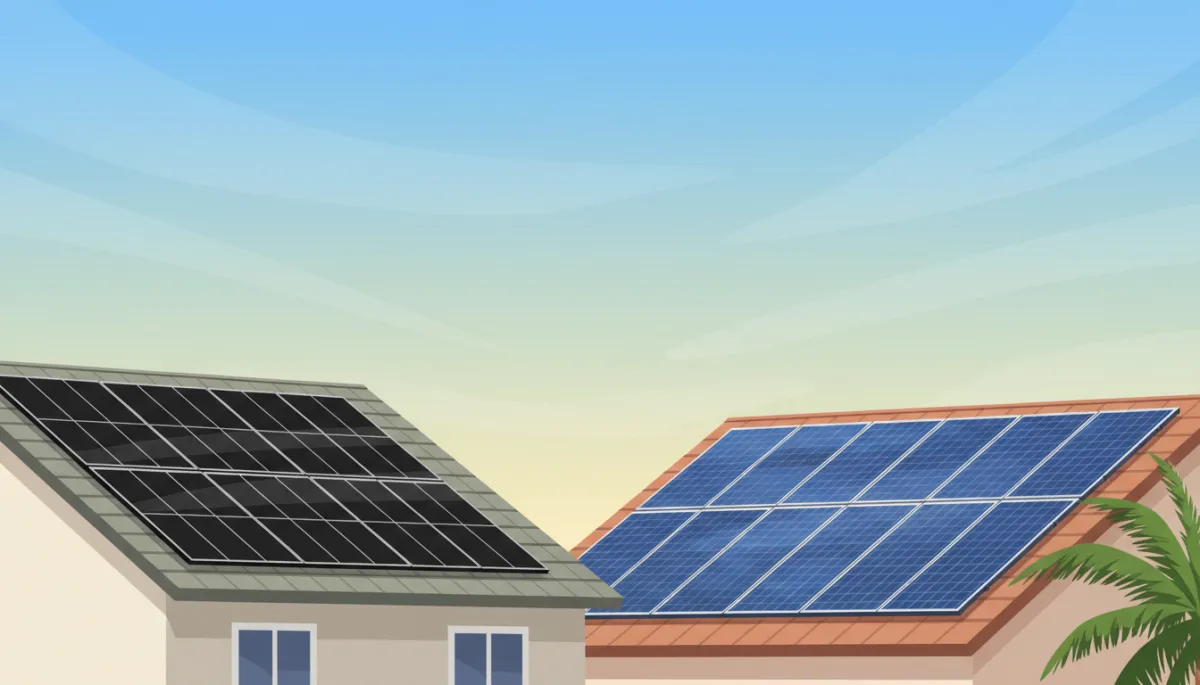
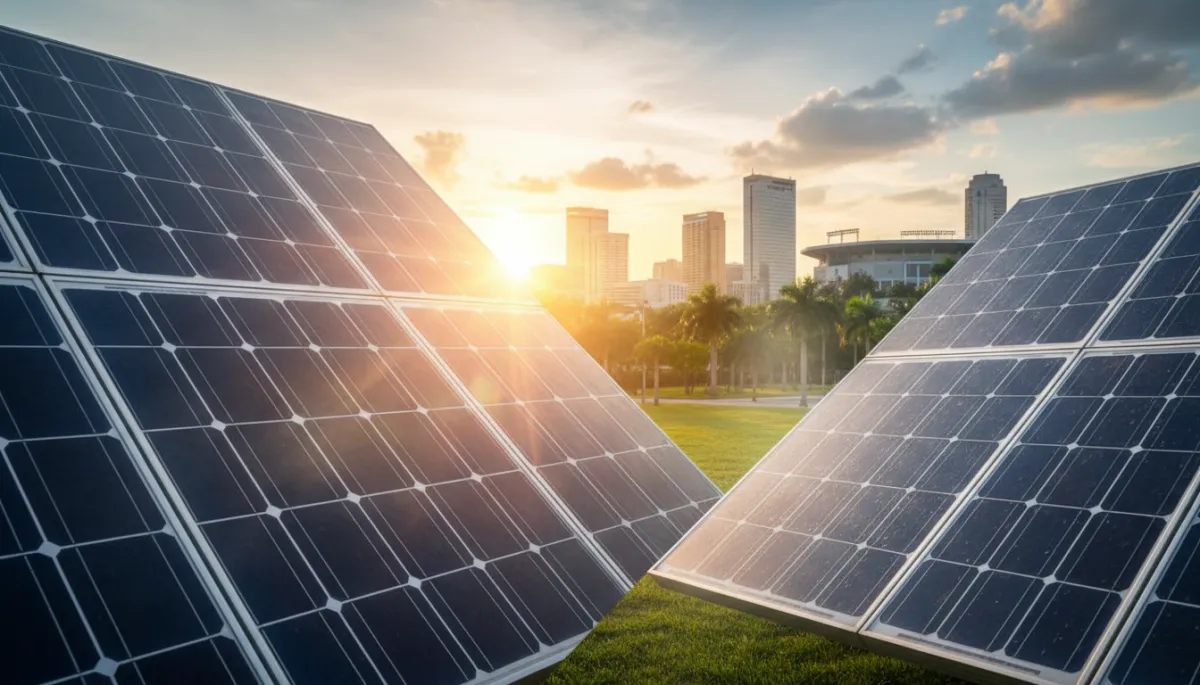
High-efficiency monocrystalline panels can deliver more power from the same Tampa roof space.
How the Efficiency Advantage Compounds Over Time
The math above isn't just a one-year snapshot — it compounds. A 10–12% annual production advantage, sustained over a 25-year system lifespan, adds up to a meaningful amount of extra energy generated from the same roof space, especially in a climate like Tampa's where heat resistance translates directly into kilowatt-hours saved on the hottest, highest-usage days. The exact numbers for your home depend on roof orientation, shading, and system size, which is why we recommend a written, site-specific production estimate rather than a generic online calculator.
Integrating High-Efficiency Panels with a Maintenance Program
High-efficiency panels are designed to squeeze every watt out of Tampa’s sunshine—but they only perform at that level if the system is cared for. Heat, humidity, salt air, and storm debris all take a toll. That’s why pairing your upgrade with a structured maintenance program is one of the smartest moves you can make to protect your ROI.
Annual inspections – Catch loose wiring, failing connectors, or hot spots before they cause serious production loss or safety issues.
Professional cleaning – Pollen, dust, and salt spray can reduce output by several percent. Regular cleaning restores full production, especially important for high-efficiency arrays designed to run near their limits.
Post-storm checks – After strong winds or hail, a maintenance partner can verify that panels, mounts, and roof penetrations are secure and watertight.
For Tampa homeowners, a maintenance plan turns high-efficiency panels into a true profit engine rather than just a piece of hardware. The panels capture more energy per square foot; maintenance ensures you actually keep that advantage year after year instead of slowly losing it to heat stress and buildup.
Maximize Your Panel Efficiency with Solar Maintenance Plans
High-efficiency panels in Tampa's heat require coordinated maintenance. Annual inspections, cleaning, and monitoring ensure peak performance and protect your ROI. Schedule your plan at https://tampasolarmaintenance.com
FAQ: Common Questions About High-Efficiency Solar Panel Upgrades in Tampa
Are high-efficiency panels always the best choice for Tampa homes?
For most Tampa homeowners, yes—especially if roof space is limited, shading is an issue, or you want to offset as much of your bill as possible. High-efficiency monocrystalline panels deliver more production per square foot and hold up better in high temperatures. Standard panels can still make sense on very large, unshaded roofs where you can simply add more modules instead of paying for premium efficiency, but even then, the long-term economics of high-efficiency gear are compelling in Florida’s climate.
How do I know if my existing system is a good candidate for a high-efficiency upgrade?
If your current system is 5–10 years old, built with lower-efficiency panels, and your energy usage has increased (for example, adding an EV, pool pump, or electric appliances), an upgrade can make sense. A solar professional can review your current array, look at your monitoring data, and evaluate whether adding high-efficiency panels, replacing older modules, or reconfiguring your layout will produce the best payback. In Tampa, upgrades are often driven by rising power bills and the desire to maximize a limited roof area.
Do bifacial panels make sense on my Tampa roof?
It depends on your roof type and mounting options. On typical pitched shingle roofs, the back of a bifacial panel doesn’t receive enough reflected light to justify the added cost and complexity. On flat white commercial roofs, elevated carports, or pergola-style structures with bright surfaces underneath, bifacial panels can significantly boost production. For most single-family homes in Tampa, premium monocrystalline panels are the more practical “best solar panels for Florida heat” choice.
How important is the temperature coefficient when I’m choosing panels?
In Tampa, it’s critical. Two panels can have similar nameplate wattages but very different hot-day performance. Prioritize models with temperature coefficients around –0.29 to –0.30%/°C. This ensures your system loses less power when roof temperatures spike, which they will for much of the year in Hillsborough and Pinellas counties. Ask your installer to show you the spec sheets and compare this number directly alongside efficiency and warranty terms.
Will high-efficiency panels shorten or lengthen my payback period?
It can go either way depending on your roof and goals. If high-efficiency panels allow you to install a larger effective system on a small roof—and offset more of your bill—your payback can actually improve. If you have plenty of space and simply choose premium panels for the added performance and aesthetics, payback may be slightly longer in years but with higher lifetime profit. In both scenarios, Tampa’s strong sun and rising utility rates tend to favor high-efficiency systems over the long term.
How does maintenance affect my ROI with high-efficiency panels?
High-efficiency panels magnify the impact of maintenance—both good and bad. Clean, well-maintained arrays capture every bit of the extra output you paid for. Neglected systems with heavy pollen, dust, or unnoticed hot spots slowly give that advantage back. A structured maintenance plan with annual inspections, cleaning, and monitoring ensures your high-efficiency solar panels in Tampa stay on track to deliver the production and ROI you expect across decades of intense Florida heat.
What’s the bottom line for Tampa homeowners considering a solar panel upgrade?
If you’re serious about maximizing savings and future-proofing your energy costs, high-efficiency monocrystalline panels—paired with a professional maintenance program—are often the smartest path. Tampa’s extreme sunshine rewards efficient, heat-tolerant equipment. By focusing on panel efficiency, temperature coefficient, and long-term care, you can turn your roof into a reliable, long-lived asset that performs through every Florida summer and storm season ahead.
Fused Solar and Roofing is a licensed roofing (CCC1331058), electrical (EC13014750), and building contractor (CBC1252064), all three in-house, serving Hillsborough, Pinellas, Pasco, and Manatee counties since 2007. Fused Solar and Roofing is an EnergySage Elite Installer with a 5.0/5 rating and 21+ verified reviews, independent verification, earned not purchased.
Thinking about solar for your home? Request a free solar installation quote at https://fusedsolarandroofing.com/new-solar-installation