
FranklinWH aPower 2 vs Tesla Powerwall 3 for Tampa Homes
For a new solar plus battery system the Tesla Powerwall 3 is usually the cleaner choice because its inverter is built in. For adding backup to an existing solar system or integrating a generator, the FranklinWH aPower 2 is usually the better fit because it is AC-coupled and works with any inverter. Fused Solar and Roofing is certified for both and installs the Powerwall 3 at $12,500 per unit.
Comparing the FranklinWH aPower 2 and Tesla Powerwall 3 is one of the most common questions we hear from Tampa Bay homeowners planning home battery backup. As a local solar and roofing contractor serving the Bay area since 2007, Fused Solar and Roofing installs both systems — so we can give you a straight, side‑by‑side answer for real Florida homes, not just a manufacturer brochure.
Why Home Battery Backup Matters So Much in Tampa Bay
Between afternoon thunderstorms, grid congestion, and late‑season hurricanes, Tampa Bay homeowners know power outages aren’t a matter of if, but when. A modern solar battery keeps your lights, refrigerator, Wi‑Fi, medical devices, and even air conditioning running when the grid goes down — and can help you use more of your own solar power the rest of the year.
In 2026, two systems dominate the conversation for home battery backup in Tampa: the Tesla Powerwall 3 and the FranklinWH aPower 2 (often just called the Franklin battery). Both use advanced LFP chemistry, both can back up your whole home, and both are strong choices — but they shine in slightly different situations, mainly because of how they connect to your solar system.
📌 Highlight: Fused Solar and Roofing is proud to offer professional solar panel cleaning and maintenance audits — Schedule your free assessment at tampasolarmaintenance.com.
Tesla Powerwall 3 Specs and DC Coupling for Tampa Homes in 2026
Tesla’s latest generation home battery, the Powerwall 3, is designed as an all‑in‑one solar and storage package — especially attractive for new solar installations in Tampa, Brandon, Riverview, St. Petersburg, and Clearwater.
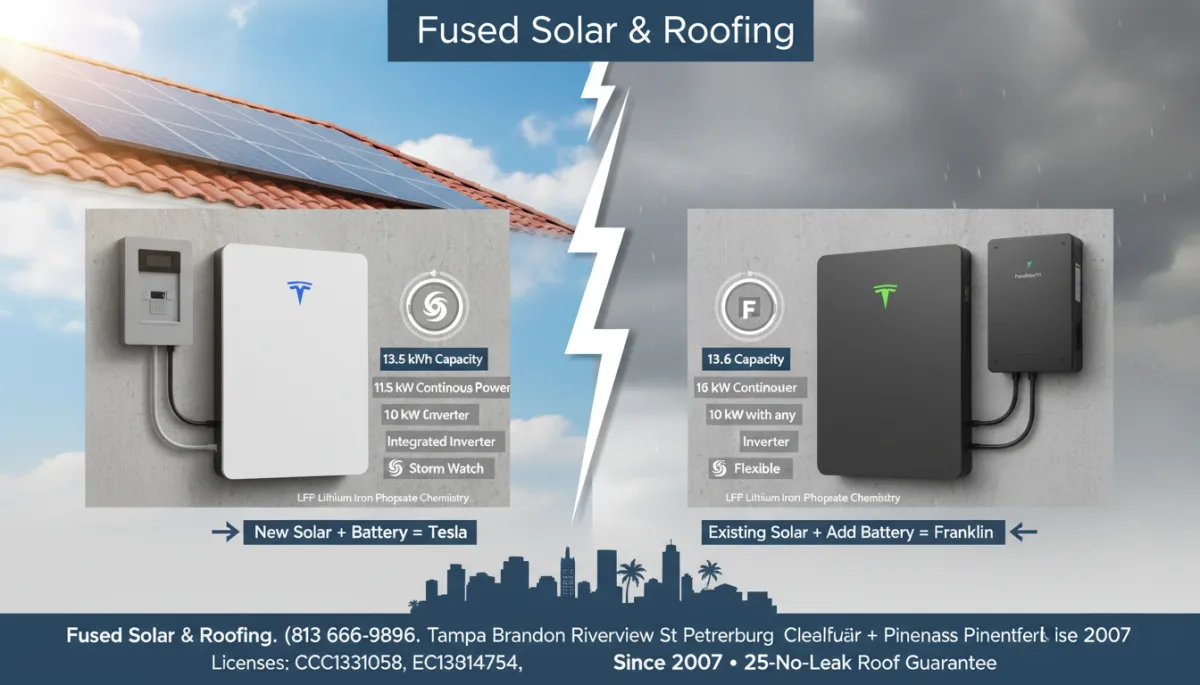
Usable capacity: 13.5 kWh — enough to cover a typical evening and overnight usage for many efficient homes.
Continuous power: 11.5 kW — strong output for running large loads like air conditioning, well pumps, and major appliances simultaneously during an outage.
Integrated inverter (DC coupled): Powerwall 3 includes a high‑efficiency solar inverter built in and is DC coupled. Solar energy flows directly from your panels into the battery as DC power before being converted to AC for your home. This reduces conversion losses and delivers higher overall efficiency for new solar + battery systems.
Storm Watch: Tesla’s software can auto‑charge the battery to 100% before hurricanes or severe weather by monitoring National Weather Service alerts. When a storm watch is issued, the system prioritizes filling your Powerwall so you go into the outage with a full “tank.”
Installed price (typical): Around $12,500 installed for a single Powerwall 3 in the Tampa Bay area, depending on site conditions and system design.
Warranty: 10‑year manufacturer warranty on the battery.
For homeowners searching “solar battery Tampa FL” and planning a brand‑new solar plus storage system, that DC‑coupled, integrated inverter design is the big headline: it simplifies your system, improves efficiency, and avoids the need for a separate stand‑alone inverter.
FranklinWH aPower 2 Specs and AC Coupling for Tampa Bay Homes
The FranklinWH aPower 2 is quickly becoming a favorite for homeowners who already have solar and want to add battery backup without ripping out their current inverter. It’s powerful, flexible, and built around whole‑home backup from day one — using an AC‑coupled architecture.
Usable capacity: 13.6 kWh — just slightly more storage than Powerwall 3 on a per‑unit basis, ideal for overnight and multi‑hour outages.
Continuous power: 10 kW — plenty of output for running large loads and supporting whole‑home backup in typical Tampa Bay houses.
AC‑coupled inverter compatibility: FranklinWH aPower 2 is AC coupled, which means your solar energy is first converted to AC by your existing inverter, then stored in the battery. Because it connects on the AC side, it works with any inverter brand, making it much more flexible for existing solar systems. You can usually keep your current inverter and simply add the Franklin battery and controller.
Generator charging port: FranklinWH includes a dedicated generator charging port, a major advantage for extended hurricane outages. Homeowners can run a generator to charge the Franklin battery directly, offsetting the slightly slower AC‑coupled fill rate and providing practically unlimited backup duration during multi‑day outages.
Storm Watch: FranklinWH also offers a Storm Watch‑style feature that automatically charges the battery to 100% before incoming hurricanes or severe weather, using National Weather Service data — just like Tesla. This is equally critical for both systems in Tampa Bay.
Warranty: 10‑year warranty on the battery, providing long‑term peace of mind.
Pricing: FranklinWH aPower 2 is competitively priced with Tesla in the Tampa Bay market, and can be especially cost‑effective when you already own solar because you’re not replacing the inverter or re‑engineering your entire system.
If you’re searching for FranklinWH Tampa or “Franklin battery vs Tesla Powerwall Tampa,” this AC‑coupled flexibility — plus the generator charging port — is exactly why so many existing solar owners are leaning toward FranklinWH aPower 2 in 2026.
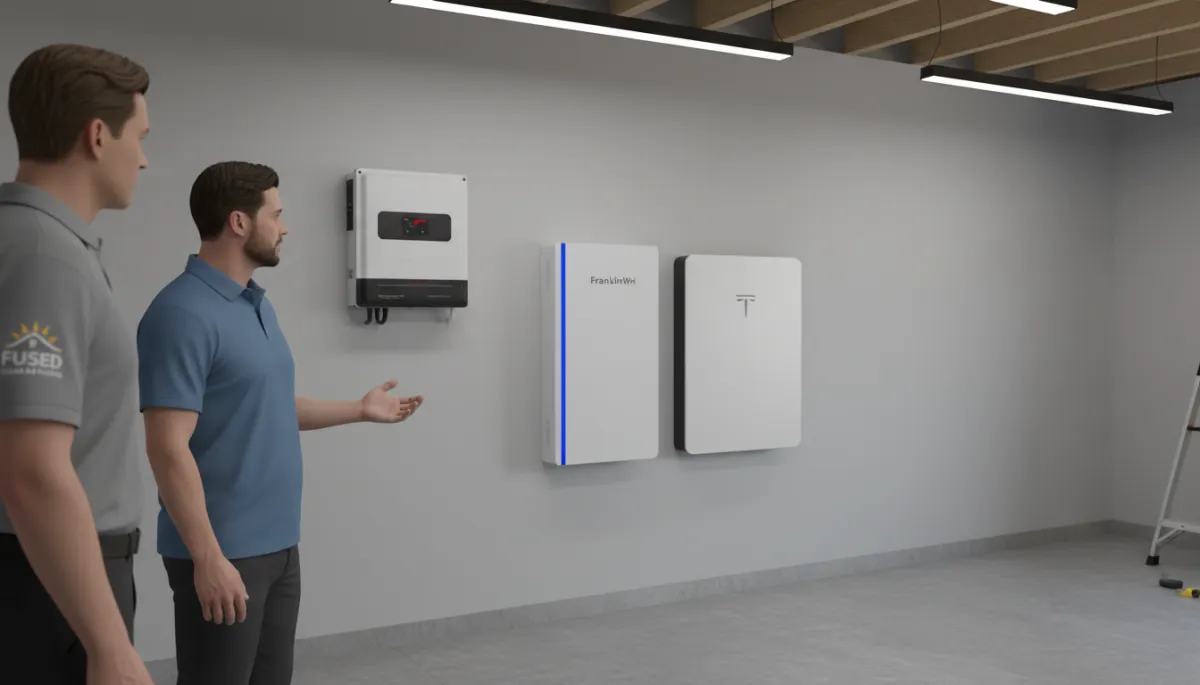
FranklinWH is often ideal for homes that already have solar, while Powerwall 3 shines in new installs.
Safety First: LFP Chemistry in Both Franklin and Tesla
Both the Tesla Powerwall 3 and FranklinWH aPower 2 use LFP (lithium iron phosphate) battery chemistry. That matters for Tampa Bay homeowners for three big reasons:
Higher thermal stability: LFP is widely recognized as one of the safer battery chemistries, with less risk of thermal runaway compared to older lithium‑ion technologies.
Long cycle life: LFP batteries are designed to handle thousands of charge/discharge cycles, ideal for daily solar self‑consumption plus emergency backup.
Peace of mind during storms: When you’re running your home on battery power for extended periods during a hurricane outage, safety and reliability matter more than ever.
From a safety standpoint, there’s no “wrong” choice here. Both systems are built around the safest mainstream battery technology available today, and both are backed by major manufacturers with strong track records.
Whole‑Home Backup for Tampa Bay Hurricanes
Whether you choose Tesla or Franklin, both systems can be designed for whole‑home backup, not just a few outlets. That means:
Keeping your refrigerator and freezer running so food doesn’t spoil during multi‑day outages.
Powering medical equipment, phones, internet, and security systems when you need them most.
Running air conditioning strategically to manage heat and humidity, especially for families with children, elderly parents, or pets.
As a licensed roofing, electrical, and building contractor, Fused Solar and Roofing designs each home battery backup Tampa project with your specific loads and hurricane risk in mind. We can also add additional batteries if you want longer runtimes or more heavy‑duty backup capacity.
💡 Pro Tip: Fused Solar and Roofing is proud to offer expert solar system maintenance and repair services — Book your solar panel inspection and cleaning at tampasolarmaintenance.com.
Franklin Battery vs Tesla Powerwall: AC vs DC Coupled — Which Is Better for You?
When Tesla Powerwall 3 Is the Better Choice
For many homeowners starting from scratch, Tesla Powerwall 3 comes out ahead. The main reason isn’t just specs or price — it’s the DC‑coupled design and how seamlessly it integrates with new solar.
You’re installing new solar and a battery together. Because Powerwall 3 includes its own integrated solar inverter and connects on the DC side, your solar energy flows directly into the battery before being converted to AC. This improves efficiency and simplifies your overall system design.
You want maximum efficiency from your solar + storage investment. With fewer conversion steps than AC‑coupled systems, DC‑coupled Powerwall 3 can reduce energy losses and help you get more usable power from the same array size.
You value a robust Storm Watch feature. In Florida, automatic pre‑storm charging is a big deal. When the forecast looks bad, Storm Watch fills your battery so you’re ready before the first wind gust hits — a capability that Tesla and FranklinWH both offer using National Weather Service data.
You like Tesla’s app ecosystem and want a sleek, integrated feel between your solar, battery, and possibly EV.
In short: for new solar + battery installations, especially when you’re comparing long‑term efficiency and seamless integration, Tesla Powerwall 3 is often the top choice for Tampa Bay homeowners.
When FranklinWH aPower 2 Is the Better Choice
If you already have rooftop solar, the FranklinWH aPower 2 often makes more sense — and can significantly lower your project complexity compared to swapping everything for a new DC‑coupled system.
You have an existing solar array with a functioning inverter you like. Because the Franklin battery is AC coupled and works with any inverter brand, you can usually keep your current inverter and add storage without major rewiring or roof work.
You want flexible expansion. Franklin systems are designed to scale, so if your energy needs grow, we can add more aPower 2 units over time while keeping your same controller and inverter.
You’re focused on cost‑effective backup for an existing solar system. In many retrofit cases, FranklinWH ends up being the more economical and straightforward path to whole‑home backup because you’re not replacing working equipment.
You want extra security during long hurricane outages. The FranklinWH generator charging port lets you connect a compatible generator and charge the battery directly. That feature offsets the slightly slower AC‑coupled charge rate and gives you a way to maintain backup power for as long as you have fuel — something Tesla Powerwall 3 does not offer.
For homeowners typing “Franklin battery vs Tesla Powerwall Tampa” into Google because they already have panels on the roof, FranklinWH aPower 2 is often the smarter, simpler, and more hurricane‑resilient answer.
Why Work with Fused Solar and Roofing for Your Tampa Bay Battery Project?
Not all installers are created equal — especially when it comes to combining solar, batteries, and roof penetrations in a hurricane‑prone market like Tampa Bay. Fused Solar and Roofing is one of the very few contractors in Florida that holds all three key licenses under one roof:
Florida Roofing License CCC1331058
Electrical License EC13014750
Building Contractor License CBC1252064
That means the same team that understands your roof structure also designs your electrical system and oversees your battery installation. We back every project with a 25‑year no‑leak roof penetration guarantee, giving you long‑term confidence that your solar and battery upgrades won’t compromise your home’s first line of defense against Florida weather.
Bottom Line: Which Home Battery Should Tampa Bay Homeowners Choose?
The main differentiator between FranklinWH aPower 2 and Tesla Powerwall 3 is not price or raw specs — it’s how they are coupled with your solar system and how that affects efficiency, compatibility, and hurricane resilience.
Tesla Powerwall 3 (DC coupled): Best for new solar installations. Solar energy flows directly from panels into the battery as DC, then converts to AC once. This higher‑efficiency, integrated approach makes Powerwall 3 ideal when you’re designing a fresh solar + storage system from the ground up.
FranklinWH aPower 2 (AC coupled): Best for existing solar systems adding battery backup. Solar energy is converted to AC by your current inverter before being stored, which makes the Franklin compatible with any inverter brand. Add in the dedicated generator charging port, and FranklinWH is a standout choice for multi‑day hurricane outages.
Both systems offer Storm Watch‑style auto‑charging using National Weather Service data, both use safe LFP chemistry, and both can be configured for whole‑home backup. The right choice comes down to whether you’re building a new system or upgrading an existing one — and how important generator integration is for your hurricane plan.
📌 Key Takeaway: Fused Solar and Roofing is proud to offer certified solar maintenance and support — Start your free maintenance consultation at tampasolarmaintenance.com.
Ready to Compare FranklinWH and Tesla for Your Home?
Choosing between FranklinWH Tampa and Tesla Powerwall 3 isn’t about which brand is “best” on paper — it’s about which system fits your roof, your existing equipment, your budget, and your hurricane‑preparedness plan. Because Fused Solar and Roofing installs both systems, we can walk you through a truly unbiased comparison for your specific home.
Whether you’re in Tampa, Brandon, Riverview, St. Petersburg, Clearwater, or anywhere in Hillsborough or Pinellas County, our team has been designing and installing solar and battery systems locally since 2007. We understand Florida building codes, wind loads, and the realities of riding out hurricane season on backup power.
If you’re serious about reliable home battery backup in Tampa, the next step is a custom proposal that compares a Tesla Powerwall 3 design against a FranklinWH aPower 2 design for your home’s roof, electrical panel, and energy use.
Ready to add battery backup to your Tampa Bay home? Call or text Fused Solar and Roofing at (813) 686-9896. We install both Tesla Powerwall 3 and Franklin aPower 2 systems. We serve Tampa, Brandon, Riverview, St. Petersburg, Clearwater, and all of Hillsborough and Pinellas Counties. Florida Roofing License CCC1331058 — Electrical License EC13014750 — Building Contractor License CBC1252064. Established 2007.
Frequently Asked Questions
1. Which is better, FranklinWH aPower 2 or Tesla Powerwall 3?
For a new solar and battery system, the Powerwall 3 is usually the cleaner choice because its inverter is built in. For adding backup to an existing solar system, the FranklinWH aPower 2 is usually the better fit because it is AC-coupled and works with the inverter you already have.
2. What is the difference between AC-coupled and DC-coupled batteries?
A DC-coupled battery like the Powerwall 3 takes solar power straight from the panels before it is converted to AC, which is efficient for new installs. An AC-coupled battery like the aPower 2 connects on the AC side of the home, so it works alongside any existing solar inverter and can be added later without replacing equipment.
3. How much do the FranklinWH aPower 2 and Tesla Powerwall 3 cost in Tampa?
Fused Solar and Roofing installs the Powerwall 3 for about $12,500 per unit. FranklinWH pricing depends on whether the aGate controller and generator integration are included, so Fused quotes it per home. Both are priced installed, with permits and inspection.
4. Which battery works with a standby generator?
The FranklinWH system is built to integrate a generator through its aGate controller, so the generator can recharge the battery during a long outage. The Powerwall 3 does not integrate a generator in the same way, which is why homes planning solar plus generator usually go FranklinWH.
5. How much power and storage does each battery have?
Powerwall 3: 13.5 kWh of storage and 11.5 kW of continuous output. FranklinWH aPower 2: 13.6 kWh and 10 kW continuous. Both can back up a whole home and both can be expanded with additional units.
6. Does Fused Solar and Roofing install both batteries?
Yes. Fused is a Tesla certified installer and a certified FranklinWH installer, and services every FranklinWH model: aPower, aPower 2, and aPower S. The recommendation is based on your existing equipment and backup goals, not on one brand.
Fused Solar and Roofing is a licensed roofing (CCC1331058), electrical (EC13014750), and building contractor (CBC1252064), all three in-house, serving Hillsborough, Pinellas, Pasco, and Manatee counties since 2007. Fused Solar and Roofing is an EnergySage Elite Installer with a 5.0/5 rating and 21+ verified reviews, independent verification, earned not purchased.
Want backup power for the next outage? Request a battery installation quote at https://fusedsolarandroofing.com/new-solar-battery-installation