Chilicon Microinverter Not Working? Tampa Bay Guide
If your Chilicon microinverter solar system has panels not reporting, low production, or the whole system showing offline, you are not alone. Many Chilicon owners in Tampa Bay feel stuck because their original installer is gone or they do not recognize the brand on the equipment, but your system can still be diagnosed and repaired by a licensed contractor. Fused Solar and Roofing is a licensed roofing (CCC1331058), electrical (EC13014750), and building contractor (CBC1252064) — all three in-house.
This guide walks through what is happening in plain language: who makes Chilicon now, how your system is laid out, what the gateway is really telling you, why most fixes are under the panels, and how a diagnostic visit and any roof work fit together. The goal is simple: to help you understand your options so you can decide on a calm, practical next step for your home.
1. Chilicon owners often feel stuck
Many Tampa Bay homeowners with Chilicon microinverters first notice a problem when they open their monitoring and see blank spots where panels used to report, or they realize the system is not producing what they expect. Sometimes it is a few panels, sometimes an entire section, and sometimes the whole system appears offline. When they look for help, they discover their original installer is no longer in business, or the company that sold the system does not answer the phone anymore. That is a stressful moment, especially if you rely on solar to offset a good portion of your household usage.
On top of that, the name on the equipment may not match the company name they remember from the sales paperwork. The word “Chilicon” might be on the gateway or on a label, but it is not a brand most people talk about at neighborhood cookouts. Homeowners understandably wonder whether anyone still works on these systems, or whether they are stuck with a rooftop full of panels that no one will touch. It can feel like you have an orphaned system, even though the equipment is still there on your roof and wired into your home’s electrical service.
The important thing to know is that a Chilicon system is still a standard grid-tied solar electric system using microinverters. It can be diagnosed, tested, and repaired by a contractor with the right electrical and roofing licenses and experience. The brand name on the label may be unfamiliar, and the original installer may be gone, but that does not make your system unserviceable. It simply means the next contractor has a little more detective work to do when they first meet your equipment and layout.
📌 Key Takeaway: A Chilicon system without its original installer is not a dead end. The equipment can still be diagnosed and repaired by a licensed contractor.
2. Who makes Chilicon now
When homeowners start researching the word “Chilicon,” they quickly discover that the story has changed over the last few years. The name may appear on your microinverters, on the gateway, or in your monitoring login, but newer information online may talk about a different company entirely. That can add to the feeling that the system has been left behind or that no one stands behind the technology anymore. It is helpful to put that into perspective so you know what you are looking at on your own home.
Generac acquired Chilicon Power in 2021, so the Chilicon microinverter line is now part of Generac. For you as a homeowner, the key point is that the Chilicon line did not simply disappear; it became part of a larger family of power products. What matters most for you as a homeowner is the practical point that follows.
What this means in practical terms is that a Chilicon system can still be serviced by a licensed contractor who understands microinverters, rooftop wiring, and the way the gateway ties everything together. You do not need to track down the original salesperson or find a company with the exact same logo that appears on your equipment. Instead, you need a contractor who is comfortable working with existing systems, reading the data from the gateway, and safely accessing the wiring and microinverters under the panels when needed.
For Tampa Bay homeowners, that is often a relief. It reframes the issue from “Is my brand still around?” to “Who can evaluate and repair my existing equipment?” Once you know that your system can be treated like any other microinverter array, the path forward becomes clearer: a diagnostic visit, a written explanation of what is happening, and a plan to correct it if you choose to move ahead.
Chilicon system not reporting? Fused Solar and Roofing diagnoses and repairs Chilicon microinverter systems across Hillsborough, Pinellas, Pasco, and Manatee counties. Request a diagnostic visit at https://fusedsolarandroofing.com/fused-solar-roofing-service-department
3. How a Chilicon system is laid out
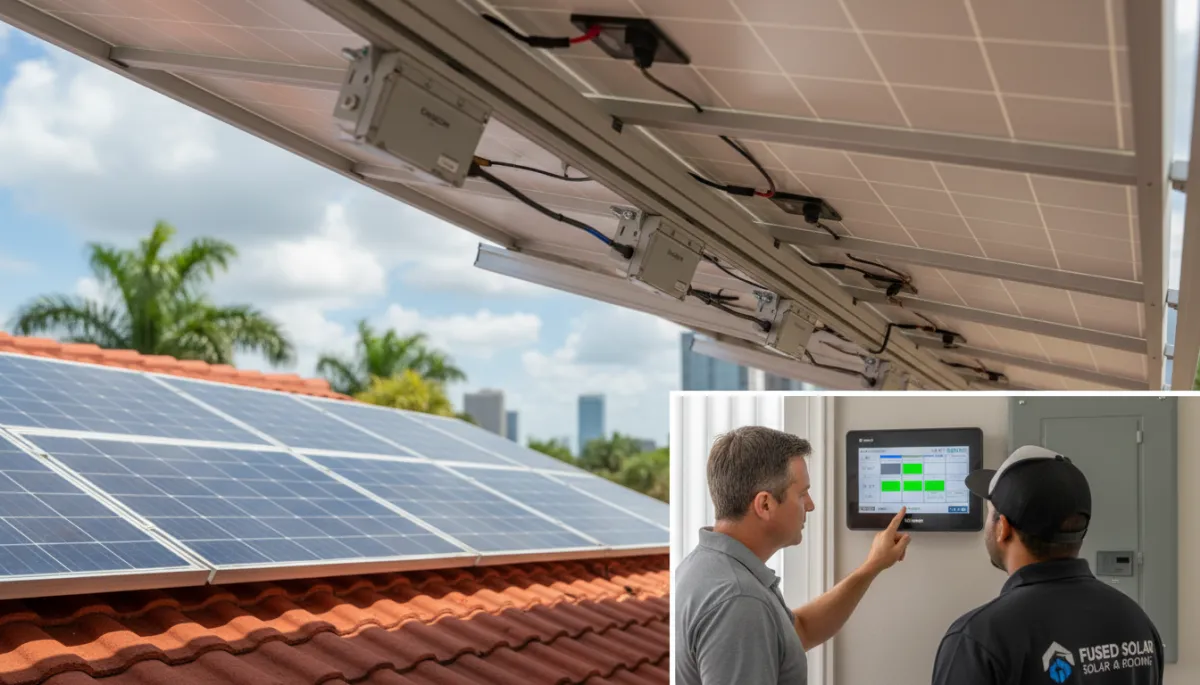
To understand why panels might stop reporting, it helps to picture how a Chilicon system is arranged on and around your home. Instead of a single large inverter mounted on a wall, Chilicon uses microinverters mounted directly under the solar panels on the roof. Each microinverter is a small box that takes the direct current power coming from one or more panels and converts it to the alternating current power your home uses, right there under the array. Those microinverters are wired together in circuits that run back down to your home’s electrical equipment.
Some Chilicon microinverters serve two panels each, so a single microinverter problem can affect two panels at once. That is one reason you might see two neighboring panels in your monitoring appear to drop off together while the rest of the array keeps working. From the ground, those panels may look perfectly fine, but the small device underneath them is where the conversion and reporting are actually happening. That is also where a technician will focus if the data points to a specific location on the roof rather than a system-wide issue.
Inside or near your main electrical panel, you will usually find the Chilicon gateway. This is a communication hub that gathers information from the microinverters and can connect to online monitoring so you can see production and panel status. On many Chilicon systems, the gateway has its own touchscreen display, which allows a technician to review system details even if online access is limited. The gateway is also where the microinverters and your home’s electrical system meet from a communication standpoint, so it is a key part of any diagnostic visit.
Between the roof and the gateway, there are conductors, junctions, and breakers that all play a role in carrying power and information. From your point of view as a homeowner, you do not need to know every wire and connection, but it is useful to understand that your monitoring screen is a picture of how all of those pieces are working together. A blank or offline panel icon represents a specific microinverter location under a panel, a group of blanks can line up with a shared section of wiring, and a full-system offline message can point toward the gateway or its connection rather than the entire array failing at once.
4. What the gateway is telling you
When you open your monitoring or look at the gateway screen, it is natural to focus on what looks wrong: the panels that are gray instead of green, the total production number that seems too low, or the message that the system is offline. While it can be worrying to see those changes, the patterns themselves are actually useful clues. They help a licensed technician narrow down where to look first and what kind of issue might be involved, long before anyone goes onto the roof or removes a panel.
If you see one or two panels not reporting while the rest of the system appears normal, that pattern can point toward the microinverter that serves those panels or a connection at that specific location. Because each microinverter is responsible for a small part of the array, a problem at that device will usually show up as a small cluster of affected panels in your monitoring, while neighboring panels continue to show production as usual. The gateway is simply reflecting that one small piece of the larger puzzle is not communicating or not producing properly.
When a larger group of panels in one area of the array appears affected, that can suggest something those panels share in common, such as a section of wiring or a connection point that serves that part of the roof. In that case, the gateway is not telling you exactly which component is at fault, but it is signaling that several microinverters in the same neighborhood are affected together. A technician uses that pattern, along with on-site inspection, to sort out whether the issue lies in a shared connection, a run of cabling, or multiple devices that need attention in the same area of the roof.
If the entire system appears offline, that can point toward the gateway itself or its connection to the rest of the system, rather than every single microinverter failing at the same time. In those situations, the first step in a diagnostic visit is often to look closely at the gateway, the breakers, and the disconnects that serve the solar circuits, and to verify how the gateway is communicating. From there, the technician can decide whether the issue is confined to the communication side, the power side, or both. In every case, the patterns you see are possibilities that a proper diagnosis will confirm or rule out, not a checklist for you to act on at home.
💡 Pro Tip: Photograph the gateway screen and screenshot any monitoring you can access, noting which panels are affected and the date. That tells a technician where to look.
5. What to note before calling
Before you schedule a diagnostic visit, there are a few simple things you can do that make the process smoother and help the technician understand what you are seeing. None of these involve opening equipment or going on the roof; they are just ways to capture information from the homeowner’s side so the contractor arrives with a clearer picture of the situation. This is especially helpful if the problem comes and goes, or if you first noticed it some time ago and are only now able to address it.
The first step is to photograph the gateway screen. If your gateway has a touchscreen display, take a clear photo of any main status page or production view you can reach without changing settings. If you use online monitoring, take screenshots of the panel layout showing which panels appear affected, along with any daily or monthly production graphs that highlight when the issue started. These images give the technician a starting point and can be especially useful if the display looks different by the time they arrive on site due to weather, time of day, or temporary changes in communication.
It also helps to note which panels appear affected on the layout, even if you are not sure which ones those are on the actual roof. If you remember the first day you noticed the problem, write that down, along with what the weather was like at the time and whether you have seen the issue during sunny periods since then. A short note such as “First noticed two panels missing on a clear day in May, still missing on sunny days now” already gives context. When you call or submit a service request, you can share that information so the technician can review it before the visit and plan accordingly.
Just as important is what you should not do. Do not go on the roof, even if you feel comfortable on ladders. Do not try to lift or slide a panel to see what is underneath it. Do not open the gateway enclosure, your electrical panel, or any disconnects, and do not unplug or reset anything in an attempt to clear the problem. Those actions can create safety risks and may complicate the diagnosis. Simply gathering information from the screens you can safely see is enough; the rest is the job of a licensed professional during a scheduled visit.
⚠️ Warning: Do not go on the roof, lift a panel, or open the gateway or any electrical equipment. Solar panels produce electricity whenever they are in sunlight.
6. Why the fix is under the panels
With a Chilicon system, the most important thing to understand about repairs is where the working parts actually sit. The microinverters are mounted under the panels on the roof. That is where the direct current from the panels is converted to usable power and where each panel’s production is tracked. When a microinverter or a connection at its location needs to be replaced or repaired, there is no way to reach it from the ground or from the gateway. The work happens at the roof level, directly beneath the panels that appear affected in your monitoring or on the gateway screen.
Because of that layout, replacing a Chilicon microinverter means removing the panel or panels above it. Even if there is only one location involved, the process is a detach and reinstall for that part of the array. The system is shut down, the affected panels are carefully removed from their mounting hardware, and the technician gains access to the microinverter and wiring beneath. Once the replacement or repair is complete, the panels are reinstalled, reconnected, and secured, and the system is turned back on so the gateway can confirm that each panel is reporting correctly again. Fused Solar and Roofing has access to replacement parts for Chilicon systems.
This work combines licensed electrical tasks with work on your roofing system. The technician is handling live-generation equipment that produces power whenever there is sunlight, and they are also working on top of your roof covering, where careful handling matters for long-term weather protection. That is why it is important that the contractor you choose is qualified on both sides of the equation. They need to be able to safely shut down and re-energize the system, verify the wiring and connections, and also remove and reinstall panels without leaving the roof vulnerable to leaks or damage around the mounting points.
Fused Solar and Roofing services Chilicon systems, including systems whose original installer is no longer in business. The same team that diagnoses the issue can plan the panel removal, microinverter replacement or repair, and final testing so that the gateway once again shows accurate reporting for each panel. Fused Solar and Roofing is a licensed roofing (CCC1331058), electrical (EC13014750), and building contractor (CBC1252064) — all three in-house. For you as a homeowner, that means the detach and reinstall, the electrical corrections, and the final checks are coordinated as one project rather than being split between separate companies.
7. What a diagnostic visit involves
When you schedule a diagnostic visit for a Chilicon system, the first step is a careful review of what you have already seen. A licensed technician will sit down with you to look at the gateway screen and any online monitoring you can access. Together, you will walk through which panels appear affected, when you first noticed the issue, and whether it has been consistent or intermittent. This conversation helps align what the monitoring shows with what is happening in your home and sets expectations for the rest of the visit in a calm, straightforward way.
From there, the technician inspects the gateway itself, along with the breakers, disconnects, and visible wiring and connections that can be reached without removing panels. They look at how the solar circuits are tied into your electrical system and confirm that the accessible components are in place and appear to be functioning as intended. This part of the visit focuses on what can be evaluated from the ground and at the equipment locations, without disturbing the array on the roof. It is a methodical process aimed at ruling out simple issues and identifying where deeper investigation under the panels may be needed.
As the visit progresses, the technician identifies which specific panels are affected according to the gateway and monitoring layout. They translate that virtual layout into real-world locations on your roof, so everyone understands where a potential microinverter replacement or wiring repair would take place. Throughout the process, they document what they see with photographs and notes. At the end of the visit, you receive photographs and a detailed written report explaining the findings in plain language. Any recommended replacement or repair is then scoped and quoted based on those findings, so you can decide how to proceed with full information in hand rather than guesses or assumptions.
Fused Solar and Roofing is an EnergySage Elite Installer with a 5.0/5 rating and 21+ verified reviews — independent verification, earned not purchased. That third-party feedback reflects a track record of working with both new installations and existing systems that need attention. Fused Solar and Roofing is certified with Generac. For a Chilicon owner, that means your system is evaluated by a team that works with microinverter systems and understands how the gateway and monitoring report what is happening on your roof.
📌 Key Takeaway: Fused Solar and Roofing diagnoses and repairs Chilicon microinverter systems under electrical license EC13014750, including systems whose original installer is no longer in business.
8. The roof under the array
When panels have to come off to reach microinverters, it naturally raises another question: what about the roof under the array? On many homes, the roof beneath the panels has been covered and out of sight since the system was installed. If your Chilicon array has been in place for a number of years, and especially if several microinverters or wiring sections may need attention, removing multiple panels gives a rare look at the condition of that part of the roof. It is a practical moment to pause and ask whether any roofing work should be done while the panels are already off, rather than repeating the detach and reinstall process later for roof reasons alone.
This is not about pushing a roof replacement you do not need. Instead, it is about making the most of the access you already have to the covered portions of your roof. If, during planning or inspection, there are signs that the roof under the array would benefit from repair or replacement, it may be worth asking whether it makes sense to address that now. If a replacement is the right choice for your situation, the full array comes off in an organized way, the roof is replaced, and then the panels and microinverters are reinstalled, reconnected, and tested so the system can return to service with a fresh roofing surface beneath it.
Fused Solar and Roofing’s own in-house electrical and roofing crews handle both the solar work and the roof work, so it becomes one coordinated job under one company instead of two separate projects. The same team that understands your Chilicon gateway and microinverters is in direct communication with the crew handling the shingles or other roofing materials, which helps keep the sequence of removal, roof work, and reinstallation aligned. After the work is complete, the technician confirms that every panel is reporting on the gateway, and you have both a functioning solar system and a roof under the array that has been thoughtfully considered rather than overlooked.
Frequently Asked Questions
Is Chilicon Power still around?
Generac acquired Chilicon Power in 2021, so the Chilicon microinverter line is now part of Generac. For a homeowner, that means your Chilicon-branded microinverters are part of a broader family of products under the Generac umbrella, even if the original Chilicon name is what appears on your equipment and monitoring.
My Chilicon installer is out of business. Who can service my system?
If your original Chilicon installer is no longer in business, your system can still be serviced by a licensed contractor that works with existing solar arrays. The key is choosing a company that understands microinverters, rooftop wiring, and the way the gateway communicates with each panel location. Fused Solar and Roofing has access to replacement parts for Chilicon systems. In Tampa Bay, Fused Solar and Roofing services Chilicon systems installed by other companies, including systems whose original installer has closed or moved on, and can provide diagnostics, written findings, and repair or replacement options based on what they find on your roof and at your electrical equipment.
Why does my Chilicon gateway show panels not reporting?
Panels not reporting on your Chilicon gateway or monitoring usually indicate that the gateway is not receiving normal information from the microinverters at those panel locations. In some cases, it may be a single microinverter or connection affecting one or two panels; in others, a group of panels may share a wiring path or connection that needs attention. A full diagnostic visit looks at the patterns in your monitoring, the condition of the accessible equipment, and the layout of your array to determine whether the issue is at a particular device, a shared section of wiring, or elsewhere in the system. The gateway is showing you that something needs to be checked; a licensed technician determines exactly what that is.
Does replacing a Chilicon microinverter mean taking panels off the roof?
Yes. Because Chilicon microinverters are mounted under the panels on the roof, replacing one involves removing the panel or panels above it to reach the device and its connections. The system is shut down, the affected panels are detached and set aside, the microinverter or connection is replaced or repaired, and then the panels are reinstalled and reconnected. Afterward, the system is turned back on and checked so the gateway confirms that the previously affected panels are reporting again. This is licensed electrical work performed on the roof, and it is typically handled as a coordinated detach and reinstall for the part of the array involved.
Can one Chilicon microinverter affect two panels?
On some Chilicon systems, one microinverter is connected to two panels. In that layout, a problem at a single microinverter or its immediate connections can show up in your monitoring as two panels not reporting or underperforming together. When a technician reviews your gateway data and panel layout, they take that possibility into account as they map the virtual panel view to the physical locations on your roof and decide which panels would need to be removed to access the underlying device during a repair.
Can a battery or generator be added to a Chilicon system?
Whether a battery or standby generator can be added to a home with a Chilicon system depends on the existing equipment and the home’s electrical panel. The starting point is an evaluation of your current solar layout, your electrical service, and what you hope to accomplish with backup or stored power. Fused Solar and Roofing installs batteries and standby generators and can review your specific situation to explain what options are available for your home.
Fused Solar and Roofing is a licensed electrical contractor (EC13014750) servicing solar systems of all brands across Hillsborough, Pinellas, Pasco, and Manatee counties, including systems whose original installer is no longer in business. Request a diagnostic visit at https://fusedsolarandroofing.com/fused-solar-roofing-service-department
Is your solar system producing what it should? Request a diagnostic visit at https://fusedsolarandroofing.com/fused-solar-roofing-service-department